 Seattle Exterior
 Siding Repair in Kirkland: When a Patch Isn't Enough
Kirkland's mix of mature tree canopy, lakeside humidity, and long wet winters puts real, ongoing stress on exterior siding. A lot of the siding repair work we see in this area didn't start as a big problem — it started as a small crack, a loose panel, or a soft spot near a downspout that got ignored for a season or two. By the time a homeowner calls, water has usually already found its way behind the siding and into the wall assembly. Our job is to fix the visible damage and the reason it happened, so the same failure doesn't come back in two years wearing a different panel.
This page is about siding repair specifically for Kirkland homes — not a generic overview. The repair approach that works on a sun-exposed home in a dry climate is not the same approach that holds up on a shaded, tree-covered lot a few blocks from Lake Washington. We size the repair to the conditions your house is actually dealing with.
What Kirkland's Climate Does to Exterior Siding
King County sits inside a marine climate shaped by Puget Sound to the west and the Cascades to the east. That combination means long stretches of driving rain, heavy cloud cover, and air that stays damp for months at a time — the kind of moisture load that never fully lets siding dry out between storms. Homes closer to the water and under heavy tree cover, which describes a large share of Kirkland's older and established neighborhoods, get an extra dose of it: less direct sun to dry wall surfaces, more standing humidity under the canopy, and a steady drip of moisture off overhanging branches long after a storm has passed.
That environment is exactly what moss, algae, and mildew need to establish themselves on siding, trim, and fascia. Left alone, moss holds moisture directly against the siding surface for weeks at a stretch, which is a much bigger problem than the cosmetic staining most homeowners notice first. On top of that, the region's frequent temperature swings between damp and dry cause expansion and contraction cycles that open up small gaps at seams, fastener points, and trim joints — gaps that are invisible from the ground until water starts getting behind the material.
None of this is unique to any one product, but it does mean that whatever siding is on your home, the repair has to account for sustained moisture exposure, not just storm damage.
Why "It's Just Cosmetic" Is Rarely True Here
In a drier climate, a cracked panel or a small gap might sit for years without causing structural harm. In Kirkland's climate, that same gap is a moisture entry point almost year-round. We've opened up plenty of siding that looked fine from the street and found soft sheathing, staining, or early rot underneath — damage that started at one overlooked crack or missing piece of flashing.
Signs Your Kirkland Home Needs Siding Repair
Most siding failures give warning signs well before they become expensive repairs. Homeowners in this area should watch for:
- Cracked, warped, or buckled panels, especially on north-facing or shaded walls
- Soft or spongy spots when you press on the siding near the bottom of walls or below windows
- Persistent moss or dark green-black staining that keeps returning after cleaning
- Peeling or bubbling paint, or visible wood grain "photographing" through painted panels
- Gaps opening up at seams, corners, or trim joints
- Water stains, discoloration, or a musty smell on interior walls near exterior siding
- Nail heads popping out or fasteners that no longer sit flush
- Visible daylight or drafts around window and door trim
Any one of these on its own might be minor. Several of them together, especially on the same wall, usually point to a water management problem that needs more than a caulk gun.
What a Correct Siding Repair Job Actually Involves
Diagnosing the Cause, Not Just the Symptom
A repair that only replaces the damaged panel and ignores why it failed is a temporary fix. Before we touch a single board, we look at where water is actually getting in — a missing kick-out flashing, a caulked joint that should have been designed to shed water instead, a gutter that's been overflowing onto the wall below, or siding installed too close to grade or a deck surface. Kirkland's shaded, tree-heavy lots make this diagnosis step even more important, because moisture problems here often trace back to drainage and airflow around the house, not just the siding material itself.
Matching Material and Finish
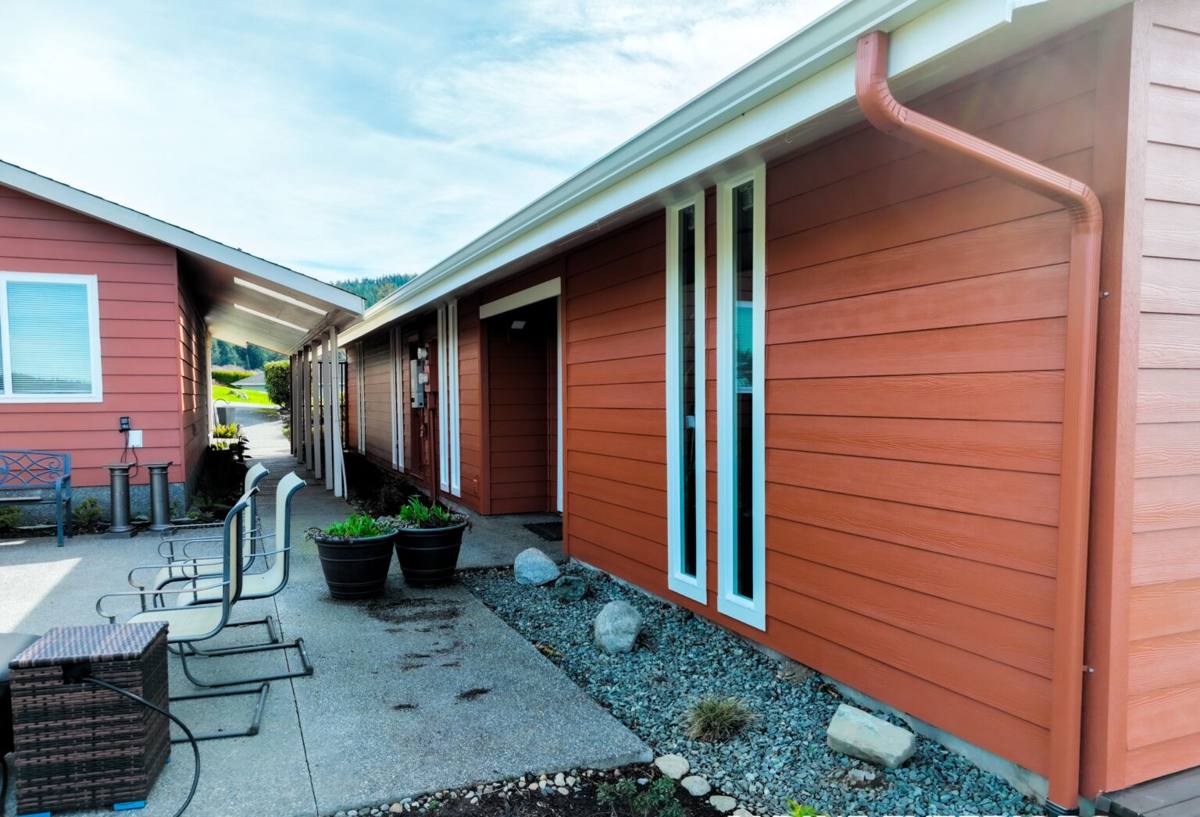
Good repairs blend in. That means matching the plank width, texture, and reveal of the existing siding, and getting the color close enough that a patch doesn't stand out as an obvious patch. On factory-finished fiber cement, this is more predictable than on field-painted wood or vinyl, because the color comes from a controlled finish process rather than a paint match done on-site years later.
Restoring the Water Management System
Siding is one layer of a larger system that includes house wrap, flashing, and proper overlaps designed to shed water downward and outward. A repair that skips rebuilding this system — even if the new panel looks perfect — leaves the same vulnerability in place. We rebuild the flashing and drainage details at every repair, not just the cosmetic surface.
Repair or Replace? How We Help Kirkland Homeowners Decide
Not every siding problem calls for a full replacement, and not every repair is worth doing if the underlying siding is near the end of its life. We walk through this honestly with every homeowner rather than defaulting to the bigger job.
| Factor | Leans Toward Repair | Leans Toward Replacement |
|---|---|---|
| Extent of damage | Isolated to one or two areas | Spread across multiple walls or elevations |
| Underlying material condition | Sheathing and framing are dry and sound | Rot or moisture damage found in the wall assembly |
| Age of existing siding | Siding is mid-life and otherwise performing well | Siding is near or past its expected service life |
| Cause of failure | One-time or localized cause (impact, one bad flashing detail) | Systemic issue (original installation errors, chronic moisture) |
| Material match | Existing siding line and color are still available | Discontinued product, poor color/texture match |
If a repair is the honest answer, we tell you that. If the damage points to a bigger, recurring problem, we'll explain why patching it would just be delaying the same repair call a year or two down the road.
Why We Repair and Rebuild Only With James Hardie Fiber Cement
When a repair requires new panels, or when a homeowner decides replacement makes more sense than patching, we install James Hardie fiber cement exclusively. We don't install LP SmartSide, vinyl, Cemplank, Allura, or unfinished cedar and spruce siding, and we think Kirkland homeowners deserve to know why before they choose a contractor.
Vinyl siding is affordable and low-maintenance in the sense that it doesn't need painting, but it's a thin material that can crack in impacts, distort in heat, and doesn't hold up structurally the way a repair needs to — patched sections are also hard to color-match once panels have faded. Engineered wood products like LP SmartSide use a wood-strand core that performs well against impact, but wood-based cores are inherently more sensitive to sustained moisture exposure than fiber cement, which matters directly in a climate like Kirkland's, where siding stays damp for extended stretches under tree cover. Cedar and primed spruce look great initially but require an ongoing cycle of painting, caulking, and moisture monitoring to avoid rot — a maintenance burden that's especially demanding in a region with this much sustained rainfall.
James Hardie fiber cement is non-combustible, dimensionally stable in wet-dry cycling, and available with a factory-applied ColorPlus finish that resists fading and doesn't require repainting on the same schedule as wood. Hardie's HZ5 product line is engineered specifically for climates with heavy moisture exposure, which fits the Pacific Northwest well. It also carries a strong transferable warranty when installed to manufacturer specification — something that matters a lot on repair work, where getting the installation details right is the difference between a fix that lasts and one that fails again.
Our Siding Repair Process in Kirkland
- On-site inspection. We assess the visible damage and check surrounding areas — flashing, gutters, grade, deck attachments — for the underlying cause.
- Honest diagnosis and scope. We explain what's actually wrong, whether it's a contained repair or a sign of a bigger issue, and what we'd recommend either way.
- Written estimate. A clear scope of work and cost before anything is scheduled — no surprise change orders for work we should have caught up front.
- Removal and structural check. Damaged siding comes off, and we check the sheathing and framing underneath before closing anything back up.
- Water management rebuild. Flashing, house wrap, and drainage details are repaired or replaced as part of the job, not treated as optional.
- Matched siding installation. New James Hardie panels are installed to manufacturer spec, matched to the existing reveal and color where possible.
- Final walkthrough. We review the completed work with you before considering the job done.
Why Hiring a Crew That Already Works in Kirkland Matters
Kirkland has a lot of variation street to street — heavily wooded lots with year-round shade, open lots closer to the lake with more direct sun and wind exposure, and everything in between. A crew that already works this area knows the difference that makes on-site: which neighborhoods tend to see moss and moisture problems fastest, how tree-heavy lots change the drainage picture around a house, and what King County's permitting and inspection expectations look like for exterior repair work when it's required.
That local familiarity also shows up in smaller, practical ways — knowing how to work around mature landscaping without damaging it, understanding typical HOA aesthetic guidelines in established Kirkland neighborhoods, and being realistic with homeowners about how weather windows in this region affect repair scheduling. A crew parachuting in from outside the area is guessing at all of that. A local crew isn't.
Keeping Your Siding Repair Lasting
Once a repair is done correctly, a little basic upkeep goes a long way in this climate. Keep gutters clear so water isn't overflowing onto siding below, trim back tree branches and shrubs that keep siding shaded and damp, and do a visual walk-around once or twice a year looking for new moss growth, gaps, or soft spots — catching a small issue early is always cheaper and easier than waiting for it to become a repair call again.
If you're dealing with cracked, stained, or soft siding on a Kirkland home, we're happy to take a look and give you a straight answer about what's actually going on and what it would take to fix it right. Reach out for a free, no-pressure estimate using the form below.