 Seattle Exterior
 Board & Batten Siding on a Peninsula: Why Magnolia Is a Different Job
Magnolia sits on bluffs above Puget Sound, which means most homes here take weather from more than one direction at once. Salt-laden air moves in off the water, wind-driven rain hits walls at an angle instead of straight down, and the shaded, tree-lined streets on the interior of the peninsula stay damp long after storms have passed. That combination — salt exposure on the water-facing sides, standing moisture and moss pressure on the shaded sides — is exactly the kind of mixed-exposure environment that separates a board and batten installation that lasts twenty-plus years from one that starts failing at the seams in five.
Board and batten is a vertical siding profile: wide flat panels with narrow battens covering the joints between them, giving a clean, linear look that reads as more modern or more farmhouse depending on the trim and color choices around it. It's a popular request in Magnolia because it pairs well with the peninsula's mix of older bungalows and newer builds alike. But the same vertical seams and exposed batten joints that make the look work are also the parts of the assembly most vulnerable to King County's rain volume and Magnolia's salt air, if they aren't detailed correctly.
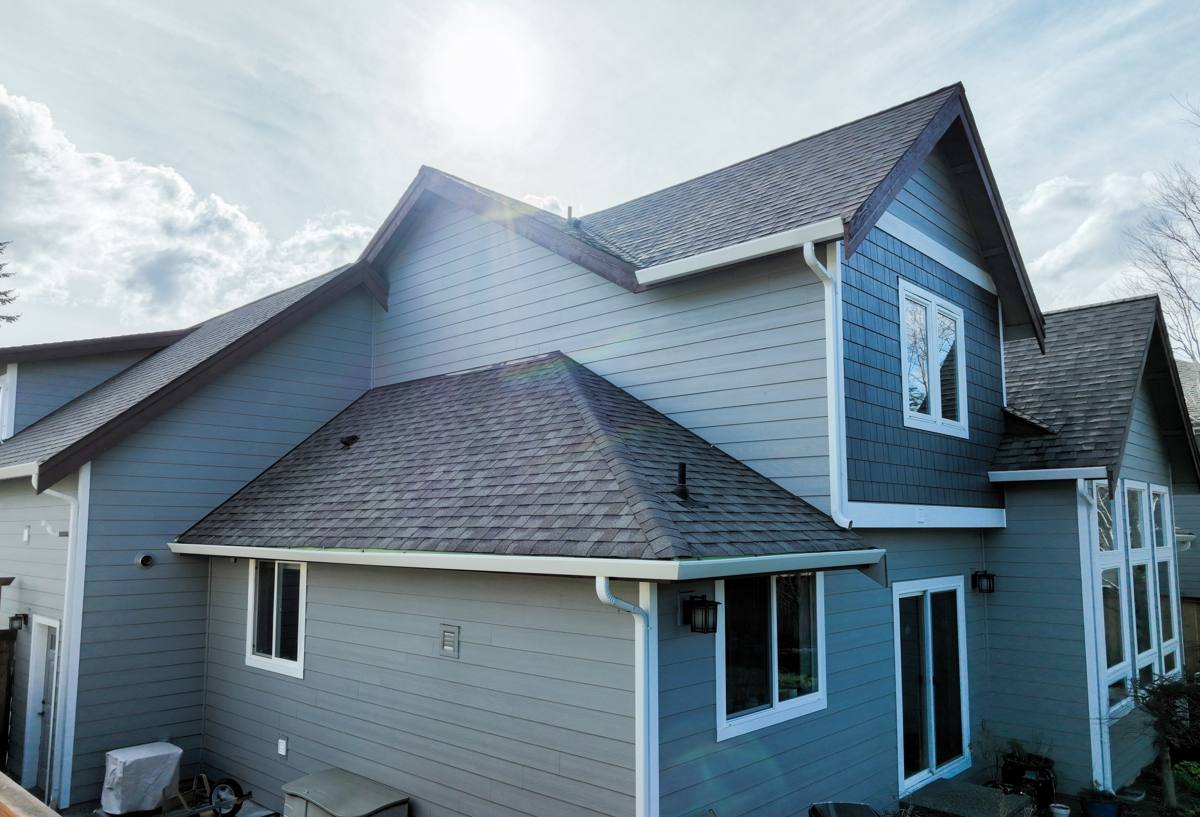
What Board & Batten Siding Actually Is
Underneath the vertical look, board and batten is still a lap-siding wall assembly — it just runs the panels vertically and covers the seams with battens instead of overlapping horizontal boards. The performance of the whole system comes down to a few things that aren't visible once the job is done:
- What's behind the panel — a drainage gap (rainscreen) or panels fastened flat to the sheathing
- How the panel material itself handles moisture, freeze-thaw, and UV over decades
- How the battens and panel edges are fastened and sealed, since these are the joints water will find first
- How flashing is integrated at windows, corners, and the base of the wall
Get those four right and the vertical look holds up. Get any one of them wrong and you end up with the same failure pattern regardless of which siding brand is on the wall: moisture tracking behind the battens, panel edges swelling or delaminating, and staining or moss growth concentrated right at the seams — the first places anyone's eye goes on a board and batten wall.
Why We Install James Hardie Board & Batten and Nothing Else
We install James Hardie fiber cement exclusively, including for board and batten profiles, and we don't install vinyl board and batten, LP SmartSide, Cemplank, Allura, or primed wood alternatives. That's a deliberate standard, not a sales pitch, and it's worth explaining plainly:
Vinyl board and batten is inexpensive and won't rot, but it's a thin extruded plastic that expands and contracts significantly with temperature swings — movement that stresses the very seams a board and batten profile is built around. In driving rain and salt air, vinyl's butt joints and corner posts are common points where wind-driven moisture finds a way behind the panel.
Primed wood board and batten gives the most traditional look, but real wood requires disciplined repainting and caulking on a cycle homeowners rarely keep up with, and Magnolia's moss season accelerates rot at any point where that maintenance lapses — especially at the base of battens and around fasteners.
LP SmartSide and comparable engineered-wood or fiberboard products perform reasonably when installation and maintenance are followed precisely, but they remain wood-based composites that depend on an intact factory coating to resist moisture. Any breach — a missed caulk joint, a fastener driven through the face instead of the specified zone — gives water a path into the substrate.
James Hardie fiber cement is non-combustible, dimensionally stable across the temperature swings the Puget Sound climate produces, and doesn't rely on a surface coating alone to resist water — the material itself is cement-based and doesn't rot or delaminate from moisture the way wood-based products can. Hardie's ColorPlus factory finish is baked on and warrantied separately from the substrate, and Hardie backs its products with a strong transferable limited warranty. For a profile like board and batten, where the seams carry more of the moisture-management burden, we want the most stable, least maintenance-dependent material behind those joints — and that's fiber cement.
What a Correct Board & Batten Installation Involves
Rainscreen drainage gap
On a wall exposed to wind-driven rain — which describes most of Magnolia's water-facing elevations — we install Hardie panels over a drainage gap rather than fastening them flat against the weather-resistive barrier. That gap gives any moisture that gets past the outer surface a path to drain and dry instead of sitting against the sheathing.
Batten spacing and fastening
Battens need consistent spacing over the panel joints, fastened per Hardie's published spec — not just nailed wherever framing happens to line up. Fastener placement, type, and depth all affect how the joint performs over time, and this is one of the most common places we see prior installs cut corners.
Flashing at penetrations and transitions
Every window, door, hose bib, light fixture, and roofline transition is a place water wants to get behind the siding. Flashing has to be integrated in the correct order relative to the weather-resistive barrier and the panels — installed after the barrier but before or behind the panel edge, never just caulked over the surface as an afterthought.
Clearances at grade and hard surfaces
Board and batten panels need proper clearance from the ground, roof lines, and decks so that splashback, snow, and moss-holding debris don't sit against the base of the wall. This clearance is one of the simplest things to get right and one of the most common things skipped on lower-bid jobs.
Board & Batten Material Comparison
| Factor | James Hardie Fiber Cement | Vinyl | Primed Wood | LP SmartSide / Engineered Wood |
|---|---|---|---|---|
| Moisture behavior | Cement-based, doesn't rot or delaminate | Won't rot, but joints move with heat | Rots without disciplined repainting | Depends on intact factory coating |
| Salt air / coastal exposure | Engineered for this exposure (HZ5 line) | Holds up but seams stress over time | Vulnerable without regular maintenance | Coating breach is the failure point |
| Fire resistance | Non-combustible | Combustible | Combustible | Combustible |
| Finish | Factory-baked ColorPlus, separately warrantied | Color molded through, fades over time | Field-painted, needs recoating cycle | Factory-coated, maintenance-dependent |
| Typical maintenance | Occasional wash, repaint on a long cycle | Low, but limited repair options if damaged | Frequent repainting and caulk upkeep | Moderate, coating inspection needed |
How We Approach a Board & Batten Project in Magnolia
- On-site assessment: we walk the specific elevations facing the water and the shaded elevations separately, since Magnolia homes often need different detailing on each side
- Tear-off and substrate check: old siding comes off and we inspect sheathing for hidden moisture damage before anything new goes up
- Weather-resistive barrier and flashing: installed and integrated at every penetration before panels go on
- Rainscreen and panel installation: Hardie panels set with proper drainage gap and fastener spec
- Batten installation: spaced and fastened over panel joints per manufacturer detail
- Finish and trim: ColorPlus finish inspected, corners and trim sealed correctly, site cleaned up
We price and schedule the job around what your specific elevations need rather than applying one generic spec to the whole house — a water-facing wall and a shaded interior wall on the same Magnolia property often call for slightly different attention to drainage and moss resistance.
Living With Board & Batten Siding in a Salt Air, Moss-Heavy Climate
Once it's installed correctly, board and batten siding in Magnolia doesn't need much — but "much" isn't "nothing." A short seasonal checklist keeps a correctly installed system performing the way it's supposed to:
- Rinse salt residue off water-facing walls periodically, especially after storms
- Keep gutters clear so overflow doesn't run down the wall face and pool at batten joints
- Trim back vegetation that shades siding and holds moisture against the wall — a common moss driver on Magnolia's tree-covered lots
- Walk the exterior once a year and look specifically at batten seams, corners, and the base of the wall for anything that looks loose or stained
- Address any caulk or trim gaps promptly rather than waiting for the next paint cycle
None of this is heavy maintenance — it's the kind of upkeep any exterior on a peninsula needs, and it's considerably lighter than what wood-based board and batten demands in the same conditions.
Why It Matters That We Already Work in Magnolia
A crew that already works this peninsula knows which elevations on a given street face the water and take the worst of the salt air, and which sides sit in shade long enough to grow moss faster than the rest of the house. That's not something you learn from a spec sheet — it's something you learn from doing the work here repeatedly. It shows up in small decisions: which side gets extra attention on the drainage gap, where flashing details need to be tightened up beyond the minimum, and how a house's specific setting on the bluff or down in a more sheltered pocket changes the plan. Hiring locally for a job like this isn't a nicety — it's part of getting the installation right the first time.
If you're considering board and batten siding for a home in Magnolia, we're happy to walk your property, look at your specific exposure on each elevation, and give you a straightforward, no-pressure estimate. There's a form below — reach out and we'll set up a time to take a look.