 Seattle Exterior
 Why Storm Damage Looks Different on a Magnolia Roof
Magnolia sits up on a peninsula with water on three sides, which means roofs here take weather that flatter, more sheltered parts of Seattle simply don't see as often. Wind off Puget Sound hits the bluffs and ridgelines with more force, driving rain sideways under flashing and shingle edges instead of straight down. Add in the neighborhood's mature tree canopy, which drops limbs and debris in windstorms and keeps roof surfaces shaded and damp long after a storm passes, and you get a combination of wind stress, moisture intrusion, and organic growth that most inland King County roofs don't deal with at the same intensity.
We've repaired enough roofs across this part of Seattle to know that storm damage rarely shows up as one clean problem. A windstorm that lifts a section of shingles on a west-facing slope is often working alongside months of moss growth that already weakened the layer underneath. Treating the visible damage without checking what the storm exposed is how homeowners end up calling us back a year later for the same leak in a new spot.
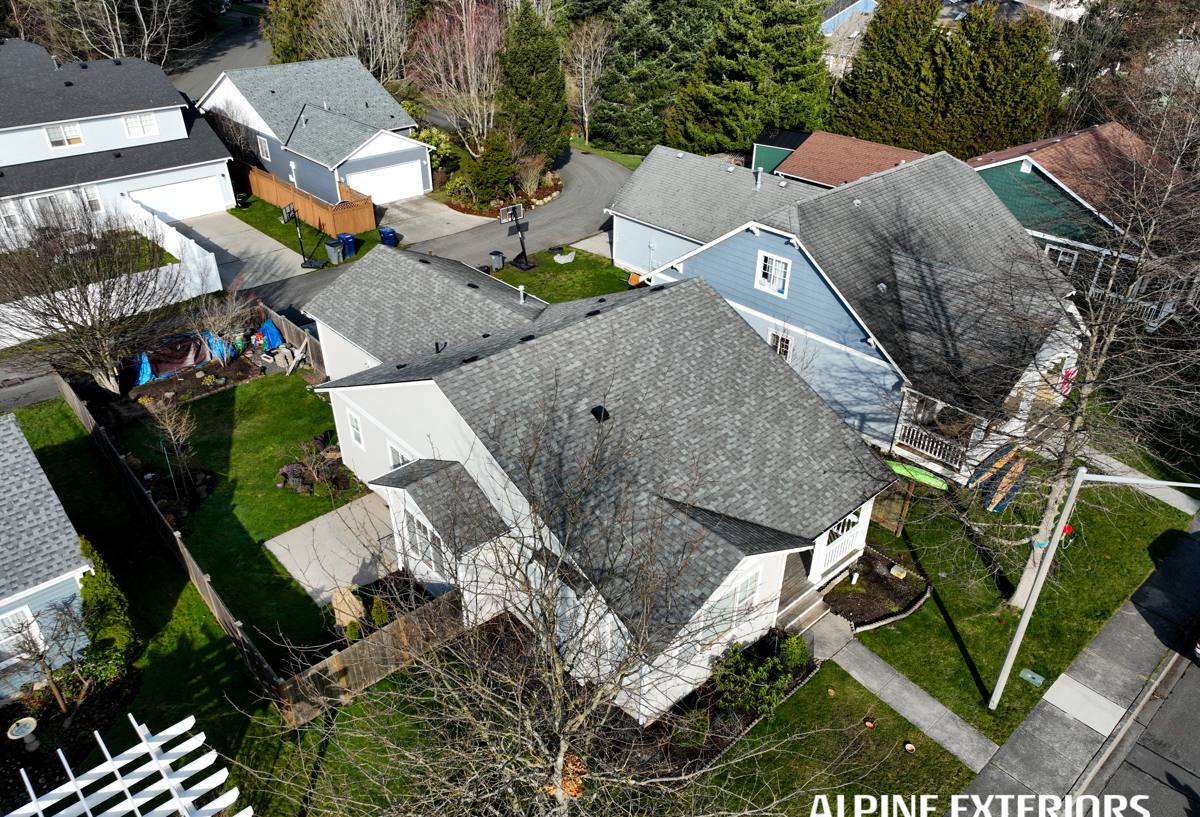
What Counts as Storm Damage (and What Doesn't)
Not every roof problem that shows up after a storm was caused by the storm. Part of an honest inspection is telling you which is which, since that distinction matters for both the repair plan and any insurance claim.
Wind-Related Damage
Lifted, cracked, or missing shingles along ridges and exposed edges are the most common storm call we get. Wind doesn't have to be extreme to do this — a roof with aging shingles, worn sealant strips, or nails that backed out over time can lose material in a moderate gust that a newer or better-maintained roof would shrug off.
Water Intrusion and Moss-Related Failure
Long stretches of wet weather push water into places it shouldn't reach — under flashing at chimneys and valleys, around vent boots, and through gaps where moss has lifted shingle edges over time. This kind of damage often gets misdiagnosed as storm damage when really the storm just finished off a spot that moss and standing moisture had been undermining for a season or two.
Impact Damage from Trees and Debris
Falling limbs and windblown debris cause the most obvious damage — punctures, cracked shingles, dented flashing, and sometimes structural decking damage if a branch is heavy enough. This category is usually the easiest to document and the most straightforward to repair, provided the underlying deck wasn't compromised.
Our Inspection and Repair Process
We approach every storm call the same way, whether it's a single missing shingle or a section of roof torn open by a fallen limb.
- Initial assessment — we inspect the damaged area and the roof as a whole, not just the spot you called about, since storms tend to expose more than one weak point at a time.
- Documentation — photos and notes on the damage, useful whether or not you plan to file an insurance claim.
- Temporary protection — if there's an active leak or open section, we get it weatherproofed before we leave, so the interior of your home isn't at risk while a full repair is scheduled.
- Repair plan and honest estimate — a clear scope of work with straightforward pricing, including what's a true storm repair versus what's pre-existing wear we noticed along the way.
- The repair itself — matched materials where possible, proper flashing and underlayment detail work, and a cleanup that leaves your property the way we found it.
Repair or Replace? How We Make That Call
Storm damage doesn't automatically mean a full re-roof, and it doesn't automatically mean a quick patch will hold either. The right call depends on a few honest factors.
| Factor | Favors Repair | Favors Replacement |
|---|---|---|
| Age of existing roof | Under 10-12 years | Nearing or past expected service life |
| Extent of damage | Localized to one slope or section | Spread across multiple areas |
| Underlying deck condition | Solid, dry sheathing | Soft spots or rot found during inspection |
| Moss and moisture history | Isolated, recently treated | Long-term, widespread growth undermining shingles |
| Material availability | Shingle line still in production, close match possible | Discontinued product, visible mismatch likely |
We'll walk you through where your roof falls on that table before we recommend either path — not before we've actually inspected it.
Materials and Methods We Use for Storm Repairs
Flashing and Underlayment Detail
A lot of storm leaks trace back to flashing, not shingles — around chimneys, skylights, and valleys where water concentrates. When we open up a repair area, we replace compromised flashing and use synthetic or self-adhered underlayment in high-exposure spots rather than relying on shingles alone to keep water out. It costs a little more in labor and material up front, but it's the difference between a repair that lasts and one that reopens with the next hard rain.
Moss Prevention as Part of the Repair
If moss contributed to the failure, we address it as part of the job rather than handing you a repaired roof that will have the same problem again in a year or two. That can mean careful cleaning, improving airflow where the roof design allows it, or installing zinc or copper control strips near ridgelines, which use rainwater runoff to discourage regrowth over time. We treat this as ongoing maintenance, not a one-time fix — moss is a climate reality here, not something you eliminate permanently.
Working With Your Insurance Company
Many storm repairs in this area go through homeowners insurance, and we treat the documentation piece of our process as part of that support — clear photos, a written damage assessment, and a scope of work an adjuster can follow. We won't tell you what your policy covers or promise a claim outcome, since that's between you and your insurer, but we will give you an honest, well-documented assessment of what happened to your roof and what it will take to fix it correctly.
Timing: Storm Season and Moss Season in King County
Western Washington's wind and rain events cluster heavily from October through February, which is also when moss growth is most active thanks to cool, wet, shaded conditions. That overlap means the roofs we see fail during a storm are often the same ones that went into fall already carrying moss damage nobody addressed over the summer. Scheduling an inspection before the wet season, or right after the first significant storm, catches problems while they're still a repair rather than a replacement.
What to Do in the First 48 Hours After Storm Damage
If you've just been through a windstorm or a heavy rain event and you suspect roof damage, a few practical steps make the difference between a straightforward repair and a bigger interior problem.
- Check attic spaces and ceilings for new water stains, damp insulation, or drips — these show up faster than obvious exterior damage.
- Look at gutters and downspouts from the ground for granules, torn shingle pieces, or debris buildup that could be backing up water.
- Avoid getting on the roof yourself, especially on wet or steep sections — most of what you need to see is visible from the ground or an attic.
- Photograph any visible damage from a safe vantage point in case you need it for an insurance claim later.
- Get a professional inspection scheduled promptly — a small opening left exposed through another rain event turns into a much larger repair.
Why It Matters to Hire a Crew That Already Works in Magnolia
Roofing crews that don't regularly work this part of Seattle sometimes underestimate what the peninsula's wind exposure and tree cover actually do to a roof over time, or they miss how steep driveways and limited street access here affect equipment staging and safe cleanup. We factor those realities into scheduling and the job itself, because we've done this work throughout Magnolia and the surrounding Seattle neighborhoods, not as a one-off trip. That familiarity also means we're not guessing at what King County permitting or code requirements apply to a given repair — we handle that as a normal part of the job, not an afterthought.
If you're dealing with storm damage on your Magnolia roof, we're happy to take a look and give you a straight answer about what happened and what it will take to fix it. Request a free, no-pressure estimate using the form below and we'll get an inspection on the calendar.