 Seattle Exterior
 Why Redmond Roofs Wear Out Faster Than the Warranty Says
Most asphalt shingle roofs are rated for 25 to 30 years on paper. In Redmond, that number is optimistic if the roof wasn't built for our specific conditions. King County's mix of prolonged wet seasons, shaded lots, and moss-friendly humidity shortens the practical life of a roof that was installed to a generic spec rather than a Pacific Northwest one. We see roofs failing at 15 to 18 years regularly, and almost always for the same reasons: poor ventilation trapping moisture in the attic, underlayment that wasn't rated for our rainfall volume, or a shingle line that was never designed to resist moss and algae growth.
A new roof installation is one of the few home projects where doing it right the first time is dramatically cheaper than doing it twice. This page covers what a correctly installed roof looks like for a Redmond home, what our process involves, and what to check for when you're comparing contractors.
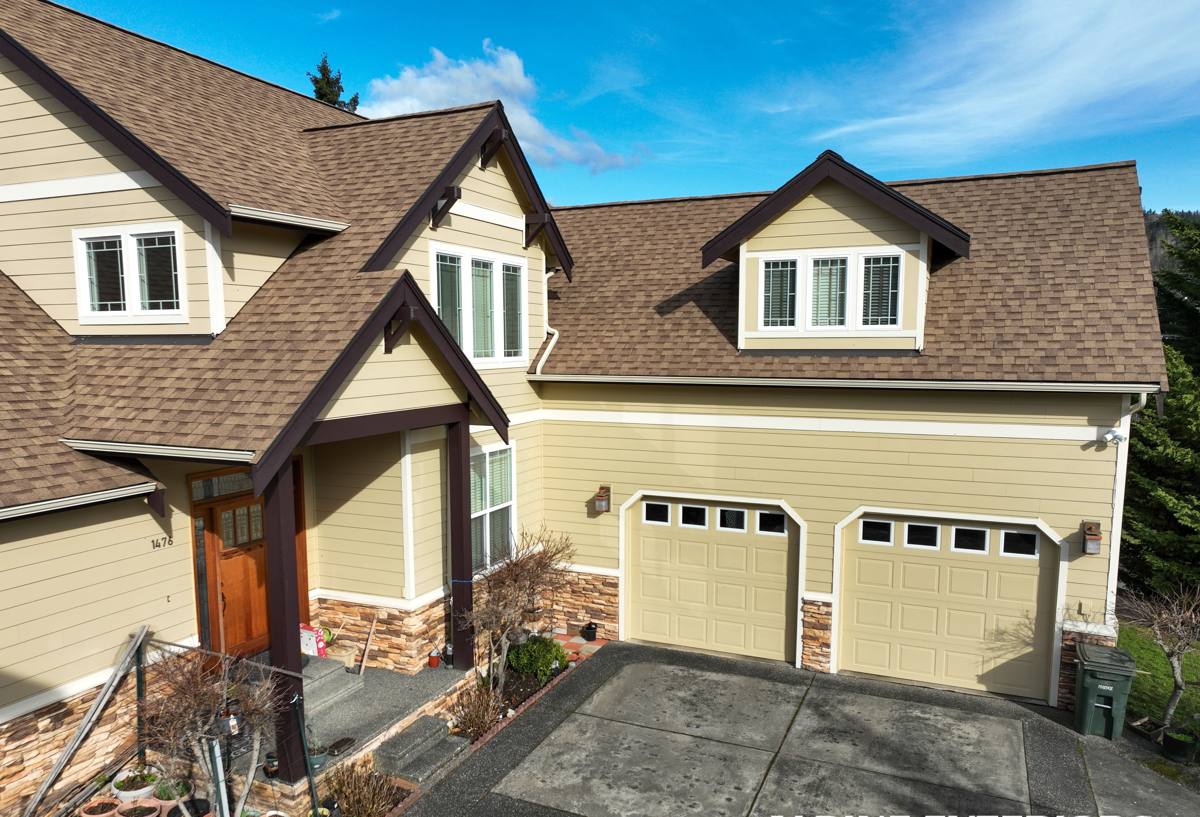
What Redmond's Climate Actually Does to a Roof
Redmond sits inland from Puget Sound, which softens some of the direct salt air exposure that coastal Seattle neighborhoods deal with, but the region still gets the same driving rain, long wet winters, and heavy tree cover that define Western Washington roofing conditions. Three factors matter most for a new roof here:
Moss and Algae Season Is Long
Redmond's tree canopy and shaded, moisture-retaining lots create ideal conditions for moss and algae to establish on roofing. Once moss takes hold, it lifts shingle edges, holds water against the roof deck, and accelerates granule loss. A new roof should go on with moss resistance built in from the start rather than treated as an afterthought.
Driving Rain Finds Weak Points
Wind-driven rain during Pacific storms doesn't just fall straight down — it gets pushed sideways and upward under shingle edges, around flashing, and into valleys. Underlayment and flashing details that would be adequate in a drier climate aren't sufficient here. This is where a large share of Redmond's roof leaks originate.
Humidity and Trapped Attic Moisture
Our region's damp air means attic ventilation isn't optional. Poorly ventilated attics trap warm, moist air against the underside of the roof deck, which contributes to premature deck rot, mold, and reduced shingle lifespan from the inside out — a problem that shows up years before it's visible from the street.
What a Correct Roof Installation Involves
A new roof isn't just laying new shingles over the old ones — that's a shortcut, and in most cases it's a bad one for this climate because it traps moisture between layers and hides the condition of the deck underneath. A proper installation follows a specific sequence:
- Full tear-off — removing all existing roofing material down to the deck, so nothing is hidden and every layer that follows is installed on a clean, inspected surface.
- Deck inspection and repair — checking the plywood or OSB sheathing for soft spots, rot, or delamination from long-term moisture exposure, and replacing any damaged sections before anything new goes down.
- Ice and water shield in vulnerable areas — self-adhering waterproof membrane at eaves, valleys, and penetrations, which matters more in our region than in drier climates because of how much wind-driven rain we get.
- Synthetic underlayment across the field — a water-resistant barrier rated for our climate, not the minimum builder-grade felt.
- Proper flashing at every transition — chimneys, skylights, walls, and vents are where the vast majority of leaks start, so flashing quality here matters more than shingle brand.
- Balanced intake and exhaust ventilation — matching soffit intake vents with ridge or roof-line exhaust so the attic can actually breathe, not just adding vents wherever is convenient.
- Shingle installation to manufacturer spec — correct nail placement, exposure, and pattern, since under-nailed shingles are a leading cause of early wind damage in our storms.
Choosing Roofing Materials for a Redmond Home
Most Redmond homes are well-served by a quality architectural (dimensional) asphalt shingle with algae-resistant granules, but the right choice depends on your home's exposure, roof pitch, and how long you plan to stay in the house. Here's how the common options compare for our specific climate:
| Material | Typical Lifespan Here | Moss/Algae Resistance | Best Fit |
|---|---|---|---|
| 3-tab asphalt shingle | 15-20 years | Low unless treated | Budget-conscious, shorter-hold properties |
| Architectural asphalt shingle | 25-30 years | Good with algae-resistant (AR) granules | Most Redmond homes — best value-to-performance ratio |
| Metal roofing | 40-50+ years | Excellent — sheds moss with proper slope | Steeper roofs, long-term owners, heavy tree cover |
| Cedar shake | 20-30 years with upkeep | Requires regular treatment | Owners committed to ongoing maintenance |
We steer most clients toward algae-resistant architectural shingles because they hold up well against our moss season without the higher upfront cost of metal, and they don't carry the maintenance schedule that cedar shake demands. That said, homes with heavy tree cover or steep, hard-to-access rooflines sometimes make metal the more practical long-term choice — we'll walk you through the honest trade-offs for your specific roof rather than pushing one product.
Ventilation: The Detail Most Roofs in This Area Get Wrong
If we had to name the single most common defect we find on Redmond roofs during tear-off, it's inadequate or mismatched ventilation. A roof needs a continuous path for air to move from the soffits (intake) up through the attic and out at the ridge or through roof vents (exhaust). When intake and exhaust aren't balanced, moist air stalls in the attic instead of escaping, and that moisture works against the roof deck and insulation from below — invisible until it shows up as a soft spot, a mold smell, or a much shorter shingle life than expected.
We calculate ventilation needs based on your attic's square footage during every new roof install, not just add a vent or two and move on.
Our Process for Redmond Roof Replacements
1. On-Site Assessment
We inspect the current roof, attic ventilation, and deck condition in person before quoting anything. This tells us what we're actually dealing with rather than estimating from the ground.
2. Clear, Itemized Estimate
You'll get a written scope covering tear-off, deck repair allowances, underlayment, flashing, ventilation, and material costs — no vague lump-sum pricing that hides what you're paying for.
3. Scheduling Around Our Wet Season
Roofing can be done most of the year here, but we plan installs with an eye on the forecast and sequence the work so your home isn't left exposed to open decking overnight.
4. Tear-Off and Installation
Full removal, deck inspection, and installation following manufacturer specifications — with daily site cleanup, since nails and debris left behind are a real hazard for kids, pets, and vehicle tires.
5. Final Walkthrough
We walk the completed roof and attic ventilation with you before calling the job done, so you know exactly what was installed and why.
What to Ask Before Hiring Any Redmond Roofing Contractor
A new roof is a major investment, and the roofing trade unfortunately has more than its share of storm-chasers and underinsured crews. Before you sign anything, use this checklist:
- Are they licensed and bonded to do roofing work in Washington State, and can they show current proof?
- Do they carry general liability and workers' comp insurance — not just liability?
- Will they put the full scope of work in writing, including underlayment type, ventilation plan, and flashing details — not just "reroof, X square"?
- Do they perform a full tear-off, or do they offer to layer over existing shingles?
- Do they routinely work in King County and understand our specific moisture and moss conditions?
- What's the manufacturer's warranty, and are they a certified installer for that warranty to be valid?
- Will they inspect and photograph the deck condition before covering it back up?
A crew that already works Redmond and the greater Eastside knows the difference between a roof detail that's adequate somewhere drier and one that's actually built for our rain and moss. That local familiarity shows up in fewer callbacks and fewer surprises during tear-off.
Signs Your Redmond Home Needs a New Roof Now
Some damage is repairable; some means it's time to replace. Common signs it's the latter:
- Granules collecting in gutters or at downspout outlets in noticeable amounts
- Shingles that are curling, cupping, or cracking across large sections of the roof
- Moss or algae that returns quickly even after cleaning
- Daylight visible through the attic roof deck
- Multiple past repairs in different areas rather than one isolated issue
- A roof approaching or past 20-25 years old with no major upgrades
If you're weighing a repair against a full replacement, or just want an honest read on where your roof actually stands, we're happy to take a look. We offer free, no-pressure estimates for Redmond homeowners — use the form below to get started.