 Seattle Exterior
 Building a Deck on Queen Anne Isn't the Same as Building One Anywhere Else in Seattle
Queen Anne sits up on a hill, and that elevation cuts both ways. It's part of what makes the neighborhood desirable — the views, the light, the separation from the flatter, denser parts of the city — but it also means homes up here take more weather than homes tucked into a sheltered valley or a tree-covered lot. Wind off Puget Sound moves across the hill with less to slow it down. Salt air carries further inland than most homeowners realize. And the moss that Seattle is famous for gets a longer growing season on decks that stay shaded, damp, or both for much of the year.
None of that means a deck can't hold up here. It means the deck has to be built with those conditions in mind from the start, not treated as an afterthought once the framing is up. A deck built the same way you'd build one in a dry, sheltered suburb will show problems on Queen Anne years before it should — soft spots at the ledger, corroded fasteners, slick decking, rot at the post bases. We build differently for this hill because the hill treats a deck differently than flatter parts of King County do.
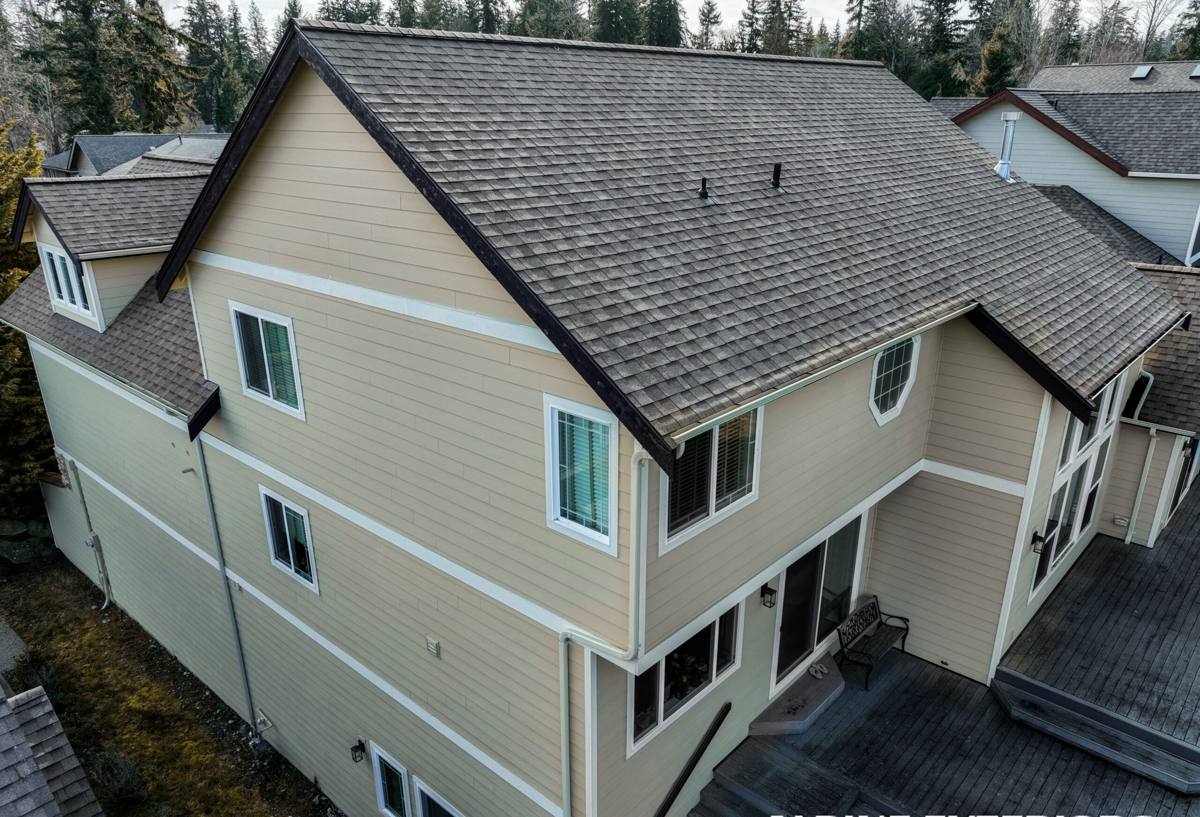
What a Correct Deck Build Looks Like Up Here
A deck is a simple-looking structure that fails in predictable, preventable places. On Queen Anne, the places that matter most are the ones exposed to wind-driven rain and the ones that stay damp longest after a storm.
Framing and Fasteners That Don't Corrode
Salt-laden air accelerates corrosion in fasteners, hangers, and hardware that would otherwise last decades. We frame with corrosion-resistant hardware rated for the exposure — not just because code in wet coastal climates expects it, but because a joist hanger that rusts through is a structural problem, not a cosmetic one. This matters more on Queen Anne than it does further inland, and it's one of the first things we check when we're asked to look at an older deck that's showing its age.
Drainage and Flashing Details That Actually Matter
Most deck failures don't start with the decking boards — they start at the ledger board, where the deck attaches to the house, or at post bases where wood sits close to grade. Water gets behind flashing that was never properly lapped, or it pools where a post base wasn't set to shed water, and rot builds quietly underneath for years before anyone sees it from the surface. With Seattle's driving rain coming at odd angles off the hill, flashing details that would get away with being "good enough" in a drier climate don't hold up the same way here. We flash ledgers properly, slope surfaces to drain away from the house, and keep structural wood off grade and out of standing water.
Choosing a Decking Material for Queen Anne's Conditions
There's no single right answer for every homeowner — budget, maintenance tolerance, and how the deck will actually be used all factor in. What we won't do is recommend a product without being upfront about its trade-offs in this specific climate.
| Material | How It Handles Moss and Damp | Maintenance | Typical Lifespan Here |
|---|---|---|---|
| Pressure-treated wood | Absorbs moisture; needs sealing to resist staining and moss growth | Annual cleaning and periodic sealing | 15-20 years with upkeep |
| Cedar | Naturally rot-resistant but still surface-stains and holds moss without care | Regular cleaning, occasional sealing | 15-25 years with upkeep |
| Capped composite | Doesn't absorb water like wood; still needs periodic washing where moss and algae collect in shaded spots | Low — occasional washing | 25-30+ years |
| PVC decking | Fully synthetic, sheds moisture well, resists moss better than wood | Low | 25-30+ years |
We install a range of these depending on what fits your home and budget. Wood decking has real advantages — cost and a look that suits older, more traditional homes — but it demands more of the homeowner in a climate where things stay damp for months at a time. Composite and PVC cost more upfront but ask less of you afterward, which is worth factoring in honestly rather than treating one option as automatically "better." The right call depends on how much maintenance you actually want to keep up with, year after year, on a hill that doesn't dry out fast.
Structural Considerations for Queen Anne's Slopes and Older Housing Stock
Elevated Decks and Guardrails
A lot of lots on Queen Anne aren't flat, and a lot of the views that make this neighborhood worth having a deck for come from being up high — sometimes well above grade. Elevated decks carry different structural requirements than a low deck a foot off the ground: footing depth and sizing, post bracing, and guardrail height and spacing all get more scrutiny, and rightly so. We design and build to hold up on a slope, not just on paper.
Working With Older Framing
Queen Anne has a lot of older homes, and when a deck ties into an older house, the existing framing, siding, and rim joist condition all affect how — and whether — a new ledger attachment can be done correctly. Sometimes that means additional work at the attachment point before the deck itself even starts. We'd rather tell you that upfront than attach a new deck to framing that can't support it properly.
Permits and Inspections
Most new deck construction and many deck replacements in Seattle require a permit, and elevated or larger structures typically need an inspection at key stages — framing and final, at minimum. We handle the permit process as part of the job rather than leaving it on the homeowner's plate, and we build to pass inspection the first time rather than treating the inspector as an obstacle. Requirements vary by the specifics of the project and the property, so exact permit needs get confirmed once we've looked at your site and plans.
How the Process Works
- Site visit and assessment. We look at the site, the slope, sun and shade exposure, and how the deck ties into the house.
- Design and material discussion. We talk through layout, size, decking material, and railing options based on your budget and how you'll use the space.
- Written estimate. A clear scope and price, with material trade-offs explained rather than glossed over.
- Permitting. We prepare and submit what's required and coordinate inspections.
- Construction. Framing, flashing, and structural work first — the parts that don't show but matter most — followed by decking, railing, and finish work.
- Final walkthrough. We go over the finished deck with you and the maintenance it needs to hold up in this climate.
Living With a Deck Through a Long Moss Season
Even a well-built deck needs some ongoing attention on Queen Anne. Moss doesn't mean something was done wrong — it means the deck is outside, in Seattle, through a wet season that runs longer than most parts of the country deal with. What matters is staying ahead of it rather than letting it sit.
- Sweep leaves and debris off the deck regularly, especially from between boards and against the house
- Clean moss and algae off the surface at least once a year, more often in shaded or north-facing areas
- Keep gutters and downspouts near the deck clear so runoff isn't dumping onto or under it
- Check that drainage gaps between boards stay clear and aren't packed with debris
- Reseal wood decking on the schedule appropriate to the product — don't wait until it's visibly gray or worn
- Walk the deck once a year looking (and feeling) for soft spots, loose fasteners, or movement at the railing
Why It's Worth Hiring a Crew That Already Works This Neighborhood
A contractor who's worked on Queen Anne before has already seen how the hill's wind exposure, the salt air off the Sound, and the long damp season play out on real decks over real years — not just in a spec sheet. That experience shows up in small decisions: how flashing gets lapped, what hardware gets specified, how a footing gets sized for a sloped lot, how a ledger attachment gets handled on an older house. Those are the details that decide whether a deck is still solid in fifteen years or starting to show problems in five.
It also matters for permitting and inspection — knowing what Seattle and King County actually expect for a given lot and structure means fewer surprises and fewer delays once the project is underway.
If you're planning a new deck or replacing one that's past its prime, we're happy to come take a look and talk through what makes sense for your home. The estimate is free, there's no pressure, and you'll get a straight answer about what your project actually needs.