 Seattle Exterior
 Building Decks for Queen Anne's Hills, Views, and Weather
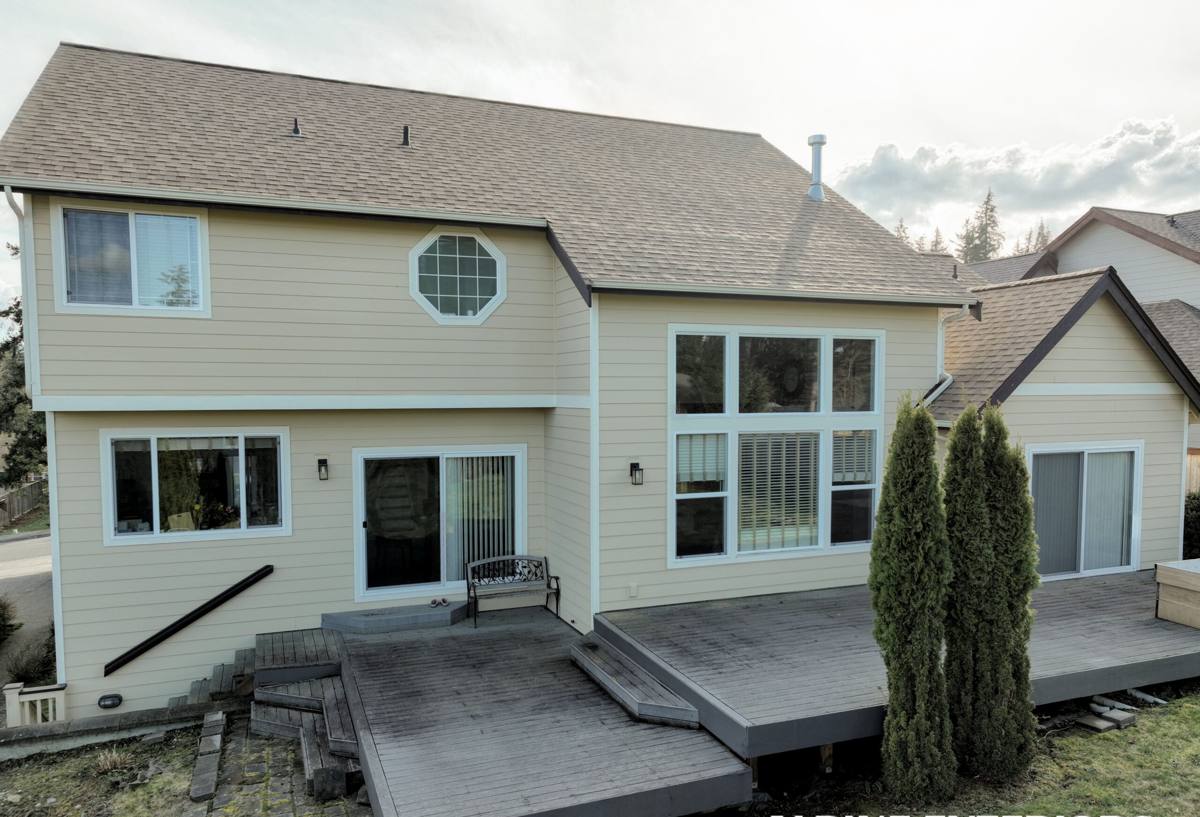
Queen Anne sits on one of Seattle's steepest and most exposed hills, and that shapes almost every deck we build there. Lots slope sharply, many homes are older craftsman or Victorian-era construction with additions bolted on over the decades, and the payoff for dealing with the grade is often a real view toward Elliott Bay or Puget Sound. A deck built for this neighborhood has to do two jobs at once: hold up on a steep, often shaded lot, and survive a marine climate that never really dries out for long. Get either one wrong and you end up with a deck that looks fine for a season or two and then starts telling on itself with soft boards, rust streaks, or a slick green film underfoot.
The Regional Climate Factors That Shape the Build
Seattle's exterior work has to answer to King County's marine weather, and Queen Anne gets it from more than one direction. The hill catches wind and driving rain off the Sound, which pushes moisture into places a flatter, more sheltered lot wouldn't see it — under railings, into ledger connections, along end grain. Add in the mature tree canopy common in the neighborhood's older residential blocks, and you get shade that keeps wood surfaces damp long after a storm has passed. That combination is exactly what feeds moss and algae growth, and in this part of the country the growing season for both is long — realistically most of the year, not just a few soggy months.
None of this is unique to any one street or block in Queen Anne, but it's consistent enough across the neighborhood that we plan for it by default rather than treating it as a surprise.
What This Means in Practice
- Fasteners and structural hardware need real corrosion resistance, not just a coated finish, given the salt-laden air off the water
- Decking material choice matters more here than in a drier inland climate
- Drainage and airflow underneath the deck are structural priorities, not finishing details
- Anything installed tight to grade or shaded by trees needs a plan for moss control from day one
What a Correctly Built Deck Involves Here
A deck is a structure first and a surface second. On Queen Anne's terrain, the structure has to account for slope, soil, and moisture movement before anyone picks a decking color.
Footings and Framing on Sloped Lots
Steep or uneven lots often mean taller posts, deeper or stepped footings, and sometimes engineered connections where a standard framing table doesn't cover the span or height involved. We size footings to the actual soil and grade conditions on site rather than defaulting to the minimum, and we keep post height and bracing in mind from the design stage — a deck standing eight or ten feet off a sloped grade needs different lateral bracing than one sitting a foot off flat ground.
Ledger Attachment and Flashing
Where a deck attaches to the house is the single most common failure point we see on older homes in wet climates, and it's almost always a flashing problem rather than a fastener problem. Water works its way behind an improperly flashed ledger board and rots the rim joist or sheathing from the inside, often for years before anyone notices. Correct flashing — installed in the right order relative to the house's existing weather barrier — is non-negotiable on every ledger-attached deck we build.
Drainage and Under-Deck Airflow
Decks built low to grade or in shaded yards need a real path for water to move away from framing and for air to circulate underneath. Skipping this is how you end up with a deck that looks dry on top but is holding moisture against the joists year-round.
Choosing Decking Material for This Climate
There's no single right answer for every home, but the trade-offs are consistent enough to lay out honestly.
| Material | How It Handles Moisture & Moss | Maintenance Burden | Typical Lifespan |
|---|---|---|---|
| Pressure-treated wood | Absorbs moisture readily; needs sealing to resist staining and softening | Annual cleaning and periodic re-sealing | 10–15 years with upkeep |
| Cedar | Naturally more rot-resistant than most softwoods, but still porous | Regular cleaning and refinishing to hold color and resist moss | 15–20 years with upkeep |
| Composite (capped) | Sheds moisture well; textured surfaces still need periodic washing to prevent surface algae | Occasional washing, no sealing or staining | 25+ years |
| PVC decking | Fully moisture-resistant, does not absorb water or feed rot | Lowest of the group; periodic washing only | 25+ years |
We don't push any one product on every job. Solid wood can be the right call on a period home where the look matters, as long as the owner understands the sealing schedule it requires. Where low maintenance and long-term moss resistance matter more, capped composite or PVC decking earns its higher upfront cost over the life of the deck. What we won't do is install a product in a situation where it's a poor structural or moisture fit just because it's cheaper up front — that's a decision we'll walk through honestly with you rather than sell around.
How Our Process Works
1. On-Site Assessment
We walk the lot, check grade and drainage, look at how the house's existing structure and siding meet the proposed deck location, and talk through how the space will actually be used — entertaining, grilling, a quiet spot to sit, a connection point to a lower yard.
2. Design and Material Selection
We size the structure to the site conditions, not a generic template, and go over decking, railing, and hardware options with the trade-offs laid out plainly — cost, maintenance, and how each option holds up to the specific exposure of your yard.
3. Permitting
Most decks above a certain height or attached to the primary structure require a permit through the City of Seattle. We handle that process rather than leaving it to the homeowner, and we build to the code requirements it carries — guardrail height, baluster spacing, footing depth, and structural connections all get inspected for a reason.
4. Construction
Framing, flashing, and structural connections get done first and get done right, since they're the parts that are hard to fix once decking is installed over them. Decking, railings, and finish work follow.
5. Final Walkthrough
We go over the finished deck with you, including what maintenance it needs and on what schedule, so there are no surprises six months in.
Slope, Grade, and Code Considerations Specific to This Terrain
Hillside lots common to Queen Anne raise structural questions that flatter neighborhoods don't. Guardrail requirements get stricter as deck height above grade increases. Footing depth and post bracing need to account for slope stability, not just vertical load. Where a deck steps down a hillside or connects to a lower patio, transitions and stair runs need to meet code for rise, run, and handrail requirements. These aren't places to cut corners — they're inspected items, and more importantly they're safety items on a structure that may sit well above grade.
Keeping Moss and Moisture From Winning Long-Term
Even a well-built deck needs some ongoing attention in a climate this wet. The goal isn't a spotless deck every week — it's staying ahead of the moisture and organic growth that cause real damage if ignored for a year or two.
- Clear leaves and debris from decking and drainage gaps regularly, especially under tree cover
- Wash surfaces at least once or twice a year to remove algae and moss film before it embeds in the surface
- Check railings, stairs, and ledger flashing annually for early signs of moisture intrusion
- Reseal or restain wood decking on the schedule appropriate to the product — don't wait for visible graying
- Keep gutters and downspouts near the deck clear so runoff isn't dumping directly onto or under the structure
- Trim back overhanging branches where practical to reduce shade and debris load
Why a Crew That Already Works in Queen Anne Matters
A contractor who builds decks across a range of Seattle neighborhoods but doesn't regularly work this specific terrain can still build a structurally sound deck — but they're more likely to underestimate what the hill, the shade, and the marine air will do to it over time. Knowing how footings behave in this soil, how much bracing a tall hillside post actually needs, and how aggressively moss takes hold in a shaded King County yard isn't something you get from a textbook span table. It comes from having done the work here, dealt with the inspections here, and seen what holds up and what doesn't after a few Pacific Northwest winters.
If you're planning a new deck or replacing one that's showing its age, we're happy to come take a look and give you a straightforward, no-pressure estimate. There's a form below to get started whenever you're ready.