 Seattle Exterior
 Why Queen Anne Roofs Wear Differently Than Roofs Elsewhere in Seattle
Queen Anne sits on one of the highest points in the city, with long views toward Puget Sound and Elliott Bay from the upper slopes. That elevation and exposure is part of what makes the neighborhood desirable, but it's also why roofs up here take a different kind of beating than roofs in more sheltered parts of King County. Homes on the hill catch more direct wind, more driving rain during winter storms, and more salt-laden air off the water than homes tucked into low-lying, tree-shielded lots. None of that means a roof up here is doomed to fail early — it just means the replacement needs to account for conditions a generic roofing job might not plan for.
We work on roofs across Seattle, but a Queen Anne roof replacement is not identical to one in a valley neighborhood a few miles away. The wind loading on exposed slopes, the corrosion risk from salt air, and the age and construction style of the housing stock all change what "doing it right" looks like.
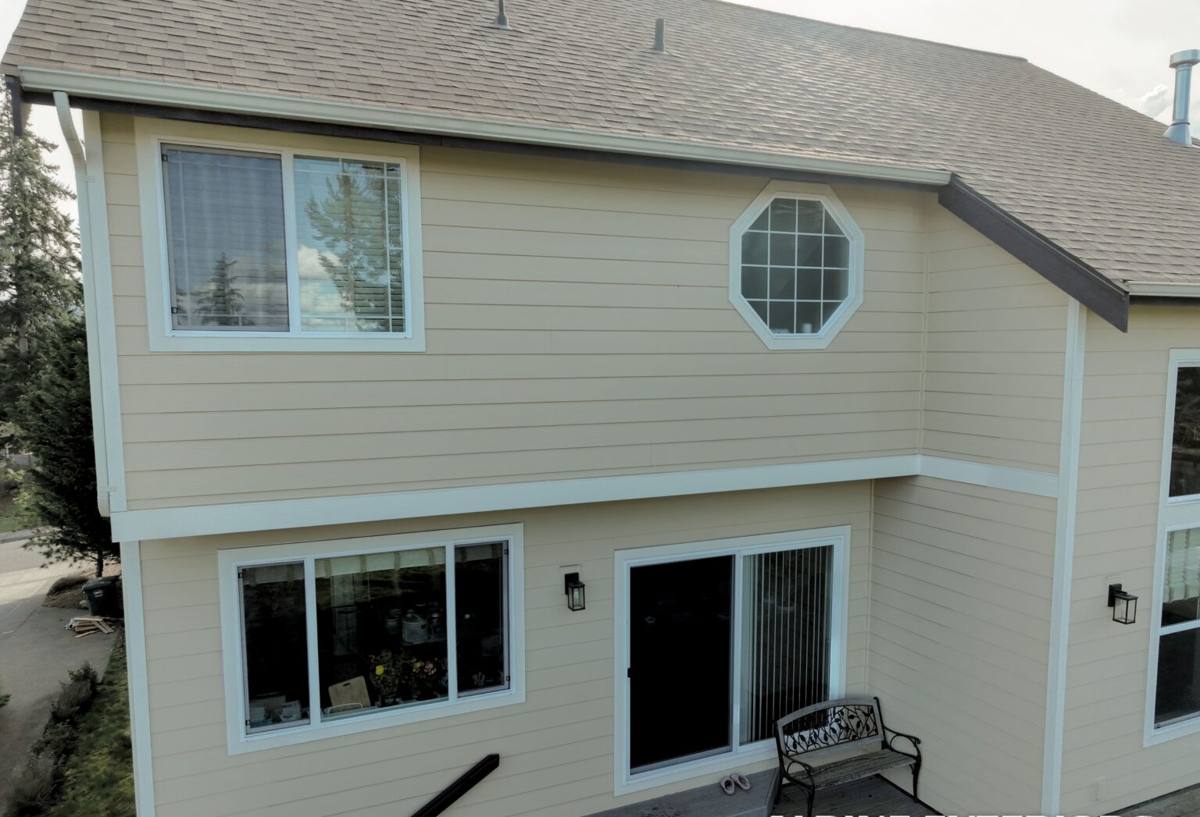
Salt Air and Wind: The Hill's Real Enemies
Proximity to Puget Sound means airborne salt settles on roofing metal over time — flashing, fasteners, gutter hardware, vent caps. Standard galvanized fasteners and lower-grade flashing can start corroding years before they would in a drier, inland part of the county. It's a slow process, so it's easy to miss until a leak shows up at a flashing seam that looks fine from the ground.
Wind is the other factor. Upper Queen Anne in particular gets more sustained gusts than sheltered blocks lower on the hill, and that matters for two reasons: it stresses shingle edges and ridge lines that aren't properly sealed, and it drives rain sideways into laps and flashing details that a calmer climate would never test. A roof replacement here should use fastening patterns and edge details rated for the exposure the specific lot actually gets, not just the manufacturer's minimum spec.
What this means in practice
- Corrosion-resistant flashing and fasteners, especially on homes with a clearer line of sight to the water
- Proper nailing patterns and sealed ridge/hip details for wind exposure, not just base-level installation
- Extra attention to any flashing that's original to the house, since older metal is often the first thing to fail
Moss, Shade, and Queen Anne's Long Wet Season
Seattle's climate already runs damp for much of the year, and Queen Anne's mature street trees and established landscaping add shade that keeps north-facing slopes and valleys between roof planes wet longer after every rain. That's exactly the environment moss needs. Moss doesn't just look bad — it holds moisture against the roofing material, lifts shingle edges as it grows, and traps debris that keeps drainage paths wet even longer. On an older roof, a heavy moss season can shave real years off the remaining service life.
When we replace a roof here, we look at the whole moss picture, not just the shingles: gutter and downspout condition, any overhanging limbs that keep a section shaded and wet, and whether the roof's ventilation is helping the deck dry out between storms or working against it. A new roof on a lot with heavy shade and poor airflow will grow moss again quickly unless those underlying conditions are addressed at the same time.
Queen Anne's Housing Stock Changes the Job
A lot of Queen Anne housing dates back to the early-to-mid 1900s — craftsman bungalows, Tudor revivals, and older single-family homes with steeper, more cut-up roof lines than a typical newer build. That matters for a replacement in a few concrete ways:
- Original decking: Many older homes have skip sheathing (spaced boards) rather than solid plywood or OSB decking. A correct replacement identifies this early and plans for adding solid decking where code and performance require it, rather than discovering it mid-tear-off.
- Complex rooflines: Dormers, multiple gables, and tighter valleys mean more linear feet of flashing per square of roof than a simple gable roof — and more places for a rushed installation to leak.
- Architectural character: Homeowners on the hill often want a replacement that respects the look of the house, which affects material choice as much as budget does.
What a Correct Roof Replacement Actually Involves
"Replacement" should mean the whole system, not just new shingles laid over old problems. A job worth paying for includes:
- Full tear-off down to the decking, so hidden rot, old flashing, and deck condition can actually be inspected instead of covered up.
- Deck repair or upgrade where boards are soft, spaced too far apart, or otherwise not able to properly hold fasteners.
- New underlayment rated for our climate, with ice-and-water membrane at eaves, valleys, and other vulnerable transitions.
- New flashing at every wall intersection, chimney, skylight, and valley — not a reuse of old metal to save time.
- Balanced ventilation so intake and exhaust airflow actually move moisture out of the attic, which protects both the new roof and the decking underneath it.
- Correct fastening and edge details matched to the home's specific wind and rain exposure.
Skipping any one of these doesn't save the homeowner money — it just moves the cost of the shortcut a few years down the road, usually as an interior leak repair.
Choosing a Roofing Material for a Queen Anne Home
There's no single "best" material — the right choice depends on the home's style, the budget, and how much long-term maintenance the owner wants to take on. Here's how the common options compare for this specific setting:
| Material | How it handles salt air & wind | Moss resistance | Maintenance |
|---|---|---|---|
| Architectural asphalt shingle | Good, with corrosion-resistant fasteners and proper edge sealing | Moderate — benefits from periodic cleaning in shaded lots | Low to moderate |
| Synthetic/composite shake | Good; more dimensionally stable than wood in wind-driven rain | Better than natural wood shake | Low |
| Standing seam metal | Excellent when properly coated and fastened; sheds wind-driven rain well | Very good — moss struggles to get a foothold on smooth metal | Low, but repairs require a specialist |
| Natural cedar shake | Requires diligent maintenance in salt air and wind exposure | Poor without regular treatment and cleaning | High |
We're honest with clients about cedar shake: it can look right on a period home, but in a damp, shaded, salt-exposed setting like much of Queen Anne, it demands a maintenance commitment most homeowners don't want to keep up with year after year. If the goal is a wood-shake appearance without that maintenance burden, a quality synthetic shake product is usually the better long-term trade-off, and we'll walk through that comparison honestly rather than just selling what's easiest to install.
Signs a Queen Anne Roof Needs Replacement, Not Repair
- Granule loss heavy enough that shingles look patchy or bald in sun-exposed areas
- Moss established in valleys or on north-facing slopes that keeps coming back after cleaning
- Soft spots or sagging visible from the ground or attic
- Flashing that's visibly corroded, lifted, or separating at walls and chimneys
- Recurring leaks in the same area despite prior patch repairs
- Shingles curling, cracking, or missing after wind events
- The roof is approaching or past the expected lifespan for its material and installation quality
If a roof only shows one or two of these in isolated spots, a repair may still make sense. When several show up together, or the roof is old enough that repairs are just delaying the inevitable, replacement is usually the more cost-effective path.
Our Process, Start to Finish
We keep the process straightforward because Queen Anne homeowners are usually juggling a busy household and don't need extra complexity added to a roof project:
- On-site inspection of the current roof, attic ventilation, and any visible trouble spots, with photos and a plain-English explanation of what we find.
- Written estimate that spells out material options, scope of work, and timeline — no vague allowances.
- Scheduling around access — hillside lots, narrow driveways, and street parking on Queen Anne all factor into how we stage material delivery and dumpster placement so the job doesn't create a headache for the block.
- Tear-off and deck inspection, with any deck issues reviewed with the homeowner before we cover them back up.
- Installation of underlayment, flashing, ventilation, and the chosen roofing material to manufacturer and code specifications.
- Cleanup and magnetic sweep of the property for debris and stray fasteners.
- Final walkthrough so the homeowner sees the finished work and understands what was done.
Working the Hill: Access and Logistics
Queen Anne's terrain isn't flat, and that changes how a crew stages a roofing job. Steep driveways, limited street parking, and lots with mature landscaping all need to be planned around before the first shingle comes off, not figured out on the fly. A crew that regularly works this neighborhood already has a feel for how to stage a job here without blocking a narrow street or damaging landscaping that's taken decades to establish.
Why Local Experience on This Hill Actually Matters
A roof replacement is the same basic trade skill everywhere, but the details that separate a roof that lasts from one that doesn't are local: knowing which slopes on the hill catch the worst wind-driven rain, knowing how quickly moss comes back on a shaded lot two blocks from the water versus one with full sun exposure, and knowing what Seattle's permitting and inspection process expects for a residential reroof. A crew that already works Queen Anne regularly isn't guessing at any of that — it's routine. That translates into fewer surprises mid-project and a roof system that's actually built for the conditions it will face, not a generic installation dropped onto a specific-condition hill.
If your roof is showing its age, or you just want a straight answer about repair versus replacement, we're happy to take a look. Fill out the form below for a free, no-pressure estimate — we'll walk the roof, explain what we find, and give you honest options for your home and budget.