 Seattle Exterior
 Why Rainier Valley Decks Wear Out Faster Than You'd Expect
Rainier Valley sees the same wet season as the rest of Seattle and King County, but a few local conditions make deck damage show up sooner than homeowners expect. Mature tree cover along many streets keeps decks shaded for long stretches of the day, which slows drying after rain and gives moss and algae a head start. Add in the marine air that moves through the whole Puget Sound region and months of low-intensity but near-constant rainfall, and you get wood and fastener wear that's different from what a deck in a drier climate would experience.
The damage isn't usually dramatic. It's slow: a joist that stays damp two extra days after every storm, a ledger board connection that traps water instead of shedding it, fasteners that corrode quietly under a board where nobody looks. By the time a homeowner notices soft decking or a wobbly rail, the underlying structure has often been absorbing moisture for a season or two already.
The Moss Problem Specifically
Seattle's long moss season (roughly fall through spring, longer in shaded yards) does more than make a deck look neglected. Moss holds moisture directly against wood fibers and fastener heads far longer than bare wood would, which accelerates rot and metal corrosion in exactly the spots where it's hardest to see: under boards, in gaps between decking, and around post bases. A deck that looks "just dirty" on the surface can have real softness underneath once the moss layer is scraped back.
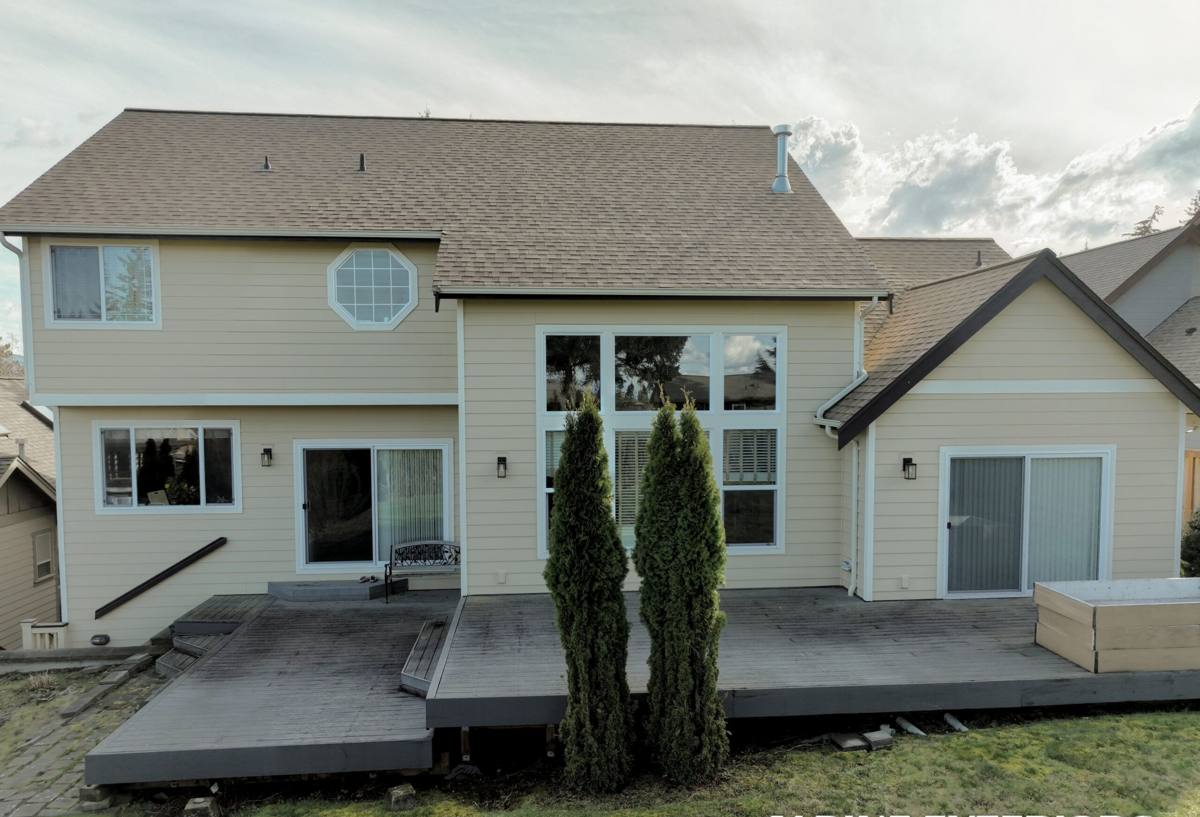
Signs a Rainier Valley Deck Needs Repair
Most repair calls we get fall into a handful of categories. Catching these early is almost always cheaper than waiting.
- Boards that feel spongy, springy, or visibly cupped when you walk across them
- Green or black staining that keeps returning within weeks of cleaning
- A railing or stair stringer that flexes or feels loose under weight
- Gaps opening up around the ledger board where the deck meets the house
- Fasteners with rust bleed staining the wood around the screw or nail head
- Visible daylight or soft spots at post bases or where posts meet footings
- Standing water that doesn't drain within a few hours after rain stops
None of these mean the whole deck is a loss. Most are localized problems that a targeted repair can address, provided the surrounding framing hasn't been compromised for too long.
What a Correct Deck Repair Actually Involves
A repair that just swaps out the board you can see, without checking what's underneath, tends to fail again within a season or two in this climate. A repair worth doing includes checking the structure the surface damage is pointing to.
Structural Inspection First
Before any board comes off, a proper repair starts with checking the framing: joists for soft spots or rot, the ledger board connection to the house (a common trouble spot on older Seattle homes), post bases and footings for movement or moisture damage, and the condition of joist hangers and structural fasteners. Surface rot is often a symptom pointing at a moisture path that needs to be corrected, not just patched over.
Fastener and Hardware Standards
In a climate with this much sustained moisture, hardware choice matters as much as the wood itself. We use fasteners and structural connectors rated for exterior, wet-service use, matched to whatever decking or framing material they're going into. Mixing incompatible metals (certain fastener types against certain treated lumber, for example) accelerates corrosion, so matching hardware to material is a basic standard, not an upsell.
Matching Existing Decking
When only a section of a deck needs new boards, matching the existing material's species, dimension, and finish keeps the repair from looking patched and keeps the deck's moisture behavior consistent across the whole surface. Where an exact match isn't practical (discontinued boards, weathered composite colors, etc.), we'll walk you through the closest realistic option and set expectations honestly before any work starts.
Drainage and Airflow Correction
A repair that doesn't address why water was sitting somewhere in the first place tends to recreate the same failure. That can mean adjusting board spacing slightly, correcting a flashing detail at the ledger, or improving airflow underneath a low-clearance deck so it actually dries out between storms instead of staying damp for days.
Repair or Replace: An Honest Look
Not every deck problem calls for a full rebuild, and not every deck is worth repairing indefinitely either. We'll always give you a straight answer based on what we find, not what's easiest to sell.
| Factor | Repair Usually Makes Sense | Replacement Usually Makes Sense |
|---|---|---|
| Framing condition | Joists and ledger are structurally sound | Widespread rot in joists, ledger, or posts |
| Damage location | Isolated to a few boards or one section | Spread across most of the deck surface |
| Deck age | Under 15-20 years, built to a reasonable standard | Original construction is decades old or undersized for current code |
| Fastener corrosion | Limited to a few visible spots | Widespread rust bleed or hardware failure |
| Footings/posts | Stable, no movement or settling | Shifting, heaving, or undersized footings |
If your deck lands in a mix of both columns, that's normal — it usually means a partial rebuild focused on the compromised sections while keeping the sound framing in place.
How Our Repair Process Works
We keep the process straightforward because homeowners deserve to know what's happening to their home before and while it's happening.
- On-site inspection. We walk the full deck, check framing from underneath where accessible, and probe suspect boards, ledger connections, and post bases.
- Written scope and estimate. You get a clear description of what's damaged, what we recommend, and why — including what happens if a section turns out worse once we open it up.
- Repair work. Damaged material is removed, framing issues are corrected first, then decking, railings, or stairs are rebuilt to match.
- Hardware and fastener check. Every connection point touched during the repair gets appropriate, corrosion-rated hardware.
- Final walkthrough. We show you what was fixed and flag anything worth keeping an eye on going forward.
Decking Materials: What Holds Up in This Climate
When boards need replacing, the material choice affects how the deck performs long-term in Rainier Valley's wet, shaded conditions.
| Material | Moisture Behavior | Maintenance |
|---|---|---|
| Pressure-treated lumber | Resists rot when properly finished; needs consistent sealing to perform well | Annual cleaning and periodic sealant reapplication |
| Cedar | Naturally moisture-resistant, ages gracefully if maintained | Regular cleaning and finish upkeep to prevent graying and moss growth |
| Composite | Doesn't rot, but can trap surface moisture and grow algae/moss if not cleaned | Periodic washing; no sealing needed, but shaded areas still need attention |
There's no single "best" material for every deck — the right call depends on how much sun and airflow the deck gets, your maintenance habits, and budget. We'll give you our honest read rather than pushing whatever's easiest for us to install.
Why Local Experience in Rainier Valley Matters
A crew that works decks across the Seattle area day in and day out knows which failure patterns show up in which conditions — heavily shaded lots versus more open ones, older homes with original ledger connections versus newer construction, decks close to grade versus elevated ones. That familiarity means less guesswork during inspection and a repair plan that's realistic about what this specific climate does to a deck over time, not a generic approach copied from a drier region.
It also means we're not learning King County permitting and inspection expectations on your project. Structural repairs — especially anything touching footings, framing, or a ledger connection — need to be done to code, and knowing the local requirements up front avoids delays.
Simple Maintenance That Extends Repair Life
A repaired deck lasts longest when a few basic habits are kept up between our visits:
- Sweep off leaves and debris regularly, especially in fall
- Clean moss and algae off the surface before it builds a thick layer
- Check that gaps between boards stay clear so water can drain through
- Look underneath periodically for standing water or debris blocking airflow
- Re-seal or re-stain wood decking on the manufacturer's recommended schedule
- Address soft spots or loose railings as soon as you notice them, not next season
If you're noticing any of the warning signs above, or just want an honest read on where your deck stands, we're happy to come take a look. The estimate is free, there's no pressure, and you'll get a straight answer about what your deck actually needs — use the form below to get started.