 Seattle Exterior
 Rainier Valley Windows Have a Harder Job Than People Think
Rainier Valley's housing stock runs the gamut — early 1900s bungalows near Columbia City and Hillman City, mid-century ramblers closer to Rainier Beach, and a growing number of newer infill homes and townhouses squeezed onto smaller lots. What almost all of them share is old or aging window openings that were never designed around today's energy costs, and a climate that doesn't let up. Seattle sits in a marine climate zone where damp air, long stretches of driving rain, and a moss season that can run six months or more put steady pressure on anything with a seal, a frame, or a sill. Add King County's mix of older single-pane construction and later aluminum-frame retrofits from the 1970s and 80s, and you get a lot of houses losing heat and taking on moisture through the same openings.
Energy-efficient window replacement in this neighborhood isn't just about lower utility bills, though that's real. It's about stopping condensation from rotting sills, keeping wind-driven rain from finding its way behind trim, and closing off the drafts that make a living room feel ten degrees colder than the thermostat says. Done right, a window job here should hold up to salt-tinged Puget Sound air, resist the moss and mildew that thrive in constant dampness, and actually perform the way its energy rating promises — not just on install day, but ten winters from now.
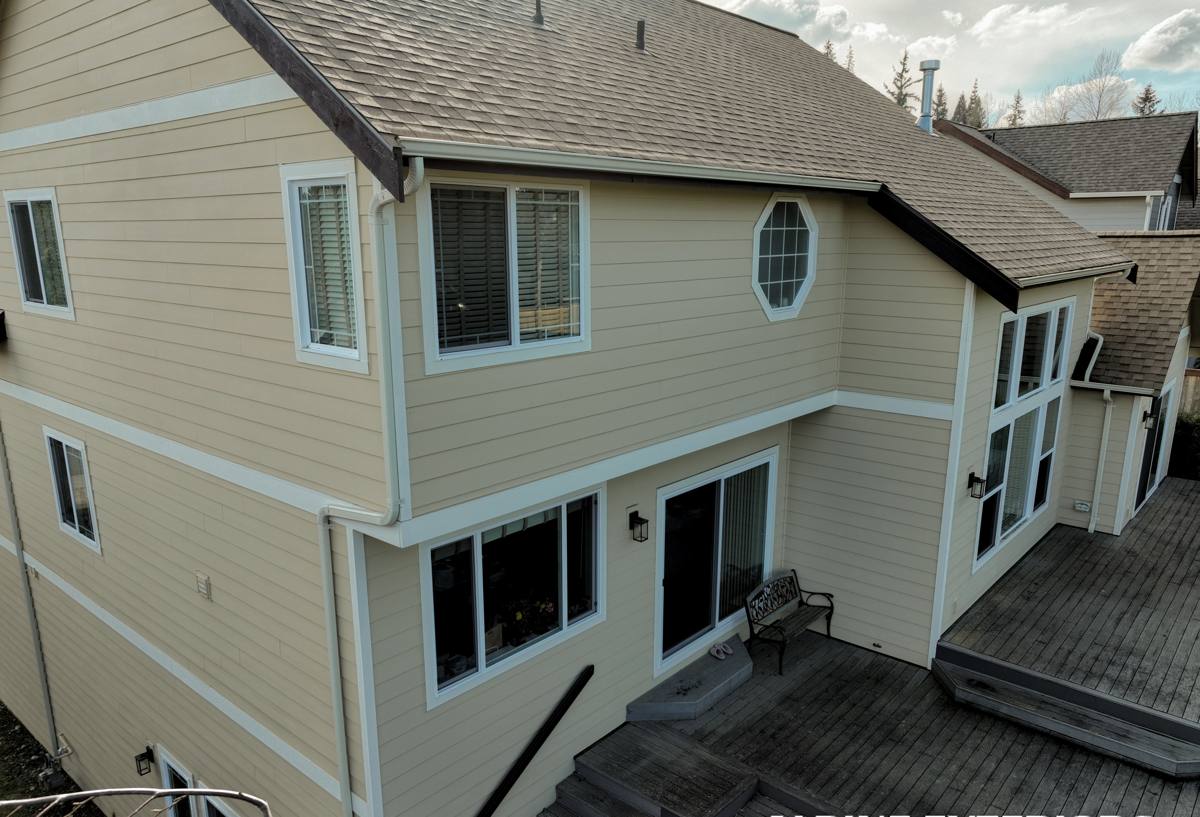
What "Energy-Efficient" Actually Means Here
Energy-efficient is a real, measurable spec — not a marketing word. For a Seattle home, three numbers matter more than any brand name:
- U-factor — how well the window resists heat loss. Lower is better. This is the number that matters most in our climate, where the bigger cost is heat escaping, not heat coming in.
- Solar Heat Gain Coefficient (SHGC) — how much solar heat passes through the glass. Seattle doesn't get the harsh direct sun that drives this number in hotter climates, but it still affects comfort on west-facing rooms that catch afternoon light.
- Air leakage rating — how much outside air sneaks through the assembled unit, not just the glass. This is often the number that separates a window that "tests fine" from one that actually stops a draft.
Double-pane glass with a low-E coating and an insulated (not aluminum) spacer bar is the baseline we work from for this climate. Triple-pane can make sense on north- or street-facing rooms with heavy noise or wind exposure, but it adds weight and cost that isn't always worth it on a typical Rainier Valley elevation. The honest answer is that the glass package matters less than most homeowners expect — the frame, the flashing, and the installation are usually what determine whether a window performs for five years or twenty.
Frame Material Trade-Offs
| Frame Type | How It Handles Seattle Moisture | Maintenance | Typical Fit |
|---|---|---|---|
| Vinyl | Won't rot or corrode; seams need good fabrication to stay tight over time | Low — occasional cleaning | Most retrofit replacements, budget-conscious full-home projects |
| Fiberglass | Excellent — dimensionally stable through wet/dry cycles, resists warping | Low | Homes wanting a longer-term investment or larger openings |
| Wood-clad | Good if cladding and flashing details are correct; exposed wood is vulnerable to our rain and moss | Higher — trim and joints need periodic inspection | Older or historic-character homes where interior wood trim matters |
| Aluminum | Poor without a thermal break — conducts cold and condenses easily in our damp winters | Moderate — prone to corrosion near the Sound | We generally steer clients away from it for this climate |
We don't install bare aluminum-frame replacements anymore, not because the material is inherently bad everywhere, but because in a climate this wet and this cool for this much of the year, an un-broken aluminum frame becomes a cold surface that sweats on the inside and corrodes on the outside. That's a maintenance headache we'd rather steer a homeowner away from than sell.
Signs Your Current Windows Are Working Against You
Most homeowners don't call about windows until something forces the issue. Here's what we look for, and what you can check yourself before you even pick up the phone:
- Condensation building up between the panes (a sign the seal has already failed)
- Visible moss or green staining on the sill, frame, or exterior trim
- Soft or discolored wood around the window opening, inside or out
- A cold draft you can feel standing near the window on a windy day
- Difficulty opening, closing, or locking — often a sign the frame has shifted or swollen
- Noticeably higher heating bills compared to similar homes nearby
- Fogging on the inside of the glass during cold snaps, even with the heat running
Any one of these on its own might just mean a window needs attention. Several at once, especially on the same wall, usually points to a flashing or moisture problem behind the window, not just the window itself — and that changes the scope of the job.
What a Correct Installation Actually Involves
What's Under the Trim Matters More Than the Glass
The window unit itself is maybe a third of the job. The rest is what happens at the rough opening — flashing that directs water down and out instead of into the wall cavity, a sill pan that catches anything that gets past the flashing, and sealant placed correctly rather than just liberally. In a climate that sees this much sideways rain, a window installed without proper flashing will eventually leak, regardless of how good the glass package is. We've opened up enough old openings in this neighborhood to know that's usually where the real problem started.
Our Process
- On-site assessment — we look at the existing window, the framing behind it, and any signs of past moisture intrusion before quoting anything.
- Honest scope and quote — if we find rot or flashing problems, we tell you before the work starts, not after we've already opened the wall.
- Removal and prep — old units come out carefully to protect interior trim and siding wherever possible; any damaged framing gets repaired, not covered up.
- Flashing and sill pan installation — this is the step that determines whether the window stays dry for the next twenty years.
- Window installation and shimming — set level, plumb, and square, with insulation in the gap rather than just sealant.
- Sealing and finish work — exterior sealant, interior trim, and a final check that the window operates smoothly.
- Walkthrough — we show you how the new hardware and any new locking mechanisms work before we leave.
Cost Factors for a Rainier Valley Window Project
Every home is different, so a real number only comes from a site visit — but these are the variables that actually move the price, in rough order of impact:
| Factor | Why It Matters |
|---|---|
| Number of openings | Full-home replacements typically bring a lower per-window cost than one-off replacements |
| Frame material | Vinyl is generally the most budget-friendly; fiberglass and wood-clad cost more upfront |
| Condition behind the window | Rot or old flashing failures add repair time before the new window even goes in |
| Window size and type | Large picture windows, bay windows, or custom shapes cost more than standard double-hung or slider replacements |
| Access and floor level | Second-story or hard-to-reach openings add labor time |
| Glass package | Double-pane low-E is our standard; triple-pane adds cost where noise or exposure justifies it |
We'd rather walk a homeowner through these trade-offs honestly than quote a flat per-window price that doesn't hold up once we're actually into the opening.
Why a Crew That Already Works This Neighborhood Matters
Rainier Valley's mix of housing ages and styles means the "standard" retrofit window doesn't always fit the "standard" old opening. A crew that's worked houses in this specific part of Seattle — not just Washington state generally — has already run into the odd framing dimensions in a 1920s bungalow, the settling quirks of a mid-century rambler, and the flashing shortcuts sometimes taken during past remodels. That experience shows up in fewer surprises mid-project and a quote that's closer to the final bill.
It also matters for permitting and code compliance. King County and City of Seattle requirements around egress sizing, safety glazing near doors and low sills, and energy code minimums apply to window replacement projects, and a local crew stays current on what inspectors in this area are actually checking for — rather than relying on generic manufacturer literature.
Maintaining Energy-Efficient Windows in a Wet Climate
New windows reduce maintenance, but they don't eliminate it. A short seasonal routine goes a long way in this climate:
- Clear debris and moss from sills and tracks before it holds moisture against the frame
- Check exterior caulking annually, especially after a hard winter, and re-seal any cracked or gapped joints
- Keep gutters and downspouts clear so overflow isn't running down the wall past window openings
- Operate locks and hardware a few times each season so mechanisms don't seize from disuse
- Wipe down interior sills during cold snaps if you notice any condensation forming
None of this is difficult, but skipping it is how a good installation slowly turns into a problem a decade down the road.
Getting a Straight Answer on Your Windows
If you're dealing with drafts, fogged glass, moss creeping up the sill, or just a heating bill that doesn't match how well-insulated the rest of the house feels, it's worth having someone look at the actual openings before you decide what to do. We're happy to come out, take a real look at what's going on behind the trim, and give you a straightforward assessment — no pressure, no upsell. Use the form below to request a free estimate.