 Seattle Exterior
 Composite Decking Built for How Redmond Actually Weathers
Redmond sits in one of the wetter, shadier corners of King County, and that combination is hard on outdoor wood. Mature tree canopy across many Redmond lots keeps decks in partial shade for long stretches of the year, which means surfaces stay damp longer after our region's frequent rain. Add in the moist, salt-tinged marine air that moves inland across the greater Seattle area, and you get a climate that pushes wood decking toward cupping, splintering, and moss growth faster than homeowners expect. Composite decking was built to shrug off exactly these conditions, which is why it's become the practical choice for a growing share of Redmond homeowners replacing tired wood decks or planning new outdoor living space.
This page focuses on composite decking specifically for Redmond properties — what the local climate demands from a deck, what correct installation looks like, and why hiring a crew that already works this area matters more than it might seem.
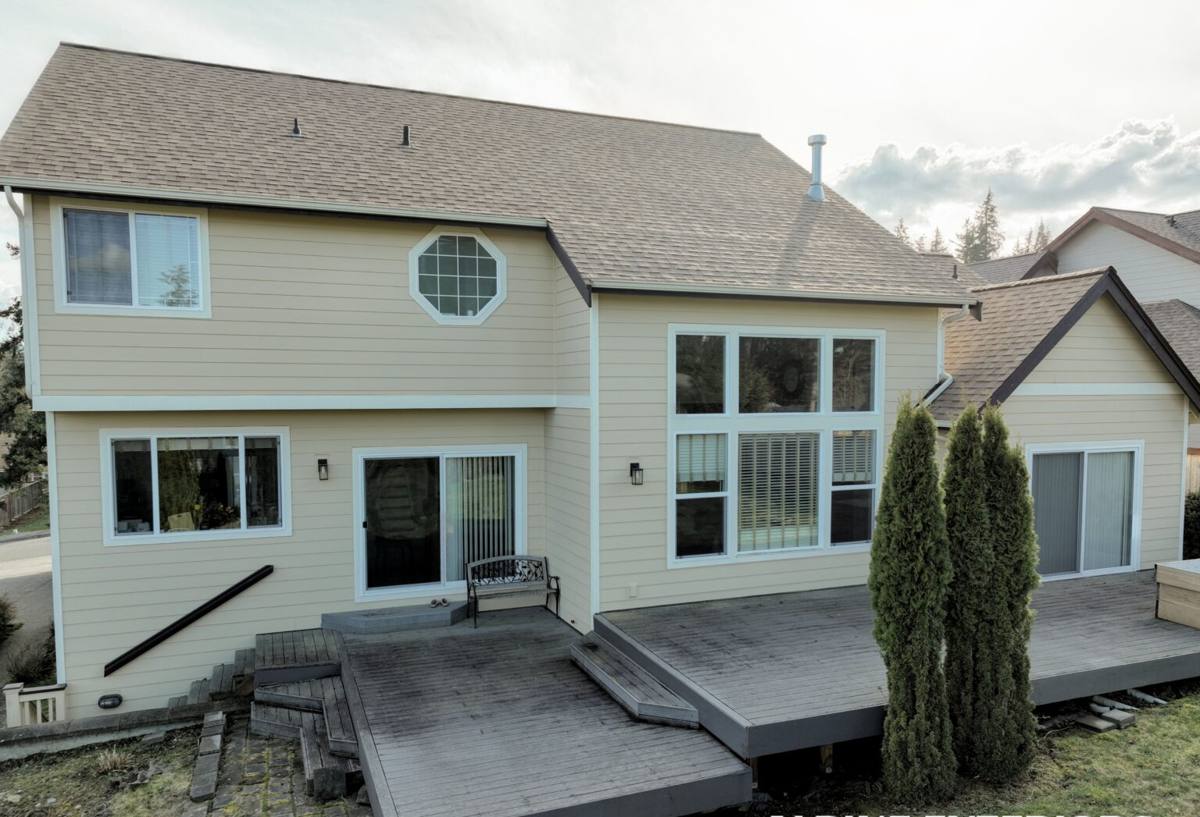
What Redmond's Weather Does to a Deck Over Time
A deck in Redmond deals with a specific set of stresses, and understanding them is the first step toward building one that lasts.
Driving Rain and Standing Moisture
Seattle-area rain isn't usually heavy, but it's persistent, and it often comes in at an angle that gets under railings and against ledger boards. Decking that can't shed water efficiently stays wet at the board edges and fastener points, which is where rot and fastener corrosion typically start.
Shade and Moss Season
Many Redmond lots back up to greenbelts or mature landscaping, and that shade extends the wet season for a deck surface well past the last rainy day. Moss and algae take hold on any organic or textured surface that stays damp, and once established, they make boards slick and accelerate surface breakdown.
Salt-Tinged Marine Air
Even away from the immediate waterfront, the Puget Sound region's marine air carries enough salinity to speed up corrosion on unprotected fasteners and metal hardware over years of exposure. It's a slow effect, but it shows up as rust streaking and loosened connections on decks that used standard hardware instead of coated, marine-rated fasteners.
Why Composite Makes Sense for Redmond Homes
Composite decking is made from a blend of wood fiber and recycled plastic, usually finished with a protective cap on the exposed surface. That construction directly addresses the three stresses above: the capped surface doesn't absorb water the way solid wood does, it resists moss and mildew far better than untreated wood, and it doesn't require the annual staining or sealing that keeps a wood deck weather-tight. For a homeowner who wants a deck that looks good through a Redmond winter without a spring refinishing project every year, that's the core appeal.
Composite isn't maintenance-free, and we won't sell it that way. It still needs regular cleaning, and the substructure underneath still needs to be built correctly. But the material itself removes the biggest recurring headache of wood decking in this climate — moisture absorption at the board level.
What a Correct Composite Deck Installation Involves
The decking boards get the attention, but most of what determines whether a deck lasts 10 years or 25 years happens underneath and around them.
The Substructure
Composite boards are heavier than wood and behave differently under load and temperature swings, so joist spacing and blocking need to match the manufacturer's specifications for that specific product — not generic wood-deck framing assumptions. Undersized framing is one of the more common corner-cuts we see on decks that develop bounce or board movement within a few years.
Ledger Attachment and Flashing
Where the deck ties into the house is the single most moisture-vulnerable point on the whole structure. Correct flashing at the ledger board keeps water from working its way behind siding or into the rim joist — a detail that matters even more in a region where rain is frequent rather than occasional.
Drainage and Airflow Underneath
Composite doesn't rot, but the joists and framing underneath it usually are wood, and they need to dry out between rain events. Proper slope, drainage paths, and ventilation under the deck keep humidity from pooling in the substructure, which protects the framing that the composite boards are counting on.
Fasteners and Hidden Fastening Systems
Most quality composite systems use hidden fastener clips rather than face-screwed boards, which gives a cleaner look and eliminates the screw-head pockets where water and grime used to collect on older wood decks. Whatever fastening system is used, hardware should be coated or stainless to handle the marine air common to this part of King County.
Composite vs. Wood vs. PVC: How They Compare for This Climate
| Factor | Wood | Composite | PVC (Cellular) |
|---|---|---|---|
| Upfront material cost | Lowest | Mid-range | Highest |
| Moisture/moss resistance | Poor without upkeep | Strong (capped surface) | Strongest |
| Annual maintenance | Staining/sealing needed | Periodic cleaning only | Periodic cleaning only |
| Typical lifespan | 10-15 years | 20-30 years | 25-30+ years |
| Feel underfoot / appearance | Natural wood look | Wood-grain look, more heat-stable than PVC | Can run hotter in direct sun, less wood-like |
We install composite for most Redmond clients because it lands in the sweet spot for this climate: it handles the rain and shade far better than wood, without the higher cost and different feel of full PVC systems. That said, we'll talk through your specific lot — sun exposure, budget, and how you use the space — before recommending a material rather than defaulting to one answer for every home.
Our Process for a Redmond Composite Deck Project
- On-site assessment: We look at your existing deck or build site, note drainage patterns, shade exposure, and any structural issues before quoting anything.
- Material and layout selection: We walk through composite board options, color, and railing choices based on your home and how the deck sits relative to sun and shade through the day.
- Permitting: Redmond and King County have specific permit and setback requirements for deck construction and replacement depending on size and height. We handle that process rather than leaving it to you to sort out.
- Demolition and framing: Old decking and any compromised framing come out, and the substructure is built or reinforced to spec for the composite system going on top.
- Installation: Boards, hidden fasteners, and railings go in following manufacturer installation requirements — the details that keep the warranty valid and the deck performing long-term.
- Final walkthrough: We go over the finished deck with you, including what maintenance it actually needs (and doesn't).
Living With a Composite Deck Through a Redmond Winter
Composite cuts the maintenance workload dramatically compared to wood, but "low-maintenance" isn't "no-maintenance," especially with a long moss season working against you. A little seasonal attention keeps the surface looking and performing like new.
- Sweep leaves and debris off regularly in fall — trapped organic matter under wet leaves is what gives moss a foothold on any decking material.
- Rinse the deck with a garden hose and a soft-bristle brush a few times a year; avoid pressure washers on composite, which can damage the cap surface.
- Use a composite-safe deck cleaner if moss or algae film does develop, rather than bleach or harsh chemicals.
- Check railings and stair connections annually for any loosening, especially after a stretch of heavy weather.
- Keep gutters and downspouts near the deck clear so runoff isn't draining directly onto or under the deck surface.
- Trim back overhanging branches where practical to cut down on shade and leaf litter that extend the damp season on the deck.
Why a Crew That Already Works in Redmond Matters
Deck framing, drainage, and permit requirements aren't identical everywhere — they're shaped by local building codes, typical lot grading, and weather patterns specific to King County. A crew that already builds decks in and around Redmond knows what inspectors here look for, how to detail flashing for our rain patterns, and how to frame for the shade and moss conditions common to tree-heavy Eastside lots. That local familiarity shows up in fewer surprises during permitting and a deck that's actually built for the conditions it will sit in for the next two-plus decades, not a generic install.
Get a Straight Answer About Your Deck
If you're weighing a deck replacement or a new build in Redmond, we're happy to take a look, talk through composite options that fit your home and budget, and give you an honest read on what your specific lot needs. Reach out below for a free, no-pressure estimate.