 Seattle Exterior
 Why Renton Roofs Wear Out Differently Than Roofs Elsewhere
A roof in Renton doesn't fail the way a roof does in a dry climate. It's rarely one dramatic storm that does the damage. It's the slow, steady grind of a long wet season, moderate temperatures that never quite let a roof fully dry out, and months of shaded, damp conditions where moss and organic growth get a foothold. King County's marine climate means most roofs here are dealing with moisture exposure for a large share of the year, not just during a handful of storms.
That changes what "correct installation" means. A roofing crew that mostly works drier inland climates can install a technically sound roof that still underperforms here, because the details that matter most in our climate — ventilation, underlayment choice, flashing at every transition, and moss resistance — aren't the details that matter most somewhere with less rain and less moss pressure. A new roof installed for Renton needs to be installed with Renton's weather in mind from the first day of the job, not treated as an afterthought.
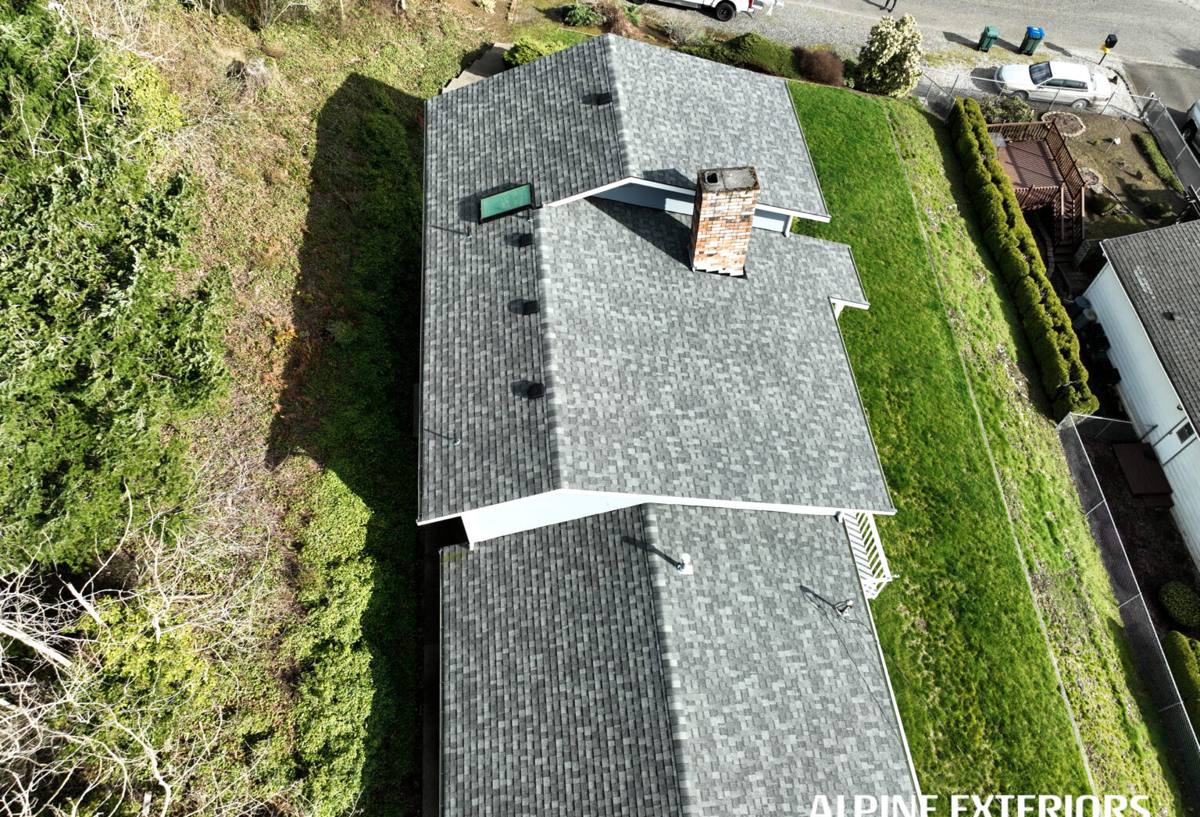
Signs a Renton Home Needs Replacement, Not Another Repair
Repairs make sense when a roof has isolated damage and the rest of the system still has useful life. Replacement makes sense when the roof as a whole is at or past the end of its service life, or when repeated repairs are starting to cost more than they're worth. In our climate, the signs tend to show up as:
- Granule loss and bald patches on asphalt shingles, especially on south- and west-facing slopes
- Moss and moss staining that keeps coming back within a season or two of cleaning
- Curling, cupping, or cracked shingles, particularly on older roofs approaching 20-25 years
- Soft or spongy decking felt underfoot in the attic or during a walk-across inspection
- Daylight visible through the roof deck from inside the attic
- Interior water stains on ceilings or walls that reappear after every heavy rain
- Rising or unpredictable repair costs on a roof that's already been patched more than once or twice
If a roof is showing two or three of these at once, a full replacement is usually the more honest recommendation — and often the more economical one over a 10-15 year horizon than continuing to chase individual repairs.
What a Correct New Roof Installation Actually Involves
Full Tear-Off, Not Overlay
We remove the existing roofing down to the deck rather than layering new shingles over old. Overlaying hides the condition of the decking and traps moisture between layers — a real problem in a climate where the decking is already fighting dampness most of the year. Tear-off lets us actually see what's underneath and fix it before it's covered up again.
Deck Inspection and Repair
Once the old roofing is off, we inspect the plywood or plank decking for soft spots, delamination, or rot, and replace any sections that won't hold a nail properly. Skipping this step is one of the most common ways a "new roof" ends up failing early — the surface materials are new, but they're fastened to compromised wood underneath.
Underlayment and Ice/Water Protection
A synthetic underlayment, plus self-adhered ice-and-water membrane at eaves, valleys, and other vulnerable areas, gives the roof a second line of defense if wind-driven rain ever gets past the primary roofing surface — which happens more often in this region's storms than most homeowners realize.
Flashing at Every Transition
Chimneys, skylights, sidewalls, and roof-to-roof valleys are where most leaks actually start, not the open field of shingles. Correct installation means new flashing at these transitions, properly stepped and integrated with the underlayment — not old flashing reused to save time.
Ventilation
Intake and exhaust ventilation need to be balanced so air actually moves through the attic space. In our climate, poor ventilation traps moisture in the attic, which shortens the life of the decking from underneath and can contribute to the same moss and algae growth we're trying to prevent on the surface.
Choosing the Right Roofing Material for Renton's Climate
There's no single "best" roofing material — the right choice depends on budget, the home's structure, and how much moss and moisture resistance matters to the homeowner. Here's how the common options actually compare for a home in this region:
| Material | Typical Lifespan | Moss/Moisture Behavior | Notes for This Climate |
|---|---|---|---|
| 3-Tab Asphalt Shingle | 15-20 years | More moss-prone; flatter profile holds debris | Lowest upfront cost, shortest lifespan here |
| Architectural/Dimensional Shingle | 25-30 years | Better shedding; algae-resistant granule options available | Best balance of cost and performance for most Renton homes |
| Metal (standing seam or panel) | 40-50+ years | Sheds water and moss buildup very well | Higher upfront cost; strong long-term value in a wet climate |
| Cedar Shake | 20-30 years with upkeep | Absorbs moisture; needs regular treatment to resist rot and moss | We're honest with clients that this option demands the most ongoing maintenance here |
For most Renton homeowners, algae-resistant architectural shingles hit the right balance — meaningfully better moss and streak resistance than basic 3-tab shingles, without the upfront jump to metal. We'll walk through the real trade-offs for your specific roof rather than pushing a single product.
How Our Installation Process Works
- On-site assessment — we inspect the existing roof, decking condition (where visible), attic ventilation, and any problem areas like valleys or skylights
- Written estimate — a clear scope of work and materials, with no vague allowances buried in the fine print
- Scheduling around weather — we plan installation windows with Renton's rain patterns in mind, and we don't leave a roof exposed overnight without protection
- Tear-off and deck repair — old roofing removed, decking inspected and repaired as needed
- Underlayment, flashing, and ventilation work — installed to code and to the manufacturer's specifications for warranty coverage
- New roofing installed — with attention to nailing patterns and manufacturer specs, since improper installation is one of the most common ways warranties get voided
- Final walkthrough and cleanup — including a magnetic sweep for nails and debris removal
Ventilation and Moisture: The Part Most Roofs Get Wrong
Homeowners often focus entirely on the shingle brand and skip past the ventilation conversation, but in a climate this wet, ventilation is doing as much work as the roofing surface itself. Balanced intake (usually at the soffits) and exhaust (ridge or roof vents) keep air moving through the attic, which helps the decking dry out between rain events instead of staying damp for weeks at a time. Poor ventilation is a quiet contributor to premature decking failure, and it's also a factor in why moss and algae come back faster on some roofs than others — a warmer, more humid attic under the roof surface accelerates growth on top of it. We check and correct ventilation as part of every full installation, not as an optional add-on.
What Affects the Cost of a New Roof
| Factor | Why It Matters |
|---|---|
| Roof size and number of stories | More square footage and steeper access increase labor and material needs |
| Roof pitch and complexity | Multiple valleys, dormers, and roof lines take more time and flashing work than a simple gable |
| Decking condition | Rotted or soft decking sections need replacement before new roofing goes on |
| Material choice | Basic asphalt shingles cost less upfront than architectural shingles or metal |
| Tear-off layers | Removing multiple existing layers of roofing adds labor and disposal cost |
| Ventilation and flashing upgrades | Bringing an older roof's ventilation and flashing up to current standards adds material and labor |
We give a written estimate based on an actual look at your roof rather than a generic per-square rule of thumb, since the factors above can shift the number significantly from one house to the next.
Why Local Experience in Renton Matters
A roofing crew that regularly works this part of King County knows the local permitting process, understands how neighborhood HOA guidelines sometimes affect material or color choices, and has a feel for how to schedule around the region's rain patterns so a job isn't left half-finished when weather rolls in. That local familiarity translates into fewer surprises during the project — permits pulled correctly the first time, inspections scheduled without back-and-forth, and a crew that isn't learning the quirks of Puget Sound weather on your roof for the first time.
A Quick Checklist Before You Hire
- Confirm the contractor is licensed and insured in Washington State
- Ask whether the estimate includes full tear-off or an overlay
- Ask how decking repairs are priced if rot is found once the old roofing comes off
- Confirm who pulls the permit and handles inspections
- Get the manufacturer warranty terms in writing, and ask whether it requires a certified installer
- Ask how ventilation will be assessed and addressed, not just the shingle brand being installed
Get a Straightforward Estimate
If your roof is showing its age or you're just trying to plan ahead before the next wet season, we're happy to take a look and give you an honest read on where things stand — repair, replacement, or somewhere in between. There's a free, no-pressure estimate form below whenever you're ready.