 Seattle Exterior
 Siding Replacement in Renton: Built for This Specific Climate
Renton sits in the wet middle ground of King County — close enough to Puget Sound to pick up salt-laden air on windy days, low enough in elevation to trap moisture, and shaded enough in older neighborhoods that moss and algae get a long growing season on north-facing walls. Siding here doesn't fail because it's old. It fails because it was never matched to what this specific stretch of Western Washington throws at it year after year: driving rain that hits siding sideways during fall and winter storms, long stretches of damp shade, and freeze-thaw cycles that are mild but relentless.
A siding replacement project in Renton isn't just a cosmetic upgrade. Done right, it's a moisture-management system for the whole exterior wall. Done wrong — even with a good-looking product — it traps water behind the cladding and causes rot, mold, and sheathing damage that's far more expensive to fix than the siding itself.
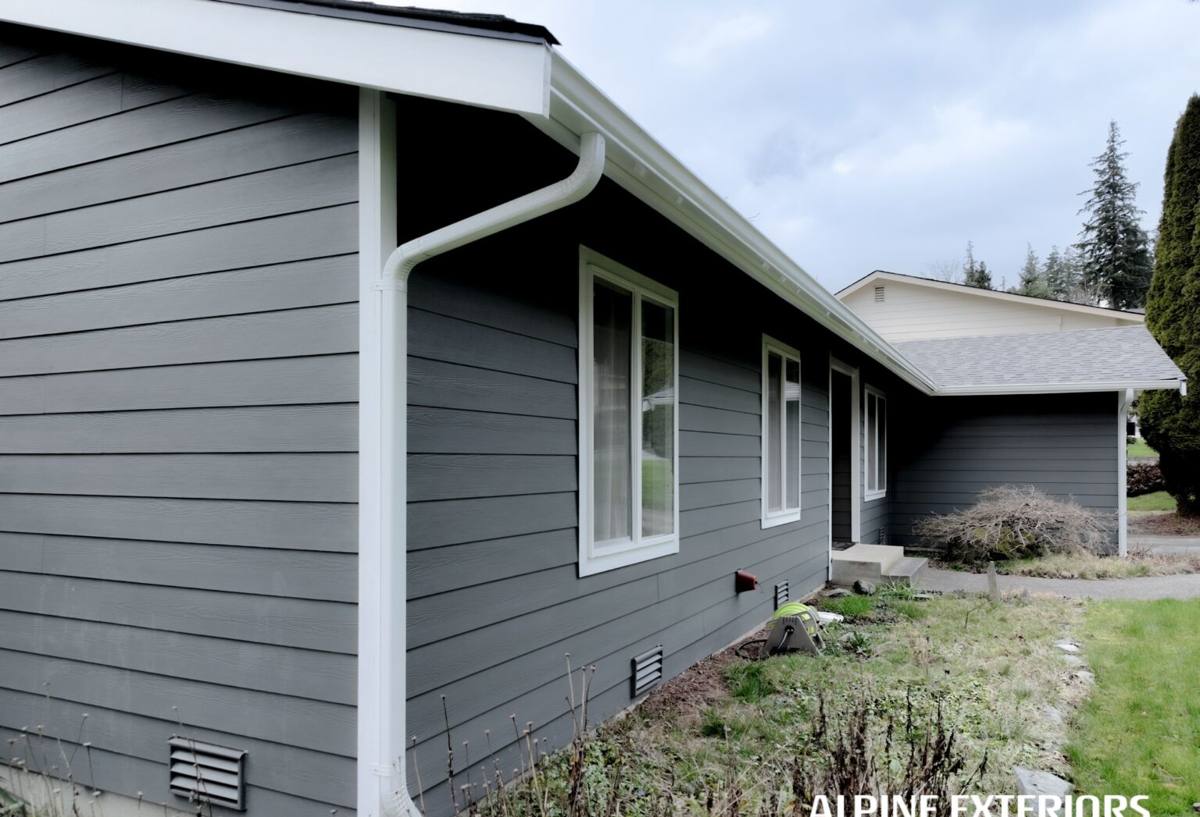
What Renton Homes Actually Need From Their Siding
We've worked on homes across Renton's mix of housing stock, from older post-war construction to newer developments built out toward the hillsides. The building ages differ, but the exposure problems repeat:
- North and west-facing walls hold moisture longer and grow moss and algae faster than south-facing walls.
- Homes near tree cover get less sun exposure to dry siding out between rain events, which accelerates moss growth and softens old wood-based products.
- Original wood or hardboard siding installed decades ago is often past the point where paint and caulk can keep water out — it's absorbing moisture even when it looks intact from the ground.
- Homes on sloped lots can have drainage patterns that dump extra water at the base of exterior walls, which is exactly where siding rot tends to start.
Any siding replacement plan for a Renton home should start by identifying which of these pressures apply to your specific house, not by assuming every wall needs the same approach.
Signs Your Siding Is Already Losing the Battle
Homeowners often wait too long because siding damage hides in plain sight. Watch for:
- Soft or spongy spots when you press on the siding, especially near the bottom courses
- Persistent black or green staining that comes back within weeks of being cleaned
- Paint that's bubbling, peeling, or won't hold for more than a couple of years
- Visible gaps, warping, or boards that have pulled away from the wall slightly
- Interior signs — musty smell, discoloration on interior walls near exterior corners
If you're seeing two or more of these, the siding is past routine maintenance and into replacement territory.
What a Correct Siding Replacement Actually Involves
A siding replacement is only as good as what happens underneath it. The visible board is the last five percent of the job. The parts that determine whether your walls stay dry for the next 30 years happen before a single new board goes up.
Tear-Off and Wall Inspection
Old siding comes off in full, not patched over. This is the point where we find out what's actually happening behind the cladding — soft sheathing, old moisture damage, or areas where previous flashing was missing or installed backward. Any rot or compromised sheathing gets repaired before new siding goes on. Covering a wet or damaged wall with new siding just delays the same problem and makes it worse.
Weather-Resistive Barrier and Flashing
A correctly installed weather-resistive barrier (house wrap) goes on the sheathing, lapped properly so water sheds downward and outward at every seam. Flashing gets installed at every window, door, and horizontal trim transition — the places where wind-driven rain concentrates. This is the step that's most often rushed or skipped on lower-quality installs, and it's the step that matters most in a climate where rain doesn't just fall straight down, it gets pushed sideways into the wall.
Fastening and Clearances
Fiber cement siding has specific fastening patterns, nail penetration depth, and clearance requirements from grade, roofing, and decks. Getting these wrong doesn't show up immediately — it shows up as cracking, buckling, or moisture intrusion a few years down the road. We follow manufacturer installation specifications because that's what keeps the product warranty valid and the wall performing the way it's supposed to.
Caulking, Trim, and Finish Details
The last step is finish work — trim, caulking at penetrations, and touch-up at cut edges. This is also where factory-finished siding has a real advantage over field-painted products: fewer exposed raw edges depending on the cut, and a finish that was cured under controlled conditions rather than applied on-site in whatever weather showed up that week.
Our Process for a Renton Siding Replacement
- On-site inspection. We walk the full exterior, check for moisture damage, and identify which walls have the heaviest exposure.
- Written estimate. You get a clear scope — what's being removed, what's being repaired, what's being installed, and why.
- Material order and scheduling. We coordinate around Renton's weather patterns to avoid installing during extended wet stretches whenever possible.
- Tear-off and repair. Old siding comes off, damaged sheathing gets addressed, and the wall is prepped properly before anything new goes up.
- Barrier, flashing, and installation. House wrap, flashing, and siding go on to manufacturer specification.
- Final walkthrough. We go over the finished job with you before calling it done.
Why We Only Install James Hardie Fiber Cement
We made a decision early on to install one siding system: James Hardie fiber cement. Not because it's the cheapest option on the market — it isn't — but because it performs consistently in the conditions Renton actually sees.
Fiber cement doesn't absorb water the way wood-based or engineered-wood products can. It doesn't feed moss and algae growth the way some organic-based siding materials do over time. And James Hardie's HZ5 product line is engineered specifically for climates like ours — places with sustained moisture exposure, freeze-thaw cycling, and long damp seasons — rather than a general-purpose product used everywhere regardless of climate.
The ColorPlus factory finish also matters more here than it would in a drier climate. A factory-cured finish holds up better against repeated wet-dry cycling than field-applied paint, which means fewer repaint cycles and less maintenance over the life of the siding. Combined with a strong transferable warranty, it's a product system we're comfortable standing behind on every home we work on — which is why we don't install vinyl, LP SmartSide, Cemplank, Allura, or cedar and primed wood siding. We'd rather install one product correctly and know exactly how it performs than offer five options and hope each one holds up.
How Hardie Compares on the Factors That Matter Locally
| Factor | Why It Matters in Renton's Climate |
|---|---|
| Moisture absorption | Fiber cement resists water absorption far better than wood-based or engineered-wood sidings, reducing rot risk in a wet climate |
| Moss and algae resistance | Non-organic composition gives moss and algae less to feed on compared to some wood-fiber products |
| Finish durability | Factory-applied ColorPlus finish is cured under controlled conditions, unlike site-applied paint exposed to Renton's damp weather during application |
| Fire resistance | Non-combustible material, an added layer of protection during dry summer wildfire-smoke seasons |
| Warranty structure | Manufacturer-backed, transferable warranty tied to correct installation practices |
Why Local Renton Experience Matters
Siding installation isn't identical everywhere. A crew that mostly works drier inland climates may not think as carefully about flashing detail, rain-screen gaps, or drainage planes — because in their market, the consequences of skipping those steps show up more slowly. In Renton and the greater Seattle area, they show up fast.
Working locally also means understanding the practical side of a project: King County permitting expectations, how to sequence work around our wetter months, and what to look for in homes built in different eras with different original construction practices. A crew that's done this work across the region isn't guessing at how a wall will behave over the next winter — they've already seen how similar walls, in similar conditions, held up or didn't.
What Affects the Cost of a Siding Replacement
Every home is different, but the main cost drivers are consistent. Rough ranges only — your estimate will reflect your specific home.
| Cost Factor | Why It Moves the Price |
|---|---|
| Square footage and stories | More wall area and taller walls mean more material and labor time |
| Extent of hidden damage | Rotted sheathing or framing found during tear-off requires repair before new siding goes on |
| Trim and architectural detail | Homes with more corners, windows, and trim transitions take longer to flash and finish correctly |
| Siding profile chosen | Lap siding, panel siding, and shingle-style products differ in material and labor cost |
| Access and site conditions | Sloped lots, tight side yards, or limited equipment access can add time |
Preparing for a Siding Replacement: A Homeowner Checklist
- Walk your own exterior and note any soft spots, staining, or visible gaps before the estimate visit
- Clear personal items, planters, and equipment from around the foundation perimeter
- Ask any contractor you're considering what weather-resistive barrier and flashing details they use — not just what siding brand they install
- Confirm in writing what happens if hidden rot or sheathing damage is found during tear-off
- Get the manufacturer warranty terms in writing, including what voids it
- Ask how the crew plans around wet-weather scheduling for your project timeline
Let's Take a Look at Your Home
If your Renton home's siding is showing moss buildup that won't stay clean, paint that won't hold, or soft spots you're not sure about, it's worth having someone look before small problems turn into structural repairs. We'll walk the exterior with you, explain what we find, and give you a straightforward, no-pressure estimate — use the form below to get started.