 Seattle Exterior
 Renton's Weather Doesn't Give Roofs Much of a Break
Sitting at the south end of Lake Washington in King County, Renton gets the full range of what Puget Sound weather can throw at a roof. Fall and winter bring long stretches of driving, wind-driven rain off the Sound, and the valley terrain around Renton tends to funnel and accelerate gusts during the region's stronger windstorms. Add in the marine air working its way inland and you get a slow, steady corrosion effect on metal flashing and fasteners that homeowners further inland don't deal with nearly as much.
Then there's moss. Renton's tree cover, shade patterns, and near-constant damp conditions from fall through spring create a long moss season — often eight months or more where conditions favor growth. Moss isn't just cosmetic. It holds moisture against roofing material, works its way under shingle tabs and shakes, and quietly opens the door for water intrusion long before anyone notices a leak inside the house.
Storm damage repair in this climate isn't a one-size-fits-all service. A roof that took a hit from a windstorm in Renton needs to be assessed with all of this in mind — not just patched at the obvious spot and left to deal with everything else on its own.
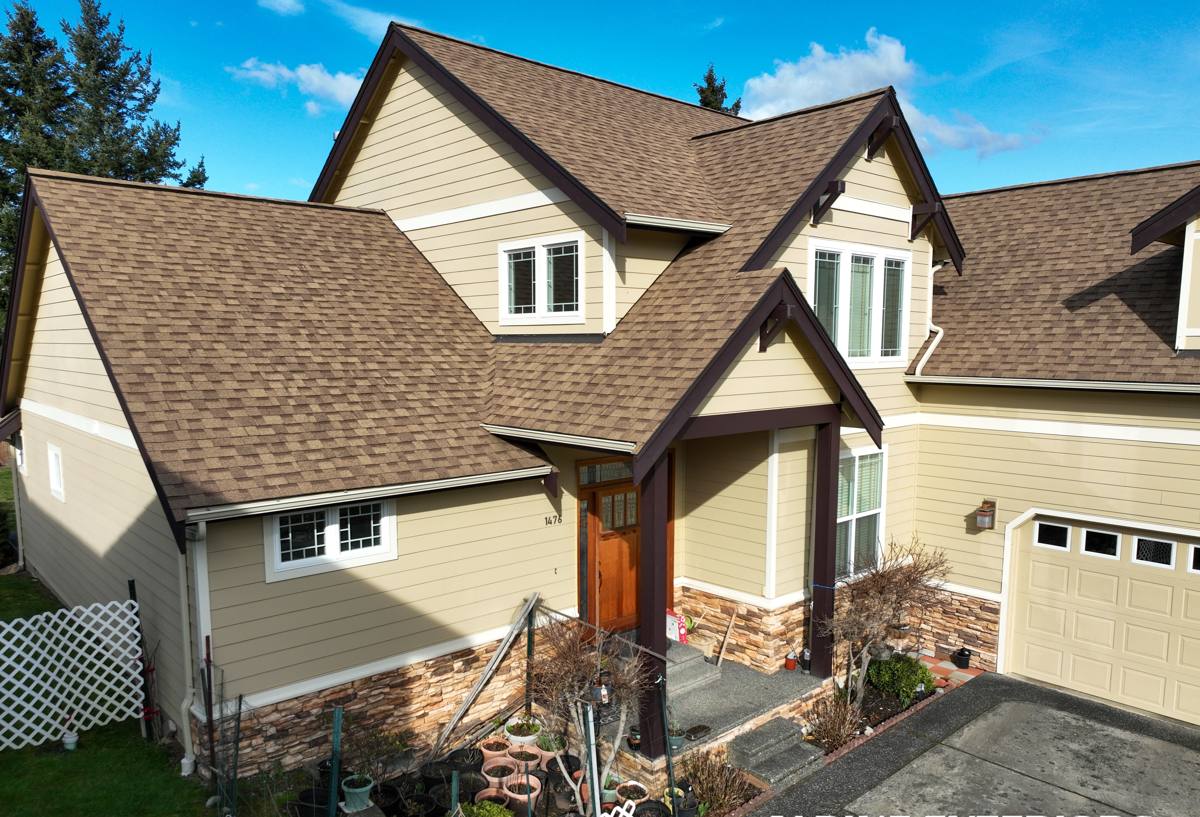
What Counts as Storm Damage (It's Often Not What You'd Expect)
Most homeowners think of storm damage as a missing shingle or a visible hole. In practice, the damage that causes the most long-term trouble is usually less dramatic:
- Wind-lifted shingles that have broken their seal but blown back down mostly flat — they look fine from the ground but no longer shed water correctly.
- Flashing separation around chimneys, vent pipes, and roof-to-wall transitions, where wind flex has cracked the sealant or bent the metal loose.
- Granule loss on asphalt shingles from wind-blown debris and driving rain, which shortens the shingle's remaining service life even without an active leak.
- Limb strikes and debris impact, common where trees overhang the roofline, which can bruise or puncture shingles without leaving an obvious gap.
- Moss-related damming that traps storm runoff at valleys, ridges, and eaves, pushing water backward under the roofing material.
Any one of these can sit quietly for a season or two before it shows up as a stain on a ceiling. That's why a storm damage inspection needs to check the whole roof system, not just the spot the homeowner is worried about.
How We Approach a Storm Damage Repair
Inspection and Documentation First
Before any repair work starts, we walk the full roof (not just the reported problem area) and document what we find with photos — shingle condition, flashing, fasteners, ventilation, and any moss or debris buildup. This matters for two reasons: it tells us the real scope of the repair, and it gives you a clear written record if you decide to file an insurance claim.
Temporary Protection When Needed
If a storm has left an active leak point or exposed decking, our first job is to stop water from getting into the house — tarping or temporary sealing — before we plan the permanent repair. This isn't billed as the fix itself; it's a stopgap so the damage doesn't spread while materials or scheduling are sorted out.
The Actual Repair
Once we know the scope, repairs typically involve replacing damaged shingles or shake in matching material, re-securing or replacing compromised flashing, resealing penetrations, and checking the decking underneath for soft spots or rot before anything new goes back down. Repairing over damaged decking is one of the most common shortcuts in this trade, and it's one we won't take — it just guarantees a repeat call in a year or two.
A Look at the Rest of the Roof
Since we're already up there, we'll flag anything else worth knowing about — heavy moss buildup, clogged gutters, or ventilation issues — even if it's outside the scope of the storm repair. You decide what to act on; we're not going to pad a storm repair invoice with unrelated upsells.
Repair or Replace? What Actually Drives That Decision
Storm damage doesn't automatically mean a full re-roof, but it doesn't always mean a small patch either. The honest answer depends on a few concrete factors:
| Factor | Favors Repair | Favors Replacement |
|---|---|---|
| Age of existing roof | Under ~10-12 years | Near or past expected material lifespan |
| Extent of damage | Isolated to one section or slope | Spread across multiple slopes or widespread granule loss |
| Decking condition | Solid, no rot found | Soft spots or water staining in multiple areas |
| Matching material availability | Shingle/shake still available or close match | Discontinued product, visible mismatch likely |
| Moss/moisture history | Manageable with maintenance | Chronic moss damage undermining large sections |
We'll walk you through where your roof lands on that table and give you a straight recommendation — including telling you plainly when a repair is the right call and a full replacement would be overkill.
Materials We Use for Storm Repairs in This Climate
What goes back on a Renton roof after storm damage should hold up to the same conditions that caused the damage in the first place. For asphalt shingle roofs, we match with quality architectural shingles rated for wind resistance rather than basic three-tab product, since the extra sealant strips and heavier profile handle wind uplift better. For cedar shake roofs, we're careful about how repairs are integrated, since shake is more sensitive to moisture trapping if repair pieces aren't properly flashed and spaced for airflow — poor repair technique, not the wood itself, is usually what shortens a shake roof's life in this climate.
For flashing, we use corrosion-resistant metal appropriate for coastal-adjacent, high-moisture exposure rather than cheaper galvanized options that show rust lines within a few seasons. It costs a bit more up front, but flashing failure is one of the top causes of repeat leak calls, so it's not a place we cut corners.
Insurance Claims: What to Know Before You Call
Many storm damage repairs in this area are at least partially covered by homeowners insurance, but coverage depends heavily on your specific policy, the cause of damage, and how quickly it's documented. A few things we've learned help this go smoother:
- Photograph visible exterior damage yourself as soon as it's safe to do so, before any cleanup.
- Get a professional inspection promptly — insurers often have windows for reporting storm-related claims.
- Ask for a written scope and photo documentation from your contractor, not just a verbal estimate.
- Understand the difference between "wear and tear" (often excluded) and sudden storm damage (usually covered) — this distinction is where most claim disputes happen.
We provide documentation you can hand directly to an adjuster, but we don't handle the claim itself — that's between you and your insurer. We've just seen enough of these go well and go poorly to know good documentation matters more than almost anything else.
Why It Matters That We Already Work in Renton
A crew that regularly works Renton roofs knows the local permitting expectations, understands how the valley's wind patterns tend to hit certain roof orientations harder than others, and has a realistic sense of how fast moss regrows here versus drier parts of the state. That local pattern recognition shortens the inspection, sharpens the diagnosis, and helps avoid repairs that look fine on paper but don't hold up against next season's weather.
It also means we're not guessing at material lead times or scrambling to source a matching shingle or shake profile — we keep relationships with regional suppliers who stock what's actually common on King County roofs.
Signs You Should Get a Storm Damage Inspection
Not every storm leaves obvious damage. If any of these apply after a windstorm or heavy rain event, it's worth having someone take a look:
- Shingle granules collecting in gutters or at downspout outlets
- A shingle or shake piece found in the yard after high winds
- New or worsening moss patches, especially near valleys and north-facing slopes
- Water stains or discoloration on interior ceilings, even faint ones
- Visible gaps or lifted edges around chimney or vent flashing
- A noticeable increase in attic humidity or musty smell after storms
None of these guarantee major damage, but they're worth a look rather than waiting for a leak to confirm it.
Get a Straight Answer on Your Roof
If a recent storm has you wondering whether your roof took real damage or just came through a rough week, we're happy to take a look. The estimate is free, there's no pressure to act on it, and you'll get a clear explanation of what we find and what — if anything — needs doing next.