 Seattle Exterior
 Roof Repair Built for Beacon Hill's Conditions
Beacon Hill sits on a ridge with views toward Elliott Bay and the Duwamish valley, and that elevation and exposure come with a trade-off: roofs up here take a harder hit from wind-driven rain than roofs tucked into more sheltered parts of Seattle. Add in mature tree cover on many blocks, a housing stock that spans early-1900s bungalows to mid-century ramblers, and King County's long wet season, and you get a neighborhood where roofs age differently than they do elsewhere in the city. A repair that works on a newer subdivision roof doesn't always hold up here — the details matter more.
This page covers what roof repair actually means for a Beacon Hill home: what the climate does to a roof over time, how to tell a repair from a replacement, what a correct repair job includes, and why local experience changes the outcome.
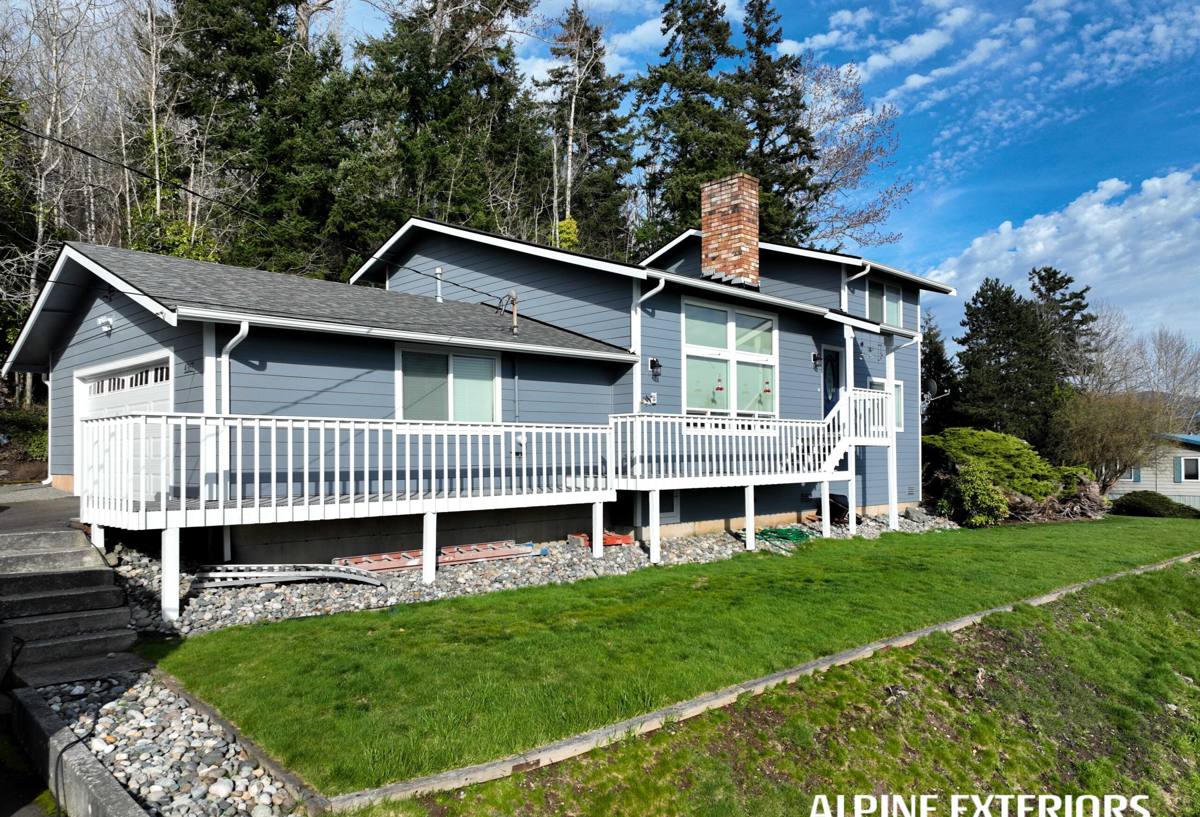
What Salt Air, Driving Rain, and Moss Season Do to a Roof
Three regional factors show up again and again when we're on Beacon Hill roofs:
Salt Air and Metal Fatigue
Beacon Hill's elevation and proximity to Puget Sound mean roofs here get more airborne salt exposure than homes further inland. Salt air accelerates corrosion on exposed fasteners, flashing, and gutter hardware. It's rarely dramatic — it's slow pitting and rust bleed that shows up first at nail heads and cut edges of flashing, years before it becomes a leak.
Driving Rain
Seattle rain isn't just steady — a good winter storm off the Sound pushes rain sideways, and Beacon Hill's exposure means wind-driven rain gets forced up under shingle laps and around vertical surfaces (chimneys, dormers, wall-to-roof transitions) that would stay dry in a straight-down rain. This is why so many "roof leaks" here actually trace back to flashing and transition points, not the field of the roof itself.
Moss Season
Between the tree canopy on many Beacon Hill streets and a wet season that can run eight months, moss finds a foothold fast — especially on north-facing slopes and anywhere shaded by a neighboring roofline or tree. Moss holds moisture against the roofing material, lifts shingle edges as it grows, and works its way under cedar shakes. Left alone, it turns a small maintenance issue into a repair, and a repair into premature replacement.
Signs Your Beacon Hill Roof Needs Repair
Most roof problems here give warning signs well before there's an active leak inside the house. Worth checking for:
- Moss buildup thicker than a quarter-inch, especially on shaded or north-facing slopes
- Granules collecting in gutters or at downspout outlets (a sign of shingle wear, not just normal shedding)
- Rust streaking below metal flashing or exposed fasteners
- Curling, cupping, or lifted shingle edges, particularly on slopes that catch the most wind
- Soft or dark patches on the underside of roof sheathing, visible from an attic
- Daylight visible around chimney, skylight, or vent flashing
- Water stains on interior ceilings near exterior walls (often a flashing issue, not a roof-field issue)
- Sagging or spongy spots when walking a low-slope section
Any one of these on its own is usually a repair. Several at once, or a roof past 20–25 years old with these signs, is worth a full inspection before you spend money patching something that's near the end of its service life anyway.
What a Correct Roof Repair Actually Involves
A repair that just covers the visible symptom tends to fail again within a season or two. A repair done right addresses the cause, not just the leak point.
Flashing and Penetrations First
Because driving rain concentrates at transitions, we start any repair by checking flashing at chimneys, skylights, vent pipes, and wall intersections — even if the reported leak seems to be somewhere else on the roof. Water travels under roofing material before it shows up inside, so the entry point and the stain point are often several feet apart.
Underlayment Condition
If shingles are pulled back for a repair, the underlayment underneath gets checked too. Old or torn underlayment defeats the purpose of a shingle repair — the shingles might look fine while water is still getting past them.
Matching the Existing Roofing
Whether it's composition shingle or cedar shake, a patch that doesn't match the surrounding material's exposure, color, and profile stands out and can create its own water path if the overlap isn't right. We match tab exposure and course lines to the existing roof rather than just nailing down whatever's on hand.
Moss and Debris Clearing
Any repair on a Beacon Hill roof includes clearing moss and organic debris from the work area and checking nearby valleys and gutters — leaving moss in place next to a fresh repair just sets up the same problem again in a season or two.
Repair vs. Replacement: What Drives the Decision
Homeowners often want a straight answer on repair versus replacement before we've even looked at the roof. It genuinely depends on a handful of factors:
| Factor | Favors Repair | Favors Replacement |
|---|---|---|
| Roof age | Under 15–18 years | Past 20–25 years (comp shingle) or showing widespread shake deterioration |
| Damage extent | Localized — one slope, one flashing point | Multiple slopes, widespread granule loss, or sheathing damage |
| Underlayment condition | Intact where checked | Torn, brittle, or missing in multiple areas |
| Moss/moisture history | First occurrence, caught early | Repeated moss damage over several seasons |
| Planned home use | Staying long-term, budget-focused now | Selling soon, or planning solar/major remodel that affects the roof anyway |
When a roof is borderline, we'll say so plainly and lay out both options with real trade-offs rather than pushing toward the bigger job.
Our Roof Repair Process
- Inspection. We walk the roof (weather permitting) and check the attic from inside, since interior signs often pinpoint the source faster than the exterior alone.
- Diagnosis. We trace the water path, not just the stain — flashing, underlayment, and shingle condition all get checked together.
- Written scope. You get a clear explanation of what's being repaired and why, before any work starts.
- Repair. Flashing resealed or replaced, damaged shingles or shakes matched and swapped, underlayment patched where exposed.
- Moss and debris clearing. The work area and adjacent valleys/gutters are cleared so the repair isn't undermined by the same conditions that caused the original problem.
- Walkthrough. We show you what was found and what was done, in plain terms.
Common Roof Types We See on Beacon Hill Homes
Beacon Hill's housing stock is a genuine mix, and the right repair approach depends on what's actually up there:
| Roof Type | Typical Homes | Repair Consideration |
|---|---|---|
| Composition shingle | Mid-century ramblers, most remodeled homes | Most common repair; matching exposure and granule color matters for a clean patch |
| Cedar shake | Older bungalows and craftsman-era homes | Moss and moisture are the main enemy; individual shake replacement is possible if the deck underneath is sound |
| Low-slope/membrane | Additions, flat-roofed sections, some newer builds | Different repair method entirely — seams and drainage matter more than shingle condition |
Why Local Experience Matters for This Job
A roofer who mostly works flatter, more sheltered parts of King County can still do fine work — but Beacon Hill's mix of elevation, tree cover, and driving rain exposure means the failure points aren't always where they'd be on a more typical suburban roof. Knowing which slopes hold moss longest, which flashing details tend to fail first on the local housing stock, and how wind-driven rain behaves on an exposed ridge roof is the difference between a repair that lasts and one that's back on the schedule next winter. It also means fewer surprises on pricing — we're not guessing at what a Beacon Hill roof typically needs, we're applying what we've already seen work.
Between Repairs: Keeping a Beacon Hill Roof Ahead of the Weather
A little seasonal attention goes a long way toward avoiding repeat repair calls:
- Clear moss buildup before it exceeds a quarter-inch, especially on shaded slopes
- Keep gutters and valleys free of needles and leaf debris, particularly after fall
- Trim back tree branches that overhang or brush the roof surface
- Have flashing checked every few years, even without a visible leak
- Address small issues (a lifted shingle edge, a rust streak) before winter's driving rain finds them
None of this replaces a proper inspection, but it's the difference between catching a problem at the "repair" stage versus the "replacement" stage.
If you're seeing moss buildup, a stain on a ceiling, or just want a straight opinion on your roof's condition, we're happy to take a look. Fill out the form below for a free, no-pressure estimate — we'll tell you honestly whether you're looking at a repair or something bigger.