 Seattle Exterior
 Roof Replacement Built for Renton's Weather
Renton sits in a stretch of King County that gets hit from two directions: driving rain off the Sound and a long, damp shoulder season that keeps roofs wet for months at a stretch. Add tree cover in many of the older neighborhoods and you get ideal conditions for moss, algae streaking, and slow moisture intrusion that homeowners often don't notice until it shows up as a stain on a ceiling. A roof replacement here isn't just about swapping old shingles for new ones — it's about building an assembly that can shed water fast, resist moss colonization, and survive salt-laden air without the underlying deck rotting out from underneath a roof that still looks fine on top.
We've worked enough roofs in this part of the Seattle area to know that a roof that performs well in a drier climate can fail early here if it's installed the same way. The details that matter in Renton — underlayment coverage, ventilation balance, flashing at every penetration — are the same details that get skipped on rushed jobs.
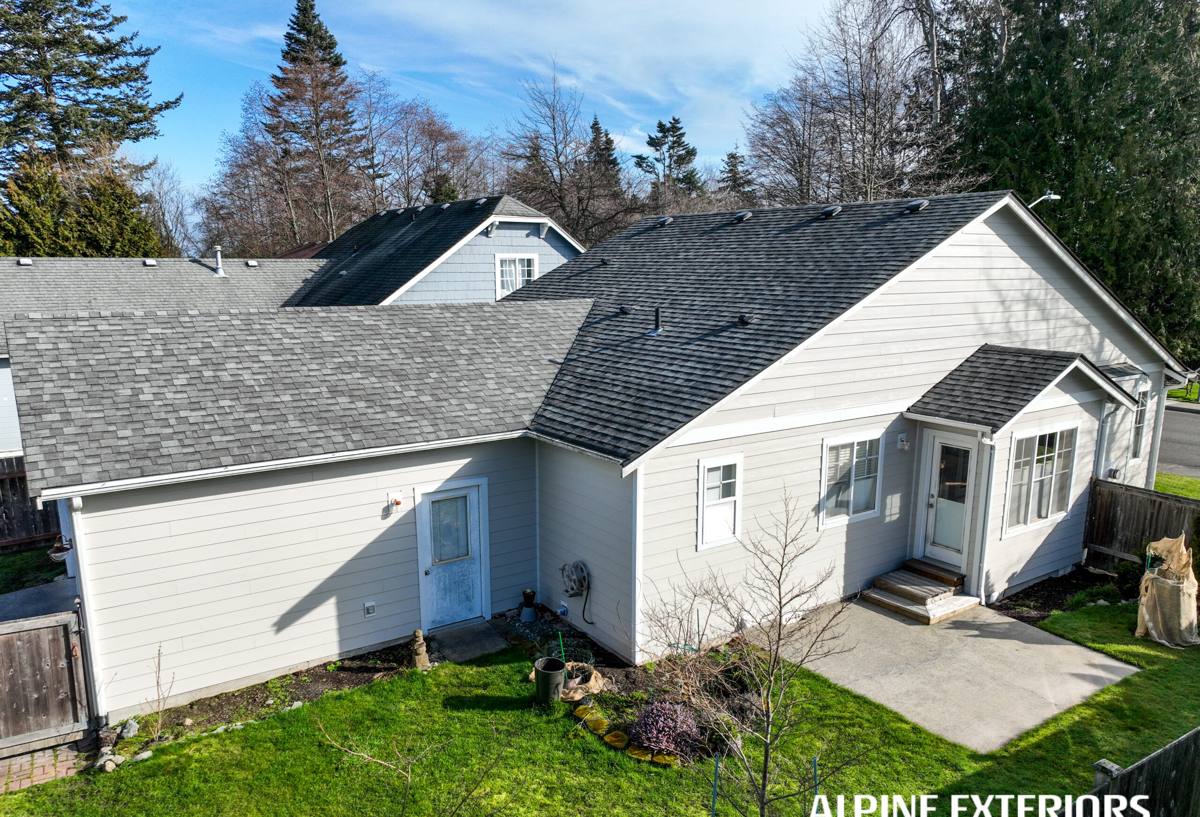
Signs a Renton Roof Needs Replacing, Not Just Patching
Roofing decisions in this climate usually come down to whether the roof is still shedding water reliably or just delaying the inevitable. A few signals we look for during an inspection:
- Granule loss heavy enough that you can see bare, shiny patches on asphalt shingles
- Moss established at the ridge or in shaded valleys, not just surface algae staining
- Soft or spongy decking felt underfoot during inspection, especially near valleys and eaves
- Flashing that's rusted, lifted, or was never properly stepped at wall intersections
- Daylight or water staining visible in the attic along the roof plane
- A roof past 20-25 years old on asphalt, or showing widespread wear well before that age
One or two of these on their own might mean a repair is enough. Several together, especially soft decking or interior staining, usually mean the roof has been letting moisture in longer than it looks like from the ground.
Why Moss Is More Than a Cosmetic Problem
Moss holds water against the roofing material long after the surrounding surfaces have dried. On shingle roofs, that constant moisture shortens the life of the granule coating and can work its way under tabs and up under the ridge. On any roof type, moss roots and rhizoids can lift edges just enough to let wind-driven rain track sideways underneath. In a climate with as many wet weeks as Renton gets, a roof that isn't detailed to resist moss buildup is fighting an uphill battle from day one.
What a Correct Roof Replacement Involves Here
A replacement done right in this climate isn't just deck, felt, shingle. It's a system, and every layer has a job:
Tear-Off and Deck Inspection
We remove the existing roofing down to the deck rather than layering over it. That's the only way to actually see the condition of the sheathing — soft spots, delaminated plywood, or rot around old penetrations don't show up until the old material is off. Any compromised decking gets replaced before anything new goes down; roofing over bad sheathing just hides a problem that will resurface.
Underlayment and Ice/Water Protection
Given how much wind-driven rain this area sees, we run synthetic underlayment across the full roof and add self-adhered ice-and-water membrane at the vulnerable spots — eaves, valleys, around chimneys and skylights, and anywhere water tends to pool or back up. This is the layer that keeps the house dry if wind gets water up and under the roofing surface, which happens more often here than in calmer climates.
Flashing at Every Penetration
Flashing failures are one of the most common causes of leaks we find on older Renton roofs, and they're almost always avoidable. Step flashing at walls, proper counterflashing at chimneys, and correctly lapped flashing at valleys all need to be installed in the right order relative to the underlayment and roofing material — not caulked together as an afterthought.
Ventilation Balance
A roof deck that can't breathe traps moisture from inside the house against the underside of the sheathing, which contributes to rot regardless of how good the roofing material above it is. We check intake at the soffits against exhaust at the ridge and correct the balance where needed, since this affects both roof lifespan and the moss/algae resistance of the surface material.
Roofing Material Installation
Whether it's architectural asphalt shingle, metal, or another material, correct nailing pattern, exposure, and fastening matter more in high-wind, high-rain conditions than they do in milder climates. We follow manufacturer specs closely because that's also what keeps the material warranty valid.
Choosing a Roofing Material for Renton Conditions
| Material | How It Handles Moss/Moisture | Typical Lifespan Here | Trade-offs |
|---|---|---|---|
| Architectural asphalt shingle | Good with proper ventilation and algae-resistant granules; still needs periodic moss removal | 20-30 years | Most economical upfront; shortest lifespan of the common options |
| Standing seam metal | Sheds water fast, minimal moss adhesion due to smooth surface | 40-50+ years | Higher upfront cost; installation sensitivity means workmanship matters even more |
| Synthetic/composite shingle | Resists moisture absorption well, low maintenance | 30-50 years | Mid-to-upper cost range; product selection matters for long-term color and rigidity performance |
There's no universally "best" material — the right call depends on the home's roof pitch, tree cover, budget, and how long the homeowner plans to stay in the house. We'll walk through the honest trade-offs for your specific roof rather than pushing one product across every job.
Our Process, Start to Finish
- Inspection and estimate — we get on the roof (not just a ground-level look) and check the deck, flashing, ventilation, and any interior signs of past leaks
- Written scope — a clear breakdown of materials, underlayment approach, flashing details, and ventilation work, so there are no surprises mid-project
- Scheduling around weather — we plan tear-off and dry-in around Seattle-area forecasts so the deck isn't left exposed longer than necessary
- Tear-off and deck repair — old material removed, sheathing inspected and replaced where needed
- Underlayment, flashing, and ventilation correction — the layers that determine how the roof performs over the next 20-plus years
- Roofing material installation — installed to manufacturer spec to protect both performance and warranty coverage
- Final walkthrough — cleanup, magnetic sweep for nails, and a review of the completed work with the homeowner
Cost Factors Homeowners Should Understand
Roof replacement pricing varies enough by roof that we won't quote a number without seeing it, but the factors that move the price are consistent:
| Factor | Why It Matters |
|---|---|
| Roof size and pitch | Steeper roofs take longer and require more safety setup, adding labor cost |
| Deck condition | Rotted or soft sheathing found during tear-off adds material and labor not visible in the original estimate |
| Material choice | Asphalt, metal, and composite options span a wide cost range per square |
| Number of penetrations | Chimneys, skylights, and vents each require individual flashing work |
| Ventilation corrections | Adding or rebalancing intake/exhaust vents is a smaller add during a full replacement than as a standalone project later |
| Access and layout | Steep lots, tight setbacks, or limited driveway access affect staging and disposal logistics |
Why a Renton-Familiar Crew Matters
A roofing crew that works Renton regularly already knows which neighborhoods hold moisture longer under tree cover, which older homes tend to have undersized ventilation from when they were built, and how local permitting and inspection typically go. That familiarity shows up in fewer surprises during the job and a roof that's detailed for the conditions it actually has to survive — not a generic install pulled from a drier-climate playbook. It also means someone local is easy to reach if a question comes up after the job is done, rather than chasing down a crew that was only in the area for one project.
Maintaining Your New Roof
A correctly installed roof still benefits from basic upkeep in this climate:
- Keep gutters clear so water isn't backing up under the eaves
- Remove moss buildup before it establishes, rather than after it's thick
- Trim back overhanging branches that keep sections of the roof shaded and damp
- Have the roof looked at after major windstorms, since lifted or displaced material is often easy to fix early and costly to ignore
- Schedule a periodic check-in every few years even if nothing looks obviously wrong
If your Renton home's roof is showing wear, letting in moisture, or is simply old enough that a replacement makes more sense than another round of repairs, we're happy to take a look and give you a straightforward, no-pressure estimate using the form below.