 Seattle Exterior
 Why Board & Batten Suits Shoreline Homes
Board and batten has become one of the most requested siding styles in the Shoreline area, and it's easy to see why. The vertical lines read as clean and a little more architectural than standard lap siding, and it pairs well with the craftsman bungalows, mid-century ramblers, and newer infill builds you see throughout this part of King County. It's also a style that can visually anchor a front elevation or an entry feature while the rest of the house stays in a more traditional horizontal siding.
But Shoreline's location right along Puget Sound means the material and the installation details matter more here than in a drier inland suburb. Salt-laden air off the water accelerates corrosion on fasteners and hardware. Driving rain, pushed sideways by wind coming off the Sound, tests every seam and joint on a vertical siding profile. And the long stretch of gray, wet months every year gives moss and algae months to take hold on anything that traps moisture or sits in constant shade under mature tree cover. Board and batten done wrong in this climate shows problems fast — done right, it's one of the more durable and attractive options available.
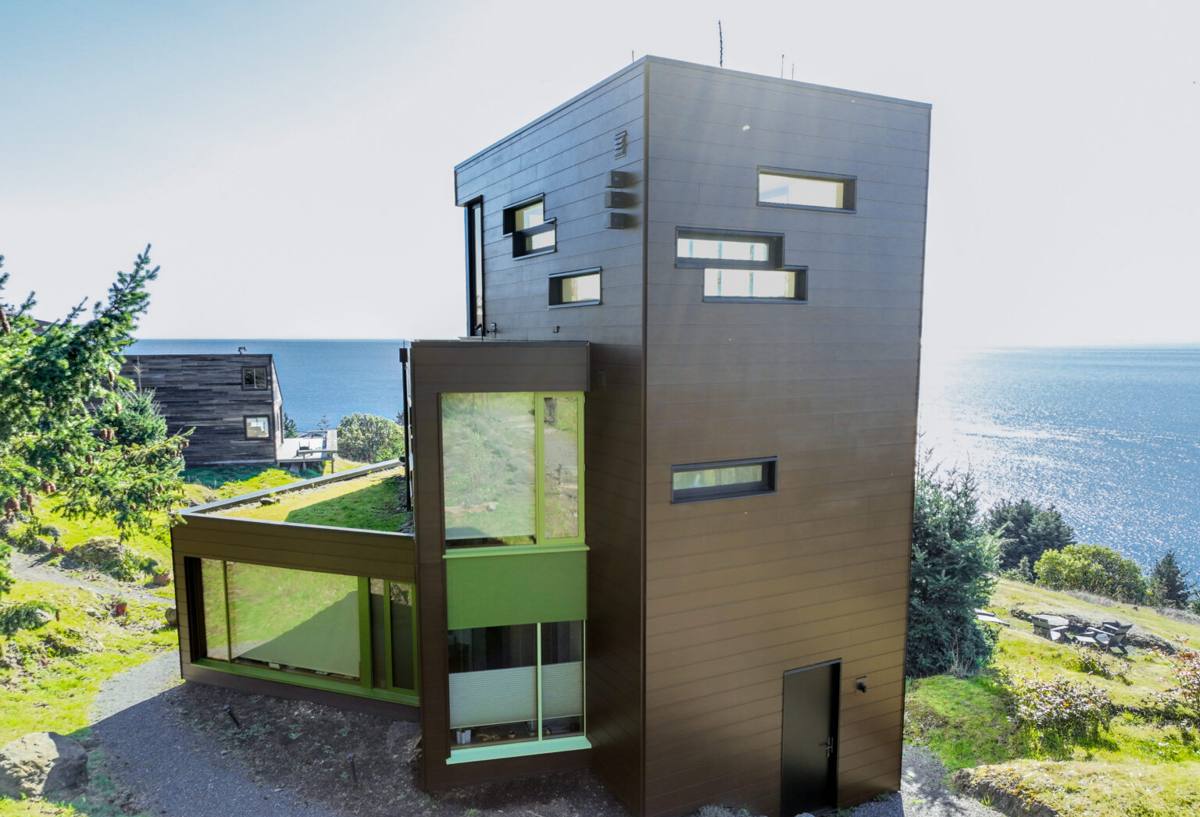
What Board & Batten Siding Actually Is
Board and batten is a vertical siding system built from wide flat panels or boards installed edge to edge, with narrower strips — the battens — fastened over the seams between them. The result is a rhythm of wide and narrow vertical lines instead of the stacked horizontal shadow lines you get with traditional lap siding. It can be run full-height on a wall, used as an accent on gables and dormers, or mixed with lap siding to break up a large elevation.
The style has old roots — it was originally a practical way to cover gaps between rough-sawn boards on barns and early homes — but modern versions are engineered products, not the rough lumber the look is based on. That distinction matters, because how those panels are made and installed determines whether the style holds up in a marine climate or becomes a maintenance headache.
Why We Install This in James Hardie Fiber Cement Only
We get asked regularly about board and batten in vinyl, engineered wood (LP SmartSide), or real cedar boards, since all three are marketed for this look. We don't install any of them, and it's worth explaining why rather than just saying no.
Vinyl board and batten
Vinyl panels for this style are lightweight and inexpensive, but they're also thin and flexible, which shows on tall vertical runs — waviness and oil-canning are more visible on wide flat panels than on narrow lap profiles. Vinyl also softens and can warp under sustained heat and UV, and it's not a material we can stand behind for the wind-driven rain exposure common along the Sound.
Engineered wood (LP SmartSide) and real wood
Wood-based products, treated or not, are organic material. In a climate with Shoreline's rainfall and humidity, any breach in the factory coating or field-applied paint gives moisture a path into the substrate, and vertical board and batten has more seams per square foot than lap siding — more places for that breach to start. Real cedar board and batten can look excellent when new, but it demands a repainting and caulking cycle that most homeowners underestimate, and it's the first thing to show rot at the bottom edge where boards sit closest to grade and splashback.
What we use instead
James Hardie's fiber cement panel systems — run as vertical panels with HardieTrim battens, or through the Artisan line for a higher-end profile — give the same board and batten look with a non-combustible, dimensionally stable core that doesn't swell, rot, or attract insects. The factory-applied ColorPlus finish is baked on, cures harder than field-applied paint, and is warranted against fading and peeling far longer than anything you can achieve painting site-applied material. For a style with this many seams, starting with a product that doesn't move with moisture is the whole ballgame.
What Correct Installation Requires Here
Board and batten is less forgiving of shortcuts than lap siding, because every seam between a wide panel and its neighbor becomes a joint that has to be detailed correctly, and there are more vertical joints per wall than on a horizontal system. In a climate that sees sustained wet-season rainfall and periodic wind-driven storms off the Sound, a few details are non-negotiable:
Drainage plane and rainscreen gap
Any wall assembly, no matter the siding, needs a code-compliant weather-resistive barrier behind it. On board and batten specifically, we install furring strips to create a true rainscreen gap behind the panels. That gap lets any moisture that does get past the surface drain and dry out instead of sitting against the sheathing — the single biggest difference between board and batten that lasts decades and board and batten that shows rot streaks at year eight.
Fastening for wide panels
Wider panels move more with temperature and humidity swings than narrow lap boards, so fastener spacing and placement have to follow the manufacturer's engineering, not a generic pattern. We use corrosion-resistant fasteners throughout — a detail that isn't optional this close to salt air, where standard hardware can show surface rust within a few seasons.
Flashing at every horizontal transition
Window heads, roof-to-wall intersections, and any horizontal trim board crossing a vertical run need step or head flashing that directs water out and away from the wall, not just caulk. Caulk is a second line of defense, not the primary one — it's the detail we see skipped most often on lower-bid board and batten jobs, and the one that causes the most callback repairs.
Batten joint treatment
Battens cover the seam between panels, but they still need proper gapping and sealant compatible with the ColorPlus finish so the joint can flex slightly without cracking the seal.
Moss, Algae, and the Long Gray Season
Shoreline's tree canopy and marine-influenced weather mean long stretches of shaded, damp conditions every year — ideal growing conditions for moss and algae on any surface that stays wet. Board and batten's vertical lines actually shed bulk water a little better than horizontal lap in some orientations, but shaded north- and west-facing walls under mature trees still need attention.
Two things make the biggest difference: the rainscreen gap described above, which keeps the back side of the panel dry so growth can't take hold from behind, and routine gutter and roof-edge maintenance, since overflow and roof runoff onto a wall is the most common cause of dark streaking on any siding in this region. The ColorPlus finish resists staining better than field-applied paint, but no factory finish makes a wall immune to years of standing moisture from a clogged gutter above it.
Comparing Board & Batten Material Options
| Material | Moisture behavior in this climate | Maintenance over 10+ years | Typical lifespan |
|---|---|---|---|
| Vinyl board and batten | Doesn't rot, but panels flex and can show waviness on tall runs; seams can loosen | Low, but limited repair options if a panel cracks or fades | 15-25 years before visible wear |
| LP SmartSide / engineered wood | Vulnerable at any coating breach; more seams than lap siding means more entry points | Regular caulk and touch-up inspection needed, especially at grade | 15-25 years with diligent upkeep |
| Real cedar boards | Organic material; absorbs moisture directly without a factory seal | Repainting and re-caulking on a recurring cycle | Variable, heavily maintenance-dependent |
| James Hardie fiber cement | Non-combustible core, dimensionally stable, factory-sealed finish | Occasional wash-down; no repainting cycle required | Decades, per manufacturer warranty terms |
Our Process for a Shoreline Board & Batten Project
We start with a site walk that looks at more than the wall you want re-sided. We check roof drainage paths, existing flashing condition, grade slope at the base of the wall, and how much shade and moisture exposure the elevation actually gets — all of which change how the assembly needs to be detailed. From there:
- Remove existing siding down to the sheathing and inspect for hidden moisture damage before it's covered up again
- Repair or replace any compromised sheathing, and correct flashing at windows, doors, and roof intersections
- Install a code-compliant weather-resistive barrier and furring strips for a true rainscreen gap
- Install James Hardie panels and battens to manufacturer fastening specifications, with corrosion-resistant hardware throughout
- Detail all joints, trim transitions, and penetrations, then walk the finished job with the homeowner
Why a Local Crew Matters for This Job
Board and batten's marine-climate details aren't universal — they're shaped by how much wind-driven rain a given wall sees, how close it sits to the Sound, and how much tree shade it gets, all of which vary block to block in this area. A crew that already works in Shoreline and the broader Seattle area has a feel for which elevations need the most attention, understands local permitting expectations, and isn't guessing at flashing and drainage details that only get tested during a real King County winter. That local track record is worth more on a style with this many seams than it is on a simpler lap siding job.
Signs Your Current Siding Might Need Attention
- Dark streaking or moss growth concentrated on shaded or tree-covered walls
- Soft or spongy spots along the bottom edge of boards near grade
- Visible gaps, cracking, or separation at vertical seams or battens
- Peeling or bubbling paint, especially after a wet winter
- Rust staining running down from fasteners or trim hardware
- Warping or waviness visible when a wall is viewed at a low angle in daylight
If you're seeing any of these on a board and batten wall, or you're planning a re-side and want the style done with the right details for this climate, we're happy to take a look. We offer free, no-pressure estimates for Shoreline homeowners — no obligation, just an honest assessment of what your home actually needs.