 Seattle Exterior
 Building Decks for Shoreline's Waterfront Climate
Shoreline sits right along Puget Sound, and that location shapes everything about how a deck should be built here. Homes closer to the water deal with salt-laden air that accelerates corrosion on fasteners and hardware. Every property in the area, waterfront or not, deals with King County's long wet season — months of steady rain followed by a stretch of low sun angles and shade that keeps surfaces damp well after the rain stops. That combination is exactly what grows moss, and moss on a deck isn't just an eyesore. It holds moisture against wood and composite surfaces, makes boards slick and dangerous underfoot, and works its way into seams and fastener heads where it starts problems you can't see until they're expensive.
A deck built without this climate in mind will show it within a few seasons: graying and cupping boards, rusted screw heads bleeding into the decking, soft spots where water pooled instead of draining, and railings that loosen because the posts were never properly flashed. A deck built for Shoreline's conditions from the start avoids most of that. This page covers what that actually looks like — the materials, the structural details, and the maintenance realities specific to building and owning a deck in this part of Seattle.
What Local Homes Need From a Deck
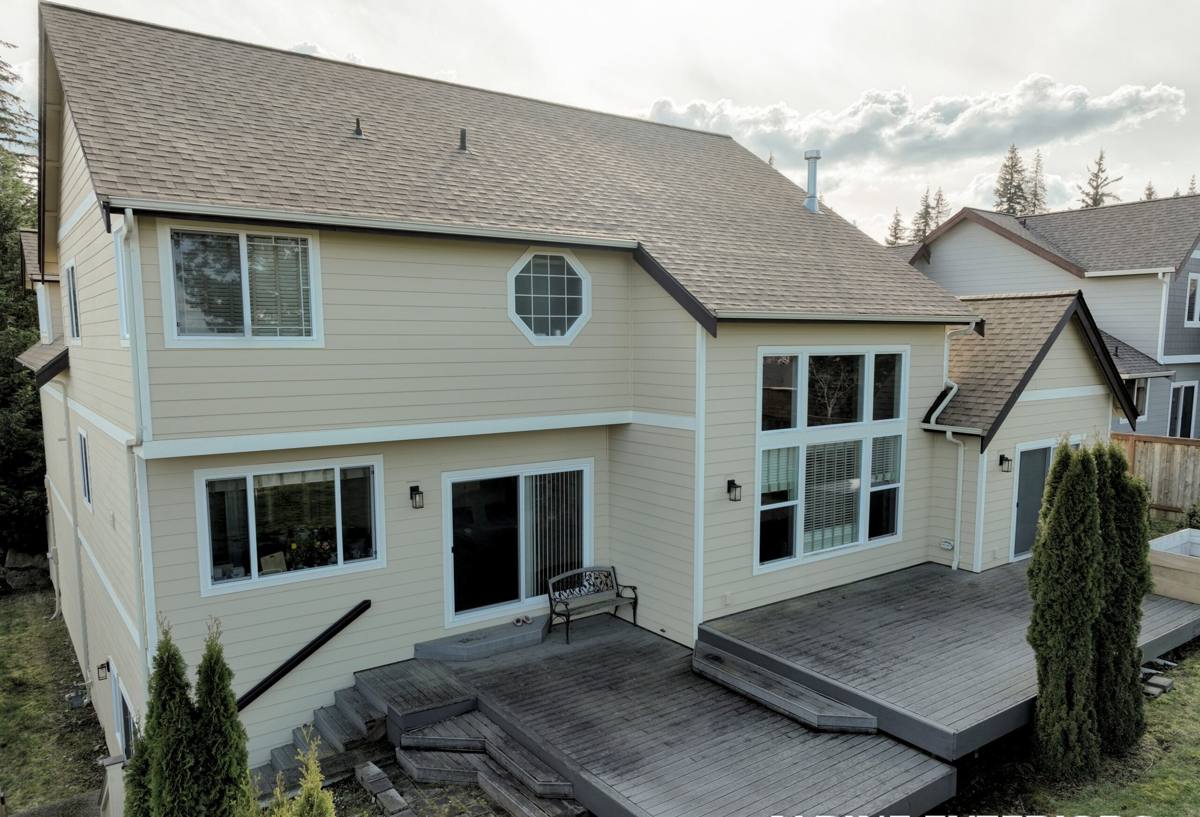
Shoreline's housing stock ranges from mid-century single-story homes to newer construction, many on lots with mature tree cover or partial water views. That mix creates a few recurring conditions we plan around:
- Shade and airflow: Decks tucked under tree canopy or on the north side of a house dry out slower after rain, which means moss and algae take hold faster and decking needs a surface built to handle sustained dampness.
- Slope and drainage: Many Shoreline lots have grade changes toward the Sound or toward drainage easements, which affects how a deck's substructure needs to be framed to shed water instead of trapping it against the house.
- Proximity to salt air: Homes within a mile or so of the water see faster corrosion on standard fasteners and hardware than homes further inland in King County.
- Ledger attachment to older framing: Many homes in this area were built decades before current deck-ledger flashing standards existed, so tying a new deck safely into the house often means correcting what's behind the siding, not just building outward from it.
None of this makes building a deck in Shoreline harder than anywhere else in the Seattle area — it just means the details matter more, and cutting corners shows up sooner.
The Moss Problem, Specifically
Moss season here typically runs from fall through spring, and on a shaded or north-facing deck it can be nearly year-round. Moss thrives wherever moisture sits — in the grain of wood decking, in the textured grooves of some composite boards, and especially in gaps where boards butt too tightly together. The fix isn't a one-time treatment; it's a combination of board spacing that allows airflow and drainage, a surface texture that doesn't trap organic material, and periodic cleaning. We factor moss resistance into both material choice and how we space and fasten the decking, not just what product we hand you a sample of.
Decking Material Options for This Climate
There's no single "best" decking material — the right choice depends on your budget, how much upkeep you want to take on, and how exposed your specific deck is to shade, rain, and salt air.
| Material | How It Handles Wet, Shaded Conditions | Maintenance | General Cost Position |
|---|---|---|---|
| Pressure-treated wood | Prone to moss and mildew if not sealed regularly; needs proper spacing to drain well | Annual cleaning and periodic sealing | Lowest upfront cost |
| Cedar | Naturally rot-resistant but still needs sealing to resist moss staining and graying | Sealing every 1-2 years for appearance and protection | Mid-range |
| Composite decking | Resists rot entirely; surface texture matters a lot for moss and algae shedding | Periodic washing, no sealing needed | Higher upfront, lower long-term labor |
| PVC decking | Fully resists moisture absorption; performs well in shaded, damp spots | Occasional washing | Highest upfront cost |
For heavily shaded lots or decks close to the water, we generally steer homeowners away from bare pressure-treated wood as a long-term surface unless they're committed to a real sealing schedule — it's a fine structural material underneath the deck, but as a walking surface in constant shade it's the option that needs the most attention to stay ahead of moss and graying. Composite and PVC products cost more up front, but for a shaded Shoreline lot the reduced maintenance burden often makes the math work out over the life of the deck.
Structural Details That Matter Here
Ledger Flashing and Attachment
The ledger board — where the deck ties into the house — is the single most common failure point on older decks in this region. If it's not flashed correctly, water works its way behind the siding and into the house framing over time, which is a much more expensive problem than anything happening on the deck surface itself. On any ledger-attached deck we build or rebuild, correct flashing and proper standoff spacing from the house wall are non-negotiable, regardless of what was there before.
Footings and Post Bases
Puget Sound's wet winters mean soil conditions shift seasonally. Footings need to be set to the depth King County's building code requires for frost and bearing, and post bases need to keep the wood post itself elevated off concrete so it isn't sitting in standing water after a heavy rain. This is a detail that's invisible once the deck is finished but determines whether the structure is still sound in fifteen years.
Fasteners and Hardware
For homes closer to the water, we use fasteners and structural hardware rated for coastal or high-corrosion exposure — standard exterior-rated screws that are fine ten miles inland can start showing rust streaks within a couple of seasons when they're exposed to salt air regularly. This is one of the cheapest details to get right and one of the most visible to get wrong.
Board Spacing and Drainage
Correct gapping between boards isn't just a manufacturer spec — in a climate this wet, it's what allows a deck to actually dry out between rain events instead of staying damp for days. Tight, moisture-trapping gaps are one of the most common causes of premature moss growth and early board failure we see on existing decks in this area.
Our Process for a Custom Deck Build
- On-site assessment: We look at your lot's grade, shade exposure, proximity to water, and how the deck will tie into your existing structure before recommending materials.
- Design and material selection: We walk through decking, railing, and structural options against your budget and how much maintenance you actually want to do.
- Permitting: Deck projects in Shoreline typically require permitting through the city; we handle that process as part of the build.
- Site prep and footings: Footings are set to proper depth and post bases are installed to keep structural wood off standing water.
- Framing and ledger work: Ledger flashing and structural connections are built to current code, including on tie-in points to older homes.
- Decking, railing, and finish work: Boards are spaced and fastened for drainage and airflow, with corrosion-appropriate hardware throughout.
- Final walkthrough: We go over basic maintenance specific to your material choice and your lot's exposure before we consider the job done.
Why a Crew That Already Works Shoreline Matters
A deck built by a crew unfamiliar with this specific stretch of the Puget Sound area is more likely to treat it like a generic build — standard spacing, standard hardware, standard sealing recommendations that don't account for how much shade and moisture a particular lot actually gets. We work in Shoreline and the surrounding Seattle area regularly, which means we've seen how decks in this specific climate actually age, not just how they look on installation day. That shows up in small decisions: which side of the yard needs extra drainage attention, when a ledger tie-in needs additional correction because of the home's age, and which decking products actually hold up against sustained shade and moss pressure instead of just resisting it in a lab test.
It also means we're accountable locally. If something needs attention after the build — a settling post, a section that's holding moisture more than expected — we're not driving in from across the state to look at it.
Maintaining Your Deck Once It's Built
- Sweep debris and leaves off the deck regularly, especially in fall — trapped organic matter is what feeds moss growth.
- Rinse or gently wash the surface a few times a year, more often in heavily shaded areas.
- Check and reseal wood decking on the schedule appropriate to that material — don't wait until graying is obvious.
- Inspect railings and post connections annually for looseness, which can signal a flashing or moisture issue underneath.
- Keep an eye on the ledger tie-in area at the house wall for any staining or soft siding, which can indicate a flashing problem starting.
- Trim back overhanging branches where practical to improve airflow and sun exposure on shaded sections.
Getting Started
Every lot in Shoreline handles rain, shade, and salt air a little differently, and the right deck build accounts for your specific property rather than a generic template. If you're planning a new deck or looking at replacing one that's showing its age, we're happy to come take a look and walk you through honest options for your situation. Reach out for a free, no-pressure estimate using the form below.