 Seattle Exterior
 Shoreline's Siding Problem Isn't Like Other Cities'
Shoreline sits right against Puget Sound, and that location shapes everything about how siding ages here. Homes a few blocks from the water deal with a fine mist of salt-laden air that settles on exterior surfaces year-round. Add King County's long wet season, where driving rain comes in sideways off the water for months at a stretch, and you have a climate that punishes any siding material with a weak point. Then there's moss and algae, which get a genuine head start in Shoreline because shaded north-facing walls, mature tree cover, and near-constant dampness from fall through spring create ideal growing conditions for months longer than in drier parts of the state.
None of this is exotic weather. It's the same Pacific Northwest pattern homeowners here have lived with for decades. But it does mean that a siding installation done to a generic national standard, without accounting for what Shoreline actually throws at a house, tends to show problems years before it should. Swelling at butt joints, soft spots at the bottom courses, streaking and green growth on shaded elevations — these are the signatures of siding that wasn't matched to this specific climate or wasn't installed with this specific climate in mind.
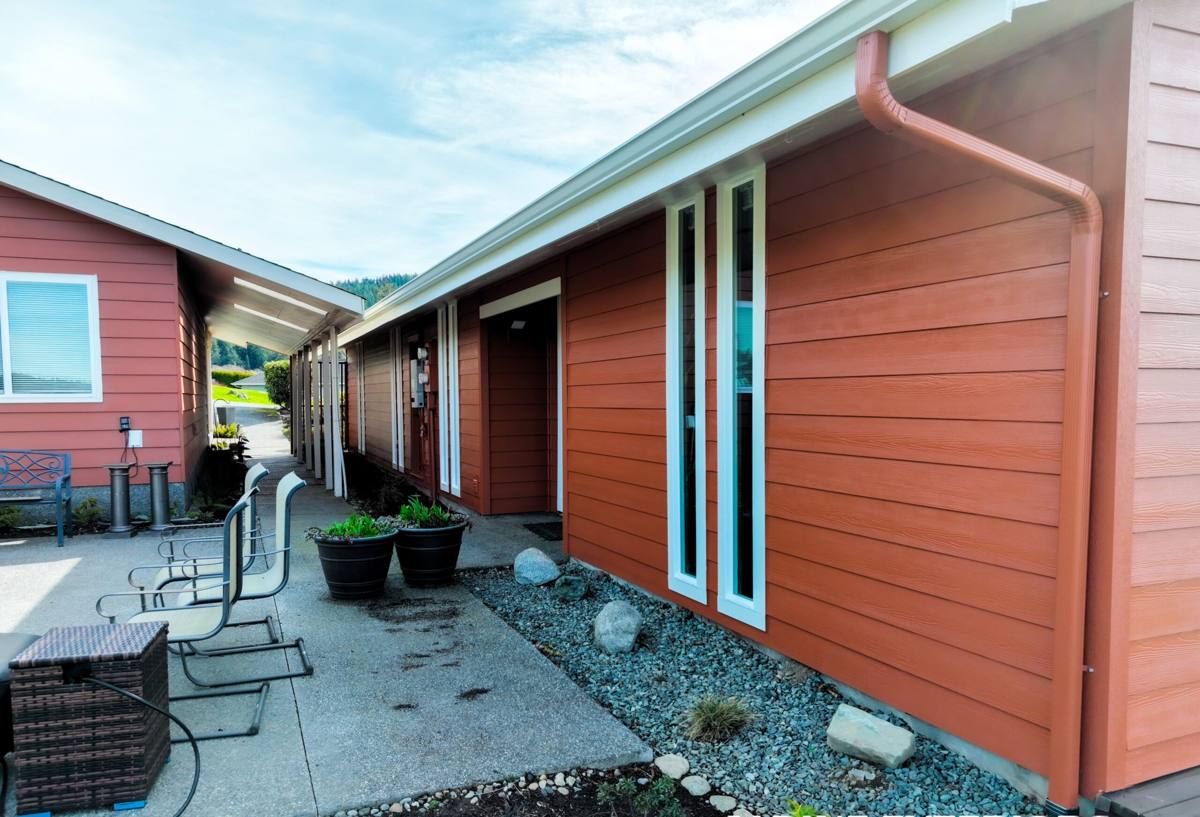
What Salt Air, Driving Rain, and Moss Actually Do to Siding
Salt air
Salt-laden air accelerates corrosion on any exposed metal fasteners, flashing, and trim, and it can degrade certain paint and coating systems faster than inland exposure would. Siding materials and finishes that aren't engineered for coastal-adjacent exposure can chalk, fade, or lose adhesion noticeably sooner near the Sound than they would a few miles inland.
Driving rain
Wind-driven rain doesn't just fall on a wall — it gets pushed sideways and upward, working its way behind siding at seams, laps, and penetrations that a calmer climate would never test. Every joint, every nail hole, and every point where siding meets a window, door, or roofline is a place where water intrusion can start if the assembly behind the siding isn't detailed correctly.
Moss and organic growth
Moss and algae need moisture and shade, and Shoreline's tree canopy plus its wet season supply both in abundance. Growth on siding isn't just cosmetic — trapped moisture under moss and algae mats keeps the siding surface damp far longer than it would otherwise stay, which shortens the useful life of any moisture-sensitive material underneath.
Why We Install Only James Hardie Fiber Cement
Our company made a deliberate call: we install James Hardie fiber cement siding, and nothing else. We don't install vinyl, LP SmartSide, Cemplank, Allura, primed spruce, or cedar. That's not a marketing position, it's a standard we set because of what we've seen these climate conditions do to siding over a full ownership cycle, not just the first few years.
Fiber cement is non-combustible, dimensionally stable, and doesn't feed moss and algae the way wood-based products can. James Hardie backs its siding with a factory-applied ColorPlus finish, engineered climate-specific HZ product lines, and a strong transferable warranty — three things that matter directly in a market like Shoreline, where salt air and sustained moisture are working against the finish and the substrate every day the siding is on the wall. We'd rather install one product correctly and stand behind it than offer a menu of options we know will underperform in this specific climate.
What a Correct Siding Installation Actually Involves
Siding installation is often thought of as a surface job — cladding going on the outside of a house. In reality, most of what determines whether siding lasts happens before the first plank goes up.
- Substrate inspection: checking sheathing for rot, delamination, or prior water damage before covering it up
- Weather-resistive barrier: a continuous, properly lapped water and air barrier installed shingle-style so water sheds down and out, not into the wall
- Flashing at every penetration: windows, doors, hose bibs, light fixtures, and vents all need integrated flashing that directs water back out, not into the assembly
- Correct fastening: proper fastener type, spacing, and depth per the manufacturer's installation instructions — over-driven or under-driven nails are a common source of premature failure
- Butt joint and seam treatment: joints backed and sealed correctly so driving rain can't work its way in from the side
- Proper clearance: siding held off grade, decks, roofs, and other surfaces to the manufacturer's minimum gap so water and debris don't sit against the bottom edge
Skip any one of these steps and the siding itself can be flawless while the wall behind it still fails. This is where a lot of installation problems in wet coastal climates actually originate — not in the product, but in details that get rushed or skipped.
James Hardie Product Lines That Fit Shoreline Conditions
James Hardie engineers its siding by climate zone, and homes in this part of Washington fall into the HZ5 category, built around resistance to moisture and cold-weather performance rather than the fire-zone concerns that dominate in drier regions. For Shoreline specifically, we typically recommend:
| Product | Best Use | Why It Fits Shoreline |
|---|---|---|
| HardiePlank lap siding | Most elevations, classic and modern styles | Widest color range in ColorPlus, proven performance in sustained wet climates |
| HardieShingle siding | Accent gables, dormers, Craftsman and cottage styles | Common regional look with the moisture resistance vinyl and wood shingle can't match |
| HardiePanel vertical siding | Modern facades, porch ceilings, accent walls | Clean lines with fewer horizontal seams for water to find |
| HardieTrim boards | Corners, window and door casing, fascia | Matches the siding's moisture and rot resistance at the most exposed edges of the house |
ColorPlus factory-applied finishes matter here in particular. A factory-baked finish resists fading and chalking better than field-applied paint, which is a real advantage when a home is dealing with salt air on top of normal UV exposure.
How Our Process Works on a Shoreline Home
- On-site assessment: we walk the exterior, check the current siding and sheathing condition, and note problem areas — north-facing walls with heavy moss, low clearance points, areas showing past water damage
- Written estimate and product plan: which Hardie products and colors fit the home, an honest scope of work, and a clear cost range
- Tear-off and substrate repair: old siding comes off, sheathing is inspected, and any rot or damage is repaired before anything new goes on
- Weather barrier and flashing installation: the part of the job that determines whether the siding survives the next twenty years of Puget Sound weather
- Hardie installation to manufacturer spec: correct fastening, clearances, and joint treatment throughout
- Final inspection and walkthrough: we go over the finished work with the homeowner before calling the job done
What Drives the Cost of a Shoreline Siding Project
| Factor | Why It Matters |
|---|---|
| Home size and wall complexity | More corners, gables, and dormers mean more cutting, flashing, and labor time |
| Existing siding and substrate condition | Rot or moisture damage found during tear-off adds repair scope before new siding can go on |
| Product selection | HardiePlank, HardieShingle, and HardiePanel carry different material and labor costs |
| Trim and accent work | Detailed trim packages and shingle accents take more time than a straightforward lap siding wall |
| Access and site conditions | Tight lots, mature landscaping, and multi-story walls affect staging and labor |
We give homeowners a written, itemized estimate before work starts, and we're upfront about broad cost ranges during the initial conversation rather than making anyone guess.
Why a Crew That Already Works Shoreline Matters
Siding installation isn't identical from city to city, even within the same county. A crew that regularly works in Shoreline already knows which elevations tend to hold moisture longest, how local permitting works, and what the housing stock in this area typically needs — a lot of it built decades ago with sheathing and moisture barriers that don't meet current standards. That familiarity shows up in faster, more accurate estimates and fewer surprises once tear-off starts. It also means we're not learning King County's inspection process or this climate's failure points on someone's home for the first time.
Protecting the Investment After Installation
James Hardie siding installed correctly needs very little upkeep, but a small amount of seasonal attention goes a long way in this climate:
- Rinse siding annually, focusing on shaded north-facing walls where moss and algae take hold first
- Keep gutters clear so overflow doesn't run down and stay against siding
- Trim back vegetation that keeps walls shaded and damp longer than they need to be
- Check caulking at trim and penetrations every couple of years and touch up as needed
- Address any impact damage or chipped finish promptly rather than letting moisture get behind it
If you're planning a siding project in Shoreline, we're glad to walk your property, look at what your home is dealing with, and put together a straightforward, no-pressure estimate using the form below.