 Seattle Exterior
 Why Rainier Valley Siding Takes a Beating
Rainier Valley sits inland from Puget Sound but still gets the same wet-season punishment as the rest of Seattle and King County: months of low-intensity rain, occasional wind-driven storms off the Sound, and enough salt-laden air moving through the region to accelerate corrosion on anything that isn't rated for it. Add in the mature tree canopy that shades a lot of the neighborhood's older lots, and you get a climate that's genuinely tough on exterior cladding — not dramatic, just relentless.
Moss and a Shade Problem That Never Really Ends
Homes tucked under tree cover stay damp longer after every rain. Siding that can't shed water fast, or that traps moisture against the substrate, becomes a moss and mildew magnet within a few seasons. On wood-based products that's a maintenance treadmill — scrub, treat, repaint, repeat. On siding that isn't installed with a drainage gap behind it, trapped moisture doesn't just grow moss on the surface, it can rot what's underneath before anyone notices.
Driving Rain, Not Just Rain
Seattle's wet season isn't all gentle drizzle. Storms moving through King County bring real wind, and wind-driven rain doesn't fall straight down — it gets pushed sideways into laps, seams, and trim joints. A siding job that would hold up fine in a drier climate can fail here specifically because the installer didn't account for water arriving horizontally, not just vertically.
Salt Air and Metal Fatigue
Proximity to the Sound means airborne salt is part of the regional environment, and it's hard on anything metal — fasteners, flashing, trim. Cheap or mismatched hardware corrodes faster here than it would inland, and once a fastener starts failing, the siding panel it's holding starts moving, which opens gaps for water. It's a slow failure mode, which is exactly why it gets missed until it's expensive.
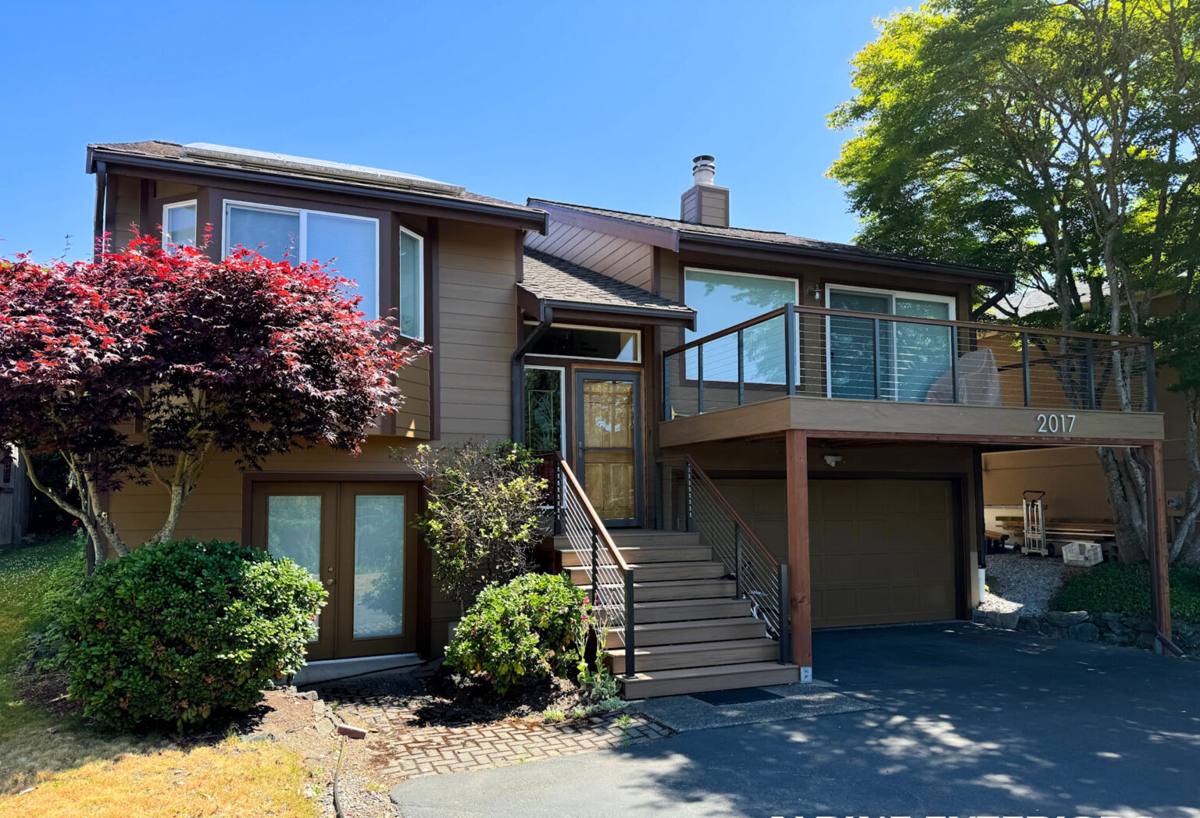
What Correct Siding Installation Actually Requires
A siding job that looks right on install day and a siding job that's still performing in fifteen years are not the same thing. The difference is almost never the product on the outside — it's what happens underneath it.
The Water-Resistive Barrier and Rain Screen Gap
Every wall needs a continuous water-resistive barrier behind the siding, properly lapped so water sheds downward and out, never behind the next layer. In a climate like this, we also build in a rain screen gap — a small air space between the barrier and the siding — so any moisture that does get past the outer layer can drain and dry instead of sitting against the sheathing. Skipping this step is one of the most common shortcuts in the industry, and it's invisible until the wall starts failing from the inside out.
Flashing Details That Get Skipped
Windows, doors, and any horizontal trim are the places where water actually gets in. Correct flashing means integrating it with the water-resistive barrier in the right sequence — not just caulking a gap and calling it done. Caulk is not flashing. It fails; properly lapped flashing doesn't depend on a bead of sealant staying intact for the next twenty years.
Fastening Schedule Built for Wind Exposure
Fastener spacing, type, and placement all change depending on wind exposure and the specific siding product's engineering spec. We follow the manufacturer's fastening schedule for the product and the exposure, not a generic pattern — a shortcut here shows up later as panels that rattle, shift, or pull loose in a wind event.
Why This Company Installs Only James Hardie Fiber Cement
We made a deliberate decision to stop installing several common siding products — vinyl, LP SmartSide, Cemplank, Allura, primed spruce, and cedar — and install James Hardie fiber cement exclusively. That's not a marketing position, it's a maintenance and durability call based on what actually holds up in a Pacific Northwest climate like Rainier Valley's.
James Hardie fiber cement is non-combustible, which matters for insurance and code considerations alike. It's engineered in climate-specific HZ product lines — the HZ5 formulation is built for regions with the kind of moisture cycling and temperature swings we get here, rather than a one-size-fits-all product. The factory-applied ColorPlus finish is baked on under controlled conditions, which gives it better fade and moisture resistance than field-applied paint, and it carries a real, transferable warranty backed by the manufacturer rather than just the installer.
None of that means other products are junk. Vinyl is inexpensive and low-maintenance in mild climates but can warp or crack under Seattle's wider temperature swings and doesn't offer the same fire rating. Wood species like cedar or primed spruce look great initially but demand a repainting and caulking cycle that most homeowners underestimate, especially under tree cover where things stay damp longer. We simply decided we'd rather stand behind one product system we can install to spec and warranty properly than split our crews' expertise across five different materials with five different failure modes.
How Hardie Compares to Other Siding Options
| Factor | James Hardie Fiber Cement | Vinyl | Wood / Primed Spruce |
|---|---|---|---|
| Moisture behavior | Engineered HZ5 formulation resists moisture cycling | Doesn't absorb water but can warp with temperature swings | Absorbs moisture; prone to rot without diligent upkeep |
| Fire resistance | Non-combustible | Combustible, can melt or deform in heat | Combustible |
| Maintenance | Factory ColorPlus finish, minimal repainting | Low maintenance but can fade and crack | Regular repainting, caulking, and moss treatment |
| Typical lifespan when installed to spec | Multiple decades | 15-25 years | Highly dependent on upkeep |
| Warranty structure | Manufacturer-backed, transferable | Varies widely by manufacturer | Typically installer-only, if any |
The point of this table isn't to declare every alternative a bad product everywhere — it's to show why, for this specific climate and the maintenance realities of Rainier Valley homes, fiber cement is the trade-off we're willing to install and stand behind.
Our Installation Process, Start to Finish
- Site assessment. We inspect the existing siding, sheathing, and any trouble spots — around windows, at grade level, and anywhere tree cover keeps a wall damp longer than the rest of the house.
- Substrate repair. Any rotted sheathing or framing gets replaced before anything new goes up. Covering damaged substrate just hides a problem, it doesn't fix it.
- Water-resistive barrier installation. Properly lapped, sealed at penetrations, and integrated with window and door flashing.
- Rain screen gap. Installed to allow drainage and drying behind the siding, sized appropriately for the wall assembly.
- Hardie panel or plank installation. Fastened per the manufacturer's schedule for the specific product and wind exposure.
- Trim, caulking, and finish work. Sealed at the joints that actually need it, not everywhere as a substitute for proper flashing.
- Final walkthrough. We review the finished work with the homeowner before calling the job complete.
Signs Your Rainier Valley Home May Need New Siding
Older housing stock in this part of Seattle — a lot of it craftsman-style and mid-century construction — is at the age where original siding is due for a hard look. Watch for:
- Persistent moss or dark streaking that comes back within weeks of cleaning
- Soft spots or visible warping, especially near ground level or under roof valleys
- Paint that's peeling or bubbling rather than just fading
- Gaps opening up at seams, corners, or trim joints
- Visible fastener corrosion or streaking below nail heads
- A noticeably higher heating bill than a similar-sized neighboring home, which can point to moisture-compromised insulation behind the siding
Questions Worth Asking Before You Hire Anyone
- Do you carry current Washington state contractor licensing and insurance, and can you provide proof?
- Will you install a rain screen gap and water-resistive barrier as part of the standard job, or is that an upgrade?
- What fastening schedule will you follow, and is it the manufacturer's spec for this product and this wall's exposure?
- Who handles the warranty if something goes wrong — the manufacturer, the installer, or both?
- Have you worked on homes in this specific neighborhood, and do you understand its shade and drainage patterns?
Why Local Experience in Rainier Valley Specifically Matters
A crew that mostly works drier, sunnier parts of King County will approach a job differently than one that regularly works neighborhoods with heavy tree cover and consistent shade. The moss cycle, the drainage patterns around older foundations, and the wind exposure from storms moving off the Sound all shape decisions that don't show up in a generic spec sheet — where to prioritize drainage detailing, which elevations take the worst of the driving rain, and how much clearance to leave near grade and landscaping. That kind of judgment comes from having actually done the work here, not from a training manual.
If you're weighing a siding replacement or repair for a Rainier Valley home, we're happy to take a look and walk you through what we'd actually recommend for your specific house — no pressure, no obligation. Request a free estimate using the form below and we'll go from there.