 Seattle Exterior
 Siding Repair Built for Redmond's Climate
Redmond sits in the thick of the Puget Sound weather pattern — long stretches of driving rain from fall through spring, heavy tree cover that keeps siding shaded and damp longer than it should be, and a moss season that can run most of the year on north-facing walls. Add in the broader region's salt-tinged marine air moving inland off the Sound, and you have a climate that is genuinely hard on exterior siding, even siding that looked fine when it went up. Homes in Redmond's wooded neighborhoods and homes near open, exposed elevations both take a beating — just in different ways.
Siding repair here isn't a cosmetic afterthought. It's the difference between catching a moisture problem while it's still a board-and-nail fix, and discovering it later as rot in the sheathing or framing. We repair siding across the greater Seattle area, and Redmond calls come in with a fairly consistent pattern: moss and algae staining, caulk failure at trim and window returns, panels that have swollen or delaminated from sustained moisture, and impact damage from storms, falling branches, or routine yard work.
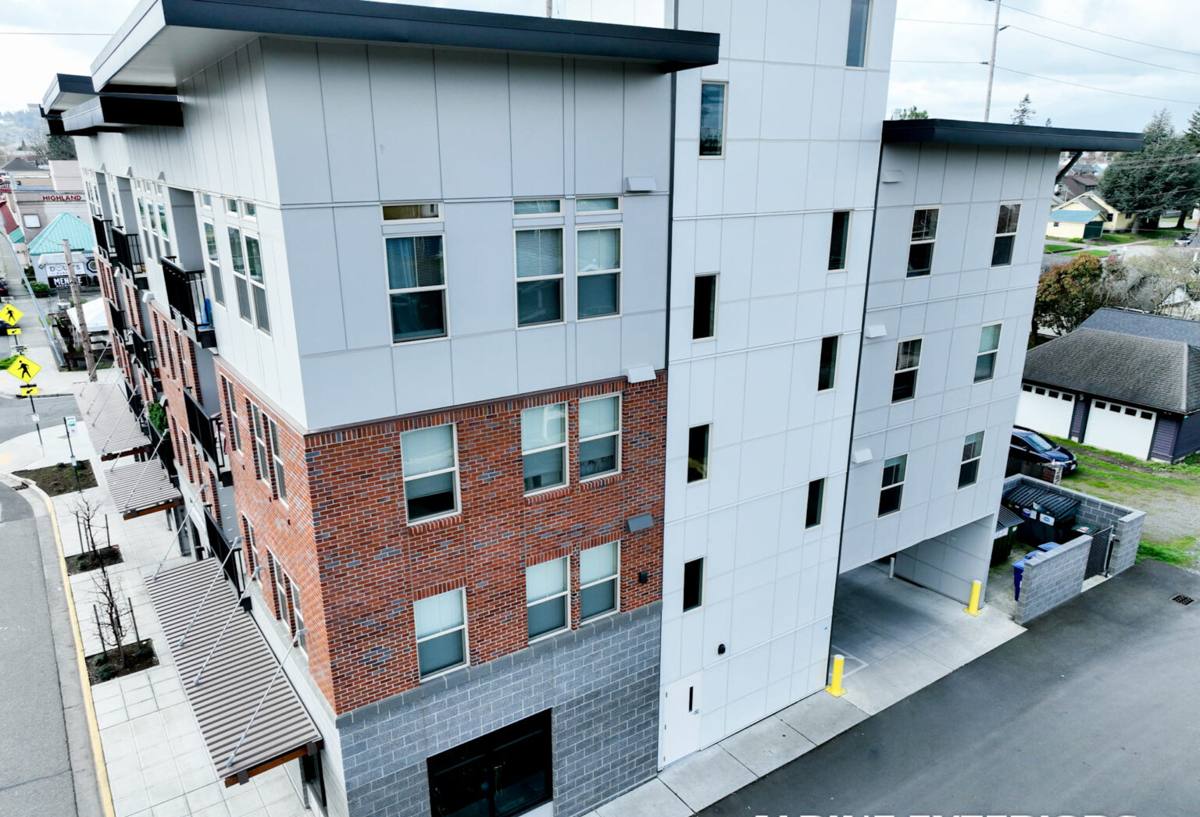
What Redmond's Weather Actually Does to Siding
Driving rain and wind-driven moisture
Rain in this region rarely falls straight down. Wind pushes it sideways into wall assemblies, which means the seams, laps, and penetrations in your siding — not just the flat field of the wall — take the most punishment. Poorly lapped panels, gapped caulk joints, and under-flashed trim are where water gets behind the siding and starts working on the water-resistive barrier and sheathing underneath.
Shade, tree cover, and moss
Redmond's mature tree canopy is part of what makes the area attractive, but it also means siding stays wet longer after every rain. Shaded, north- and east-facing walls are where we see the heaviest moss and algae growth, and where paint and factory finishes break down fastest. Moss holds moisture against the surface and, over time, works into seams and fastener holes.
Freeze-thaw and seasonal swelling
King County doesn't get brutal winters, but it does get repeated cycles of cold snaps and thaw. Siding materials that absorb moisture — wood, some composites, poorly sealed fiber cement edges — expand and contract through these cycles, which accelerates cracking, joint separation, and paint failure at the exact spots where water already wants to get in.
Signs Your Redmond Home Needs Siding Repair
Most siding damage doesn't announce itself. It shows up as small, easy-to-dismiss details that add up. Walk your home's exterior a couple of times a year and look for:
- Soft or spongy spots when you press on siding near the bottom courses or around windows
- Visible gaps, cracks, or missing caulk at trim boards, corners, and window/door casing
- Persistent moss or dark streaking that keeps coming back after cleaning, especially on shaded walls
- Paint that's bubbling, peeling, or chalking heavily in patches rather than evenly across the wall
- Panels that have visibly bowed, warped, or pulled away from the wall plane
- Staining or a musty smell on interior walls that back up to exterior siding
- Fastener heads that have popped, rusted, or backed out of the siding
- Wood siding that's noticeably softer or discolored at butt joints and bottom edges
Any one of these on its own might be minor. Several together, or damage that's spreading, usually means water has been getting behind the siding for a while.
What a Correct Siding Repair Actually Involves
A repair that just patches the visible symptom without checking what's underneath is a repair that fails again in a season or two. We treat every repair call as an inspection first, patch second.
Find the water path, not just the damaged board
Damaged siding is usually a symptom of a water path — a bad flashing detail, a caulk joint that opened up, a downspout dumping water against a wall, or a planting bed that keeps soil and moisture splashed up against the bottom courses. Replacing the board without fixing the water path just buys you a shorter repeat repair.
Check the sheathing and WRB before closing it back up
Once siding is off, we look at the water-resistive barrier and sheathing behind it. If there's soft wood, active moisture, or a failed barrier, that gets addressed before anything new goes back on — not covered over.
Match materials and reinstall to spec
Patch repairs only hold up if the replacement material, fastening pattern, and lap sequence match what's required for that siding system. This matters even more with fiber cement, where gaps, clearances, and fastener placement are engineered specs, not guesswork.
Re-seal and re-finish properly
The right sealant at the right joints, applied to a clean, dry, properly prepped surface, and finish work that matches the surrounding siding so the repair doesn't stand out or become its own weak point.
Repair or Replace: How We Help You Decide
Not every problem area needs a full re-side, and not every home is a good candidate for spot repair. The honest answer depends on how much of the wall is affected and what's happening underneath the siding.
| Situation | Repair usually makes sense | Replacement usually makes sense |
|---|---|---|
| Damage extent | Isolated boards or a single wall section | Damage spread across multiple elevations |
| Sheathing condition | Dry, solid sheathing behind the damaged area | Soft, rotted, or repeatedly wet sheathing |
| Siding age | Siding is younger and otherwise sound | Siding is at or past its expected service life |
| Cause | One-time event — impact, a failed caulk joint, a storm | Systemic issue — chronic moss, ongoing moisture intrusion |
| Material match | Replacement material is still available and will blend in | Discontinued profile/color, or patchwork would look uneven |
We'll tell you straight which category your home falls into. If a targeted repair will genuinely hold, that's what we recommend and what we price — we're not trying to upsell a full re-side when it isn't needed.
Our Process for Redmond Repair Calls
- Inspection. We walk the full exterior, not just the spot you called about — related problem areas are common and cheaper to catch early.
- Diagnosis. We identify the actual water path or failure cause, not just the visible symptom.
- Written scope and estimate. A clear explanation of what's damaged, what's driving it, and what the repair (or replacement, if that's the honest answer) involves.
- Repair work. Damaged material removed, sheathing and barrier checked and corrected if needed, new material installed to spec, sealed and finished to match.
- Walkthrough. We show you what was found and what was done before we call the job complete.
Why a Crew That Already Works Redmond Matters
Siding repair is local work in the truest sense. A crew that's worked homes throughout Redmond and the broader King County area already knows which builders and eras used which siding products, where the common failure points tend to show up on similar home styles, and how the tree-cover and drainage patterns in different Redmond neighborhoods affect moss growth and moisture exposure. That local pattern recognition shortens the diagnosis phase and helps avoid repairs that look fine for a season but miss the real cause.
It also means straightforward scheduling and follow-up — no crew driving in from out of the area for a single job, and no guesswork about whether a repair company will still be around if something needs a follow-up look.
Why We Repair and Replace With James Hardie Only
When a repair calls for new siding material, or when a home's problems point toward full replacement instead of patchwork, we install James Hardie fiber cement — exclusively. We don't install vinyl, LP SmartSide, Cemplank, Allura, or primed wood siding, and that's a deliberate standard, not an oversight.
Hardie's fiber cement is non-combustible and dimensionally stable, so it doesn't expand, contract, and work its joints loose the way wood-based and some engineered wood siding products do in a wet, freeze-thaw climate like ours. Its ColorPlus factory finish is baked on under controlled conditions, which holds up better against the region's driving rain and shaded, moss-prone walls than field-applied paint. Hardie also engineers specific product lines (HZ5, HZ10) for different climate zones, so the material specified for the Pacific Northwest is built for exactly the conditions Redmond deals with. The transferable warranty backs that up if you sell the home before the siding's service life is up.
None of that means other siding products are without merit — vinyl is inexpensive and low-maintenance in mild climates, and engineered wood has its place. But for a region with this much rain, shade, and moss pressure, and for repair work we're going to put our name behind, fiber cement engineered for this climate is what we recommend and what we install.
Get an Honest Look at Your Siding
If you're seeing moss buildup, soft spots, cracked caulk, or damage from a recent storm on a Redmond home, it's worth having someone look before it turns into a bigger repair. We'll give you a straight assessment of what's actually going on, what it will take to fix it right, and whether repair or replacement is the honest call for your situation. The estimate is free, and there's no pressure — just fill out the form below to get started.