 Seattle Exterior
 Capitol Hill's Siding Problem: Old Homes, Wet Weather, and a Lot of Shade
Capitol Hill has one of the older, denser housing stocks in Seattle — a mix of early-20th-century Craftsman bungalows, foursquares, Victorians, and additions built onto all of them over the decades. That age is part of the neighborhood's character, but it also means a lot of exterior walls are still wearing siding that was never designed for what King County weather actually does to a house year after year.
Seattle's marine climate brings long stretches of driving rain, humid air off the Sound, and short winter days that leave shaded walls damp for hours after a storm passes. Add in Capitol Hill's mature street trees and tight lot spacing — plenty of homes here have at least one side that barely sees direct sun — and you get ideal conditions for a multi-month moss and mildew season that keeps painted wood and older composite siding perpetually damp. Over years, that constant moisture cycle is what actually destroys siding: not one bad storm, but repeated wetting and drying that swells wood fiber, lifts paint, and works moisture past seams that were fine when the house was new.
None of this means Capitol Hill homes need something exotic. It means the siding replacement has to account for real conditions — shaded north and west walls, older wall assemblies, mature landscaping close to the house — instead of a generic install that assumes a dry, sunny elevation.
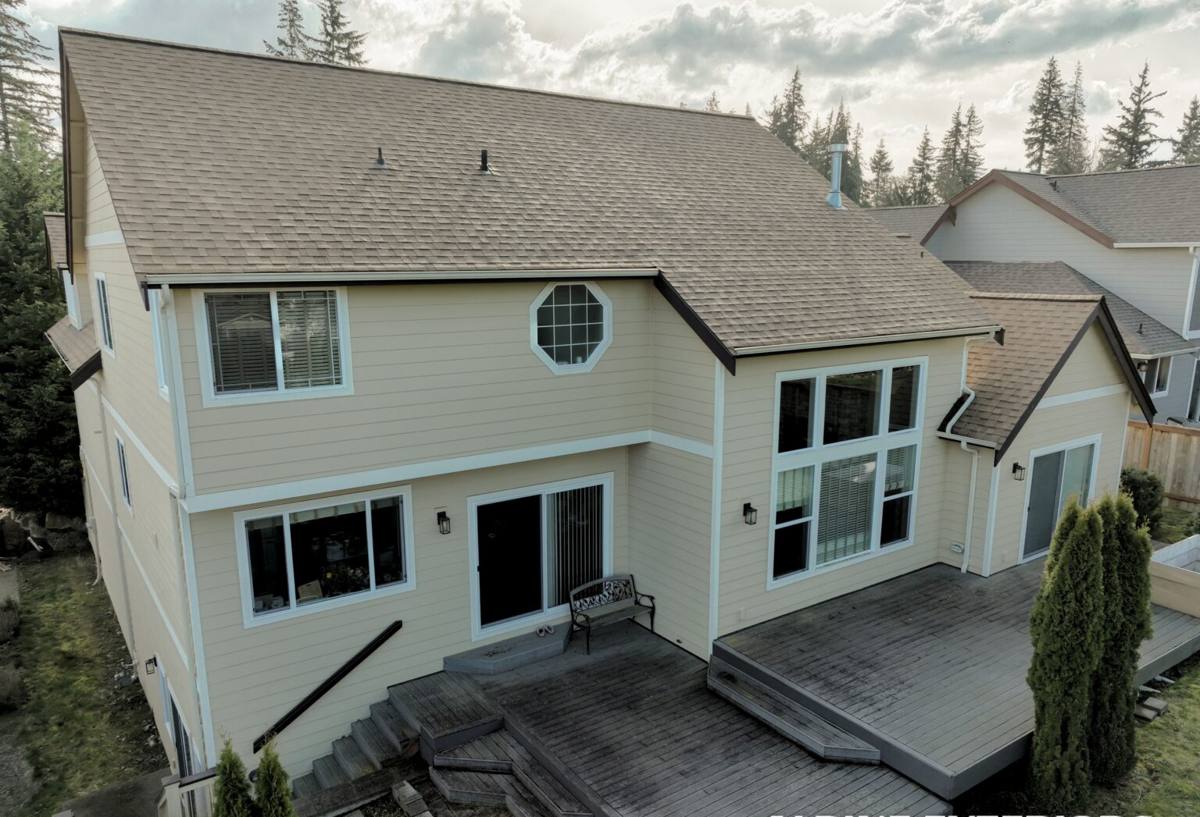
Signs Your Capitol Hill Home's Siding Has Reached the End of the Road
Most siding failure on Capitol Hill's older homes is gradual, and homeowners often chalk up the early signs to "needs a paint job" when the underlying material is already compromised. Worth checking for before you call anyone:
- Soft or spongy spots when you press on siding, especially near the bottom courses and around window trim
- Paint that won't hold — bubbling, peeling, or needing a repaint every 2-3 years instead of lasting
- Visible moss or dark streaking that comes back within weeks of cleaning it off
- Gaps, warping, or cupping in individual boards or panels
- Rising utility bills alongside drafts near exterior walls, which often points to a compromised weather barrier behind the siding, not just the siding itself
- Rot around window and door trim, especially on shaded or tree-covered elevations
Any one of these can be a localized repair. Several at once, or on a home that's due for its first or second re-side, usually means it's time to talk about full replacement rather than patching around the problem.
What a Correct Siding Replacement Actually Involves
The siding itself is the visible 10% of the job. The other 90% — the part that determines whether your walls stay dry for the next 30 years or start failing again in five — happens underneath it, and it's the part a rushed crew skips.
Tear-off and what's underneath matters
Once the old siding comes off, we inspect the sheathing and framing for hidden rot before anything new goes up. On older Capitol Hill homes this step regularly turns up soft sheathing behind failed trim or around old, poorly flashed window installs — problems that get sealed inside the wall if a crew just re-sides over them.
Weather-resistive barrier and flashing
A correctly detailed water-resistive barrier, properly lapped and taped, along with new flashing at every window, door, and horizontal transition, is what actually keeps Seattle's driving rain out of the wall assembly. Siding sheds most of the water, but the barrier and flashing behind it are the last line of defense — and they're invisible once the job is done, which is exactly why it matters who installs them.
Fastening, clearances, and finish details
Fiber cement has manufacturer-specified fastener patterns, joint treatments, and ground clearances that are easy to shortcut and hard to notice until the siding fails prematurely — often outside any workmanship warranty. Correct clearance at grade and at roof/deck intersections is especially important on Capitol Hill's often-shaded, moisture-retentive lots.
Why We Install Only James Hardie Fiber Cement
We don't install vinyl, LP SmartSide, cedar, primed spruce, or other fiber cement brands. That's a deliberate standard, not a sales pitch. In a climate that keeps siding damp for days at a stretch, we've found the products that hold up best long-term are non-combustible fiber cement systems engineered specifically for wet climates, with a factory-applied finish rather than a job-site paint job that starts failing on schedule.
James Hardie's HZ5 product line is engineered for exactly the freeze-thaw, high-moisture Pacific Northwest climate zone Capitol Hill sits in. ColorPlus, Hardie's factory finish, is baked on under controlled conditions and backed by its own finish warranty — a meaningfully different proposition than field-applied paint that has to cure in whatever weather shows up that week. Combined with Hardie's transferable product warranty, it's a system we're comfortable standing behind on a 100-year-old Capitol Hill house or a newer build.
| Material | Moisture behavior in wet climates | Finish | Maintenance burden |
|---|---|---|---|
| James Hardie fiber cement (HZ5) | Engineered for high-moisture climate zones; non-combustible; doesn't rot | Factory ColorPlus finish, warrantied | Low — occasional cleaning, no repainting cycle |
| Vinyl siding | Can warp/buckle with heat and cold cycling; seams are a moisture path | Color molded through, fades over time, not repaintable easily | Low upfront, but limited repair options when damaged |
| Wood / primed spruce / cedar | Absorbs moisture, prone to rot in shaded, damp conditions | Field-applied paint or stain | High — repainting and rot inspection every few years |
| Other fiber cement (LP, Cemplank, Allura) | Similar base material to Hardie; varies by product line and installer spec | Varies — factory or field finish depending on line | Depends on installation and finish quality |
We're not going to tell you every other product on that list is unusable — plenty of them have legitimate use cases. We simply decided, as a company, that Hardie's HZ5 system and ColorPlus finish give Capitol Hill homeowners the best odds of a siding job that still looks and performs right in year 20, not just year two.
Our Process, Start to Finish
- On-site assessment: We walk the whole exterior, not just the elevation you called about, checking trim, flashing, and any soft spots before quoting.
- Written scope and estimate: You get a clear breakdown of what's being replaced, what Hardie product and profile we're using, and what happens if we find hidden damage during tear-off.
- Tear-off and inspection: Old siding comes off in sections, sheathing gets inspected, and we flag anything unexpected before covering it back up.
- Repair and barrier work: Any rotted sheathing or framing is repaired, and a new weather-resistive barrier and flashing system goes in correctly lapped.
- Hardie installation: Panels or lap siding installed to manufacturer fastening and clearance specs, with trim and joint details finished properly.
- Final walkthrough: We go over the finished work with you before calling the job done.
Working Around Capitol Hill's Older Housing Stock and Dense Lots
Capitol Hill presents a few practical constraints most newer Seattle-area neighborhoods don't. Lots are often tight, with houses close to property lines and mature trees or shrubs right up against the walls, which affects staging, material access, and how much of a wall we can safely reach without disturbing landscaping. Older homes also more frequently have layers of siding history — an original wall assembly with a later re-side over it — which we plan for rather than discover as a surprise mid-project.
Some pockets of Capitol Hill and nearby historic areas of Seattle carry design review or landmark considerations on exterior changes. We're not going to guess at the specifics of your address here — it's worth a quick check with the city or your contractor before work starts if your home is in an older, established block. What we can tell you from experience is that Hardie's range of profiles and colors generally gives homeowners in older neighborhoods more flexibility to match an existing architectural style than most vinyl or engineered-wood options do.
Timing the Job Around Seattle's Wet Season
Siding replacement can happen most of the year in Seattle, but scheduling around the wettest stretches matters more here than in drier climates — an open wall assembly during a multi-day rain event is not a position you want your house in. We sequence tear-off and barrier installation in manageable sections and watch the forecast closely, rather than opening up more of the house than we can weatherproof in a day. On shaded, moisture-retentive lots, that planning discipline matters even more than it does on a sunny, open elevation.
Why Local Experience in This Neighborhood Matters
A crew that regularly works Capitol Hill has already seen what its particular combination of old construction, shade, and moisture does to a wall over decades — where rot tends to hide, which older assemblies need extra attention, and how to stage a job on a tight urban lot without damaging what's already there. That's different knowledge than a crew that mostly works new-construction subdivisions with open yards and full sun. Getting it right the first time matters more here, because a poorly detailed re-side on an older Capitol Hill home just traps the next round of moisture problems behind brand-new siding.
If your Capitol Hill home is showing signs of siding failure, or you're planning ahead for a re-side, we're happy to take a look and walk you through what we find — no pressure, no obligation. Use the form below to request a free estimate.