 Seattle Exterior
 Roof Repair in University District: What Local Homes Are Up Against
University District sits in one of Seattle's denser, older residential pockets — a mix of craftsman bungalows, early-20th-century houses split into rentals, and low-rise apartment buildings that serve the university population. That housing mix means a wide range of roof ages and roof types within a few blocks of each other, and it means a lot of roofs that have been patched, re-patched, or simply left alone by absentee landlords for longer than they should have been. Add in mature tree canopy on many streets and the tight lot spacing typical of the neighborhood, and you get roofs that hold onto moisture and debris longer than a roof out in the open would.
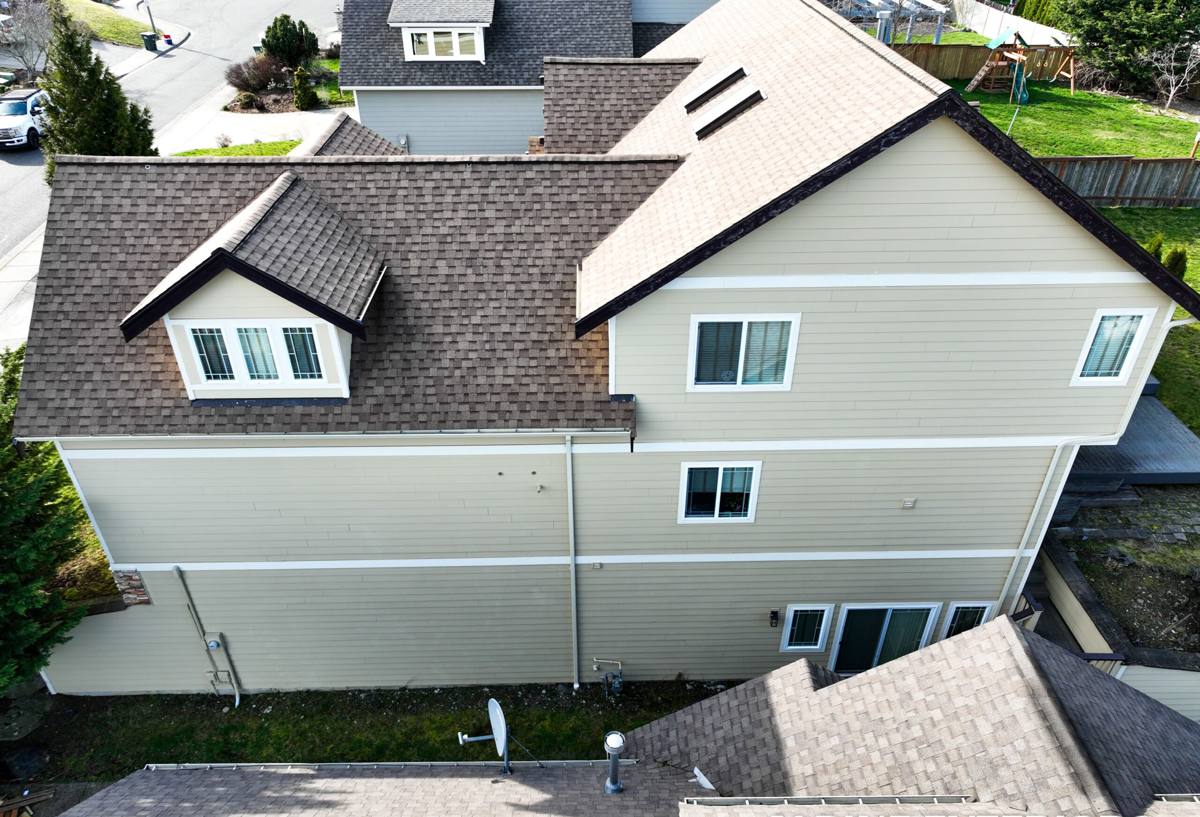
None of that is unique to University District, but it does mean roof repair calls here tend to follow a pattern: moss and organic buildup in shaded valleys, flashing that's failed around old additions or dormers, and gutters that back up because of overhanging branches. Knowing that pattern before we ever get on the roof lets us diagnose faster and fix the actual problem instead of just chasing the leak.
How Seattle's Climate Shapes Every Roof Repair
Western Washington doesn't destroy roofs with heat or hail the way other regions do — it wears them down slowly, through moisture. King County's climate combines a long wet season, driving rain that gets pushed sideways by wind off Puget Sound, and a marine air layer that carries a faint salt content even well inland. That combination is what actually drives most of the repair work we do.
Driving Rain and Wind-Driven Water
Seattle rain rarely falls straight down. When wind pushes rain sideways, it finds every gap in flashing, every under-lapped shingle, and every nail hole that's lost its seal. A roof that would hold up fine somewhere drier can leak here simply because water is being driven uphill under the roofing material instead of running off it.
The Long Moss Season
Shade, moisture, and mild temperatures are a perfect combination for moss, and University District's tree cover gives moss plenty of shaded roof area to colonize. Moss isn't just cosmetic — it holds water against the roofing material, lifts shingle edges as it grows, and accelerates granule loss on asphalt shingles. Left unaddressed for a few seasons, moss growth alone can turn a roof that had years of life left into one that needs premature repair or replacement.
Salt-Tinged Marine Air
Puget Sound's marine air carries trace salt content that accelerates corrosion on exposed metal — flashing, fasteners, gutter hardware, and vent caps. It's a slower process than what you'd see on a true coastline, but over years it's a real factor in why metal components fail before the roofing material around them does.
Signs a University District Roof Needs Repair
Most roof problems give warning signs well before they turn into an active leak indoors. Here's what we tell homeowners in this neighborhood to watch for:
- Dark streaking or visible moss/moss growth on shaded slopes, especially north-facing sections
- Granules collecting in gutters or at downspout outlets — a sign of asphalt shingle wear
- Curling, cupping, or lifted shingle edges, particularly on older sun-and-rain-cycled roofs
- Water stains on interior ceilings or attic sheathing, even if they've only appeared once
- Rusting or visibly corroded flashing around chimneys, skylights, or roof-wall intersections
- Sagging gutter runs or gutters overflowing during normal rain, not just storms
- Daylight visible through the roof deck from inside the attic
- Missing or displaced shingles after a windstorm
Any one of these on its own doesn't necessarily mean a major problem, but it's worth a look before the next wet season turns a small issue into a bigger repair.
What a Correct Roof Repair Actually Involves
Diagnosis Before Patching
An interior water stain almost never sits directly below the actual point of entry — water travels along sheathing and rafters before it shows up on a ceiling. A correct repair starts with tracing the leak path from the inside where possible, then confirming it on the roof itself, rather than guessing based on where the stain appears.
Matching Materials, Not Just Covering Damage
A patch that doesn't match the surrounding roofing in material, profile, and age creates a new weak point — mismatched shingles can shed water differently than the surrounding field, and mismatched flashing metal can create galvanic corrosion where two dissimilar metals touch. We match materials to what's already on the roof whenever a reasonable match exists, and we're upfront when it doesn't and a larger section needs to be addressed together.
Flashing and Moisture Details Get Priority
Most roof leaks in this region trace back to flashing, not the field roofing material itself — step flashing at wall intersections, counter-flashing at chimneys, and valley flashing where two roof planes meet. These details do the real work of shedding wind-driven rain, so a repair that reseals a shingle but ignores compromised flashing underneath will leak again.
Moss and Debris Removal Done Without Damage
Moss removal has to be done carefully — aggressive scraping or pressure washing can strip granules and shorten the life of asphalt shingles faster than the moss itself would have. We use methods appropriate to the roofing material, followed by treatment to slow regrowth, rather than treating removal as a one-time power-wash job.
Common Roof Types in University District and Repair Considerations
The right repair approach depends heavily on what's already on the roof. Here's how we approach the material types most common in this neighborhood:
| Roof Type | Where We See It | Typical Repair Considerations |
|---|---|---|
| Asphalt Shingle (3-tab or architectural) | Most common on single-family and converted-rental homes | Granule loss, curling with age, moss lifting shingle edges in shaded areas |
| Cedar Shake/Shingle | Older craftsman-style homes | Moss and moisture retention, splitting, needs breathable repair approach to avoid trapping moisture |
| Low-Slope/Flat (membrane or built-up) | Apartment buildings and additions | Ponding water, seam failures, membrane punctures — different repair method entirely from sloped roofing |
| Metal Panel | Newer additions and some outbuildings | Fastener backout, sealant failure at panel laps, corrosion at cut edges |
Because the neighborhood has such a mix of building ages and types, we don't apply a single repair template to every job — a fix that's right for a shake roof on a 1920s bungalow isn't the fix you'd use on a membrane roof over a rental unit's flat addition.
Repair vs. Replacement: How We Help You Decide
Not every roof problem calls for a full replacement, and not every leak can be permanently solved with a patch. We walk homeowners through the real trade-offs rather than defaulting to the most expensive option.
| Factor | Favors Repair | Favors Replacement |
|---|---|---|
| Roof age relative to material's expected life | Roof is in the first half of its expected lifespan | Roof is at or past the typical service life for its material |
| Extent of damage | Isolated to one area — a valley, a penetration, a section | Widespread granule loss, moss, or wear across most slopes |
| Underlying deck condition | Deck is sound where inspected | Soft, delaminated, or water-damaged sheathing found during inspection |
| Repair history | First or second repair on this roof | Roof has had repeated repairs to the same area |
| Plans for the property | Owner plans to stay and roof otherwise performs well | Sale, refinance, or long-term hold where a fresh roof adds clear value |
We'll always tell you honestly which side of that table your roof falls on, including when a repair is genuinely the right call rather than a stopgap before a sales pitch.
Our Roof Repair Process
- Inspection: We get on the roof (not just a ladder-and-binoculars look) and check the attic side where accessible, since interior signs often tell us as much as the exterior.
- Written scope and estimate: You get a clear explanation of what's actually wrong, what we recommend, and what it costs — before any work starts.
- Repair: Work is done with materials matched to your existing roof wherever possible, with flashing and moisture details treated as the priority, not an afterthought.
- Cleanup and debris removal: Old material, moss debris, and fasteners are cleared from the roof and the ground around the house.
- Follow-up: If a repair doesn't fully resolve the issue in the next rain cycle, we come back to reassess — that's part of doing the job right the first time.
Why a Crew That Already Works University District Matters
A roofing crew that regularly works this neighborhood already understands the housing stock — the age range of the roofs, the common repair points on craftsman-era homes, and the flat-roof quirks of the apartment buildings near campus. That familiarity shortens the diagnosis step and reduces the chance of a repair missing the real cause.
It also matters for logistics specific to a dense, walkable neighborhood: tighter lot lines, on-street parking constraints, and proximity to neighbors all affect how a job is staged and how debris and materials are handled. A crew that's done this in University District before plans around those realities instead of learning them on your job.
Finally, King County permitting and Seattle's building requirements apply differently depending on the scope of work — a like-for-like repair is usually straightforward, but larger flashing or decking work can cross into permit territory. We handle that determination as part of scoping the job, so you're not the one left guessing.
Maintenance Between Repairs
A repair fixes what's wrong today. A little maintenance in between keeps the next repair from coming sooner than it should, especially given how much this region's climate favors moss and moisture buildup.
- Clear gutters and downspouts at least twice a year, more often under heavy tree cover
- Trim back branches that overhang the roofline to reduce shade, debris, and physical abrasion
- Have moss treated before it visibly colonizes a slope, not after
- Check attic ventilation — poor airflow traps moisture and accelerates deck and shingle wear from the inside
- Walk the exterior after major windstorms and note any obviously displaced or missing shingles
- Have a roof inspected every few years even without an active leak, especially once it's past the midpoint of its expected life
If you're dealing with a leak, visible moss, or just want an honest read on where your roof stands, we're glad to take a look. Reach out for a free, no-pressure estimate using the form below.