 Seattle Exterior
 Window Installation Built for University District's Older Homes
The University District sits among some of the older, denser housing stock in Seattle — a mix of early-1900s craftsman bungalows, converted duplexes, and mid-century infill homes, many still carrying their original wood-frame windows or a first round of aluminum replacements from decades ago. That age matters. Original window openings in this neighborhood were framed for different materials and different expectations around air sealing and moisture control than what's standard today. A window installation here isn't just "remove old, insert new" — it's reconciling an older wall assembly with a modern window unit, and doing it in a way that survives King County's wet season year after year.
We install windows across Seattle, but University District jobs come with their own pattern: tight lot lines, older single-pane or early double-pane units, wood-frame construction that's absorbed decades of moisture cycles, and a lot of homes where the trim, siding, and interior finish all have to be protected and matched back cleanly. Getting that right takes more care than a generic swap-and-go job.
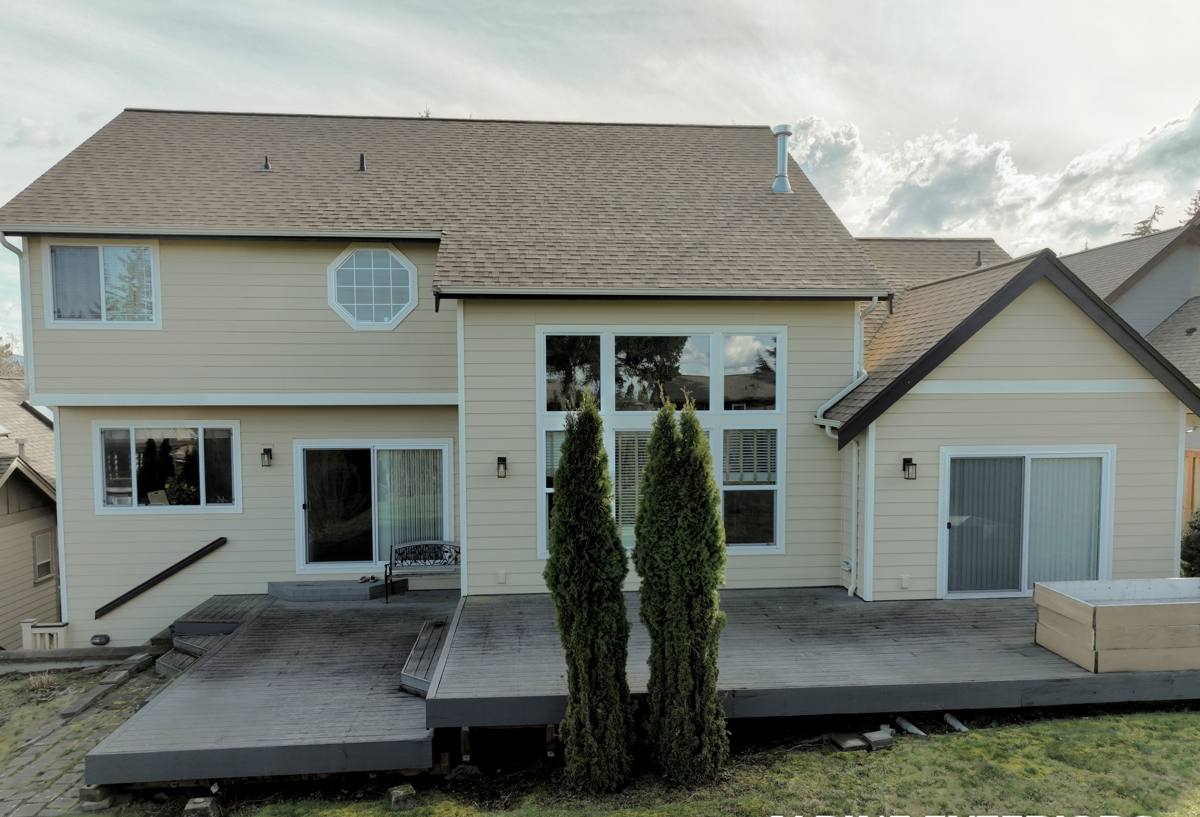
What Seattle's Climate Does to Windows in This Neighborhood
Seattle's marine climate is the whole reason window installation quality matters more here than in drier parts of the country. Three things in particular wear on windows in University District:
Driving Rain
Wind-driven rain off the Sound doesn't just fall straight down — it gets pushed sideways into window openings, especially on west- and south-facing walls. If flashing, sill pans, and sealant details aren't done correctly, that rain finds its way behind the window frame and into the wall cavity, where it can sit for months before anyone notices a problem.
A Long Moss and Mildew Season
King County's damp season stretches for much of the year. Anywhere moisture lingers — window sills, the base of frames, gaps in old caulking — you'll eventually see moss, algae, or mildew take hold. On older wood-frame windows, that constant dampness accelerates rot at the sill and the bottom corners of the frame, which is usually where we find the worst damage during a replacement.
Salt Air
Seattle's proximity to Puget Sound means a degree of salt-laden air reaches even inland neighborhoods like University District, particularly on windier days. Salt air accelerates corrosion on metal hardware, fasteners, and lower-grade aluminum components. It's a slower factor than rain or moss, but over 15-20 years it adds up, especially on the cheaper hardware that sometimes comes standard on budget window lines.
None of this means windows fail quickly in this neighborhood — it means the installation details (flashing, sealing, drainage, hardware quality) matter more here than they would in a dry climate, because there's less room for error before moisture finds a way in.
Signs a University District Home Needs New Windows
- Visible rot, soft wood, or paint bubbling at the sill or bottom corners of the frame
- Persistent condensation between panes (a sign the seal on a double-pane unit has failed)
- Drafts you can feel near the frame even with the window fully latched
- Windows that are painted shut, warped, or difficult to open and close
- Visible daylight gaps around the frame from outside
- Rising heating bills without another clear explanation
- Moss, black mildew staining, or persistent green growth on the sill or exterior casing
- Single-pane glass throughout a home that's never been upgraded
Any one of these on its own isn't an emergency. But in a wet climate, moisture problems compound — a small gap this year can mean sill rot in two or three years if it's left alone.
What a Correct Installation Actually Involves
A lot of window problems we get called out for in Seattle aren't the fault of the window itself — they're the fault of how it was installed. On older University District homes especially, the process needs to account for what's behind the existing trim, not just what's visible.
1. Assessment of the Existing Opening
Before anything is removed, we check the condition of the framing and sill around the window. On a home with original wood-frame windows, this is often the first real look anyone's had at that wood in years. If there's rot or water damage, it needs to be addressed before a new window goes in — otherwise you're sealing a new unit onto a compromised opening.
2. Careful Removal
Old windows come out with attention to the surrounding trim and siding, especially on homes where the interior casing or exterior trim is original and worth preserving.
3. Flashing and Sill Pan Work
This is the step that determines whether a window stays dry for 20 years or leaks in year three. Proper flashing directs water that reaches the window opening back out and away from the wall assembly, rather than letting it collect. In a climate with as much driving rain as Seattle gets, this step isn't optional or cosmetic — it's the difference between a dry wall cavity and a hidden rot problem five years down the line.
4. Setting and Leveling the New Unit
The window is set square, plumb, and level in the opening, with the right shimming so it operates smoothly and seals evenly on all sides.
5. Insulation and Air Sealing
Gaps between the window frame and the rough opening get filled with appropriate insulation — not overpacked, which can bow the frame, and not skipped, which leaves drafts and a path for moisture and cold air.
6. Exterior Sealing and Trim Finish
Exterior caulking and trim work are finished to shed water correctly, and interior trim is reset or replaced to match the home's existing finish where possible.
Choosing the Right Window for This Neighborhood
There's no single "best" window for every University District home — it depends on the home's age, your budget, and how long you plan to stay in it. Here's how the common options generally compare for a wet, marine climate like Seattle's:
| Frame Material | Moisture Performance | Maintenance | Typical Fit |
|---|---|---|---|
| Vinyl | Good — won't rot, minimal maintenance | Low | Budget-conscious replacements, rentals |
| Fiberglass | Very good — stable in temperature swings, resists warping | Low | Long-term owners wanting durability |
| Wood (clad exterior) | Good if properly clad and maintained; interior wood adds warmth | Moderate — exterior clad reduces upkeep | Craftsman and period-appropriate homes |
| Aluminum | Weaker in this climate — prone to condensation and corrosion over time without thermal breaks | Moderate to high | Rarely our first recommendation here |
For a lot of University District's older craftsman and bungalow-style homes, clad-wood or fiberglass windows tend to strike the best balance of period-appropriate appearance and real weather performance. Vinyl remains a solid, cost-effective choice, particularly for rental properties or homes being updated on a tighter budget. We'll walk through the trade-offs honestly based on your specific home rather than pushing one product line.
Working Around Older Construction and Tight Lots
University District's lot sizes and older building patterns mean some jobs come with real logistical constraints — narrow side yards, close-set neighboring structures, or upper-story windows with limited staging space. We plan around this ahead of time rather than discovering it on install day, which keeps the job on schedule and avoids damage to landscaping, siding, or a neighbor's property line.
Older homes in this area also sometimes have non-standard window openings, since dimensional lumber sizing and construction practices from a century ago don't always match today's standard window sizes. That can mean a slightly wider install window as we account for custom-fit trim work rather than a stock, off-the-shelf swap.
Why a Crew That Knows This Neighborhood Matters
Window installation quality is mostly invisible once the job is done — the flashing, the sealant lines, the sill pan work are all hidden behind trim within a day. That's exactly why experience with this specific type of housing stock and this specific climate matters. A crew that's worked on University District homes before knows what to expect when the old trim comes off: what condition the sill is likely to be in, how the original construction was framed, and what it takes to seal a window correctly against Seattle's rain rather than just get it to look finished.
We're a Seattle-based exteriors contractor, and we treat window installation as part of the building envelope — connected to your siding, trim, and roofline, not an isolated swap. That matters in King County's climate, where a window that's slightly wrong on the flashing detail doesn't fail immediately — it fails quietly, two or three winters later.
What to Expect From Our Process
- A walkthrough to assess your current windows, framing condition, and goals for the project
- An honest recommendation on materials and window styles suited to your home and budget
- A clear, written estimate before any work begins
- Careful removal, correct flashing and sealing, and clean trim finish work
- A final walkthrough so you can see and test every window before we consider the job done
If you're weighing whether to replace one problem window or take on a full-home project, we're happy to talk through both the honest cost difference and the practical trade-offs — there's no pressure either way.
If your University District home has drafty, foggy, or aging windows, we'd be glad to take a look. Reach out for a free, no-pressure estimate using the form below.