 Seattle Exterior
 Composite Decking in Wallingford: Built for This Climate, Not a Catalog Photo
Wallingford's mix of early-1900s bungalows, mid-century remodels, and newer infill homes all share one thing in common: they sit under the same gray, wet Seattle sky for roughly eight months of the year. A deck here isn't a summer accessory. It's an exterior structure that has to survive driving rain off the Sound, long stretches of overcast humidity, and a moss season that can turn a north-facing deck green almost overnight. Composite decking has become the go-to choice for homeowners in this neighborhood who are tired of sanding, staining, and chasing rot every spring, but "composite decking" covers a wide range of products and installation quality. This page is about what actually holds up on a Wallingford lot, and what a correct installation looks like start to finish.
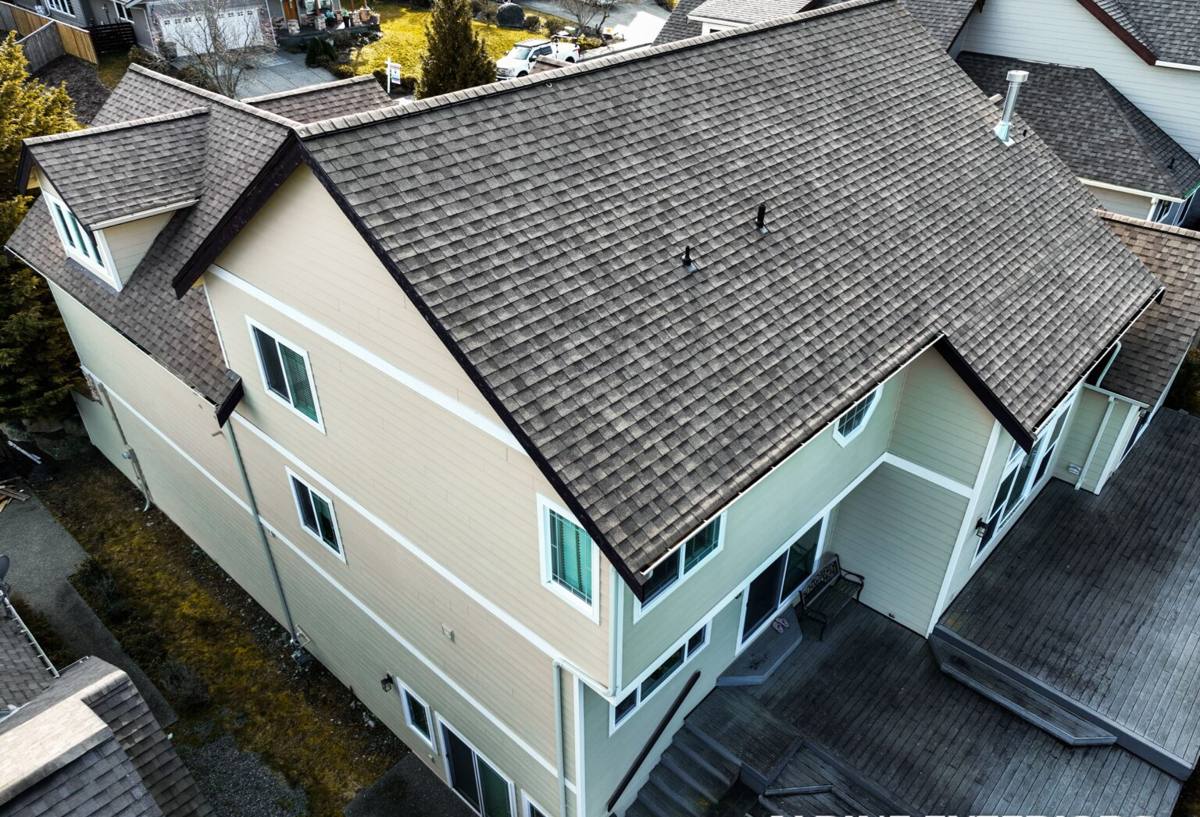
What Seattle's Climate Actually Does to a Deck
King County's marine climate is mild, which is part of why people love living here, but mild doesn't mean gentle on building materials. A few specific conditions matter more for decking than most homeowners expect:
- Sustained moisture, not just rainfall totals. Seattle doesn't get the heaviest rain in the country, but it gets long duration exposure — days and weeks where wood and fasteners never fully dry out between storms.
- Moss and algae growth. Shaded decks, especially under mature trees common in older Wallingford lots, stay damp long enough for moss and green algae film to establish on any surface that holds moisture, including composite boards that aren't installed with proper airflow underneath.
- Wind-driven rain near open exposures. Homes with any view exposure toward Puget Sound or Lake Union can see rain pushed sideways into ledger connections, rim joists, and stair stringers — areas that are easy to get wrong on a standard deck build.
- Freeze-thaw cycling, even if mild. Our winters aren't brutal, but repeated freezing and thawing at fastener points and end cuts is enough to open small gaps in poorly sealed wood decking over a few seasons.
None of this means composite decking is a magic fix. It means the installation details that control moisture and airflow matter more here than in a drier climate, and cutting corners on those details shows up faster in Seattle than it would in Arizona or Colorado.
Why Composite Makes Sense for This Neighborhood
Traditional wood decking can absolutely be built well and last for years, but it asks for a maintenance schedule that a lot of homeowners simply don't keep up with: annual cleaning, periodic sealing, and vigilance about soft spots before they become structural problems. In a climate like ours, skipped maintenance years compound quickly. Composite decking shifts that burden. The boards themselves don't absorb water the way solid wood does, they don't need staining, and they resist the freeze-thaw splitting that shows up on neglected wood decks after a few Seattle winters.
That said, composite isn't maintenance-free — it's maintenance-different. Moss and algae will still grow on any surface that stays damp and shaded, composite or not. The difference is that composite boards clean up without the sanding, re-staining, or replacing individual boards that wood decking eventually demands.
Where Composite Still Requires Good Judgment
Not every composite product performs the same in wet, shaded conditions. Board density, the cap layer (the outer shell that resists moisture and staining), and groove design for hidden fasteners all affect how a deck handles Wallingford's climate over 10-15 years. We don't push one brand as the only acceptable option — we walk homeowners through the real tradeoffs for their specific deck: sun exposure, tree cover, and how the deck ties into the house.
What a Correct Composite Deck Installation Involves
The board itself is only part of the job. Most of the problems we get called out to fix on other contractors' composite decks trace back to the substructure and moisture management underneath the boards, not the decking material itself. A correct installation includes:
- Proper joist spacing for composite span ratings. Composite boards have different structural span requirements than wood, and manufacturer specs vary by product. Installing composite on joist spacing meant for wood decking is one of the most common shortcuts we see, and it leads to bounce and premature sagging.
- Joist tape or flashing on top of the framing. This single detail is the difference between a substructure that stays dry underneath the decking and one that traps moisture against the joists for months at a time — exactly the condition that rots framing lumber in our climate, hidden under boards that look fine from above.
- Correct ledger board flashing and house connection. Where the deck attaches to the home is the single highest-risk point for water intrusion into the structure itself. This needs proper flashing integrated with the home's siding or trim, not just lag bolts and caulk.
- Ventilation and drainage underneath the deck. Low-clearance decks and ground-level decks need real airflow planning, not just gravel underneath. Standing moisture under a deck is what feeds moss and mildew on the underside of boards and around fastener points.
- Fastener systems matched to the board. Hidden fastener clips, screws, and edge treatments all vary by manufacturer. Using the wrong fastener system can void a warranty and create loose or squeaking boards within a couple of seasons.
- Stair and railing structural integrity. Composite decking on stairs and around railings takes more direct weather exposure and foot traffic stress than the main deck field, and needs its own attention to framing and fastening.
Our Process for a Wallingford Deck Project
We approach every deck the same methodical way, because skipping steps is exactly how the moisture and structural problems above end up baked into a "finished" deck.
1. On-Site Assessment
We look at sun and shade exposure, existing framing condition if it's a rebuild, drainage around the footprint, and how the deck connects to the house. This tells us what substructure work is actually needed before any decking goes down.
2. Structural and Framing Work
If we're rebuilding on existing framing, we check joists, beams, and posts for rot or undersizing before covering anything up. New builds get framing spec'd to the composite product's actual span requirements, not generic lumber spacing.
3. Moisture Management Details
Joist tape, ledger flashing, and drainage planning happen before a single deck board is installed. This is the part of the job that's invisible once finished, and the part that determines whether the deck is still solid in ten years.
4. Decking Installation
Boards go down with the fastener system matched to the product, proper gapping for expansion, and attention to stair and railing details that see the most weather exposure.
5. Walkthrough and Cleanup
We walk the finished deck with the homeowner, cover basic care expectations for our climate specifically, and leave the site clean.
Comparing Decking Approaches for a Seattle Climate
| Factor | Pressure-Treated Wood | Composite Decking |
|---|---|---|
| Annual maintenance | Cleaning + periodic staining/sealing | Occasional cleaning, no staining |
| Moisture absorption | Absorbs water, can cup or split over time | Resists absorption; cap layer sheds moisture |
| Moss/algae resistance | Depends heavily on maintenance upkeep | Better resistance, but still needs airflow and cleaning in shaded spots |
| Typical lifespan (with good install) | 10-15 years with regular upkeep | 20-25+ years, manufacturer warranty dependent |
| Upfront cost | Lower material cost | Higher material cost, lower lifetime maintenance cost |
| Repair approach | Individual board replacement is straightforward | Board matching may vary if product is discontinued |
Neither option is universally "right" — a lightly shaded, well-drained deck with an owner who enjoys yearly maintenance can do fine with wood. Most Wallingford homeowners who call us about composite are looking to get out of that maintenance cycle permanently, and that's the honest use case where composite earns its higher upfront cost.
Living with a Composite Deck Through Our Wet Season
Composite decking isn't zero-maintenance, and we'd rather set that expectation clearly than oversell the product. In our climate, a composite deck still benefits from:
- Periodic sweeping and rinsing to keep organic debris (leaves, needles, seed pods) from sitting on the surface and feeding moss growth
- An occasional soft-wash with a mild cleaner in shaded or north-facing areas where moss is more persistent
- Keeping gutters and downspouts near the deck clear, so runoff isn't dumping directly onto or under the decking
- Checking that under-deck ventilation gaps haven't been blocked by landscaping, storage, or debris buildup over time
- A visual check of railing and stair connections once a year, since these see the most direct weather exposure
None of this is heavy lifting compared to wood deck upkeep, but skipping it entirely in a climate with our moss season will still shorten the life of any decking product, composite included.
Why a Local Crew Matters for This Kind of Project
Deck work in Seattle and King County involves permitting requirements that vary depending on deck height, size, and whether it's attached to the structure — and inspectors here are specifically looking at ledger attachment and flashing details because of how often those get missed. A crew that already works in Wallingford and the surrounding Seattle neighborhoods knows the typical lot conditions, drainage patterns, and permitting expectations without treating your project as a first attempt. That familiarity translates into fewer surprises mid-project and a deck built to hold up to the specific way water moves through this area, not a generic install pulled from a national playbook.
A Simple Checklist Before You Hire Anyone for Deck Work
- Do they explain joist spacing and span ratings specific to the composite product, or just quote a price per square foot?
- Will they show you the flashing and moisture-barrier plan at the ledger board before construction starts?
- Do they pull the required local permit, or ask you to skip it?
- Can they explain why they recommend a specific composite product for your deck's sun/shade exposure, rather than pushing one brand across every job?
- Do they address under-deck ventilation and drainage, especially on low-clearance or ground-level decks?
- Are warranty terms (manufacturer and workmanship) explained clearly and in writing?
Getting Started
Every deck on every Wallingford lot is a little different — sun exposure, tree cover, how the ground slopes, and how the deck ties into the house all change what "doing it right" looks like. If you're weighing composite decking for your home, we're happy to take a look, walk you through the real tradeoffs for your specific situation, and give you a straightforward, no-pressure estimate. There's a short form below to get that conversation started.