 Seattle Exterior
 Why Wallingford Roofs Take a Different Kind of Beating
Wallingford sits in one of the more tree-covered, closely-built pockets of Seattle, and that combination shapes how roofs age here. Mature tree canopy over many lots means shade, falling debris, and near-constant moisture on parts of the roof that never fully dry out between storms. Add in the salt air that drifts off Puget Sound and the driving, wind-pushed rain that comes through King County in fall and winter, and you get a roofing environment that punishes shortcuts. A repair that would hold up fine in a dry inland climate can fail here in a single wet season if it isn't done right.
Most of the homes in this part of Seattle are older craftsman bungalows and early-to-mid-century houses, often with additions, dormers, or a garage roof tacked on at a different pitch than the main structure. Every one of those transitions — where roof planes meet, where a chimney or vent pipe pokes through, where an addition ties into the original framing — is a place water can find a way in. Roof repair in this neighborhood is as much about understanding how a house was built over time as it is about shingles.
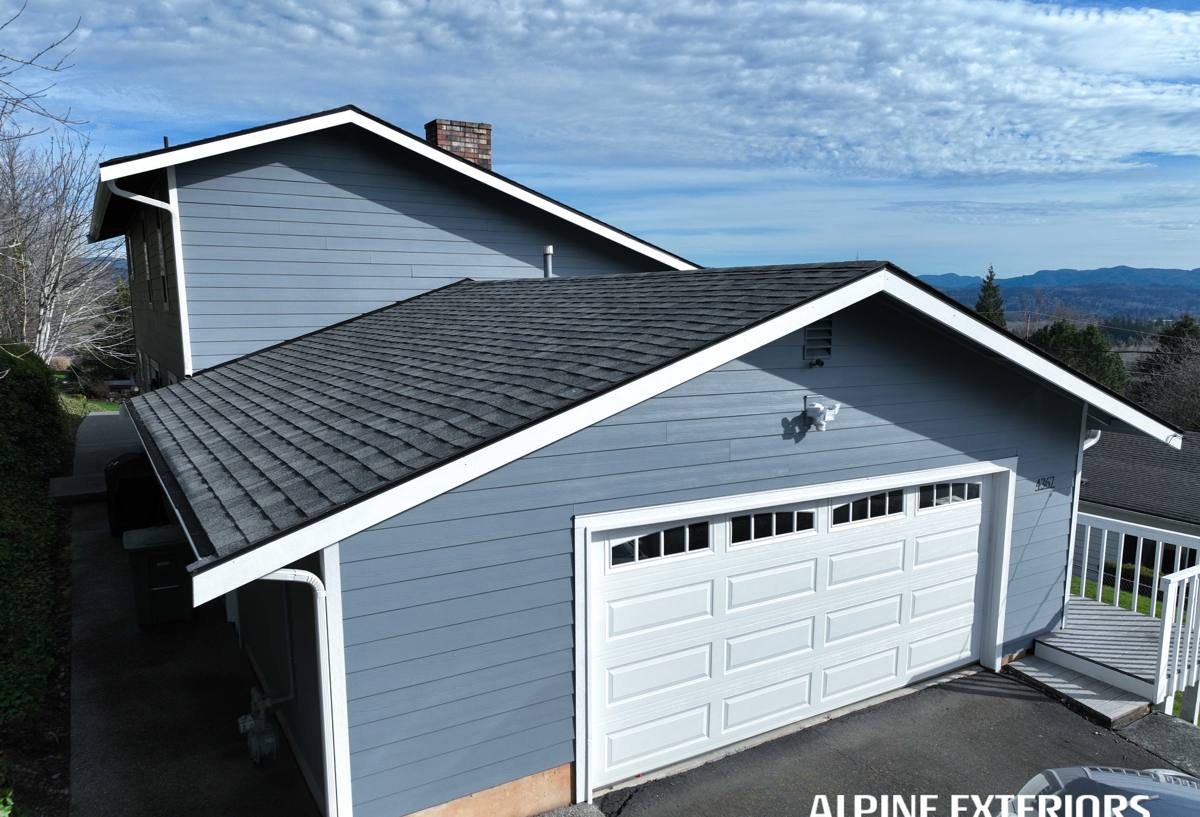
The Repair Problems We See Most Often in Wallingford
Moss and Organic Growth
Long, mild, wet winters with limited direct sun on shaded or north-facing slopes give moss everything it needs to take hold. Left alone, moss lifts shingle edges, holds water against the roof deck, and accelerates granule loss on asphalt shingles. On older cedar it works into the grain and speeds up rot. Moss removal done carelessly — pressure washing, aggressive scraping — can do more damage than the moss itself, which is why we treat it as a repair task, not a cleaning chore.
Wind-Driven Rain at Flashing and Valleys
Seattle's rain rarely just falls straight down. Storms off the Sound tend to drive rain sideways, which pushes water into laps and seams that would stay dry in a calmer climate. The failure points are predictable: valley flashing, step flashing along chimneys and dormers, and any place where roofing meets a wall or a lower roof plane. A leak that only shows up during a windy storm, and not during a calm rain, is almost always a flashing or wind-driven-rain issue rather than a simple worn shingle.
Corrosion from Salt Air
Proximity to Puget Sound means airborne salt is a slow, steady factor in how fast metal components age. Nail heads, flashing, and fasteners that aren't rated for a marine-influenced environment can corrode faster than the roofing material around them, leading to small leaks that trace back to a single failed fastener rather than a damaged shingle. This is one of the more overlooked causes of a "mystery leak" on homes that are otherwise in decent shape.
Age-Related Wear on Older Roofs
A lot of Wallingford's housing stock has been reroofed at least once, sometimes with materials or methods that were standard decades ago but don't hold up as well to today's expectations. Brittle, sun-and-moss-stressed shingles, undersized or missing ice-and-water shield at eaves and valleys, and ventilation that was adequate when installed but marginal now are common findings once we're actually up on the roof.
What a Correct Repair Actually Involves
Diagnosis Before Anything Gets Patched
The most common mistake in roof repair isn't bad material — it's fixing the visible symptom instead of the actual entry point. Water travels along the underside of decking and rafters before it shows up as a stain on a ceiling, so the wet spot inside the house is rarely directly below the leak. A correct repair starts with tracing the path: checking flashing, checking the roof plane above and around the stain, and confirming moisture with more than a guess before opening anything up.
Matching Materials, Not Just Covering the Spot
A patch that doesn't match the surrounding roofing in material, weight, and installation method usually creates a new weak point instead of solving the old one. That means matching shingle type and, where possible, exposure and nailing pattern; using flashing metal and underlayment suited to a wet, salt-influenced climate; and re-sealing transitions with materials rated for long-term UV and moisture exposure, not just a quick tube of sealant.
Our Roof Repair Process in Wallingford
- Inspection. We get on the roof (not just a ground-level look) and check the suspected leak area, the roof plane above it, flashing, penetrations, and general condition of the surrounding roofing.
- Honest diagnosis. We explain what's actually failing, why, and whether it's an isolated repair or a sign of a bigger issue coming — no upselling a full reroof for a fixable flashing problem, and no downplaying a repair that's really a symptom of a roof near the end of its life.
- Written scope and estimate. You get a clear explanation of what will be done, with materials specified, before any work starts.
- The repair itself. Removal of the damaged section, correction of the underlying cause (not just the surface), and reinstallation with materials and flashing details suited to our rain and moss exposure.
- Cleanup and check. Debris removal and a final look to confirm the repair area, and the surrounding roofing it ties into, is sound.
Repair or Replace? How We Help You Decide
Not every roof problem in Wallingford needs a full replacement, and not every leak can be permanently solved with a patch. We walk homeowners through the honest tradeoffs rather than defaulting to the more expensive answer.
| Factor | Leans Toward Repair | Leans Toward Replacement |
|---|---|---|
| Age of roofing | Under roughly two-thirds of expected material lifespan | Near or past expected lifespan for the material |
| Extent of damage | Isolated to one area, flashing, or a few shingles | Widespread granule loss, multiple leak points, or soft decking |
| Moss/organic history | Surface growth with roofing still structurally sound underneath | Long-term moss has caused rot or deck damage |
| Cause of the leak | Single identifiable failure (flashing, fastener, one seam) | Systemic issue: aging underlayment, poor original ventilation, chronic wind-driven rain intrusion |
| Future plans | Repair buys reasonable, cost-effective time | Replacement avoids repeat service calls on an aging roof |
Roof Types Common in Wallingford and How We Handle Each
Most repair calls in this neighborhood involve one of a handful of roof types, and each has its own repair considerations.
- Asphalt composition shingle: the most common material here; repairs focus on matching shingle profile and color as closely as possible and correcting flashing beneath the damaged section.
- Cedar shake or shingle: found on a number of older homes; repairs require attention to how the wood is drying and breathing, since trapping moisture against cedar accelerates rot rather than preventing it.
- Low-slope or flat sections: common on additions, porch roofs, and garages; these need membrane or built-up systems suited to standing water and ponding, which behave very differently from steep-slope shingle roofing.
- Metal flashing and accent roofing: the piece most affected by salt air corrosion, and often the actual cause of a leak that appears to be coming from the shingles around it.
Moss Season: What Homeowners Can Do Between Visits
You don't need to be on your own roof to keep small problems from becoming repair calls. A few habits make a real difference in a climate where moss season runs long and rain is frequent.
- Keep gutters and downspouts clear so water isn't backing up under the roof edge, especially under mature trees that drop needles and leaves year-round.
- Watch for dark streaking or green growth on shaded, north-facing slopes — it's easier and cheaper to address moss early than after it's lifted shingles.
- Trim back branches that keep a section of roof in near-constant shade and drop debris directly onto it.
- Check attic spaces occasionally for damp insulation, dark spots on the underside of the decking, or daylight where there shouldn't be any.
- After a windy storm, a quick look from the ground for lifted or missing shingles can catch a problem before the next rain gets behind it.
- Avoid pressure washing moss off yourself — it can drive water under shingles and strip granules, turning a cosmetic issue into a repair issue.
Why Hiring a Crew That Already Works in Wallingford Matters
A roof repair contractor who already works in this part of Seattle knows what to expect before they climb the ladder: the moss patterns typical of tree-shaded lots, the flashing details that tend to fail under wind-driven rain, and the fastener and material choices that hold up against salt air off the Sound rather than corroding early. That familiarity shows up in faster, more accurate diagnosis and repairs that are built for this specific climate rather than a generic approach that happens to work in drier parts of the country.
It also matters for the practical side of the job — navigating older framing, additions with mismatched rooflines, and the access challenges that come with mature trees and closely spaced lots. A crew that treats every Wallingford roof as a first-time puzzle is more likely to miss the real cause of a leak, or to install a repair that isn't suited to how hard this climate is on flashing, fasteners, and organic growth.
If you're dealing with a leak, visible moss, or damage after a storm, we're happy to take a look and give you a straightforward assessment — no pressure, no inflated scope. Use the form below to request a free estimate for roof repair at your Wallingford home.