 Seattle Exterior
 Wallingford's Housing Stock Deserves a Siding Plan, Not a Product Swap
Wallingford is one of Seattle's older, well-established neighborhoods, and that shows in the homes: a mix of early-to-mid-century Craftsman bungalows, Tudor-influenced cottages, and post-war additions, many of which have been re-sided at least once since they were built. That history matters when you're planning a siding installation. A home built in the 1920s doesn't have the same wall assembly, sheathing, or moisture behavior as a house built last decade, and a siding crew that treats every job the same way is setting the next owner up for a callback in ten years.
The right approach for a Wallingford home starts with understanding what's actually behind the existing siding — old sheathing, older insulation choices, sometimes layers of prior siding stacked on top of each other — and building a new water-management system on top of that reality, not just nailing up new boards over old problems.
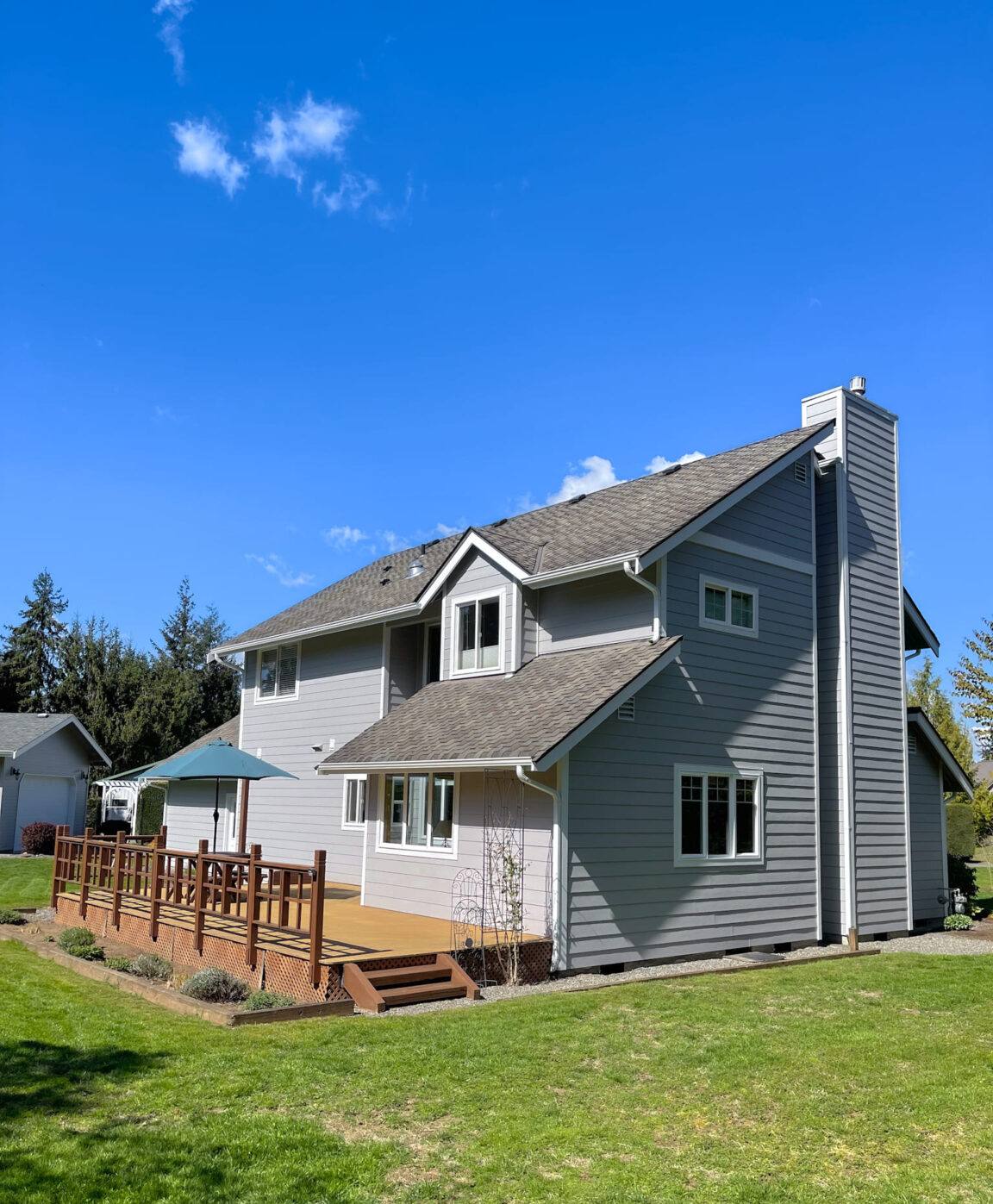
What Seattle's Marine Climate Does to Siding Over Time
King County sits in a marine climate zone, and Seattle homes deal with a specific combination of stresses that drier or more inland regions simply don't face:
- Driving rain: Wind-driven rain off the Sound pushes moisture sideways into wall assemblies, not just straight down, which means lap siding and flashing details have to work harder than a simple "shed water downward" design.
- Salt air: Proximity to Puget Sound puts a low but steady level of salt-laden moisture into the air across the Seattle area, which accelerates corrosion on fasteners, trim metal, and anything not rated for coastal-adjacent exposure.
- A long moss season: Cool, damp conditions for much of the year give moss, algae, and mildew a long window to establish themselves on north-facing walls, shaded elevations, and anywhere air doesn't circulate well.
- Prolonged humidity: Unlike a hard freeze-thaw climate, Seattle's problem isn't extreme cold — it's siding staying damp for extended stretches, which is exactly the condition that causes wood-based products to swell, delaminate, or rot from the inside out.
None of this means Wallingford homes need exotic materials. It means the installation details — flashing, drainage, fastening, and the product itself — have to be chosen for sustained moisture exposure, not just good looks on a dry day.
What a Correct Siding Installation Actually Involves
The Water-Resistive Barrier
Every correct siding job starts underneath the siding, with a continuous weather-resistive barrier installed over the sheathing. Seams get properly lapped and taped, and every penetration — vents, hose bibs, light fixtures — gets sealed before a single piece of siding goes up. This barrier is the home's actual first line of defense; the siding itself is the second.
Flashing at Every Transition
Windows, doors, roof lines, and deck ledgers are where water intrusion happens, not in the middle of a flat wall. Correct installation means metal or manufactured flashing at every one of these transitions, integrated with the weather barrier in the right shingle-lap order so water is always directed outward and down, never trapped behind the cladding.
A Drainage Gap Behind the Siding
In a climate that sees as much sustained rain as Seattle does, siding needs somewhere for incidental moisture to go. A rainscreen gap — created with furring strips or a purpose-built drainage mat — lets bulk water drain and lets the wall assembly dry out between rain events instead of staying wet against the sheathing.
Fastening and Clearances
Fasteners need to be corrosion-resistant given the area's salt-air exposure, driven to the manufacturer's specified depth and pattern — not too tight, not too loose. Siding also needs proper clearance from grade, roof lines, and hard surfaces so it isn't sitting in standing water or splash-back moisture during Seattle's wetter months.
Caulking Where It Belongs — and Nowhere Else
Sealant has a specific job: closing small gaps at trim and penetrations. It is not a substitute for flashing, and over-caulking a wall can trap moisture behind the siding instead of letting it drain. Correct installation uses caulk deliberately, not as a catch-all fix.
Why We Only Install James Hardie Fiber Cement
We install James Hardie fiber cement siding exclusively. We don't install vinyl, LP SmartSide, primed spruce, cedar, or other fiber cement brands like Allura or Cemplank — not because those products have no merit, but because after years of siding work in this exact climate, we standardized on the one product system that consistently holds up to Seattle's specific combination of driving rain, sustained humidity, and a long moss season without the maintenance headaches or moisture risk the alternatives carry.
| Material | How It Handles Sustained PNW Moisture | Longer-Term Consideration |
|---|---|---|
| Vinyl | Doesn't rot, but seams and panels can allow moisture behind the cladding with no drying capacity, and it can warp or crack in temperature swings | Lower upfront cost, shorter realistic lifespan in this climate, limited repair options if damaged |
| Primed spruce / cedar | Natural wood absorbs moisture readily in a climate that stays damp for months at a time; requires an intact paint film to perform at all | Repainting and caulk maintenance on a recurring cycle; rot risk grows with any coating failure |
| LP SmartSide | Engineered wood strand product; performs reasonably when installation and maintenance are followed exactly, but is still wood-based and moisture-sensitive at cut edges and seams | Manufacturer maintenance and touch-up requirements are strict; deviations can affect warranty coverage |
| James Hardie fiber cement | Cement-based composition doesn't absorb and swell the way wood products do, and the factory-applied ColorPlus finish resists the moss, mildew, and UV exposure typical of Seattle's long wet season | Higher upfront investment; correct installation to Hardie's climate-specific spec is essential to get the full performance |
James Hardie also builds region-specific "HZ" product lines engineered for different climate zones, non-combustible material composition, and a factory finish warranty that's meaningfully stronger than field-painted alternatives. That combination — durability in sustained moisture, low ongoing maintenance, and a warranty that actually means something — is why it's the only product we put on a home.
Our Wallingford Siding Installation Process
- On-site assessment: We inspect the existing siding, sheathing condition, trim, and problem areas specific to the home — shaded north walls prone to moss, low-clearance sections, prior water staining.
- Scope and product selection: We walk through the right James Hardie plank, panel, or shingle profile and color for the home's style, plus any trim and flashing upgrades the wall assembly needs.
- Tear-off and sheathing repair: Old siding comes off, sheathing is inspected for hidden rot or damage and repaired before anything new goes up — this step is where problems from decades of Seattle rain often surface.
- Weather barrier and flashing installation: A new continuous water-resistive barrier goes on, with flashing integrated at every window, door, and roofline transition.
- Drainage gap and siding installation: Furring or drainage mat is installed for proper ventilation behind the cladding, then Hardie siding is installed to manufacturer fastening and clearance specifications.
- Trim, caulking, and final detailing: Trim is finished, sealant is applied only where it belongs, and every penetration is checked.
- Final walkthrough: We review the completed work with the homeowner and cover basic care going forward.
Signs a Wallingford Home Needs New Siding
- Persistent moss or algae streaking on north- or shade-facing walls that keeps returning after cleaning
- Soft spots, bubbling, or visible warping in wood-based or engineered siding
- Paint that's failing faster than a normal repaint cycle, especially on walls exposed to prevailing rain
- Cracked, buckled, or missing vinyl panels after wind events
- Rising energy bills that suggest the wall assembly behind the siding is no longer performing
- Visible gaps at trim, corners, or window flashing where daylight or drafts are noticeable
- Any sign of moisture staining on interior walls near exterior siding lines
What Affects the Cost of a Siding Installation
| Factor | Why It Matters |
|---|---|
| Home size and wall complexity | More square footage, dormers, and cut-ins mean more material and labor time |
| Condition of existing sheathing | Hidden rot or damage found during tear-off adds repair scope before new siding can go on |
| Siding profile and trim detail | Lap siding, shingle-style panels, and custom trim packages carry different material and labor costs |
| Number of stories and access | Two- and three-story walls, steep grades, or tight side yards affect scaffolding and staging time |
| Flashing and drainage upgrades | Homes without an existing rainscreen gap benefit from adding one, which is additional scope done right the first time |
We give exact numbers only after seeing the specific home — anyone quoting a firm price sight unseen for a Seattle-area re-side isn't accounting for what's actually behind the old siding.
Living With New Siding Through Seattle's Wet Seasons
One advantage of James Hardie's factory-applied ColorPlus finish is how little upkeep it asks for compared to field-painted materials. Homeowners still benefit from periodically rinsing off pollen, dust, and the early stages of moss growth on shaded walls, and keeping gutters and downspouts clear so water is directed away from the foundation and lower siding courses. Trimming back vegetation that holds moisture against the wall also goes a long way in a climate where things stay damp for months at a stretch. None of this is heavy maintenance — it's the kind of basic care that keeps correctly installed siding performing the way it's designed to for decades.
Why Local Installation Experience Matters in Wallingford
A crew that already works in Seattle neighborhoods like Wallingford understands the practical realities that come with older King County housing: navigating narrow side yards and mature landscaping, working around homes that may have had multiple past exterior updates, and pulling the correct permits for the jurisdiction. That familiarity shows up in fewer surprises mid-project and a wall assembly that's built for how this specific climate actually behaves, not a generic install done the same way regardless of where the home sits.
If you're weighing a siding replacement for a Wallingford home, we're happy to take a look and talk through what your specific house needs — no pressure, no obligation. Use the form below to request a free estimate.