 Seattle Exterior
 Why Window Replacement Looks Different in Wallingford
Wallingford is one of Seattle's older residential neighborhoods, and it shows in the housing stock: a dense mix of early-1900s Craftsman bungalows, Tudor-influenced cottages, and post-war infill, many still carrying their original wood-frame windows or a first-generation retrofit from decades ago. That combination of age and character means window replacement here isn't a one-size-fits-all job. A window that looks right on a stucco rambler in the suburbs can look badly out of place on a Wallingford bungalow with deep eaves, divided-light sashes, and narrow trim reveals.
At the same time, these homes have spent decades under King County's wet marine climate, which works against old wood, old glazing putty, and old weatherstripping in ways that are easy to underestimate. The goal in Wallingford isn't just "install new windows" — it's replacing tired, leaky units with something that performs for the next 20-30 years while still looking like it belongs on the house.
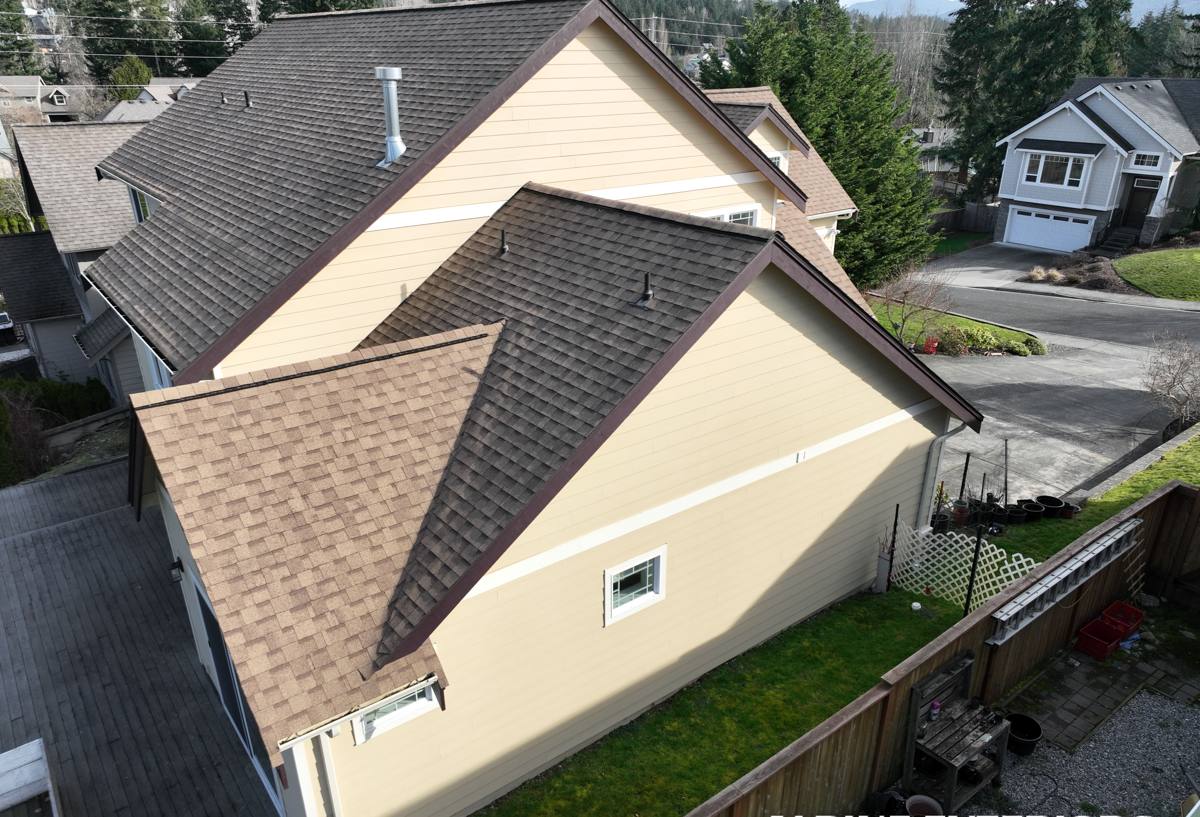
What Seattle's Climate Does to Older Windows
Seattle's marine climate is mild compared to much of the country, but it's relentless in ways that are harder on windows than a harsher, drier climate would be. Wallingford homes sit under the same year-round pattern of moisture, wind-driven rain, and salt-laden air moving inland off Puget Sound — and that combination slowly breaks down window components most homeowners never think about until something fails.
Driving Rain and Wind-Driven Moisture
Storms off the Sound rarely come straight down. Wind pushes rain sideways into window faces and up under sills, which is exactly where old flashing and glazing putty fail first. Once water gets behind a frame instead of running off it, it doesn't dry out quickly in our climate — it sits, and it starts rotting wood sash and sill framing from the inside out.
Moss and Algae Season
King County's long wet season keeps north- and west-facing surfaces damp for months at a time, and that's exactly the condition moss and algae need to take hold. On windows, that shows up as green-black growth in corners, in the weep channels of vinyl frames, and along wood trim — and it holds moisture against the frame longer than a dry surface would, accelerating rot and seal failure.
Salt Air and Hardware Corrosion
Homes throughout the Seattle basin pick up airborne salt off Puget Sound, and over years that salt-laden air corrodes window hardware — hinges, balances, cranks, and screws — faster than it would further inland. On older aluminum or steel-framed windows it can also pit and discolor the frame itself, which is one more reason a straight swap using the original materials isn't always the smartest long-term move.
Signs Your Wallingford Home Needs New Windows
Not every drafty window needs full replacement, but a few signs consistently point to it rather than a repair:
- Wood sash or sill that's soft, spongy, or visibly rotted when pressed
- Windows that won't stay open on their own, or won't latch tightly
- Visible fogging or moisture trapped between panes of a double-glazed unit (a sign the seal has failed)
- Cold drafts you can feel near the frame even with the window fully closed
- Interior sill paint that keeps bubbling or peeling despite repainting
- Noticeably more outside noise coming through than older single-pane glass should let in
- Moss, algae, or black staining that keeps returning in the frame corners or weep holes year after year
If you're only seeing one or two of these on a single window, a repair or reglaze may still make sense. When several show up across multiple windows, or the frames themselves are failing, replacement is usually the more honest recommendation.
What a Correct Window Replacement Job Actually Involves
The window unit itself is maybe half the job. What happens around it — the flashing, the air sealing, the fit — is what determines whether the new window lasts 25 years or starts leaking again in five.
Flashing and Moisture Management
Every opening gets flashed so that any water reaching the rough opening drains back out and away from the wall assembly, not into it. This matters more in Wallingford's older homes than in new construction, because we're often working with original wall framing and sheathing that was never detailed for modern water management. Skipping or rushing this step is the single most common reason a "new" window ends up with the same rot problem a few years later.
Proper Fit and Insulation
An undersized or oversized opening gets shimmed and insulated correctly rather than packed with extra caulk to hide a bad fit. Gaps around the frame get filled with low-expansion foam or backer rod and sealant — not stuffed with loose insulation, which does little to stop air movement.
Matching the Home's Character
For Craftsman and older-style Wallingford homes, we pay attention to sash pattern, grille layout, and trim reveal so the replacement window doesn't flatten the look of the house. Divided-light patterns, exterior trim profiles, and even hardware finish are usually things we can match or complement rather than default to a generic contractor-grade look.
Choosing the Right Window Material
There's no single "best" frame material — the right choice depends on the house, the budget, and how much upkeep you want to take on. Here's how the common options compare in a wet, marine climate like ours:
| Material | Moisture & Salt-Air Performance | Maintenance | Typical Cost Range |
|---|---|---|---|
| Vinyl | Good — won't rot or corrode, though quality varies a lot by manufacturer | Low | Most affordable |
| Fiberglass | Excellent — very stable in wet, temperature-swinging conditions | Low | Mid to upper-mid |
| Wood | Fair — needs a good exterior clad or diligent upkeep to handle our rain | High unless clad | Higher |
| Wood-clad (wood interior, aluminum/vinyl exterior) | Good — the exterior shell shields the wood from weather | Moderate | Higher |
| Aluminum | Fair — prone to condensation and corrosion near salt air unless thermally broken | Low | Varies |
For most Wallingford homes we lean toward fiberglass or a well-built vinyl for full replacements, and wood-clad when matching an original Craftsman look matters more than anything else. We'll walk through the real trade-offs for your specific house rather than pushing one product line.
Our Window Replacement Process
The process is straightforward, and we keep you informed at every step:
- On-site assessment — we check every window's frame condition, look for hidden water damage, and measure openings precisely.
- Product recommendation — based on your home's style, budget, and exposure (a west-facing wall takes far more weather than a sheltered one), we recommend materials and glass packages that make sense.
- Written estimate — a clear scope and clear pricing, without surprise change orders for work that should have been scoped up front.
- Removal and prep — old units come out carefully to protect siding and interior trim, and any rot or damage found in the opening gets addressed before the new window goes in.
- Installation and flashing — new windows are set, shimmed, flashed, and sealed to manufacturer and code standards.
- Final check and cleanup — we test operation, check the seal, and clean up the work area before calling it done.
Energy Performance and Building Requirements
Washington's energy code sets minimum performance requirements for replacement windows, and Seattle's permitting process has its own expectations depending on the scope of work — especially if window sizes are changing or a large share of a home's windows are being replaced at once. We handle the permitting and code side of this so you're not left guessing whether a project needs a permit or what performance rating a window has to meet.
Beyond the code minimum, it's worth thinking about what actually matters for a Wallingford home: a lower U-factor keeps heat in during our long, wet winters, and a properly sealed installation does more for comfort than most people expect from "just windows." We'll walk through NFRC ratings like U-factor and SHGC in plain language rather than assuming you already know what they mean.
Why Hiring a Crew That Works Wallingford Regularly Matters
Window replacement in an established Seattle neighborhood comes with details a crew unfamiliar with the area can miss: narrow lots and alley access that affect how materials get moved to the back of a house, older framing dimensions that don't match modern off-the-shelf window sizing, and homes close enough together that protecting a neighbor's property is part of the job. Knowing what a west-facing window is up against in King County's climate versus a sheltered one, and knowing what Seattle's permitting office expects for a given scope of work, comes from doing this work here repeatedly, not from a crew passing through once.
We also know how frustrating it is to get a bid that changes the moment a crew shows up and finds rot behind the trim. Because we've opened up enough Wallingford window openings to know what's commonly hiding behind original wood trim on a home this age, our estimates account for what we're likely to find, not just what's visible from the outside.
Ready for an Honest Look at Your Windows?
If your windows are drafty, fogged, hard to operate, or just showing their age, we're happy to come take a look and give you a straightforward assessment — no pressure, no upsell script. Fill out the form below to schedule a free estimate for window replacement at your Wallingford home.