 Seattle Exterior
 West Seattle Decks Face a Different Set of Problems
West Seattle sits on a peninsula with Puget Sound on one side and the Duwamish waterway on the other, which means homes here catch salt-laden air on top of the normal Pacific Northwest rain load. That combination is harder on an outdoor structure than most homeowners expect. Salt air accelerates corrosion on fasteners and hardware, driving rain finds its way into end grain and joints that face the weather, and the shade from mature trees and close-set homes keeps decks damp long after a storm has passed. Add in a moss season that can run from fall through spring, and you have a structure that's working against the elements almost year-round.
A deck built without this in mind might look fine for a couple of years and then start showing problems all at once: soft spots near the house, rust streaks below fasteners, boards that stay slick with algae no matter how often they're swept. We build and repair decks across Seattle and King County, and the West Seattle jobs consistently need a few things done differently than a deck going in on a drier, more inland lot.
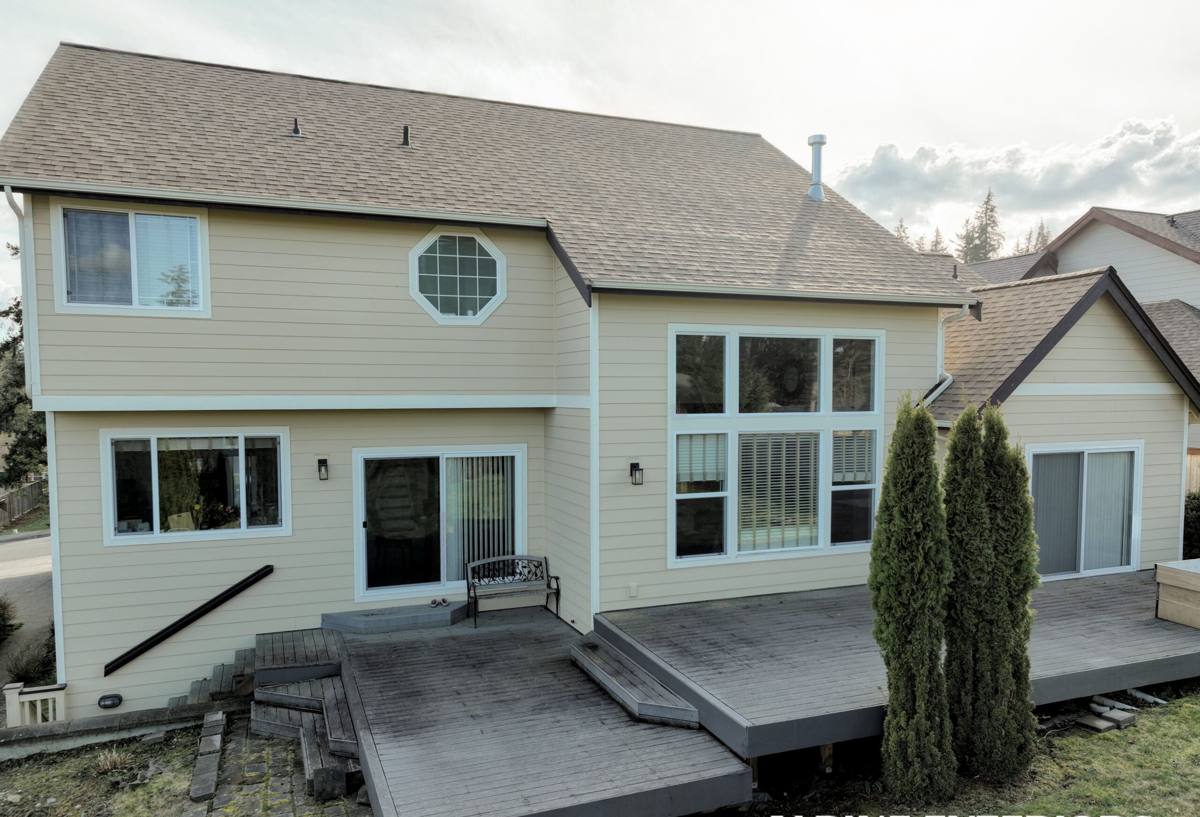
What a Deck Built for This Peninsula Actually Needs
Drainage First, Everything Else Second
Standing water is the enemy of every deck material, but it's a bigger problem here because of how long surfaces stay wet between dry spells. That means real slope built into the framing (not just hoping the boards shed water), gaps sized correctly for airflow, and a ledger connection that's flashed so water can't migrate behind the siding and into the house framing. This last point matters more than most homeowners realize — a poorly flashed ledger is one of the most common causes of hidden rot we find when we tear an old deck apart.
Hardware That Won't Corrode
Salt air speeds up corrosion on anything less than fully rated hardware. We use stainless or hot-dip galvanized fasteners and structural connectors rated for coastal exposure, not the standard exterior-grade hardware that's fine sixty miles inland but starts streaking rust within a couple of seasons this close to the water.
Airflow Underneath
A deck that sits low and tight to the ground, or backs up against a fence with no ventilation, holds moisture underneath long after the surface looks dry. Where the lot allows it, we build in enough clearance and skirting gaps to let air move, which does more to slow moss and mildew growth than any surface treatment.
Decking Material Options for This Climate
There's no single "best" material for every West Seattle project — it depends on your budget, how much upkeep you want to take on, and the look you're going for. Here's how the common options actually perform under salt air, shade, and near-constant moisture.
| Material | How it handles moisture & moss | Maintenance | Typical lifespan |
|---|---|---|---|
| Pressure-treated wood | Needs sealing to resist moisture pickup; moss takes hold quickly in shaded spots without upkeep | Annual cleaning, re-sealing every 2-3 years | 10-15 years with upkeep |
| Cedar | Naturally rot-resistant but still needs finish to fight graying and moss in wet shade | Cleaning and re-oiling every 1-2 years | 15-20 years with upkeep |
| Composite decking | Doesn't absorb water like wood, but algae and moss can still grow on the surface film in shaded, damp spots | Periodic washing, no sealing required | 25-30 years |
| PVC decking | Fully synthetic, doesn't feed rot; still needs washing to keep moss and mildew from staining the surface | Low — occasional washing | 25-30+ years |
We're upfront with clients that composite and PVC cost more up front but save a lot of weekend labor over the life of the deck, which tends to matter more here than in drier parts of the state simply because moss and algae need scrubbing off more often. Wood is still the right call for a lot of homeowners who want a traditional look and don't mind the maintenance rhythm — we'll walk through the honest trade-offs for your specific lot and sun exposure rather than push one product line.
Structural Basics You Can't Skimp On
The visible decking gets all the attention, but the framing underneath is what determines whether a deck lasts. A few things we treat as non-negotiable on every build:
- Footings sized and set to current code depth for our soil and frost conditions, not just poured to match the old ones
- Ledger board attachment with proper flashing and structural screws or through-bolts — never just nailed to the rim joist
- Joist hangers and post bases rated for exterior, corrosion-prone environments
- Guardrails and stair framing built to current structural requirements, especially on older homes where the original deck predates today's code
- Beam and post sizing calculated for your actual span and load, not eyeballed from what was there before
A lot of the decks we're called out to inspect in West Seattle were built decades ago under older code, or were owner-built without a permit. They can look solid on the surface while hiding undersized framing or a rotted ledger connection. We check these basics on every project, whether it's new construction or a repair.
Permits and Code in Seattle
Most deck projects of any real size in Seattle require a permit, and inspections check exactly the structural points above — footings, ledger attachment, guardrail height and spacing, stair geometry. Skipping the permit process might save time upfront, but it becomes a real problem when you go to sell the house and a buyer's inspector or the title company flags unpermitted work. We handle the permit process as part of the job so you're not left sorting it out after the fact.
Our Process
Every project starts with a walk of the site so we can look at sun exposure, drainage, existing structure (if there is one), and how the space will actually get used. From there:
- On-site assessment and measurements, including a look at the ledger and any existing framing if we're replacing a deck
- A written proposal covering material options, layout, and a realistic cost range — no vague allowances
- Permit drawings and submission where required
- Demolition of the old structure (if applicable) and disposal
- Framing, inspection, decking, railing, and any stairs or built-ins
- Final walkthrough where we go over care and maintenance specific to the materials you chose
Maintenance Realities: Moss, Mildew, and Salt Residue
Even the best-built deck needs some seasonal attention here. A few habits make a real difference:
- Sweep debris off the surface regularly — trapped leaves and needles hold moisture against the boards and feed moss growth
- Rinse salt residue off metal hardware and railings periodically, especially on decks with more open exposure toward the water
- Clean moss and algae with a deck-safe cleaner rather than a pressure washer on full blast, which can strip wood fibers or damage composite surface caps
- Re-check and tighten railing hardware annually — corrosion works on fasteners even when the wood or composite looks fine
- Keep gutters and downspouts near the deck clear so runoff isn't dumping extra water onto the structure
Signs Your Existing Deck Needs Replacing, Not Just Repair
Not every problem means a full rebuild. But a few signs point toward replacement rather than patching:
- Soft, spongy decking near the house where it meets the ledger
- Visible rot or rust at the post bases or joist hangers
- A ledger board that's separating from the house or shows water staining on the siding above it
- Railings that feel loose or flex under normal pressure
- A structure that predates current code with no record of a permit or inspection
If you're only seeing surface graying or moss on the boards themselves, that's usually a cleaning and refinishing job, not a rebuild. We'll tell you honestly which category your deck falls into rather than push a replacement you don't need.
Why Local Experience Matters Here
A contractor who mostly builds decks east of Lake Washington or further inland isn't necessarily thinking about salt exposure, moss timing, or how a specific lot's shade pattern affects drying time. Working across Seattle and King County, we've seen how differently decks age depending on which side of the water they're on, how much tree cover they sit under, and how exposed they are to weather coming off the Sound. That's the kind of thing that shows up in material choice, hardware selection, and framing details — not just in the finished look.
If you're planning a new deck or dealing with an aging one in West Seattle, we're happy to take a look and give you a straightforward, no-pressure estimate — just fill out the form below.