 Seattle Exterior
 West Seattle Roofs Face a Different Kind of Wear
West Seattle sits on a peninsula with direct exposure to Puget Sound, which means homes here take on a mix of weather that inland Seattle neighborhoods don't deal with in the same combination. You've got salt-laden air blowing off the water, driving rain that comes in sideways during winter storms, and a heavy tree canopy in many pockets of the neighborhood that keeps roofs shaded and damp for long stretches of the year. None of that is a dealbreaker for a roof, but it does mean a roof built for a drier climate, or installed without attention to detail, tends to fail here faster than it should.
A correctly installed roof accounts for all three of these factors from the start: material selection that tolerates salt exposure, underlayment and flashing that handle sustained wind-driven rain, and ventilation designed to keep moss and moisture from taking hold. That's the difference between a roof that needs attention again in eight years and one that goes the full distance of its rated life.
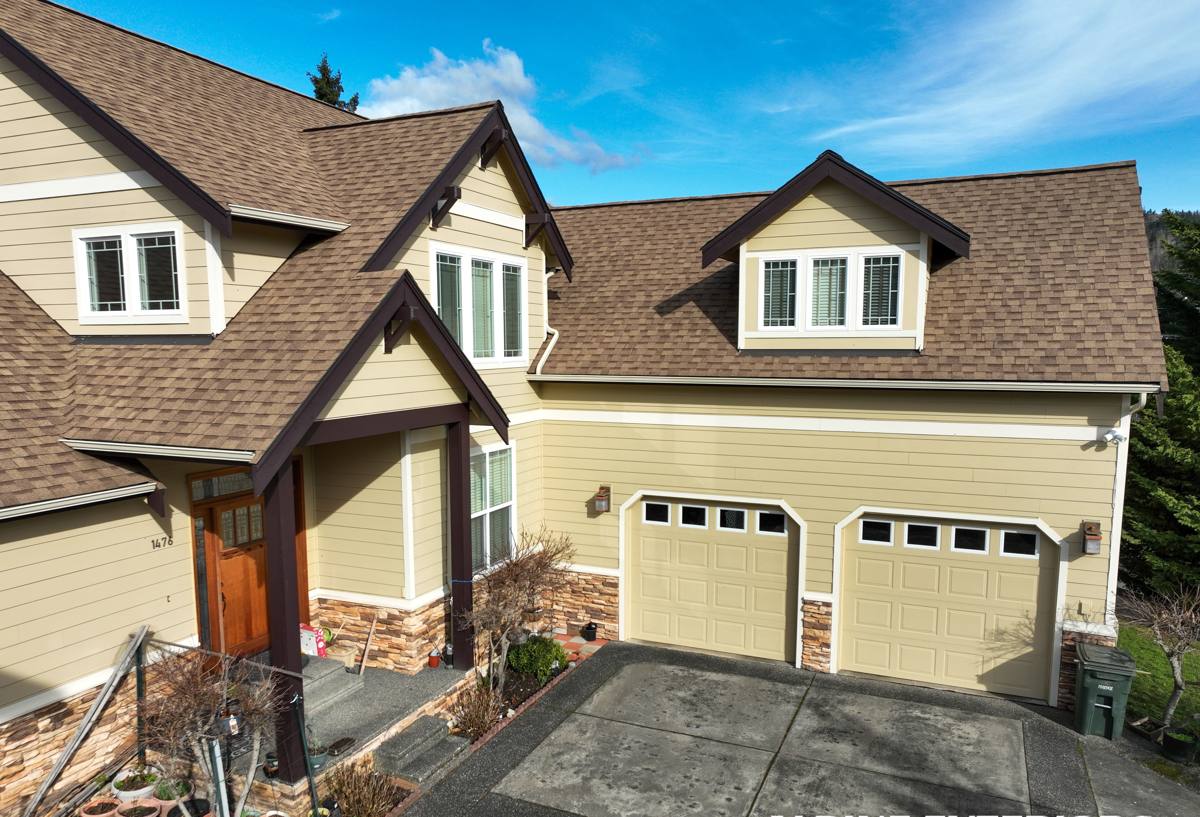
What Puget Sound Climate Actually Does to a Roof
Salt Air and Metal Fatigue
Homes closer to the water pick up airborne salt that settles on flashing, fasteners, and any exposed metal on the roof. Over years, that accelerates corrosion on lower-grade metal components — cheap nails, unsealed flashing, and thin gutter systems in particular. It's a slow process, but it's a real one, and it's why we pay attention to the metal we use on a West Seattle roof, not just the shingle itself.
Driving Rain and Wind-Driven Water
Seattle doesn't get the heaviest rainfall totals in the country, but King County storms often bring rain sideways, pushed by wind off the Sound. That matters because a roof only needs to shed water straight down to perform on paper — it needs to resist water being driven up and under shingle edges, around chimneys, and into wall-roof transitions to actually perform in a real storm. This is a detailing problem more than a materials problem, and it's where a lot of roof failures actually start.
Moss Season
Shaded, moisture-retaining roof sections in West Seattle can grow moss for a good chunk of the year. Moss holds water against the roofing surface, works its way under shingle tabs, and can lift edges over time. It also blocks proper drainage in valleys if left unchecked. Moss isn't just cosmetic — left alone long enough, it shortens the life of an otherwise sound roof.
Signs a West Seattle Home Needs a New Roof, Not Another Repair
Repairs make sense for isolated problems. A full replacement makes sense once the roofing system as a whole is compromised. Common signs we see on inspections in this neighborhood include:
- Granule loss heavy enough that shingles look bald or blotchy in patches, especially on south- and west-facing slopes
- Persistent moss growth that comes back within a season or two of cleaning, even after treatment
- Curling, cupping, or cracked shingles, particularly on older 3-tab roofs
- Soft spots or sag in the roof deck, felt when walking the roof or seen from the attic
- Daylight visible through the roof deck from inside the attic, or water staining on rafters and sheathing
- Rusted, loose, or missing flashing around chimneys, skylights, and roof-to-wall transitions
- A roof that's simply reached the end of its rated service life, even if it looks okay from the ground
If you're only seeing one or two of these, a repair or a maintenance visit may still be the right call. When several show up together, or the roof is past its expected lifespan, replacement is usually the more honest recommendation — and the more cost-effective one over the next decade.
Choosing a Roofing System Built for This Neighborhood
There's no single "best" roofing material for every house — it depends on the roof's slope, the home's architecture, and what the homeowner wants to spend up front versus over time. What matters for West Seattle specifically is how a material handles sustained moisture and how easy it is to keep moss-resistant over the years.
| Material | Typical Lifespan | Moisture & Moss Behavior | Best Fit |
|---|---|---|---|
| 3-tab asphalt shingle | 15–20 years | Lowest moisture resistance; moss and algae take hold faster | Budget-driven projects, shorter-term ownership plans |
| Architectural (laminate) shingle | 25–30+ years | Better water shedding, often available with algae-resistant granules | Most West Seattle homes; the standard we recommend for the money |
| Standing seam metal | 40–50+ years | Excellent water shedding, sheds moss more easily due to smooth surface | Steep-slope or view homes, homeowners planning to stay long-term |
| Cedar shake | 20–30 years with upkeep | Attractive but higher maintenance burden in a wet, mossy climate | Homeowners committed to regular upkeep for the traditional look |
We're upfront about trade-offs. Cedar shake looks great and suits a lot of West Seattle's older craftsman-style homes, but it needs more consistent maintenance in a climate that stays damp for months at a time — that's a maintenance conversation, not a knock on the material. Architectural shingles are where most homeowners land because they balance upfront cost, moisture performance, and warranty length well for this climate.
Our New Roof Installation Process
Tear-Off and Deck Inspection
We remove the old roofing down to bare deck rather than layering over it. That's the only way to actually see the condition of the sheathing underneath — rot, soft spots, and old water damage don't show up until the old material is off. Any damaged decking gets replaced before anything new goes down; installing new roofing over a compromised deck just hides a problem that will resurface.
Underlayment and Ice-and-Water Protection
Given how much wind-driven rain this area sees, we install synthetic underlayment across the full roof and self-adhered ice-and-water shield membrane at the eaves, valleys, and any low-slope transitions — the spots where water is most likely to back up or get pushed uphill by wind. This layer is what actually keeps a roof dry during a real storm, not just a light rain.
Flashing at Every Transition
Chimneys, skylights, sidewalls, and roof-to-wall intersections are where most leaks start, not in the open field of the roof. We install new metal flashing at every one of these points rather than reusing old flashing, and we detail it to shed water outward even under wind pressure — not just gravity-fed drainage.
Ventilation Designed for Moss and Moisture Control
Proper intake and exhaust ventilation keeps the underside of the roof deck at a consistent temperature and moisture level, which does two things: it protects the sheathing from condensation damage, and it reduces how much moss and algae can establish on the surface above. A roof with poor ventilation stays damper longer after every rain, and in this climate, that adds up fast.
Shingle Installation and Final Details
Shingles go down following the manufacturer's specified nailing pattern and exposure — not a shortcut pattern to save time. Ridge caps, starter strips, and drip edge are installed as a complete system, because a roof's warranty and its actual performance both depend on every component working together, not just the field shingles looking right from the street.
What a Correct Installation Includes
It's easy for a roof to look finished from the ground and still be missing details that matter. Here's what should be part of any complete new roof installation in this climate:
- Full tear-off to bare deck, with all old fasteners removed
- Deck inspection and repair of any damaged sheathing before new material goes down
- Ice-and-water shield membrane at eaves, valleys, and low-slope areas
- Synthetic underlayment across the full roof deck
- New drip edge at all eaves and rakes
- New flashing at every chimney, skylight, sidewall, and roof-to-wall transition
- Balanced intake and exhaust ventilation matched to the attic space
- Manufacturer-specified nailing pattern and shingle exposure
- Magnetic sweep and full site cleanup once installation is complete
Permits, Timeline, and What to Expect
A full roof replacement in Seattle requires a building permit, and we handle that process as part of the job rather than leaving it on the homeowner's plate. Most single-family roof replacements in King County move through permitting and inspection without complication, but it does add lead time before work starts, so we build that into the schedule up front.
Once crews are on site, most West Seattle homes are fully re-roofed in one to a few days depending on roof size, complexity, and how much deck repair turns up once the old roofing is off. Weather is the other variable — we don't tear off a roof and leave it exposed if rain is likely, which sometimes means adjusting the schedule around a clear window rather than pushing through a storm.
Why Local Experience in This Neighborhood Matters
A crew that already works West Seattle regularly knows what this housing stock actually needs — the mix of older craftsman homes with steeper, more complex rooflines and newer construction with simpler slopes, the tree-heavy lots that need extra attention to moss and drainage, and the wind exposure that changes as you move from more sheltered inland streets toward the bluffs facing the Sound. That familiarity shows up in small decisions during the job: where to add extra flashing, which valleys need more attention, and how to detail ventilation for a specific roofline. It's the accumulated judgment that comes from doing this work in this specific climate, on this specific kind of housing, over and over.
We're licensed to work throughout Seattle and King County, and West Seattle is a neighborhood we know well — not a one-off job we're pricing on guesswork.
Get a Straight Answer About Your Roof
If your roof is showing its age, or you just want an honest read on how much life it has left, we're happy to take a look. The estimate is free, there's no pressure attached to it, and you'll get a clear explanation of what we find and what your real options are. Use the form below to get started.