 Seattle Exterior
 Siding Built for West Seattle's Exposure
West Seattle sits out on its own peninsula, with a lot of homes catching wind and weather straight off the Sound. That exposure means siding here works harder than siding in more sheltered parts of the city. Salt-laden air moves in off the water, wind-driven rain gets pushed sideways into wall assemblies rather than falling straight down, and the long stretch of gray, damp months each year keeps north- and west-facing walls wet longer than most siding products are designed to tolerate. Add in tree cover on many lots and you get moss and algae that thrive on any surface that stays damp.
None of this is unusual for Puget Sound homes, but it does mean the siding choice and the installation details matter more here than they would in a dry climate. We install James Hardie fiber cement exclusively, and this page walks through what that looks like specifically for a West Seattle siding project — not a generic overview, but what we actually pay attention to on homes in this part of King County.
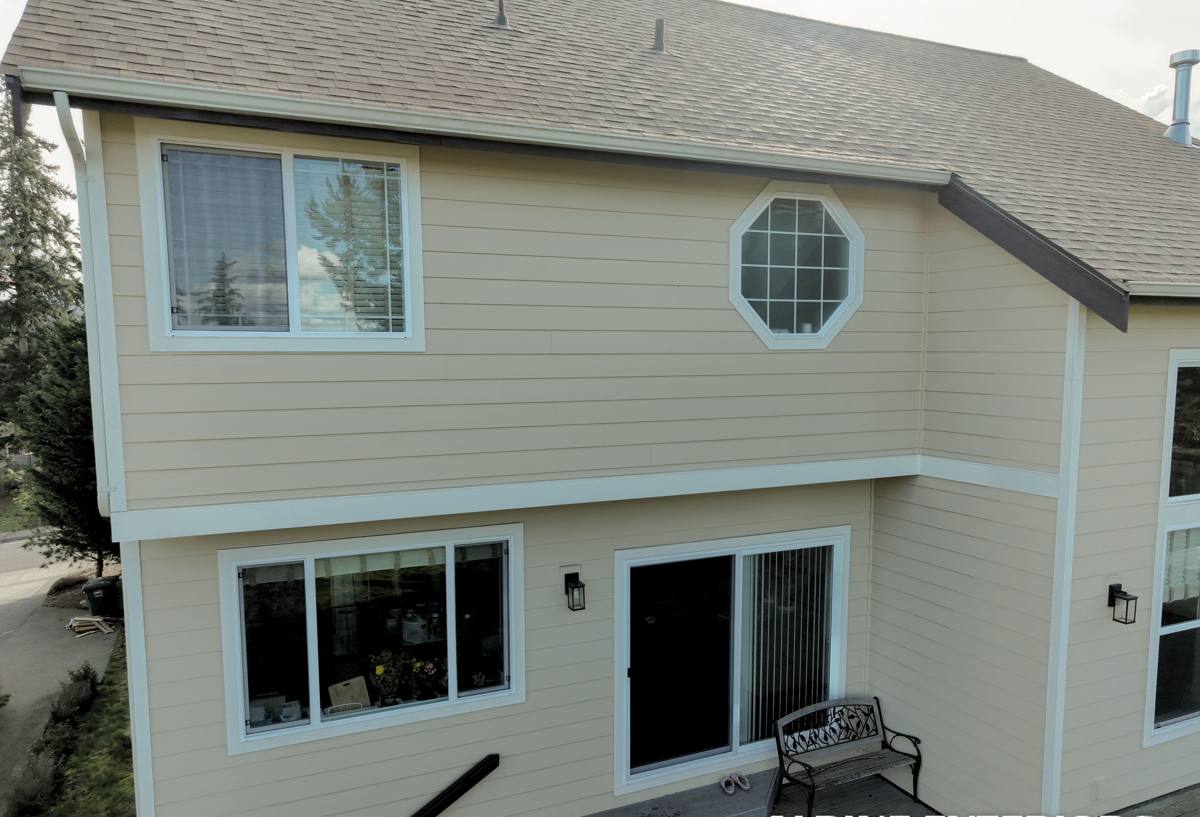
What West Seattle's Climate Does to Siding Over Time
Salt Air and Metal Fasteners
Homes closer to the water deal with airborne salt that accelerates corrosion on exposed fasteners, flashing, and trim hardware. Over years, corroded fasteners can loosen, stain the siding face, or fail outright. This is one of the reasons fastener selection and flashing details matter as much as the siding material itself.
Wind-Driven Rain
West Seattle's exposure to weather coming off the Sound means rain doesn't always fall straight down — it gets driven sideways into lap joints, butt seams, and trim intersections. Siding that isn't installed with the correct laps, gaps, and sealant details will let water find its way behind the cladding, where it can sit against sheathing and framing for months at a time.
Moss and Algae Growth
The extended damp season, combined with tree cover common in many West Seattle neighborhoods, creates ideal conditions for moss and algae to take hold on shaded walls, especially north-facing elevations and areas beneath overhangs that never fully dry out. Some siding materials absorb moisture into the surface, which feeds growth and eventually leads to soft spots or paint failure. Others resist it because the material itself doesn't hold water the same way.
Why We Only Install James Hardie Fiber Cement
We made a decision a while back to stop installing vinyl, LP SmartSide, primed wood, and other fiber cement brands, and to install James Hardie exclusively. That's not a marketing position — it's a standard we hold because of what we've seen happen to siding on homes in exactly this kind of climate.
- Non-combustible material: Hardie fiber cement is a cement-and-cellulose composite, not a petroleum-based product, so it doesn't soften, warp, or off-gas in summer heat the way vinyl can, and it holds up to wind-driven rain without absorbing water the way raw wood siding does.
- Factory-applied ColorPlus finish: the finish is baked on at the factory under controlled conditions, which gives more consistent, durable color adhesion than field-applied paint on primed wood or fiber cement alternatives — important on a peninsula where UV exposure and salt air both attack paint film over time.
- HZ5 product engineering: Hardie makes region-specific formulations, and the HZ5 line is engineered for wetter, harsher climate zones — which describes West Seattle's exposure well.
- Strong transferable warranty: when installed to Hardie's specifications, the product carries a manufacturer warranty that can transfer to a new owner, which matters for resale in a market where buyers increasingly ask about siding age and type.
We're upfront that other products have their place and their own advocates. Vinyl is inexpensive and low-maintenance in mild climates; LP SmartSide is lighter and easier to handle on some jobs; cedar has real curb appeal for the right buyer. Our issue isn't that these products are without merit — it's that after years of doing repair and replacement work across the Seattle area, we don't think they hold up as well as fiber cement against this specific combination of salt air, driving rain, and moss season, and we'd rather stand behind one product we trust completely than install several we have reservations about.
What a Correct Siding Installation Actually Involves
The siding material is only part of the job. Most siding failures we get called out to inspect trace back to installation shortcuts, not the product itself. A correct installation on a West Seattle home includes:
Water Management Behind the Siding
A weather-resistive barrier installed correctly, with proper overlaps and integration at every penetration — windows, doors, hose bibs, vents, and electrical fixtures — so that any water that does get past the siding face has a path to drain out rather than sit against the sheathing.
Flashing at Every Transition
Flashing above windows, doors, and at roof-to-wall intersections directs water away from the assembly instead of letting it pool. This is one of the most commonly skipped details on lower-cost installations, and it's often invisible until a wall has already been damaged.
Correct Fastening and Clearances
James Hardie specifies fastener type, spacing, and minimum clearance from grade, roofing, and decks. Following those specs — rather than field-guessing — is what keeps the manufacturer warranty valid and keeps the siding performing as designed.
Proper Caulking and Joint Treatment
Butt joints, trim intersections, and penetrations need the right sealant applied correctly. Over-reliance on caulk to compensate for poor flashing is a common shortcut that fails within a few wet seasons.
Our Process for a West Seattle Siding Project
- On-site assessment: we look at your home's exposure — which walls face prevailing wind and rain, where tree cover keeps siding damp longer, and where existing moisture or moss damage already shows.
- Sheathing and moisture check: before any new siding goes up, we check what's underneath. Old wall assemblies in this area sometimes have trapped moisture damage from prior installations that needs to be addressed first.
- Weather barrier and flashing installation: this is the step that determines how the wall performs for the next 30-50 years, and we don't rush it.
- Hardie panel or plank installation: installed to manufacturer spec for fastening, clearance, and joint treatment, using the HZ5 product line suited to this climate zone.
- Trim, caulking, and final detailing: corner boards, window trim, and all joints sealed correctly.
- Final walkthrough: we go over the finished job with you and explain what maintenance, if any, the ColorPlus finish will need going forward.
Cost Factors for a West Seattle Siding Installation
Every home is different, but the factors that most affect the scope and cost of a siding project here are consistent. This isn't a price list — it's what actually drives the estimate up or down.
| Factor | Why It Matters |
|---|---|
| Existing wall condition | Hidden moisture damage or rotten sheathing found during tear-off adds repair scope before new siding can go on |
| Home size and wall complexity | More corners, dormers, and trim details mean more labor and material waste |
| Product line and profile | Lap siding, panel siding, and shingle-style Hardie products have different material and labor costs |
| Color and finish choice | ColorPlus factory finishes vs. field-painted options affect both cost and long-term maintenance |
| Site access | Tight lots, slopes, or limited driveway access common in West Seattle can add setup time and equipment needs |
| Tear-off vs. overlay | Removing old siding down to the sheathing is more labor-intensive but lets us properly address the water management layer |
Signs Your West Seattle Home May Need New Siding
- Persistent moss or algae staining that returns shortly after cleaning
- Soft or spongy spots when you press on the siding, especially near the bottom courses or under windows
- Visible warping, buckling, or gaps between panels or planks
- Peeling or bubbling paint that keeps recurring in the same spots
- Rust streaks running down from fasteners or trim hardware
- Rooms with exterior walls that feel damp, musty, or drafty during the wet months
Why Hiring a Crew That Already Works West Seattle Matters
Siding installation is detail work, and the details that matter change with the site. A crew that mostly works drier, more sheltered neighborhoods may not think as carefully about wind-driven rain at a corner exposed to open water, or about how much clearance a wall needs when it sits under mature tree cover most of the year. Working across Seattle and King County day in and day out means we've seen what happens to siding here specifically — where the moisture problems show up first, which walls need extra flashing attention, and how the salt air and long moss season change the maintenance conversation compared to siding installed inland.
That local pattern recognition doesn't replace following manufacturer specs — it adds to it. We follow James Hardie's installation requirements on every job, and we bring the judgment that comes from seeing how those requirements play out on homes with this exact exposure.
Get a Free, No-Pressure Estimate
If your West Seattle home has siding that's showing its age, or you're planning ahead for a replacement, we're happy to take a look and walk you through what we see — no pressure, no obligation. Use the form below to request a free estimate.