 Seattle Exterior
 Siding Repair in West Seattle: Built for a Peninsula Climate
West Seattle sits out on a peninsula bounded by Puget Sound and Elliott Bay, which means a lot of homes here get more direct exposure to marine weather than properties tucked further inland in the city. That combination of salt-tinged air moving off the water, wind-driven rain through fall and winter, and a moss season that can run most of the year on shaded or north-facing walls puts steady, compounding pressure on siding. Repair work in this part of Seattle has to account for all three at once — not just patch whatever is visibly cracked or stained and call it done.
We handle siding, roofing, windows, and decks for homes throughout Seattle and King County, and on repair calls specifically we treat the underlying cause as the actual job, not just the visible damage. A cracked, warped, or delaminating board patched without figuring out why it failed in the first place usually fails again in the same spot within a season or two, and that costs a homeowner more in the long run than doing it right the first time.
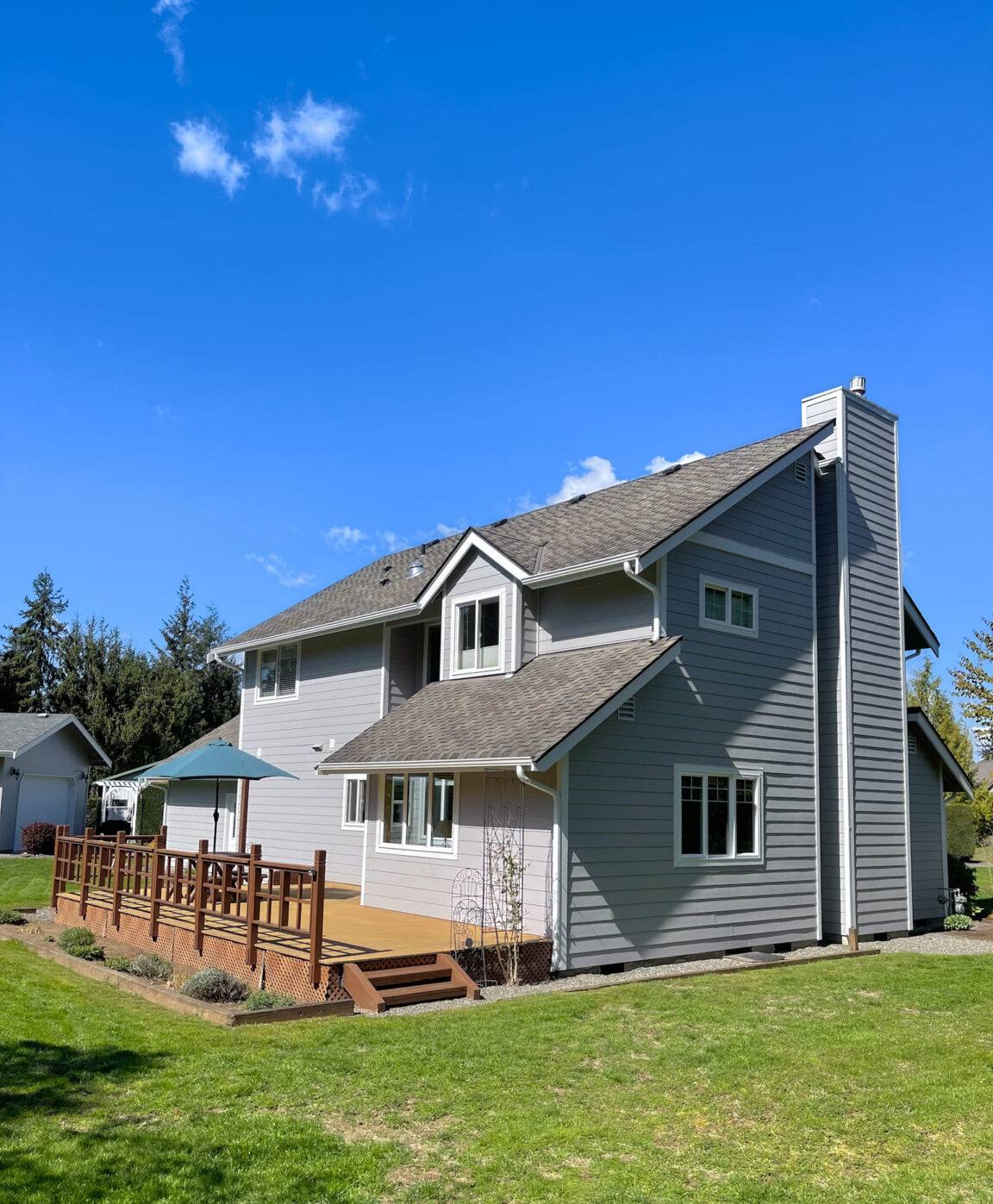
What This Climate Does to Siding Over Time
Salt Air and Marine Exposure
Homes closer to the water's edge in West Seattle pick up salt-tinged air that speeds up corrosion on fasteners, flashing, and any exposed metal trim faster than it happens further inland. Under-spec or plain steel fasteners show rust streaks and start to loosen years before they should out here, and that loosening is often the real starting point of a siding failure that looks, at first glance, like unrelated board damage somewhere else on the wall.
Wind-Driven Rain
Storms coming off the Sound don't just fall straight down — wind pushes rain sideways into wall assemblies, especially on elevated or more open lots with less tree cover to break the wind. That matters for repair work because wind-driven rain reaches gaps and seams that would stay dry in a calmer inland climate. It's usually the reason damage clusters around butt joints, inside corners, and anywhere flashing was installed short or skipped altogether.
Moss, Mildew, and a Long Growing Season
Mild temperatures combined with near-constant moisture from fall through spring give moss and mildew a growing season that runs most of the year across the Puget Sound region. Shaded elevations, north-facing walls, and anywhere siding stays damp longer than it should become growth surfaces first. Once moss takes hold on wood-based or engineered-wood siding, it holds moisture against the material long enough to start real rot underneath, often well before the growth itself is obvious from the ground.
Signs a West Seattle Home Needs Siding Repair
- Cracked, split, or visibly warped boards, especially on walls that face prevailing wind and rain
- Soft or spongy spots when pressed, which usually means moisture has already reached the material underneath
- Paint or finish peeling, bubbling, or failing faster in one area than the rest of the house
- Persistent moss or mildew staining that keeps coming back after cleaning
- Gaps opening up at seams, corners, or trim where caulk has cracked or shrunk away
- Rust streaking below fasteners or exposed metal flashing and trim
Repair vs. Replacement: How We Make the Call
Not every damaged section of siding on a West Seattle home needs a full re-side. A house with a handful of isolated problem spots — a section that took storm damage, a corner where flashing failed, boards damaged by a one-time event like a fallen branch — is often a legitimate repair candidate. A house with widespread moisture damage, siding that's failing the same way across multiple walls, or an underlying material that's simply reached the end of its service life usually isn't, because repeated spot repairs on a system that's failing broadly end up costing more over a few years than one correct replacement would have.
| Condition | Repair Usually Makes Sense | Replacement Usually Makes Sense |
|---|---|---|
| Isolated storm or impact damage | Yes — targeted board replacement | Only if surrounding material is also compromised |
| Single failed flashing detail | Yes — re-flash and patch the affected area | Not on its own |
| Widespread soft or rotted boards | Rarely a lasting fix | Yes |
| Recurring moss/mildew across several walls | Sometimes, if drainage is the real cause | Yes, if the material itself is failing |
| Aging original material past its service life | Short-term patch only | Yes, for a lasting fix |
What a Correct Siding Repair Actually Involves
Matching Material and Profile
A repair that doesn't match the existing board width, exposure, and texture stands out visually and can also create a seam where water behaves differently than it does across the rest of the wall. On James Hardie siding we've installed or repaired before, matching current material to the existing profile and factory finish is usually straightforward. On other siding types, matching gets harder the older the original installation is, since profiles and finishes change over the years and exact matches aren't always available anymore.
Flashing and the Moisture Barrier Behind It
Most of the repair calls we run in this part of Seattle trace back to flashing that was never lapped correctly to begin with, or to caulk that was used as a stand-in for flashing rather than a supplement to it. Caulk alone cracks and shrinks over time — it was never meant to be the only barrier against wind-driven rain. A correct repair means pulling back enough of the surrounding material to actually inspect and fix the weather-resistive barrier and flashing underneath, not just covering the visible symptom.
Fastening and Sealant Standards
Given how much marine air this side of the city gets, fastener choice matters more here than it would in a drier inland climate. We use corrosion-resistant fasteners and sealants rated for sustained moisture exposure on every repair, and we fasten to the manufacturer's specified pattern rather than however the original installer happened to do it — deviations from spec are a common, avoidable cause of repeat failures.
Why We Repair — and Recommend — James Hardie Fiber Cement
A lot of the repair calls we get in West Seattle come in on siding that isn't James Hardie — vinyl, primed wood, engineered wood, or older fiber cement from a different manufacturer. We can patch and repair most of those materials, and we're upfront about what that repair can and can't accomplish: matching color and texture gets harder the older the product line, and some of those materials have known moisture or maintenance trade-offs that no amount of quality patching fully solves. James Hardie is the only siding we install as new work, because in a wet marine climate like this one, non-combustible fiber cement with a factory-applied ColorPlus finish holds up with less maintenance and less risk of the moisture-related failures we see most often on repair calls. When a repair on non-Hardie siding turns out to be more extensive than a spot fix — or when a homeowner is weighing repair against replacement anyway — we lay out that option honestly rather than defaulting to whatever is already on the wall.
Our Process for a West Seattle Siding Repair
We start with an on-site inspection of the damaged area and the wall assembly around it, not just the board that looks bad from the street. That means checking how far moisture has actually traveled, whether the flashing and weather barrier behind the siding are doing their job, and whether the damage is isolated or a sign of a broader problem. From there we give a straightforward read on repair versus replacement for that specific section, along with a written scope before any work starts. Matching material, correct flashing detail, and proper fastening are standard on every repair we do — not upgrades a homeowner has to ask for separately.
A Checklist Before Hiring for Siding Repair in West Seattle
- Ask how they'll address the cause of the damage, not just replace the visible board
- Confirm current Washington contractor licensing and active liability insurance
- Get a written scope that specifies material, fastener type, and flashing detail — not just "repair siding"
- Ask directly whether they can match your existing siding, and what happens if an exact match isn't available
- Ask how they'd handle it if the repair turns out to be larger than expected once the wall is opened up
Why a Local Crew Matters
A contractor who already works West Seattle regularly knows how this peninsula's exposure to Puget Sound and Elliott Bay compares to more sheltered parts of King County, and that shows up in small but consequential decisions — how much lap a flashing detail gets on a wind-exposed wall, which fastener grade gets specified given the marine air, whether a stain pattern points to a one-time event or an ongoing drainage problem. Those are the calls that determine whether a repair holds for years or needs redoing after the next wet winter.
If you're dealing with damaged, stained, or failing siding on a West Seattle home — or you're not sure whether repair or replacement is the right call — we're glad to take a look and give you a straightforward, no-pressure read. Reach out below for a free estimate.