 Seattle Exterior
 West Seattle's Climate Is Harder on Siding Than People Expect
West Seattle sits out on a peninsula, wrapped by Puget Sound on two sides, which means homes here take on weather that inland Seattle neighborhoods simply don't see as often. Salt-laden air off the Sound accelerates corrosion on fasteners and metal trim. Wind-driven rain off the water finds every gap in a siding system that a calmer climate would never expose. And King County's long, damp fall-through-spring stretch keeps north- and west-facing walls shaded and wet long enough for moss and algae to take hold and stay there for months.
None of this is unique to one street or one style of house. Craftsman bungalows in the Admiral district, mid-century ramblers near the Junction, and newer builds up on the ridge with unobstructed Sound views are all fighting the same combination of salt, wind, rain, and shade. Siding that isn't engineered and installed with that combination in mind fails faster here than it would twenty miles inland — and it usually fails quietly, behind the surface, before anyone notices a problem.
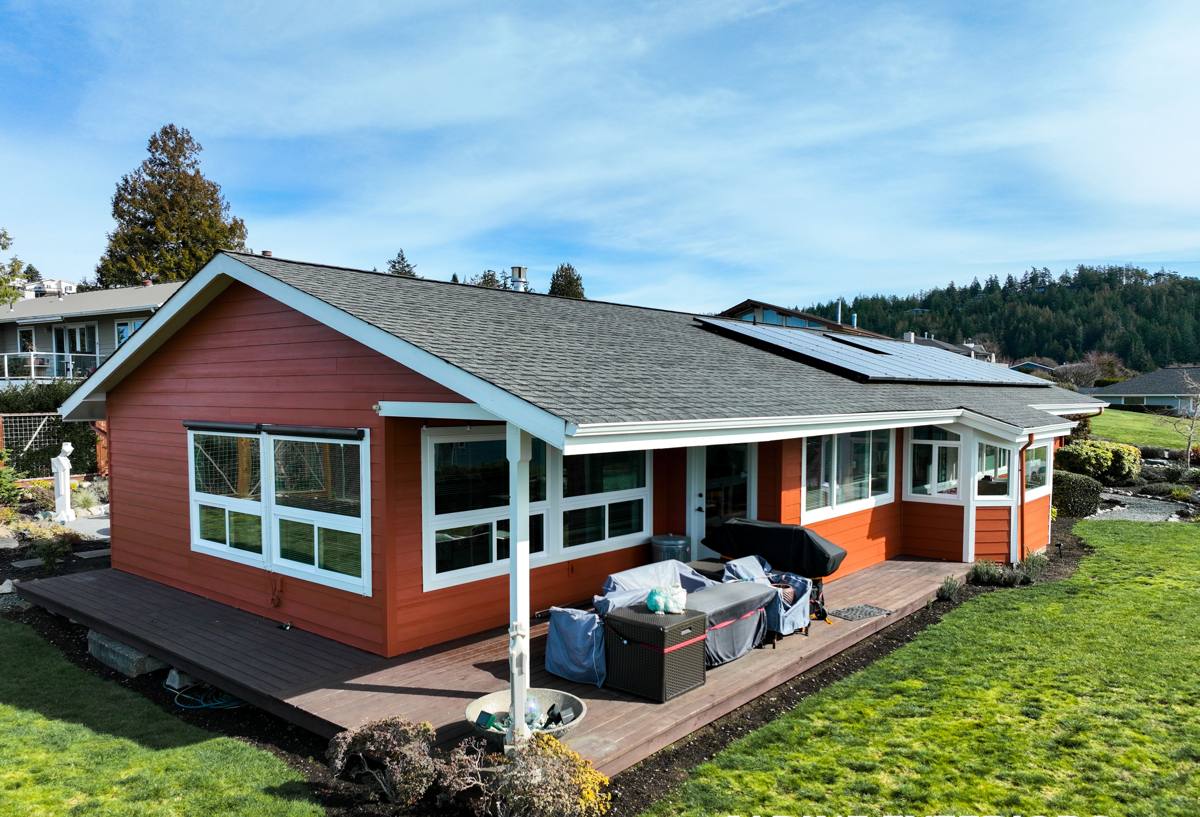
Signs a West Seattle Home Needs Siding Replacement, Not Just a Patch
Homeowners often call about a small visible issue — a stained patch, a soft spot, a section that looks tired — and the real story turns out to be bigger. Watch for these:
- Soft or spongy siding when pressed, especially near the bottom courses and around window and door trim
- Paint that keeps failing in the same spots within a year or two of repainting
- Persistent moss or dark streaking on shaded walls that pressure washing only knocks back temporarily
- Visible cupping, warping, or gaps opening up between boards or panels
- Musty smell or discoloration on interior walls that back up to exterior siding
- Siding that's original to a home built more than 20-25 years ago, particularly if it's wood, hardboard, or an older composite product
Any one of these on its own might be a repair. Several together, especially on walls that face the Sound or sit in shade most of the day, usually mean the underlying weather barrier has been compromised for a while and a full replacement is the more honest answer than another round of patching.
Why We Install Only James Hardie Fiber Cement in West Seattle
We don't offer vinyl, LP SmartSide, primed wood, or cedar siding, and that's a deliberate standard, not a limitation on what we're capable of installing. In a marine climate with salt air and sustained moisture exposure, the material matters as much as the workmanship. James Hardie fiber cement is non-combustible, doesn't swell or rot when it takes on moisture the way wood-based products can, and holds its shape and paint line far better under repeated wet-dry cycling than vinyl, which can warp in direct sun and turn brittle in cold snaps.
Hardie's ColorPlus factory finish is baked on under controlled conditions rather than field-applied, which matters a great deal here — West Seattle's damp shoulder seasons make it hard to get consistent field-painted results, and factory finishes hold color and resist fading far longer than a coat applied on-site in variable weather. Hardie also builds specific product lines engineered for different climate exposures, backed by a strong transferable warranty. When we stand behind a siding job, we want the material underneath the paint to be one we trust as much as the installation itself.
What a Correct Siding Replacement Actually Involves
Tear-Off and What's Underneath
Removing the old siding is also our chance to inspect the sheathing and framing before anything new goes up. In a wet climate, this step catches problems early — soft sheathing, hidden rot around old flashing, or framing that's been slowly absorbing moisture for years. Any of that gets repaired before new siding goes on; covering a known problem is not something we'll do.
Weather-Resistive Barrier and Flashing
This is the layer that actually keeps water out, and it's also the layer that's invisible once the job is finished — which is exactly why it's the most common place for corners to get cut. A properly lapped weather-resistive barrier, correctly integrated window and door flashing, and properly flashed transitions at rooflines, decks, and trim are what stand between a West Seattle wall and the next atmospheric river. We follow manufacturer flashing details rather than improvising, because improvised flashing is where slow leaks start.
Fastening and Clearances
Fiber cement has specific fastening requirements — nail type, spacing, and depth all affect long-term performance, and using the wrong fastener in a salt-air environment invites corrosion and streaking down the face of the siding. We also maintain proper clearance between the bottom of the siding and grade, decks, and roof lines, since tight clearances are one of the most common causes of premature moisture damage on homes near the water.
Joints, Caulking, and Factory Finish
Because Hardie's ColorPlus finish is factory-applied, field work is limited to properly treating cut edges and sealing joints with the right products — not repainting the whole wall. Done correctly, the finish should hold its color and integrity for many years without a maintenance repaint.
Our Process, Start to Finish
A siding replacement on a West Seattle home generally follows the same sequence, though the details flex based on the house:
- On-site inspection and assessment, including a look at sheathing condition where accessible and a discussion of which Hardie product line fits the home's exposure
- Written estimate covering scope, material, and timeline, with no pressure to sign on the spot
- Site protection and old siding removal, with sheathing inspected and any needed repairs called out before covering anything
- Weather-resistive barrier installation and flashing at every penetration, window, door, and transition
- Hardie siding installation to manufacturer fastening and clearance specifications
- Trim, caulking, and final detail work
- Cleanup and final walkthrough so you can see the finished work before we consider the job done
Comparing Siding Options in a Marine Climate
Homeowners researching options often ask how the alternatives actually compare once you factor in West Seattle's specific exposure. Here's an honest breakdown:
| Material | Moisture Behavior | Salt Air / Coastal Exposure | Finish Longevity |
|---|---|---|---|
| James Hardie fiber cement | Does not rot or swell; engineered for wet climates | Non-combustible, holds up well to salt air with proper fasteners | Factory ColorPlus finish, long-lasting color hold |
| Vinyl | Doesn't rot, but can warp or buckle with heat/cold cycling | Can fade and become brittle over time | Color molded in, but fades and cannot be refinished easily |
| Wood / cedar | Absorbs moisture, prone to rot without diligent maintenance | Salt air accelerates weathering and finish breakdown | Requires regular refinishing/staining, especially on shaded walls |
| LP SmartSide / engineered wood | Better than raw wood, but still moisture-sensitive at cut edges and seams | Edge sealing and maintenance become critical near the water | Field or factory finish depending on product, moderate upkeep |
This isn't a claim that other products can't perform anywhere — it's a statement about what tends to hold up best specifically under West Seattle's combination of salt air, sustained rain, and shaded, slow-drying walls, which is why we've standardized on one material rather than offering several.
Choosing a Crew That Already Works West Seattle
Siding installation quality varies a lot more than most homeowners expect, and the difference usually isn't visible until years later when flashing details either held up or didn't. A crew that regularly works West Seattle homes already understands things a crew unfamiliar with the area has to learn on your project: how much wind exposure a Sound-facing wall actually takes, which walls stay damp longest through King County's wet season, and how to sequence a tear-off around our rain patterns so sheathing isn't sitting exposed longer than it should be.
Local experience also means realistic scheduling. Siding work here has to work around genuine rain windows, not just be scheduled and hoped for. A contractor who's done this on West Seattle homes before will plan around that instead of rushing exposed walls to hit a deadline.
A Quick Checklist Before You Sign a Siding Contract
- Does the estimate specify the exact Hardie product line and profile, not just "fiber cement siding"?
- Is sheathing inspection and repair addressed explicitly, or only assumed?
- Does the contractor describe their flashing and weather-barrier approach, or wave past it?
- Is the warranty explained clearly, including what's covered by the manufacturer versus the installer?
- Can the contractor speak specifically to how they handle West Seattle's exposure — wind, salt air, and shaded walls?
- Is there a clear plan for protecting exposed sheathing if weather turns mid-project?
If a contractor can't answer these plainly, that's worth noting before you commit to a full siding replacement.
If your West Seattle home is showing signs of worn or failing siding, we're happy to take a look and walk you through what we're seeing — no pressure, no obligation. Fill out the form below for a free estimate.