 Seattle Exterior
 Asphalt Shingle Roofing Built for Fremont's Weather
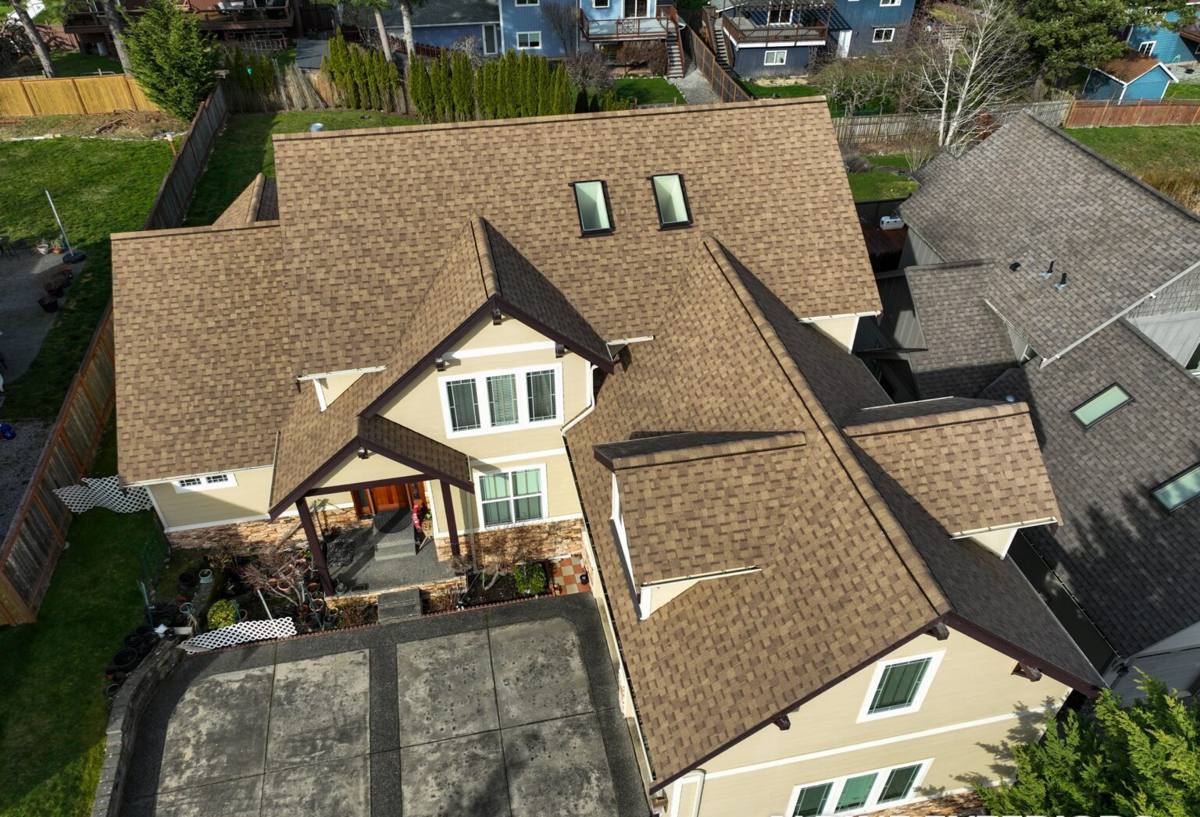
Fremont's mix of older bungalows, mid-century homes, and newer infill sits close enough to the water and under enough tree canopy that roofs here take a specific kind of beating. It's not one big storm that wears out a roof in Seattle — it's the accumulation of months of low-grade dampness, salt-tinged air drifting off the Sound, and shade-grown moss that never really goes dormant. Asphalt shingle roofing is still the most practical, cost-effective choice for most Fremont homes, but only when it's installed and maintained with this specific climate in mind. A shingle roof that would be fine in a drier climate can underperform here if the underlayment, ventilation, and moss strategy weren't chosen for King County conditions.
We work on Fremont roofs regularly, which means we're not guessing at how a given shingle line, underlayment, or ventilation setup holds up locally — we've seen it after a few winters, not just on a spec sheet.
Why Seattle's Climate Is Hard on Shingle Roofs
Moss Is a Moisture Problem, Not Just a Look Problem
Moss loves the shaded, damp conditions common in Fremont's tree-lined streets. Left alone, it does more than make a roof look neglected — it holds water against the shingle surface, works into granule loss over time, and can lift shingle edges enough for wind-driven rain to get underneath. A moss-heavy roof also sheds water unevenly, which stresses flashing and gutters that weren't designed for the extra load.
Driving Rain and Wind-Driven Water
Seattle rain isn't usually the heaviest by volume, but it's frequent, and it often comes with wind off the Sound that pushes water sideways into laps, valleys, and edges instead of straight down. A shingle roof depends on correct overlap, proper nailing, and good underlayment to handle that — a roof that's fine in a calm downpour can still leak in a sideways one if those details were rushed.
Salt Air and Slow Corrosion
Fremont's proximity to Puget Sound means the air carries a low but steady level of salt. Over years, that accelerates corrosion on exposed metal — flashing, fasteners, vent stacks, gutter hardware. It's a slow process, which is exactly why it's easy to overlook until a fastener fails or flashing starts to rust through at the edges.
Temperature Swings and Shingle Flexibility
Shingles expand and contract with temperature and moisture. Seattle's swings aren't extreme, but the constant wet-to-dry cycling over a long roofing season puts real, repeated stress on shingle mat and adhesive strips. Lower-grade shingles or poor installation show this stress first — curling edges, lifted tabs, and premature granule loss.
What a Correct Asphalt Shingle Job Looks Like Here
A roof that's going to hold up in Fremont needs a few things done right, in order. Skipping or rushing any one of these is where most of the roof problems we get called out for actually start.
- Full tear-off when warranted — layering new shingles over old traps moisture and hides deck damage; we inspect the deck before deciding whether tear-off is necessary.
- Deck inspection and repair — soft, delaminated, or water-stained sheathing gets replaced, not covered over.
- Ice-and-water shield at vulnerable areas — eaves, valleys, and penetrations get self-adhered membrane, not just felt, given how often water sits at these points here.
- Synthetic underlayment across the field — more consistent water resistance than old felt, and it holds up better through a wet install season.
- Proper flashing at every penetration — vent stacks, chimneys, skylights, and wall intersections are where the vast majority of shingle roof leaks actually originate, not the open field of shingles.
- Balanced attic ventilation — intake at the eaves and exhaust at the ridge, sized to the attic, to prevent trapped moisture that shortens shingle life from underneath.
- Correct nailing pattern and exposure — manufacturer specs exist for wind and water resistance; shortcuts here are invisible until the first real storm.
Choosing the Right Shingle for a Fremont Roof
Not every asphalt shingle product is a good match for this climate, and the differences matter more here than in drier regions. We steer homeowners toward products with a track record for algae and moss resistance, because a roof under tree cover in Fremont will grow moss faster than one in an open, sunny lot — that's simply the environment, not a flaw in the home.
| Shingle Type | Typical Lifespan (PNW conditions) | Best Fit For |
|---|---|---|
| 3-Tab Standard | 15–20 years | Budget-focused projects, simpler rooflines |
| Architectural / Dimensional | 25–30 years | Most Fremont homes — better wind and moisture resistance |
| Algae-Resistant (copper/zinc granules) | 25–30 years, slower moss regrowth | Shaded lots, homes under tree canopy |
| Impact/Class 4 Rated | 30+ years | Homeowners prioritizing longevity and possible insurance benefits |
We'll talk through these trade-offs honestly rather than upselling — a straightforward architectural shingle with algae-resistant granules is the right call for most shaded Fremont properties, and we'll say so plainly if a premium product isn't necessary for your specific roof.
Our Process for Fremont Roofing Projects
1. On-Site Inspection
We walk the roof and attic, not just look from the ground. That means checking deck condition, existing ventilation, flashing condition, and moss/algae patterns that tell us how the roof has actually been performing — not just how it looks from the street.
2. Written Scope and Straightforward Estimate
You get a clear scope of work — what's being torn off, what's being replaced, what underlayment and shingle are being used, and why — along with an honest cost range. No pressure, no scare tactics about problems that aren't there.
3. Weather-Aware Scheduling
Roofing in Seattle means working around rain, not ignoring it. We plan tear-off and dry-in stages to minimize the window your deck is exposed, and we don't start a tear-off we can't get dried in before weather moves through.
4. Installation to Spec
Manufacturer nailing patterns, proper flashing details, and correct ventilation aren't optional line items we skip to save time — they're what determines whether the roof performs for its full expected lifespan in this climate.
5. Final Walkthrough
We review the finished work with you, including ventilation, flashing, and any gutter or moss-prevention recommendations specific to your lot's sun and tree exposure.
Maintenance That Actually Matters in Fremont
A well-installed shingle roof still needs some ongoing attention in this climate. This isn't about selling a maintenance contract — it's genuinely the difference between a roof that reaches its full lifespan and one that doesn't.
- Gentle moss removal (not high-pressure washing, which strips granules) as needed, typically every 1–2 years depending on shade coverage
- Gutter cleaning at least twice a year — clogged gutters back water up under the shingle edge
- Periodic check of flashing around chimneys, vents, and skylights for early signs of corrosion or lifting
- Trimming overhanging branches where practical to reduce shade and debris buildup
- A visual roof check after any significant windstorm
Cost Factors for Fremont Homeowners
Every roof is different, so we won't quote a number without seeing the job, but the main factors that move the price on a Fremont re-roof are consistent:
| Factor | Why It Matters Locally |
|---|---|
| Roof pitch and access | Many Fremont homes have steeper pitches or tight lot access that affects labor and staging |
| Deck condition | Older homes sometimes need sheathing repair once old shingles come off |
| Number of penetrations | Chimneys, skylights, and multiple vents each need proper flashing, adding labor |
| Shingle grade chosen | Algae-resistant and impact-rated products cost more upfront but reduce moss and storm-related maintenance |
| Ventilation upgrades | Homes with poor existing attic airflow may need added intake or exhaust vents |
| Tear-off scope | Full tear-off versus partial repair changes both material and labor significantly |
Why a Crew That Works Fremont Regularly Matters
Roofing crews that don't work King County regularly tend to apply general practices that work fine in drier climates but leave gaps here — underspeccing underlayment, skimping on ventilation, or not accounting for how much moss pressure a shaded Fremont lot actually sees. Working these neighborhoods consistently means we already know what tends to go wrong on a given roof style and street's tree cover, and we plan the job around it instead of finding out the hard way after the first wet winter.
It also means we're accountable locally. If a flashing detail or ventilation call needs a second look after the first heavy rain of the season, we're not far away and not hard to reach.
Get a Straightforward Estimate
If your Fremont home's shingle roof is showing moss buildup, granule loss, or age, or you just want an honest read on how many years it has left, we're happy to take a look. Use the form below for a free, no-pressure estimate — we'll tell you what we actually see, not just what's easiest to sell.