 Seattle Exterior
 Siding Built for Beacon Hill's Climate
Beacon Hill sits up on a ridge south of downtown Seattle, and that elevation cuts both ways. Homes up here catch more open wind than houses tucked into low-lying King County neighborhoods, which means rain doesn't just fall on the walls — it drives into them sideways during a winter storm system. Add in the tree canopy that shades a lot of Beacon Hill's older streets, and you get long stretches where north- and west-facing walls barely dry out between storms. That combination of wind-driven rain and shade is exactly what grows moss, mildew stains, and soft, swollen siding over a few short years.
None of that is unique to one house. It's a neighborhood-wide pattern, and it's why siding that works fine in a drier climate can fail early here. The right material, installed the right way, is the difference between siding that sheds water and dries out, and siding that slowly absorbs it.
What Beacon Hill Homes Actually Need From Their Siding
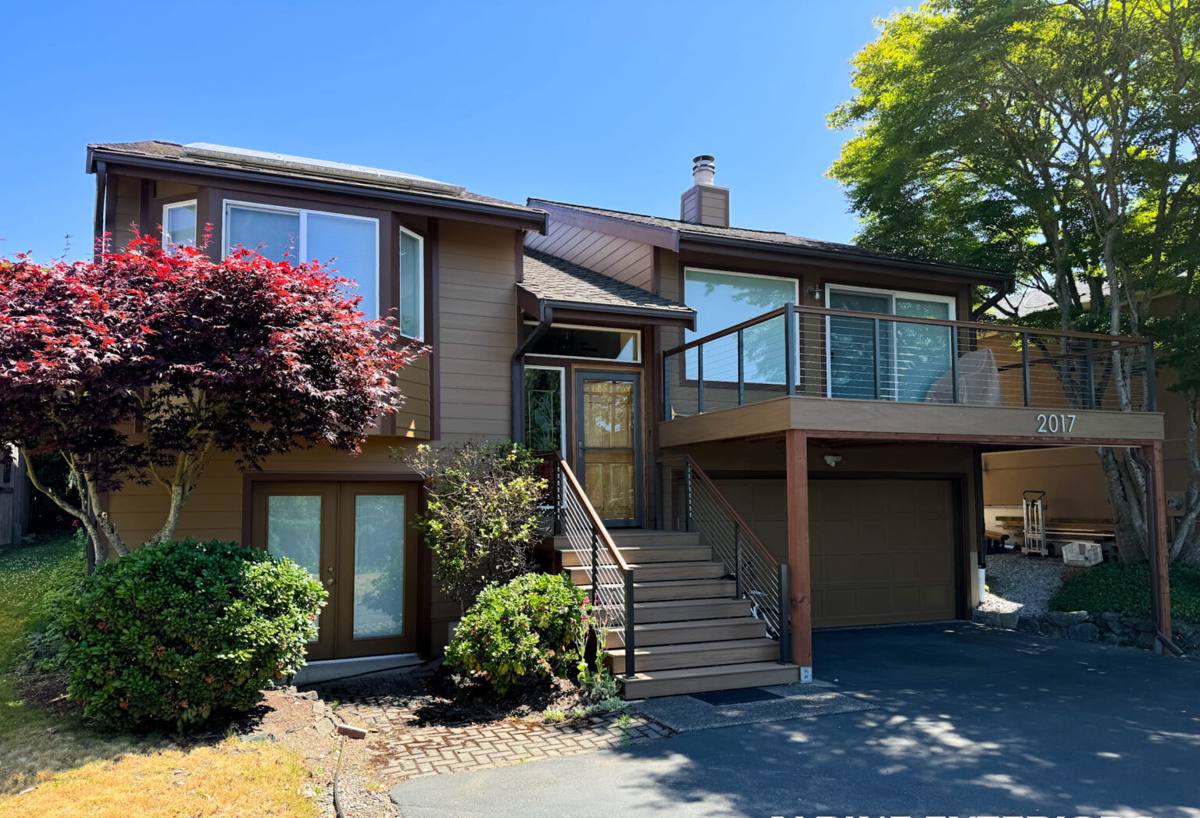
Beacon Hill's housing stock is a mix — early-1900s bungalows, mid-century ranches, and newer infill homes, often sitting on sloped lots with retaining walls and tight side yards. Whatever the era, a Seattle house exposed to this climate needs three things from its siding system, not just one:
- A water-shedding surface that doesn't wick moisture into the wall assembly during our long wet season.
- A moss- and mildew-resistant finish that doesn't need re-staining or re-sealing every couple of years to hold up.
- A stable substrate behind proper flashing and a drainage gap, so any water that does get past the siding has somewhere to go besides your sheathing.
Older siding on Beacon Hill homes was rarely installed with today's understanding of rain-screen gaps and flashing details. A replacement project is the one chance to fix that — not just swap the surface material and leave the same moisture path underneath.
Why Older Siding Struggles Here
Original wood siding, old hardboard, and even some early fiber cement installs on Beacon Hill homes were often face-nailed directly over building paper with minimal flashing at windows and trim. Over 40, 60, or 80 years of King County rain, those details fail quietly — you see the result as peeling paint, dark streaking, or soft spots long before you see the actual leak point.
Signs a Beacon Hill Home Needs Siding Replacement
You don't need to wait for visible rot to start planning. Watch for these signs, especially on the sides of the house that face prevailing wind and get the least sun:
- Persistent moss or dark green/black staining that comes back within a season of cleaning
- Paint that's bubbling, peeling, or failing faster than a normal repaint cycle
- Boards that feel soft, spongy, or slightly bowed when pressed
- Visible cracking, especially around butt joints and corners
- Gaps opening up at trim boards or window casings
- A noticeable jump in heating bills without another explanation
- Siding that was last replaced or painted more than 15-20 years ago and is original hardboard, cedar, or old fiber cement
Any one of these on its own might just need a repair. Several at once, especially on a shaded or wind-facing wall, usually means the wall assembly behind the siding has been absorbing moisture for a while.
Why We Install Only James Hardie Fiber Cement
We standardized on James Hardie siding and don't install vinyl, LP SmartSide, cedar, primed spruce, or other fiber cement brands. That's a deliberate call, not a sales pitch. Vinyl expands and contracts with temperature swings and can crack in a hard freeze; it also isn't repaintable the way most homeowners expect. Wood and primed spruce look great on day one but demand ongoing painting and sealing to survive our wet season, and any gap in that maintenance lets moisture in fast. Engineered wood products depend heavily on perfect edge-sealing and flashing to avoid moisture absorption at cut ends and seams — a detail that's easy to get wrong and hard to inspect once the siding is up.
James Hardie fiber cement is non-combustible, dimensionally stable across our temperature range, and comes factory-finished with ColorPlus technology, so the color coat is baked on under controlled conditions rather than applied on-site in whatever weather shows up that week. Hardie also builds region-specific product lines — its HZ5 formulation is engineered for wetter, harsher climates, which fits Beacon Hill's rain and wind exposure better than a one-size-fits-all product. The warranty is transferable and backed by a large, established manufacturer, which matters if you sell the house down the line.
We're not saying every other product is a bad product. We're saying that after years of installing and repairing siding around Seattle, Hardie is the one we're comfortable standing behind on every job, including the tough, wind-exposed sides of Beacon Hill houses.
What a Correct Siding Replacement Job Involves
Ripping off old siding and nailing up new boards is the easy part to see — it's not the part that determines whether the job lasts. A correct replacement includes:
- Full tear-off and sheathing inspection — checking for soft or rotted sheathing before anything new goes up, since covering damaged wood just hides the problem.
- A proper weather-resistive barrier installed shingle-style so every layer sheds water down and out, not into the seams below it.
- Correct flashing at every window, door, and penetration — the single most common failure point on older Beacon Hill homes we've opened up.
- A drainage gap behind the siding so bulk water and incidental moisture can drain and the wall can dry, rather than staying trapped against the sheathing.
- Manufacturer-spec fastening and clearances — Hardie publishes specific nailing patterns, gaps, and ground clearances, and skipping them is what voids warranties and shortens siding life.
- Factory-finished trim and caulking done to spec, not just wherever it looks tidy.
Skip any one of those steps and the new siding can still look good for a year or two before the same moisture problems the old siding had start showing up again.
Our Process for Beacon Hill Projects
Assessment and Access Planning
Beacon Hill's sloped lots and narrow side yards mean access planning matters before a crew ever shows up. We walk the property, look at grading and drainage around the foundation, check for retaining walls or tight equipment access, and inspect the existing siding and trim up close — not just from the ground — before we scope the job.
Weather-Aware Scheduling
Tear-off exposes your wall sheathing to the weather, so we watch the forecast and stage the work to limit how long any section sits open during our rainy months. On a hill lot with real wind exposure, that planning matters more than it would on a sheltered, low-lying property.
Daily Cleanup and Communication
We keep the site contained and walk you through what we found once tear-off starts — sheathing condition, any hidden moisture damage, and anything that changes the original scope — before we move forward, not after the fact.
Cost Factors for a Beacon Hill Siding Job
Every home is different, but the same handful of factors drive most of the cost variation we see on Beacon Hill projects:
| Factor | Why It Matters | Beacon Hill Consideration |
|---|---|---|
| Home size and number of stories | More surface area and higher work means more material and labor time | Common on the hill's mid-century two-story homes and view-oriented additions |
| Condition of existing sheathing | Rotted sheathing found during tear-off needs repair before new siding goes on | More likely on shaded, wind-facing walls with a history of moss |
| Site access and lot grade | Steep or narrow lots slow down material staging and equipment setup | Common on Beacon Hill's sloped streets and retaining-wall lots |
| Trim, corner, and color detail complexity | More cuts, more custom trim work, and ColorPlus color selection affect labor and material | Varies widely between older bungalows and updated homes |
| Number of window and door openings | Each opening needs proper flashing, adding labor time | Older homes often have more, smaller openings than newer construction |
We give you a firm, itemized estimate after the in-person assessment — not a ballpark over the phone — because sheathing condition alone can change the scope significantly once tear-off starts.
Why a Local Crew Matters on Beacon Hill
Siding work in Seattle isn't just a materials question — it's a permitting and code question too, and requirements can differ slightly by jurisdiction within King County. A crew that already pulls permits and works regularly in the city knows the local inspection expectations and doesn't lose time relearning them project to project. On a neighborhood like Beacon Hill, with its mix of older homes, tight lots, and grade changes, that familiarity also means fewer surprises around access, staging, and how to sequence the tear-off around the weather.
It also means we've seen how this specific climate treats siding over years, not just on paper. That's what shapes the flashing details, drainage gaps, and product choices we insist on — not a generic install spec pulled from a warmer, drier region.
Get a Free, No-Pressure Estimate
If your Beacon Hill home is showing moss buildup, paint failure, or soft spots on the siding, it's worth getting an honest look before another wet season sets in. Fill out the form below for a free estimate — no pressure, no obligation, just a straight assessment of what your home needs.