 Seattle Exterior
 Magnolia's Roofs Face a Different Climate Test Than Inland Seattle
Magnolia sits on a peninsula bounded by Puget Sound and Elliott Bay, which means homes here take on weather that inland Seattle neighborhoods simply don't see as much of. Wind-driven rain comes off the water at angles that push moisture up under poorly lapped shingles and around loose flashing. Salt-laden air settles on roofs year-round, quietly working on exposed metal fasteners and flashing. And with tree cover common throughout the neighborhood, shaded roof slopes stay damp long after a storm passes, which is exactly the environment moss and algae need to take hold.
None of this means a Magnolia roof needs anything exotic. It means the ordinary parts of an asphalt shingle installation — ventilation, flashing, fastener choice, underlayment — have to be done correctly and without shortcuts, because this climate finds every weak point faster than a drier, calmer one would.
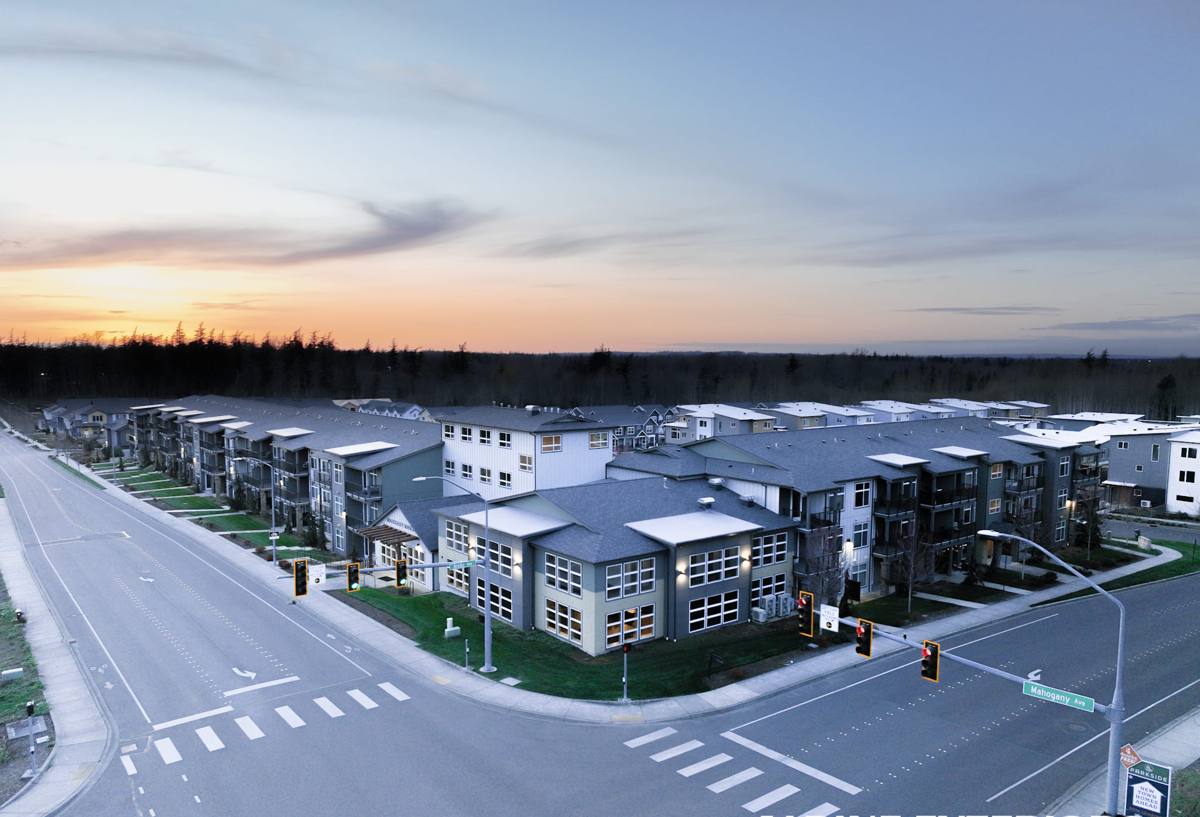
What Goes Into a Correct Asphalt Shingle Roof Installation
Asphalt shingles are a forgiving, well-understood roofing material, but "forgiving" doesn't mean the details don't matter. A shingle roof lives or dies on the layers and connections underneath it, not just the shingles themselves.
Ventilation and Attic Airflow
An attic that can't breathe traps moisture, and trapped moisture shortens the life of a roof deck from the inside out — often before it ever causes a visible leak. Proper intake at the eaves and exhaust at the ridge keeps air moving, which matters even more in a marine climate where humidity is already high most of the year.
Underlayment and Water Protection
Underlayment is the roof's backup plan for the water that gets past the shingles during wind-driven rain. In a neighborhood exposed to Sound weather on multiple sides, we don't treat this layer as an afterthought — it's installed to shed water at every seam, with extra protection at eaves, valleys, and low-slope transitions where standing water and wind-blown rain are most likely.
Flashing at Every Transition
Chimneys, skylights, sidewalls, and roof-to-wall transitions are where the majority of shingle roof leaks actually start — not the open field of shingles. Flashing has to be formed and layered correctly with the underlayment and shingles, not just caulked into place. Caulk is a maintenance item, not a flashing strategy.
Fastening and Nailing Pattern
Manufacturer nailing patterns exist for a reason: wind uplift. A roof that looks identical from the ground can perform very differently in a windstorm depending on whether it was fastened to spec. This is a step that's easy to rush and impossible to inspect once the job is finished, which is part of why who does the work matters as much as what materials go on it.
Moss and Algae: Managing a Long Wet Season
Seattle's wet season runs long, and shaded, north-facing, or tree-covered roof slopes in Magnolia rarely get the sun exposure needed to dry out quickly between rains. That combination is what lets moss establish itself in shingle granules and lets algae form the dark streaking many homeowners notice on older roofs.
Moss is more than a cosmetic issue. As it grows, it lifts shingle edges and holds moisture directly against the roofing material, which accelerates granule loss and can eventually work moisture under the shingle course. Algae staining is mostly cosmetic, but left unaddressed it can make a roof look far older than it actually is.
Zinc or copper strips installed near the ridge are a proven, low-maintenance way to reduce moss regrowth on shaded slopes, since rain carries trace metal ions down the roof surface as it sheds. We treat this as a standard consideration on Magnolia homes with heavy tree cover, not an upsell. What we avoid is aggressive pressure washing to remove moss — it strips granules and can do more damage to the shingle surface than the moss itself.
Salt Air and Coastal Exposure
Homes closer to the water deal with airborne salt settling on every exterior surface, including the roof. Over time, that accelerates corrosion on lower-grade fasteners, flashing, and any exposed metal components. It's a slow process, but it's a real one, and it's specific to Magnolia's position relative to inland Seattle neighborhoods that don't share the same coastal exposure.
The practical response is straightforward: use corrosion-resistant fasteners and flashing metals suited to a marine environment, and avoid combinations of dissimilar metals that can accelerate galvanic corrosion where they meet. It's a small material decision made once, at installation, that has an outsized effect on how the roof ages over the following decades.
Choosing the Right Asphalt Shingle for a Magnolia Home
Not every asphalt shingle product is built for the same conditions, and the right choice depends on the home's exposure, roof pitch, and how much shade the roof gets. The table below covers the general tiers of asphalt shingle available and how they tend to perform.
| Shingle Type | Typical Lifespan | Wind Resistance | Best Suited For |
|---|---|---|---|
| 3-tab shingles | Shorter end of the asphalt range | Lower wind rating | Budget-conscious projects on more sheltered slopes |
| Architectural (dimensional) | Mid-to-long range | Higher wind rating than 3-tab | Most Magnolia homes, especially wind- or rain-exposed slopes |
| Premium / designer | Longest asphalt option | Highest wind rating in the asphalt category | Homes wanting a heavier, dimensional look with maximum durability |
Most homes in this neighborhood are well served by architectural shingles with a algae-resistant rating built into the granules — a standard feature on quality product lines now, and worth confirming on any bid you're comparing. We'll walk through the actual trade-offs in cost, appearance, and warranty coverage for your specific roof rather than defaulting to one tier for every job.
Our Process, Start to Finish
We walk every Magnolia roof in person before quoting it. A roof's pitch, tree exposure, existing ventilation, and deck condition all affect the scope of work, and none of that can be assessed accurately from a photo or a satellite image.
- Inspection and estimate — a full walk of the roof, attic ventilation check, and honest assessment of what the deck and flashing actually need.
- Tear-off — we remove the old roofing down to the deck rather than layering over it. Overlaying traps moisture and hides deck problems, which we consider a shortcut rather than a real repair.
- Deck repair — any soft, rotted, or delaminated decking is replaced before anything new goes down.
- Underlayment and flashing — installed to spec at every valley, penetration, and transition.
- Shingle installation — fastened to manufacturer wind-rating specifications, not a generalized pattern.
- Cleanup and magnetic sweep — the property is cleared of debris and swept for stray nails before we consider the job finished.
- Final walkthrough — we go over the completed roof with you directly, not just hand over paperwork.
Signs a Magnolia Roof Needs Attention
Because so many roof problems in this climate start small and out of sight, it's worth knowing what to watch for between inspections:
- Dark streaking or green-black growth on shaded or north-facing slopes
- Moss buildup along ridge lines or in valleys
- Granules collecting in gutters or at downspout outlets
- Curling, cupping, or lifted shingle edges
- Rusted or visibly corroded flashing around chimneys or vents
- Daylight visible through the attic roof deck
- Musty odor or damp insulation in the attic after heavy rain
- Missing or damaged shingles after a windstorm
Catching these early usually means a repair instead of a full replacement, which is why we recommend a roof check after any significant windstorm, even if nothing looks obviously wrong from the ground.
Why Working With a Crew That Already Knows Magnolia Matters
A roofing crew that regularly works this neighborhood already understands how its wind exposure, tree cover, and coastal moisture behave on a real roof — not in theory. That familiarity shows up in smaller, practical ways: knowing which slopes in the area tend to hold moss, understanding King County permitting for reroofing work, and being realistic about how long a job will actually take given Seattle's weather windows. It also means a shorter response time if something needs attention after a storm, since we're not coordinating a crew from across the region to come look at it.
A correctly installed asphalt shingle roof, matched to the exposure your specific slopes face, is one of the more straightforward ways to protect a Magnolia home for the long term. If you'd like an honest look at where your current roof stands, or a clear estimate for a replacement, we're glad to come take a look — no pressure, no obligation, just a real assessment of what your roof actually needs.