 Seattle Exterior
 Why Columbia City Roofs Wear Differently Than You'd Expect
Columbia City sits close enough to Lake Washington and the broader Puget Sound air pattern that roofs here deal with a specific combination of stresses: near-constant damp, long stretches of low sun angle that keep north-facing slopes shaded for months, and a mix of older mature-tree canopy with newer infill construction. None of that is dramatic on its own. What it does is quietly shorten the useful life of a shingle roof that wasn't installed with this climate in mind, or that's gone a decade or more without a real inspection.
Asphalt shingles are still the right call for the vast majority of homes in this neighborhood — they're proven, repairable, and reasonably priced for the coverage you get. But "asphalt shingle roof" covers a wide range of outcomes depending on the shingle class, the underlayment, the flashing detail work, and how the attic underneath is ventilated. In a King County climate, those details matter more than they would in a drier region, because moisture that gets past a marginal installation doesn't dry out quickly here — it sits.
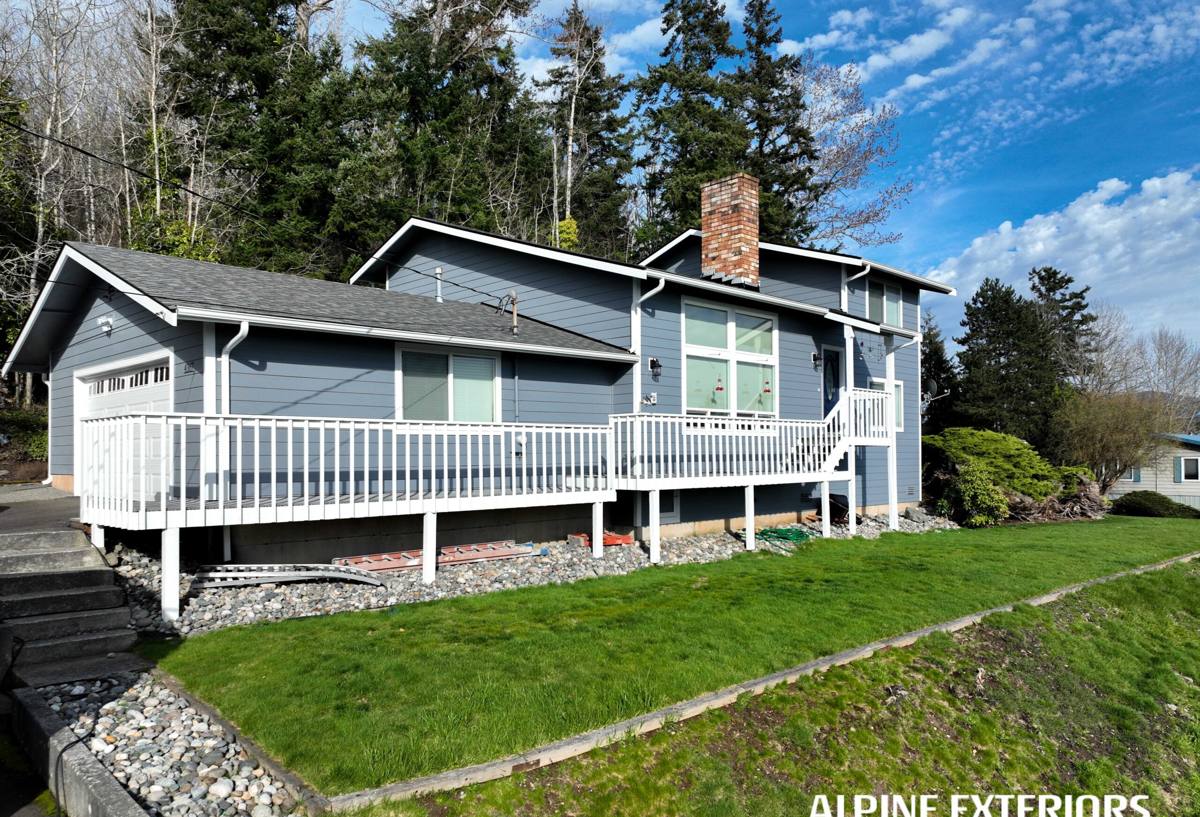
What a Correct Installation Actually Involves
A shingle roof is a system, not a single layer. When any part of that system is skipped or done to the bare minimum, the shingles on top can still look fine for a few years while the roof underneath is already failing. For this climate, we treat the following as non-negotiable, not upgrades:
Underlayment and Ice/Water Barrier
Synthetic underlayment across the full deck, with a self-adhering ice-and-water membrane at eaves, valleys, and around every penetration. This is the layer that protects the deck if wind-driven rain gets under a shingle tab — and in a neighborhood that sees plenty of driving rain off the Sound, that's a matter of when, not if.
Flashing Detail Work
Step flashing at every wall intersection, new flashing at chimneys and skylights (not caulked-over old flashing), and properly lapped valley metal. Flashing failures, not worn-out shingle fields, are the single most common cause of the roof leaks we get called out for.
Fastening and Nail Placement
Correct nail count and placement per the manufacturer's wind-rating instructions — not the local building code minimum, which is a floor, not a target. Under-nailed or misplaced-nail shingles are the ones that lift and tear loose in a winter windstorm, even when the shingle product itself was a good one.
Starter Course and Ridge Detail
A proper starter strip at eaves and rakes, and a ridge vent or ridge cap system that's actually sealed against wind-driven rain rather than just nailed down. This is where a lot of budget installs cut corners, because it's the part that's hardest to see from the ground.
Choosing a Shingle for a Wet, Shaded Climate
Not every asphalt shingle line is built the same way, and in a climate with this much sustained moisture exposure, the differences show up faster than they would somewhere drier. We generally steer homeowners toward algae-resistant, higher-wind-rated architectural shingles rather than the lowest-tier 3-tab product, for reasons that are practical rather than cosmetic.
| Shingle Type | Typical Lifespan Here | Best Fit | Trade-Offs |
|---|---|---|---|
| 3-tab (economy) | 15-20 years | Budget-constrained re-roofs, rentals | Lower wind rating, less algae resistance, flatter look |
| Architectural / dimensional | 25-30 years | Most Columbia City homes | Higher upfront cost, but far better wind and moisture performance |
| Impact-resistant architectural | 25-30+ years | Homes with a lot of falling debris under mature trees | Premium price; benefit is durability, not appearance |
| Algae-resistant (copper/zinc granules) | Same as base product | North-facing or heavily shaded roof planes | Small cost add; meaningfully slows streaking in shaded areas |
The algae-resistant granule option is worth calling out specifically for this neighborhood: homes with mature street trees or neighboring structures that shade part of the roof tend to develop dark streaking on standard shingles within a few years. It's not a structural problem, but it looks like one to a lot of homeowners, and it's avoidable with the right product on the shaded slopes.
Moss Season and What It Actually Does to a Roof
Moss is the complaint we hear most often from Columbia City homeowners, and it deserves a straight answer instead of a scare tactic. A light dusting of moss on a shaded slope is cosmetic. Moss that's been left to establish a mat — thick enough to hold water against the shingle surface for weeks at a time — is a different problem, because it keeps the shingle surface wet long after the rest of the roof has dried, and it can work its way under tab edges over a couple of seasons.
The fix isn't aggressive pressure washing, which strips the protective granules off a shingle and shortens its life faster than the moss would have. What actually works:
- Soft washing or gentle hand removal with a roof rake, never a pressure washer, on the shingle field
- Zinc or copper strips near the ridge on the shaded slopes, which let rain carry trace metal down the roof and discourage regrowth
- Keeping gutters and valleys clear so water isn't sitting against the lowest courses
- Trimming back overhanging branches where it's practical, to get more sun and airflow onto the worst-affected areas
Moss removal timing matters too — late summer or early fall, before the long wet season sets in, gets the best result and the longest window before regrowth.
Ventilation and Attic Moisture
A shingle roof can be installed perfectly on the outside and still fail early if the attic underneath isn't ventilated correctly. In a climate with this much ambient humidity, an under-ventilated attic traps warm, moist air against the underside of the roof deck. Over a few winters that shows up as sheathing that stays damp, nail corrosion, and in some cases visible moisture staining on the underside of the deck long before any shingle problem is visible from outside.
Balanced intake (at the soffits) and exhaust (at the ridge) is the standard we install to — not one without the other. A ridge vent with no matching soffit intake doesn't actually ventilate the attic; it just gives the same stagnant air somewhere to sit.
Our Process, Start to Finish
1. Inspection and Honest Assessment
We get on the roof (or use a pole camera where access is limited) and check the shingle field, flashing, valleys, and attic ventilation, not just what's visible from the street. We'll tell you plainly if a roof needs full replacement, a targeted repair, or just maintenance — we don't upsell a full re-roof when a repair will genuinely hold.
2. Written Scope and Straight Pricing
You get a written scope covering shingle product, underlayment, flashing work, ventilation changes, and cleanup — not a one-line quote. No pressure to sign same-day.
3. Tear-Off and Deck Inspection
Full tear-off to the deck on replacements, with any soft or water-damaged decking replaced and documented before new material goes down — not covered over.
4. Installation to Manufacturer Spec
Underlayment, ice-and-water membrane, flashing, and shingles installed to the manufacturer's nailing and wind-rating instructions, which is also what keeps the manufacturer's warranty intact.
5. Cleanup and Magnet Sweep
Full site cleanup, including a magnetic nail sweep of the yard and driveway, before we consider the job done.
Signs Your Roof Needs Attention
Most roof problems in this neighborhood don't announce themselves with a dramatic leak — they show up as small signs first. Worth checking for, or having us check for you:
- Granules collecting in gutters or downspouts (a sign shingles are wearing down)
- Shingle tabs that are curling, cupping, or visibly lifting at the edges
- Dark streaking or thick moss growth on shaded slopes
- Daylight visible through the attic roof deck, or damp insulation below it
- Soft spots underfoot when walking the roof (a sign of deck damage, not just shingle wear)
- Rusted, cracked, or caulked-over flashing around chimneys, skylights, or wall intersections
- A roof past 20-25 years old with no record of a full inspection
What Drives Cost on a Columbia City Re-Roof
| Factor | Why It Matters Here |
|---|---|
| Roof pitch and access | Steeper Craftsman and bungalow rooflines common in the neighborhood take longer to work safely |
| Number of layers to remove | Older homes sometimes have a second shingle layer underneath, adding tear-off time |
| Deck condition | Moisture-damaged sheathing found at tear-off adds material and labor, and we'll show you before replacing it |
| Shingle class chosen | Architectural and algae-resistant products cost more per square but hold up longer in shaded, wet conditions |
| Flashing and valley complexity | Homes with dormers, multiple roof planes, or chimneys need more custom flashing work |
| Ventilation upgrades | Adding proper soffit/ridge venting on an older home is a smaller add-on cost with a real payoff in roof lifespan |
We don't quote flat per-square prices sight unseen, because the factors above genuinely change the number — an honest quote comes after we've actually looked at the roof.
Why Local Experience on This Roof Type Matters
A crew that regularly works Columbia City and the surrounding Seattle neighborhoods has already seen how the local combination of moisture, shade patterns, and older housing stock plays out on a roof over time. That's not a marketing point — it's the difference between installing to a generic spec and installing for what this specific climate actually does to a roof over 20-plus years. It also means we're not guessing at permit requirements, typical roof pitches, or the kind of tree cover that drives moss and algae issues in this part of King County.
Maintenance That Actually Extends the Roof's Life
Between inspections, a few habits make a real difference in how long a shingle roof lasts in this climate:
- Clear gutters and downspouts at least twice a year, more often under heavy tree cover
- Have moss addressed before it mats, not after
- Trim branches that overhang or touch the roof surface
- Get a professional look after any major windstorm, even if nothing looks obviously wrong
- Keep an eye on attic ventilation, especially if you've added insulation or done other attic work
If you'd like a straight, no-pressure look at where your roof actually stands, we're glad to come out and give you an honest assessment along with a free estimate — no obligation, no hard sell, just what we'd tell a neighbor.