 Seattle Exterior
 Siding That Actually Fits University District Homes
University District has one of the more varied housing stocks in Seattle — early-1900s craftsman bungalows and foursquares near the core neighborhood, brick and wood-frame multiplexes converted for rental use, and newer infill construction squeezed onto narrow lots close to campus. What these houses share is exposure: mature street trees, tight setbacks between buildings that trap moisture and shade, and decades of paint-over-paint on old wood siding that was never built for how wet the Pacific Northwest actually gets.
When we're called out to look at siding in this neighborhood, the story is usually the same — soft trim boards where a downspout has been dumping water against the wall for years, moss creeping up the north side of the house where sun never reaches, and cedar lap siding that's been repainted so many times the wood underneath has started to cup and crack. A siding replacement here isn't just a cosmetic upgrade. It's a chance to stop a slow-motion moisture problem before it reaches the sheathing.
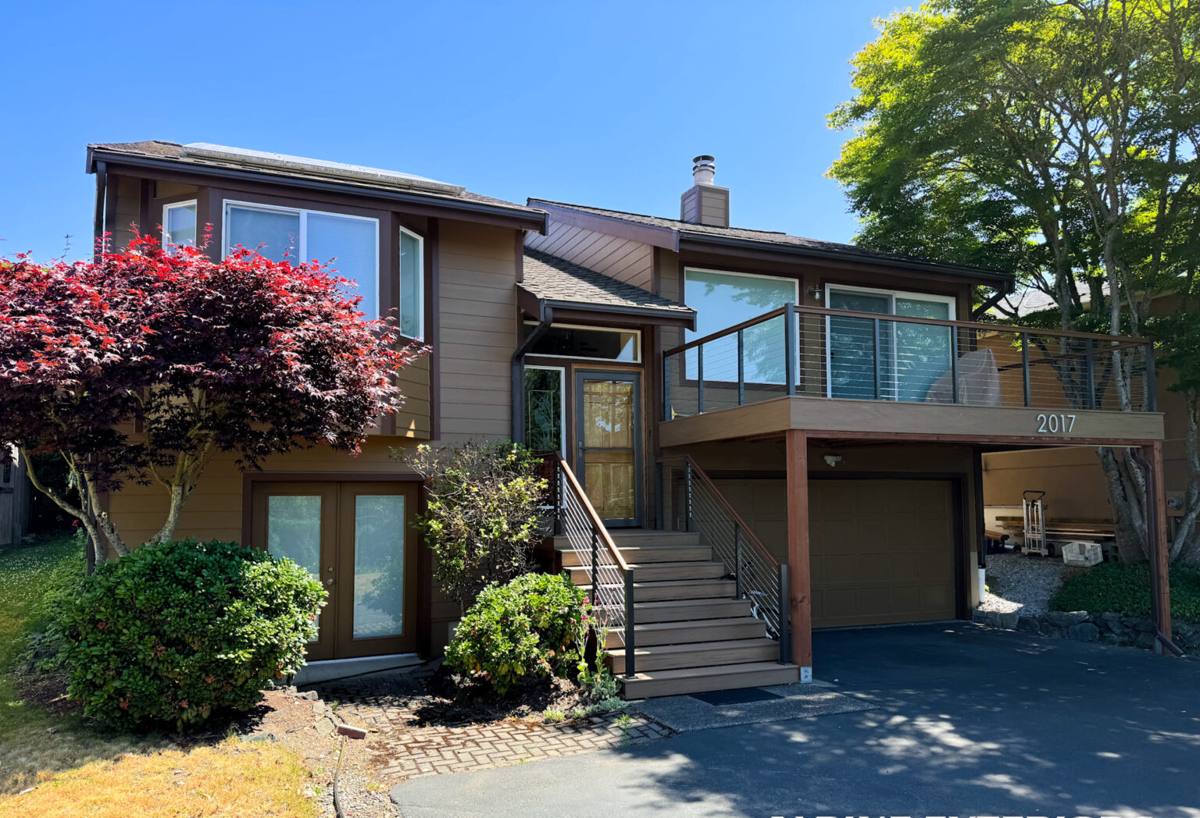
What Seattle's Climate Does to Siding Over Time
Seattle and King County sit in a marine climate that's mild in temperature but relentless in moisture. Driving rain off Puget Sound doesn't just fall straight down — wind-driven storms push water sideways into wall assemblies, which is exactly the kind of exposure that punishes any siding material with weak seams, exposed end grain, or paint film as its only line of defense. Add in a moss season that can run from early fall through late spring in shaded, tree-covered neighborhoods, and you get siding that stays damp far longer than it would in a drier climate.
University District's tree canopy and building density make this worse in specific spots — walls facing north or wedged between two houses often never fully dry out between storms. That constant damp-dry cycle is what breaks down wood fiber, lifts paint, and feeds algae and moss growth on any surface that can hold moisture. It's also why we see so much rot concentrated at specific failure points: bottom courses near grade, window sills, and anywhere trim meets a roofline or deck ledger.
The Damage Pattern We See Most Often
- Moss and black algae staining on shaded, north-facing walls
- Soft or delaminating trim at window and door casings
- Cupped, cracked lap siding from repeated wet-dry cycling
- Rot at the bottom few courses where siding sits too close to grade or a walkway
- Failed caulk joints letting water track behind the cladding instead of shedding off it
Why We Install James Hardie and Nothing Else
We standardized on James Hardie fiber cement siding because it's engineered for exactly this kind of climate. It's non-combustible, it doesn't rot, and it doesn't feed moss and algae the way wood fiber does — it's cement-based, so there's no organic material for fungus to break down. Hardie's ColorPlus factory finish is baked on under controlled conditions, which holds up far better against year-round rain than field-applied paint ever does, and it comes with a strong transferable warranty backed by a company with a long track record in wet climates specifically.
We don't install vinyl, LP SmartSide, cedar, primed spruce, or composite panels like Cemplank or Allura. Each of those has a legitimate use case somewhere, but none of them hold up to Seattle's moisture load the way we want a product to hold up on a house we're putting our name behind. Vinyl flexes, gaps, and can't take the constant damp without eventual warping at the seams. Wood and primed spruce need repainting on a schedule most homeowners can't keep up with, and once paint film fails, moisture gets into the wood fiber and rot follows. LP SmartSide is an engineered wood product — better than raw lumber, but it's still wood-based, meaning cut edges and moisture intrusion are still a real vulnerability if the install isn't flawless. Fiber cement takes that vulnerability off the table entirely.
Hardie's Climate-Engineered Product Lines
James Hardie makes region-specific formulations — their HZ5 product line is engineered for climates like ours, with freeze-thaw cycling and heavy moisture exposure built into the spec. That matters in University District specifically, where shaded, damp wall sections need a product that won't absorb water and swell the way a generic fiber cement board might.
What a Correct Installation Actually Involves
Fiber cement siding is only as good as the install behind it. A rushed or under-specified job can undercut everything the material is supposed to deliver, and this is where a lot of siding jobs — regardless of brand — go wrong.
| Install Element | Why It Matters in This Climate |
|---|---|
| Weather-resistant barrier behind the siding | Gives water a drainage path if any moisture gets past the cladding — non-negotiable given how much rain this region sees |
| Rainscreen gap or furring | Lets the wall assembly dry out between storms instead of staying damp against the sheathing |
| Proper flashing at windows, doors, and penetrations | Most rot failures start at a flashing gap, not a flat wall section |
| Correct fastener spacing and type | Hardie specifies exact nailing patterns — skip them and you void the warranty and risk board movement |
| Field-cut edge sealing | Cut ends need to be sealed to match factory-finished edges, or moisture can wick in at every seam |
| Clearance from grade, decks, and roof lines | Siding held too close to standing water or splashback is the single most common cause of early rot |
Every one of those details is spelled out in James Hardie's own installation manual, and every one of them is easy to skip if a crew is moving fast or hasn't installed the product hundreds of times before.
Our Process, Start to Finish
- On-site inspection of existing siding, trim, and any moisture or rot damage already present
- Written scope covering tear-off, sheathing repair if needed, weather barrier, and Hardie product selection
- Removal of old siding and inspection of sheathing underneath for hidden water damage
- Repair of any compromised sheathing or framing before new siding goes on
- Installation of weather-resistant barrier and rainscreen where the wall assembly calls for it
- Hardie siding, trim, and flashing installed to manufacturer spec
- Final walk-through and cleanup — including magnet sweep for stray fasteners around the property
Maintenance: What Changes and What Doesn't
Fiber cement lowers your maintenance burden significantly, but "lower" isn't "zero," especially with University District's tree cover and shade. A little seasonal attention keeps the siding — and the trim and paint around it — looking right for decades.
- Rinse off moss and algae buildup on shaded walls once or twice a year with a garden hose and soft brush — avoid pressure washers, which can force water behind the siding
- Keep gutters clear so overflow doesn't run down the wall face during heavy rain
- Trim back branches and shrubs that keep siding shaded and damp longer than it needs to be
- Inspect caulk joints at windows and trim every year or two and recaulk if it's cracked or pulling away
- Repaint on Hardie's recommended cycle if you choose a field-applied color rather than a ColorPlus factory finish
Hardie vs. the Alternatives, Honestly
| Material | Moisture/Moss Resistance | Typical Maintenance | Fire Rating |
|---|---|---|---|
| James Hardie fiber cement | Excellent — cement-based, no organic fuel for algae or rot | Low — occasional rinse, factory finish holds color for years | Non-combustible |
| Vinyl siding | Fair — sheds water but seams and panels can trap moisture and warp | Low, but limited repair options if damaged | Combustible |
| Cedar / primed wood | Poor to fair without diligent upkeep — organic material feeds moss and rot | High — repainting and sealing on a strict schedule | Combustible |
| LP SmartSide (engineered wood) | Better than raw wood, still wood-based at the core | Moderate — coating maintenance matters more than with cement board | Combustible |
We're not going to tell you every other product is a bad choice everywhere — vinyl and engineered wood both have their place. But on this street, in this climate, with this much shade and moisture, we don't think they hold up the way a house deserves, and that's why we only put our name on Hardie installations.
Why a Local Crew Matters for This Neighborhood
University District has its own logistics — narrow lots, on-street parking pressure near campus, older homes with non-standard framing dimensions, and a mix of owner-occupied houses and long-term rentals where access and scheduling both need to be worked around. A crew that already works this part of Seattle knows how to stage a job on a tight lot, coordinate with the City of Seattle's permitting process, and recognize the specific rot patterns that show up on the older housing stock here versus, say, a newer build in a different part of King County.
That local familiarity isn't a marketing point — it's what keeps a siding job from turning into a longer, messier project than it needs to be. We know what to expect before we tear the first board off.
If your siding is showing moss, soft trim, or paint that just won't hold anymore, we'll come take a look and give you a straight answer about what's going on and what it would take to fix it right. Use the form below to request a free, no-pressure estimate.