 Seattle Exterior
 Why Siding Choice Matters More in Kirkland Than Most Places
Kirkland sits right on Lake Washington, wrapped in mature tree canopy and close enough to Puget Sound to catch the same damp, marine-influenced air that moves through the rest of the region. That combination is tough on exterior building materials. Homes here deal with long stretches of driving rain, high ambient humidity even on dry days, and shaded, tree-lined lots where moisture lingers on north- and west-facing walls far longer than it would in a drier climate. Add in a moss season that can stretch from fall through spring, and you have an environment that punishes any siding product with weak points at the seams, fasteners, or finish.
This isn't a page about siding in general. It's about what James Hardie fiber cement siding needs to do, specifically, on a Kirkland house — and what separates a correct installation from one that looks fine for a year or two and then starts failing at the joints.
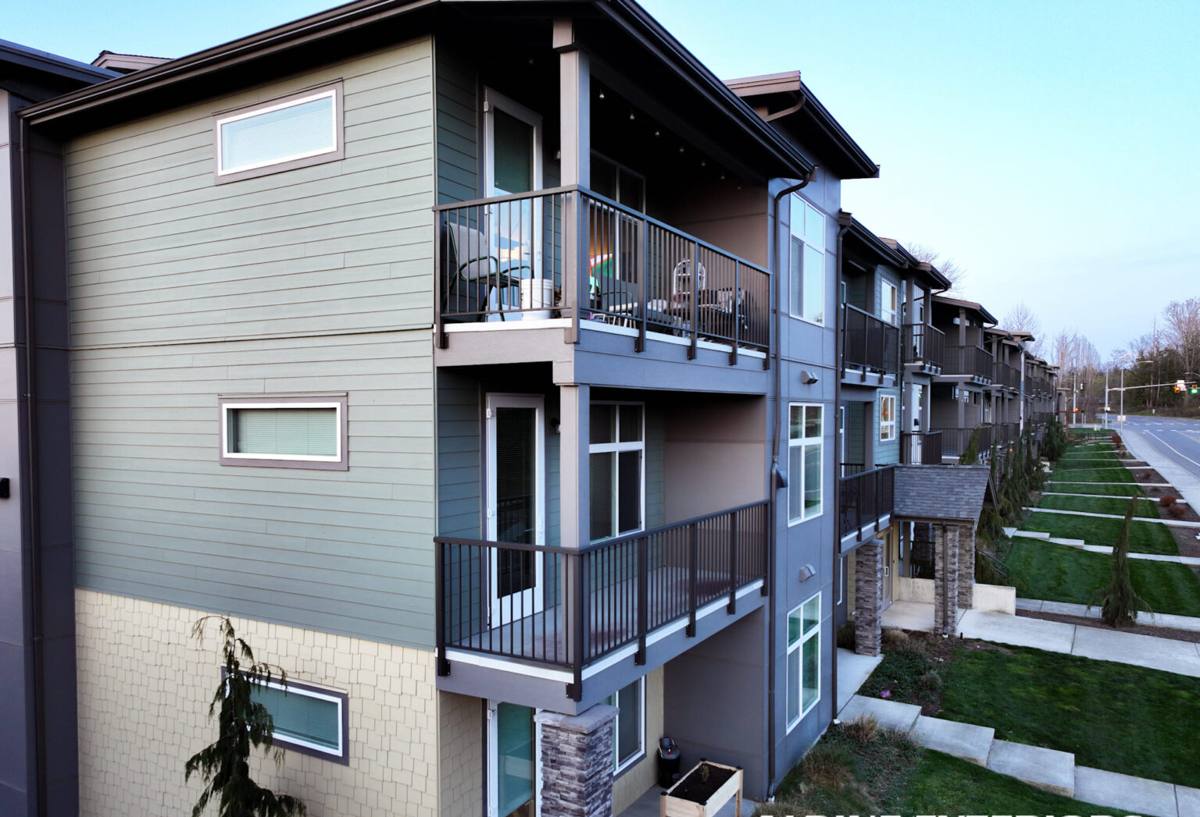
What Kirkland's Climate Actually Does to Exterior Walls
Moisture That Doesn't Dry Out Quickly
King County's marine climate means long periods of steady, low-intensity rain rather than short violent storms. That sounds gentler, but it's actually harder on siding — water has more time to find its way behind panels, into end cuts, and along poorly caulked joints. Combined with mild temperatures, walls that stay wet don't get the quick dry-out cycle you'd see in a hotter, more arid climate.
Moss, Algae, and Shade
Wooded lots and lake-adjacent humidity are a near-perfect setup for moss and algae growth on any surface that holds moisture. Wood-based sidings are especially vulnerable because moss and algae feed on organic material and hold water directly against the substrate, accelerating rot from the surface in.
Wind-Driven Rain at Seams and Corners
Storms coming off the Sound push rain sideways into corners, window trim, and butt joints — the exact spots where a siding system's weakest details get exposed. A product that isn't engineered for this kind of exposure, or that's installed without proper flashing and gapping, will show water staining and swelling at those joints years before the field of the siding shows any wear.
Why We Only Install James Hardie
We made a decision to install James Hardie fiber cement siding exclusively, and nowhere is that decision more relevant than in a climate like this one. Fiber cement is non-combustible, dimensionally stable, and doesn't feed moss and algae the way wood-based products do. It doesn't swell, delaminate, or rot the way engineered wood products can when a seam takes on water. That doesn't mean it's maintenance-free or immune to bad installation — no siding is — but the material itself is built to tolerate the wet, shaded, moss-prone conditions that define a Kirkland lot far better than the alternatives.
James Hardie's HZ5 product line is engineered specifically for climates like the Pacific Northwest, with moisture and freeze-thaw performance tuned for our zone. That's a meaningful distinction — not all fiber cement is manufactured the same way for every region, and installing the correct HZ designation matters here.
What a Correct Installation Involves
James Hardie siding performs the way it's rated to perform only when the system behind it is done right. In a climate this wet, cutting corners on the details below is where premature failures start — not in the panels themselves.
- Weather-resistant barrier and drainage plane: a continuous, correctly lapped water-resistive barrier behind the siding, with a drainage gap that lets any incidental moisture escape instead of pooling against the sheathing.
- Flashing at every penetration: windows, doors, hose bibs, light fixtures, and any other wall penetration need proper flashing integrated with the WRB — not just caulk.
- Correct fastener placement and depth: Hardie is specific about nail placement, spacing, and depth. Overdriven or misplaced fasteners crack the board or compromise its ability to move with temperature changes.
- Proper gapping and sealing: panel joints, corners, and trim need the clearances and sealants James Hardie specifies — not whatever a crew has on the truck.
- Painted or factory-finished cut edges: any field-cut edge needs to be sealed to keep the cut end from wicking moisture, which is one of the most common places we find failures on unmaintained siding.
None of this is exotic. It's just detail work that takes time and discipline, and it's the difference between siding that holds up for decades in this climate and siding that needs repair within a few years.
Signs Existing Siding Is Struggling With Local Conditions
- Dark streaking or green/black growth that returns quickly after cleaning
- Soft or spongy spots near the bottom of walls or around window trim
- Visible gaps or cracking at butt joints and corners
- Paint that's peeling or bubbling rather than fading evenly
- Persistent moisture smell along an interior wall that backs a shaded exterior
James Hardie vs. Other Siding Options in This Climate
| Factor | James Hardie Fiber Cement | Vinyl | Wood / Engineered Wood |
|---|---|---|---|
| Moisture tolerance | Engineered for wet, humid climates (HZ5 line) | Doesn't absorb water, but seams and fasteners can trap it behind the panel | Absorbs moisture, prone to swelling and rot at edges |
| Moss/algae resistance | Doesn't feed organic growth; factory finish resists staining | Growth sits on the surface, harder to keep clean long-term | Organic material feeds moss and algae directly |
| Fire resistance | Non-combustible | Combustible, can melt/deform | Combustible |
| Finish longevity | ColorPlus factory finish, long warranty on color | Color molded in, can fade and chalk | Requires repainting/staining on a regular cycle |
| Long-term maintenance | Periodic washing, caulk checks | Low, but seam and impact damage common | Regular repainting, sealing, and repair |
Color and Finish Choices for Kirkland Homes
James Hardie's ColorPlus finish is baked on at the factory under conditions a job-site paint crew can't replicate, and it comes with its own long-term warranty against fading and chipping. That matters here because Kirkland's mix of lakefront homes, wooded residential streets, and newer builds spans a wide range of architectural styles — from traditional Craftsman to more modern, clean-lined designs. Hardie's lap siding, board-and-batten, and shingle-style panels all work within that range, and a factory-cured finish holds its color better under the region's UV-filtered, moisture-heavy weather than a field-applied paint job will.
Cost Factors on a Kirkland Project
Every home is different, but the same set of variables tends to drive cost on jobs in this area. We give firm numbers only after walking a house, but these are the factors that move the estimate:
| Factor | Why It Affects Cost |
|---|---|
| Existing siding removal | Tear-off of old wood, vinyl, or damaged siding adds labor and disposal |
| Sheathing and moisture damage | Rot found once old siding is off may need repair before new siding goes on |
| Wall complexity | Dormers, multiple gables, and cut-up wall lines take more time and material than a simple rectangular elevation |
| Siding profile | Lap, shingle, and board-and-batten styles differ in material and labor cost |
| Trim and accent work | Window trim, corner boards, and fascia detailing add scope |
| Access and lot conditions | Steep or wooded lots, common around Kirkland, can affect staging and scaffolding needs |
Our Process, Start to Finish
We keep the process straightforward because homeowners deserve to know what's happening to their house and when.
- On-site assessment: we look at your current siding, wall assemblies, and any trouble spots — moss buildup, soft trim, staining — before quoting anything.
- Written estimate: a clear scope of work and pricing, no vague allowances.
- Tear-off and inspection: once old siding is off, we check the sheathing and framing underneath for hidden moisture damage before closing anything up.
- WRB, flashing, and drainage plane installation: the part of the job that determines how the siding performs for the next 30-plus years, done to manufacturer spec.
- James Hardie installation: panels, fasteners, gapping, and sealing done to James Hardie's published installation requirements.
- Final walkthrough: we go over the finished work with you before calling the job done.
Why Hiring a Crew That Already Works in Kirkland Matters
A siding installer who works throughout King County and the greater Seattle area has already seen how Hardie performs on lakefront lots, shaded wooded properties, and older homes with tricky wall assemblies. That local repetition matters — it means fewer surprises when old siding comes off, and installation details that are already dialed in for a climate that punishes shortcuts. It also means someone who's not learning the region's rain and moss patterns on your project.
If your siding is showing moss, staining, soft spots, or you're planning a renovation and want it done with a material built for this climate, we're happy to take a look and put together a straightforward, no-pressure estimate for James Hardie siding on your Kirkland home.