 Seattle Exterior
 Building a Deck That Actually Holds Up in Kirkland
Kirkland sits in one of the greener, more tree-covered pockets of King County, with mature landscaping, sloped lots running down toward Lake Washington, and a lot of shade from established trees. That combination is beautiful to live with and hard on a deck. Wet weather moves through the Puget Sound region for much of the year, and on a shaded Kirkland lot, a deck can stay damp long after a sunnier yard a few miles away has dried out. A deck built without that reality in mind will look fine for a year or two and then start showing problems — soft boards, dark streaking, a slick green film underfoot, hardware bleeding rust through the finish. A deck built correctly for this climate is a different story.
This page focuses specifically on custom deck construction for Kirkland homes: what the local conditions do to a deck over time, what a correctly built deck actually involves below the surface, and how we approach the work from first site visit to final walkthrough.
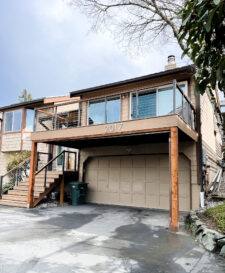
What Kirkland's Weather Does to a Deck Over Time
The problems we see on older Kirkland decks tend to trace back to the same handful of causes:
- Extended moisture exposure. Long stretches of drizzle and overcast days mean deck surfaces and structural framing can stay damp for days at a time, especially on north-facing or heavily shaded lots.
- Moss and algae growth. Shade plus moisture is exactly what moss needs. On decks near mature trees or under roof overhangs, moss and algae can take hold in areas that never get direct sun, making boards slick and, over time, holding moisture against the wood surface.
- Wood movement from wet-dry cycling. Even without hard freezes, repeated wetting and drying causes wood to swell and shrink. Over years, that movement loosens fasteners, opens joints, and stresses finishes.
- Debris buildup. Falling leaves and needles collect between deck boards and in corners, trapping moisture against the structure long after the surface itself has dried.
None of this means a deck can't last for decades in Kirkland — it means the material choice, the framing details, and the drainage plan have to account for it from the start, not get patched in later.
Choosing a Decking Material for a Kirkland Property
There's no single "best" decking material — the right choice depends on how shaded your lot is, how much upkeep you want to do, and your budget. Here's how the common options compare for a climate like this one:
| Material | Moisture & Moss Resistance | Maintenance | Typical Lifespan |
|---|---|---|---|
| Pressure-treated wood | Fair — treatment resists rot but surface still absorbs moisture | Annual cleaning, periodic sealing | 15–20 years with upkeep |
| Cedar | Good natural rot resistance, but surface graying and moss uptake without sealing | Sealing every 1–2 years | 15–25 years with upkeep |
| Composite decking | Very good — resists rot, but textured surfaces can hold algae film in shade | Periodic washing, no sealing needed | 25–30+ years |
| PVC/capped polymer decking | Excellent — fully synthetic, minimal moisture absorption | Occasional washing | 25–30+ years |
On heavily shaded Kirkland lots, we generally steer clients away from smooth, non-textured wood-look products in deep shade — those surfaces can stay damp longer and grow algae faster than a boards with a bit of texture designed to shed water. This isn't a knock on any particular manufacturer; it's about matching the surface profile to how much sun a given deck will actually get. We'll walk your specific site with you and talk through what's realistic for your yard, your budget, and how much maintenance you actually want to do.
The Structural Details That Determine Whether a Deck Lasts
The decking surface is what you see, but the framing underneath is what determines whether the deck is still solid in fifteen years. In a wet climate, a few details matter more than most homeowners realize.
Ledger Board Flashing
The ledger board — where the deck attaches to the house — is the single most common failure point on decks in wet climates. Water that gets behind an improperly flashed ledger board can rot the rim joist and framing without any visible sign from the deck surface. We install proper flashing and water-resistant barrier detailing at every ledger connection, so water sheds away from the house rather than tracking behind the siding.
Joist Protection and Fasteners
Joist tape over the top of framing lumber keeps standing water from soaking into end grain and fastener holes, which is where rot typically starts. We also use corrosion-resistant, code-rated fasteners and hardware throughout — cutting corners on hardware is a common source of the rust streaking and loosened connections we see on older decks.
Footings and Drainage
Footings need to be sized and set to local frost depth and soil-bearing requirements, and on the sloped lots common in Kirkland, that often means additional engineering attention to grading and drainage around the posts. A deck built on undersized or shallow footings may look fine for years and still be out of code, which becomes a real problem at resale or during a future permit review.
Permits and Code Considerations in Kirkland
Like most King County jurisdictions, Kirkland requires a building permit for decks that are attached to the home or elevated above a certain height — this covers most custom decks, not just large or complex ones. Elevated decks also need code-compliant guardrails and stair railings, which matters on the sloped, lake-facing lots that are common throughout the city. Setback requirements from property lines can also come into play depending on your lot.
We handle the permit application and coordinate inspections as part of the build, so you're not the one tracking down requirements or scheduling city inspectors. Skipping this step to save time is one of the more expensive mistakes a homeowner can make — an unpermitted deck can complicate a home sale or insurance claim years down the road.
Our Process for Custom Deck Builds in Kirkland
Site Visit and Design
We start by walking the property with you — looking at sun and shade exposure, slope, drainage patterns, and how the deck will connect to the house. This is also when we talk through material options honestly, based on how that specific spot on your lot behaves through the wet months.
Permitting
Once the design is set, we prepare and submit the permit package and schedule the required inspections, keeping you updated as it moves through the city process.
Construction
Framing, flashing, footings, and decking installation follow, with inspections at the appropriate stages. We don't cover up structural work before it's been checked — that's what protects you if a question ever comes up later.
Final Walkthrough
Before we consider the job done, we walk the finished deck with you, cover basic care for your specific material, and answer any questions about maintenance going forward.
Maintaining a Deck Through a Long Moss Season
Whatever material you choose, a little seasonal attention goes a long way in this climate. A basic routine looks like this:
- Sweep leaves and debris off the deck surface and out from between boards regularly through fall
- Rinse or gently wash the surface a couple of times a year to interrupt moss and algae growth, especially in shaded corners
- Check and clear gaps between boards so water can drain rather than pool
- Inspect fasteners and railings annually for looseness or rust staining
- Reseal wood decking on the manufacturer's recommended schedule — don't wait for graying to set in before treating it
- Keep gutters and downspouts near the deck clear so roof runoff isn't draining directly onto or under the structure
None of this is complicated, but skipping it is exactly how moss gets a foothold and how moisture problems go unnoticed until they're expensive to fix.
Why Hire a Crew That Already Works in Kirkland
A deck built to a generic spec sheet doesn't account for the fact that a shaded lot near Lake Washington behaves differently than an open, sun-exposed yard on the other side of King County. We work throughout the Kirkland area regularly, which means we already understand the sloped-lot footing challenges, the shade patterns from mature tree canopy, and what the local permitting process actually requires — not in the abstract, but from having done it. That local familiarity translates into fewer surprises during the build and a deck that's built for the yard it's actually sitting in.
If you're planning a new deck or replacing one that's showing its age, we're happy to come take a look and talk through honest options for your property. Use the form below to request a free, no-pressure estimate.