 Seattle Exterior
 Magnolia Decks Live in a Tougher Spot Than Most of Seattle
Magnolia sits up on a bluff with long, open exposure to Puget Sound, and that location changes what a deck has to put up with compared to a yard a few miles inland. You get salt-laden air coming off the water, wind-driven rain that hits siding and decking at an angle instead of falling straight down, and a moss season that stretches for a good chunk of the year in this climate. A deck built to a generic spec might look fine for a season or two, but the combination of moisture and salt air is what actually determines whether the structure is still sound in ten years.
None of this means a Magnolia deck needs to be exotic or overbuilt. It means the details that are easy to skip — flashing, fastener selection, drainage, and airflow underneath the structure — matter more here than they would in a drier part of King County. Get those right and a deck in this neighborhood can last as long as anywhere else. Skip them and you're looking at rot, corrosion, and a rebuild well ahead of schedule.
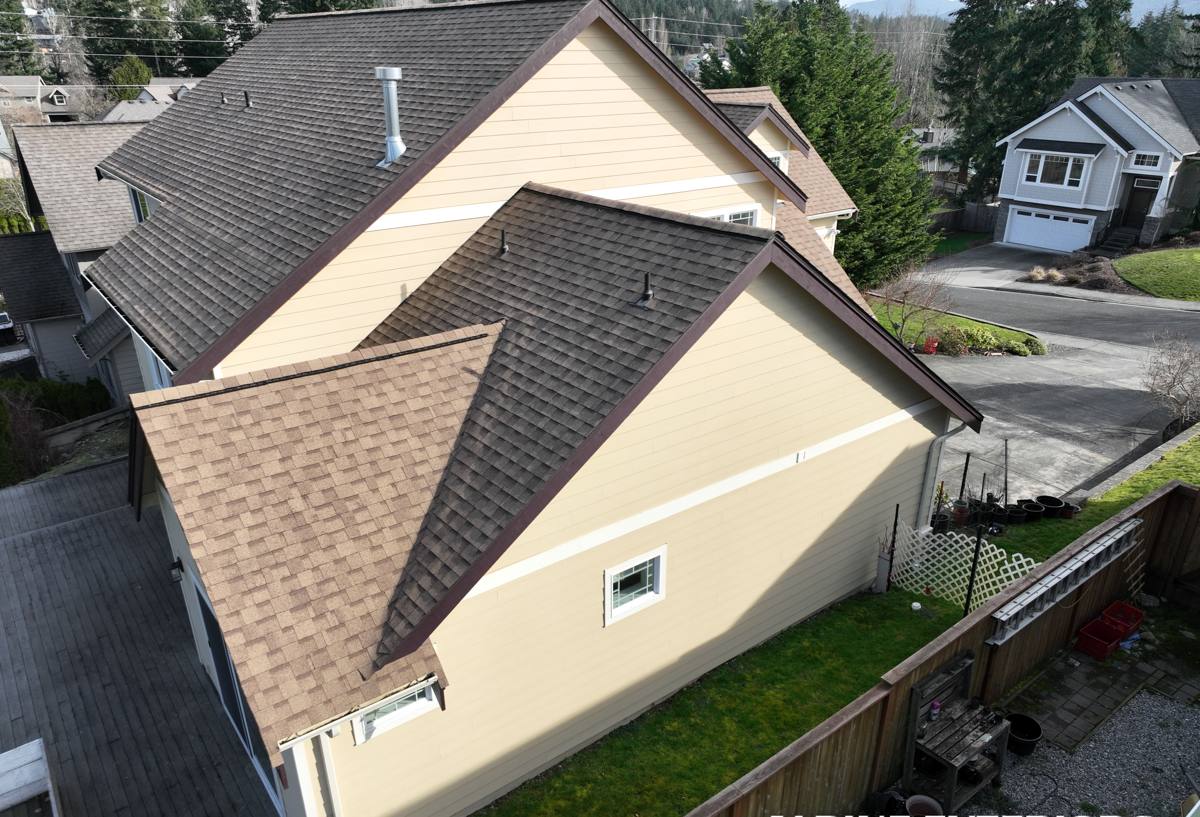
What a Correctly Built Deck Actually Requires
A deck is a structure, not just a surface to walk on. The parts you can't see once it's finished are the parts that determine whether it holds up.
Ledger Board Attachment and Flashing
Most deck failures start at the ledger board — the piece that attaches the deck to the house. If that connection isn't flashed correctly, water works its way behind it and into the house framing, and you don't find out until there's rot in the rim joist or sheathing. In a climate with as much driving rain as Seattle gets, proper ledger flashing isn't optional trim work, it's the single most important detail on the whole project.
Footings and Frost Depth
Footings need to be sized and set to the depth required by local code, with solid bearing and drainage around them so water doesn't pool against the concrete or undermine the soil over time. On sloped or bluff-adjacent lots, which are common in Magnolia, footing placement also has to account for how the grade drains during heavy rain events, not just how it looks on a dry day.
Fasteners and Hardware
Salt air accelerates corrosion on standard fasteners and structural hardware. Screws, joist hangers, and structural screws all need to be rated for the exposure they'll actually see, not just whatever's cheapest at the yard. This is a place where cutting a corner doesn't show up as a problem for a few years — and then it shows up all at once as rust streaks, loosened hardware, and a deck that needs joists re-hung.
Choosing Decking Material for This Climate
There's no single "best" decking material — there's a best material for your budget, your maintenance appetite, and how much sun versus shade and moss exposure your particular yard gets. Here's how the common options actually compare for a Magnolia property.
| Material | Moisture & Moss Behavior | Maintenance | Trade-offs |
|---|---|---|---|
| Pressure-treated wood | Sheds water fine if sealed and kept clear of debris; moss gains a foothold fast in shaded, damp spots if not maintained | Needs periodic cleaning, sealing/staining every couple years | Lower upfront cost, but ongoing upkeep is real and easy to fall behind on |
| Cedar | Naturally rot- and insect-resistant, but still needs airflow and drainage to avoid staining and moss | Occasional cleaning and refinishing to hold color and protection | Attractive, ages well when maintained; softer than composite, shows wear faster if neglected |
| Composite decking | Doesn't absorb water the way wood does, so rot isn't a concern, but moss and algae can still grow on the surface film in shaded, damp areas | Occasional washing; no sealing or staining required | Higher upfront cost, longer expected service life, more consistent appearance |
| PVC / capped composite | Most resistant to moisture uptake and staining of the group | Lowest maintenance; still benefits from periodic washing to keep surface film clear | Highest upfront cost; installation is less forgiving of mistakes than wood |
Whichever material you choose, the framing underneath it should be treated as the part that has to last the longest, since re-decking a sound frame is a much smaller job than rebuilding a rotted one.
Design Choices That Actually Help in This Climate
A few design decisions make a bigger difference in wind-and-rain conditions than most homeowners expect:
- Board spacing and orientation that let water drain instead of pool, especially on decking that will sit under a covered area or in shade for part of the day
- Gaps and airflow paths underneath the deck so the framing can dry out between rain events instead of staying damp
- Railing and guard systems built with hardware rated for the same exposure as the rest of the structure — railings take direct weather and get touched constantly, so corrosion here shows up fast
- Stair and landing placement that accounts for how water moves across the yard during heavy rain, not just how it looks on paper
Permits and Code in Seattle
Most new decks and many significant deck repairs or rebuilds in Seattle require a permit, with requirements around guardrail height, stair geometry, footing depth, and structural connections set by the city's building code. Depending on your lot, there may also be considerations around setbacks or, on bluff or slope-adjacent properties, additional review tied to the site conditions. We handle the permit process as part of the job rather than leaving it for the homeowner to sort out, and we build to what the inspector will actually check — not just to what looks finished from the yard.
Our Process
- On-site assessment. We look at the existing structure (if there is one), the grade, drainage patterns, sun and shade exposure, and how the deck will actually be used before recommending anything.
- Design and material discussion. We walk through decking material, railing style, and layout options with honest trade-offs on cost and maintenance — no pressure toward the most expensive option.
- Permitting. We prepare and submit what's needed for the city and schedule inspections at the right points in the build.
- Demolition (if applicable). Old decking, and any framing that's compromised, comes out cleanly before new structure goes in.
- Framing and footings. This is where the ledger flashing, footing placement, and fastener selection all happen — the part of the job that determines the deck's lifespan.
- Decking, railing, and finish work. Surface material and railings go on last, with attention to drainage gaps and fastener placement.
- Final walkthrough. We go over care and maintenance specific to the material you chose so you know what upkeep actually looks like going forward.
Maintenance Checklist for a Magnolia Deck
Whatever material you go with, a little regular attention keeps small issues from becoming expensive ones:
- Clear leaves and debris out of gaps between boards so moisture and organic matter don't sit and feed moss growth
- Wash the surface at least once a year, more often on shaded sections, to keep moss and algae film from building up and creating a slip hazard
- Check railings and stair connections periodically for movement, which can signal fastener corrosion before it becomes visible rust
- Keep gutters and downspouts near the deck clear so runoff isn't dumping extra water onto or under the structure
- Re-seal or re-stain wood decking on the schedule the product calls for — don't wait until it's visibly gray and dry
- Look underneath the deck once a year for standing water, damp framing, or early signs of rot near the ledger board
Repair, Restore, or Rebuild?
Not every tired-looking deck needs to come out. Surface graying, minor moss staining, and loose railings are often fixable without touching the frame. But soft or spongy decking, rust streaks running from hardware, movement at the ledger connection, or footings that have shifted are structural signs, not cosmetic ones — and they're the kind of thing that gets worse, not better, over another wet season. Part of our assessment is telling you honestly which category your deck falls into before we recommend a scope of work.
Why a Crew That Already Works Magnolia Matters
A contractor who mostly works drier, more sheltered parts of King County can still build a technically fine deck on paper — but the details that matter here (flashing sequencing for wind-driven rain, hardware selection for salt exposure, drainage planning on bluff-adjacent lots) are the kind of thing you learn by dealing with them repeatedly, not by reading a spec sheet once. Working regularly in Magnolia and similar Seattle neighborhoods means we've already seen how decks in this exposure age, what fails first, and what actually holds up — and we build to that experience instead of a one-size-fits-all standard.
If you're planning a new deck or need an honest look at one that's showing its age, we're happy to come take a look. There's no pressure and no obligation — just a straight assessment of what your yard and your budget actually call for, and a free estimate through the form below.