 Seattle Exterior
 Capitol Hill's Roofs Take a Different Kind of Beating
Capitol Hill sits close enough to Puget Sound and Lake Washington that salt-laden, moisture-heavy air is a constant presence on roofing materials, fasteners, and flashing. Add Seattle's long stretch of driving rain — the kind that comes in sideways off winter storms rather than falling straight down — and you get water intrusion at points a roof in a drier climate would never have to defend. Then there's the moss. King County's wet season runs long, and Capitol Hill's mature tree canopy keeps large sections of many roofs shaded and damp well after a storm has passed. That combination of salt exposure, wind-driven rain, and moss growth is exactly why a roof built for this neighborhood needs to be installed differently than a roof going up somewhere hot and dry.
None of this means Capitol Hill roofs are doomed to fail early. It means the installation details — underlayment choice, flashing work, ventilation, and fastening — have to be done correctly the first time, because this climate does not forgive shortcuts.
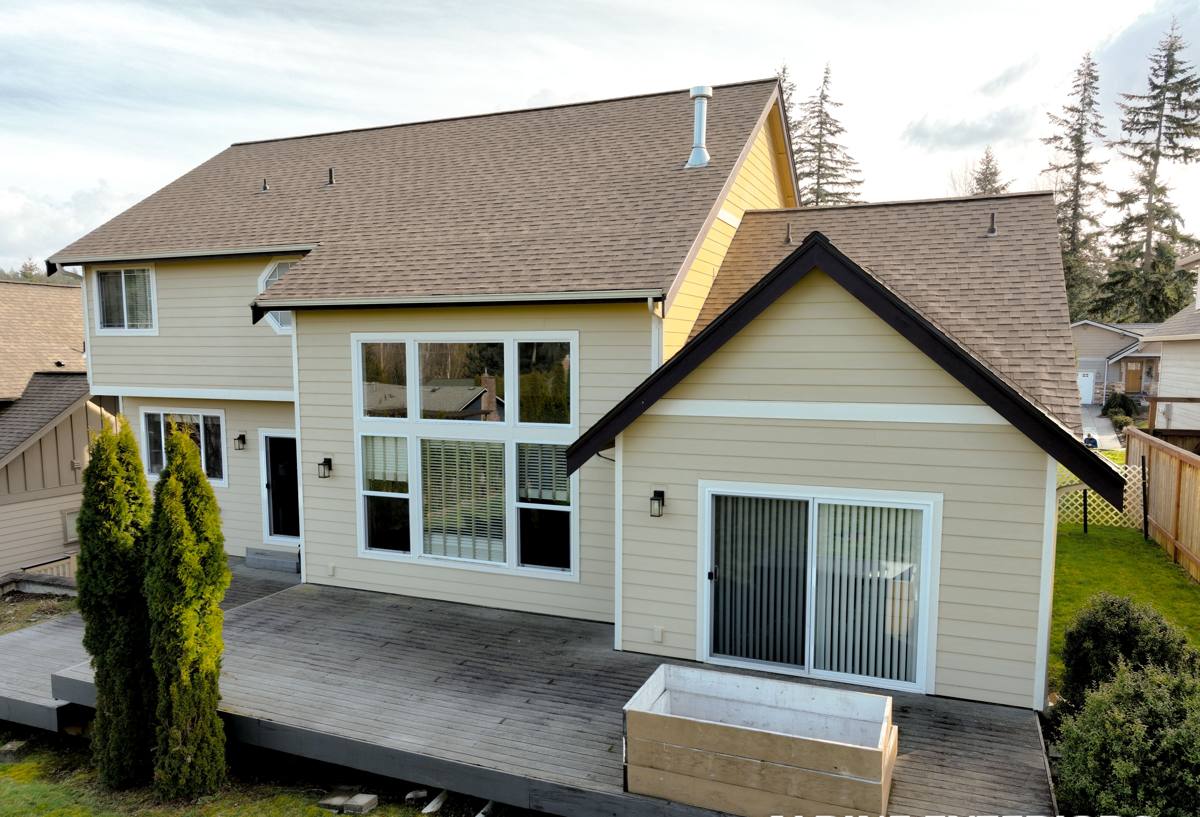
How to Tell a Capitol Hill Home Needs a New Roof, Not Another Repair
A lot of homeowners call us after their third or fourth patch job in as many years. At some point, repeated repairs stop being cost-effective and a full replacement becomes the smarter investment. Here's what tends to signal that point has arrived:
- Shingles that are curling, cupping, or losing granules in patches, especially on shaded slopes
- Moss mats thick enough to hold water against the roofing material rather than just sitting on the surface
- Soft or spongy spots underfoot, which usually mean the decking underneath has started to rot
- Daylight visible through the roof deck from inside the attic
- Recurring leaks around chimneys, skylights, or valleys that keep coming back after being sealed
- Interior staining on ceilings or upper walls that reappears after every heavy rain
- A roof that's simply reached the end of its expected lifespan for its material type
If you're seeing two or more of these, it's worth getting an honest inspection before spending more money chasing leaks on a roof that's past its useful life.
Roofing Materials That Actually Hold Up in Seattle Weather
There's no single "best" roofing material for every home — it depends on your roof's pitch, your budget, and how much shade your lot gets. What matters most in a climate like ours is how a material handles sustained moisture and moss pressure over years, not just how it looks on install day.
| Material | Moisture & Moss Behavior | Typical Lifespan | Maintenance Needs |
|---|---|---|---|
| Architectural asphalt shingles | Good when installed with proper underlayment; moss-resistant granule options available | 25–30 years | Periodic moss treatment, gutter clearing |
| Standing seam metal | Sheds water and moss very well due to smooth, steep-friendly surface | 40–50+ years | Low; occasional fastener and seam check |
| Cedar shake | Attractive but absorbs moisture and holds moss/organic growth if not maintained closely | 20–30 years with upkeep | High — regular treatment, cleaning, and inspection |
| Synthetic composite shake/slate | Mimics natural materials without the moisture absorption | 40–50 years | Low to moderate |
Our professional standard leans toward architectural asphalt and metal for most Capitol Hill homes because of how predictably they perform under repeated wet-dry cycles. Cedar shake can still be the right call on the right home, especially where it matches the original architecture, but it comes with a real maintenance commitment — we'll walk you through that trade-off honestly rather than talk you into or out of a product without context.
What a Correct New Roof Installation Actually Involves
A new roof is more than laying shingles over what's already there. Done right, it's a full system rebuild:
Tear-Off and Deck Inspection
We remove the old roofing down to the decking so we can actually see what's underneath — not guess at it. Any soft, rotted, or delaminated sheathing gets replaced before anything new goes down. Installing a new roof over compromised decking just guarantees an early failure.
Underlayment and Water Barrier
Given how much wind-driven rain this area sees, we pay close attention to underlayment coverage, with ice-and-water shield reinforcement at eaves, valleys, and other vulnerable transitions — the spots where wind-blown rain is most likely to work its way underneath standard shingles.
Flashing Details
Chimneys, skylights, sidewalls, and roof-to-wall transitions are where most leaks actually originate, not the open field of the roof. Correct step flashing, counter-flashing, and sealant work at these points matters more than almost anything else on the job.
Ventilation
Balanced intake and exhaust ventilation keeps moist air from getting trapped in the attic, which reduces condensation, protects the new decking from the inside out, and helps the roofing material itself last as long as it's rated to.
Fastening and Finish Work
Every material has a manufacturer-specified fastening pattern for wind and moisture resistance. We follow it, then finish with proper ridge capping and a final detail pass before cleanup.
Ventilation and Moisture Control — Why It's Non-Negotiable Here
In a lot of climates, ventilation gets treated as an afterthought. In Seattle, it shouldn't be. Our humidity levels and long wet season mean an under-ventilated attic can trap moisture year-round, not just during a cold snap. Over time, that trapped moisture leads to sheathing rot, mold, reduced insulation performance, and premature aging of the roofing material from underneath — damage you won't see until it's already serious. On heavily shaded Capitol Hill lots, where roof surfaces dry more slowly to begin with, getting intake and exhaust ventilation balanced correctly during installation is one of the most important things we do for the long-term health of your roof.
Our New Roof Installation Process, Start to Finish
- Inspection and honest assessment — we look at the whole roof system, not just the surface, and tell you plainly whether you need a repair or a replacement
- Material selection — we walk through options based on your home's style, budget, and how much shade or moss pressure your lot deals with
- Written estimate and permitting — Seattle requires permits for most full roof replacements, and we handle that paperwork as part of the job
- Scheduling around weather — we plan installs to avoid the wettest stretches of the calendar whenever possible, since a dry deck installs better and lasts longer
- Site protection — tarps and staging plans that account for dense lot lines, landscaping, and neighboring property
- Tear-off and deck repair — full removal, inspection, and replacement of any compromised sheathing
- Installation — underlayment, flashing, ventilation, and roofing material installed to manufacturer spec
- Cleanup — full site cleanup including a magnetic sweep for stray nails and fasteners
- Final walkthrough and warranty paperwork — we go over the finished roof with you and make sure you have your warranty documentation in hand
What Drives the Cost of a New Roof in Capitol Hill
Every roof is priced individually, but the same handful of factors move the number up or down on almost every job we quote in this neighborhood:
| Cost Factor | Why It Matters |
|---|---|
| Roof size and pitch | Steeper, larger roofs take more material, labor time, and safety equipment |
| Material choice | Asphalt, metal, and shake carry different material and labor costs |
| Number of penetrations and valleys | Chimneys, skylights, and dormers each require additional flashing work |
| Decking condition | Rotted sheathing discovered during tear-off adds material and labor |
| Lot access | Dense, narrow Capitol Hill lots can slow material staging and disposal |
| Layers of existing roofing | Multiple old layers mean more tear-off time and disposal cost |
Most single-family roof replacements in the Seattle area land somewhere in the low-to-mid five-figure range, with the final number depending heavily on the factors above. We won't know your real number until we've actually seen your roof — but we'll give you that number in writing before any work starts, with no surprise add-ons buried in the fine print.
Older Homes and Dense Lots — What's Different About Working on Capitol Hill
Capitol Hill's housing stock skews older and more architecturally varied than a lot of Seattle's newer neighborhoods, with a mix of Craftsman, Victorian, and early-to-mid-century homes on tightly packed lots. That combination brings a few practical challenges: original decking on older homes was sometimes installed with wider gaps than modern building code allows, which can require an overlay or partial replacement during a reroof. Steep, multi-pitch roof designs common on older Craftsman and Victorian homes take longer to work safely and require more careful flashing at the extra ridges and valleys those designs create. And narrow side yards and close-set neighboring homes mean material staging, dumpster placement, and safety setup all need to be planned before the crew ever shows up — not figured out on the fly.
Why Hiring a Crew That Already Works in Capitol Hill Matters
A roofing crew that mostly works in newer, more spread-out parts of King County isn't necessarily prepared for a dense urban lot, a century-old roof deck, or a permit process specific to Seattle. A crew that already works Capitol Hill regularly knows how to stage a job on a tight lot without disrupting your neighbors, recognizes older decking and framing on sight, and has already accounted for how much shade and moss pressure a given block typically deals with. That familiarity translates into fewer surprises mid-project and a roof that's built for the specific conditions of your street, not a generic install.
Protecting Your New Roof After Installation
A correctly installed roof still needs some basic upkeep to hit its full expected lifespan, especially under Capitol Hill's tree canopy. A simple annual routine goes a long way:
- Clear gutters and downspouts at least twice a year, more often if you're under heavy tree cover
- Treat for moss buildup before it has a chance to mat and hold moisture against the roof surface
- Trim back overhanging branches that keep sections of the roof shaded and slow to dry
- Have flashing points checked after any major windstorm
- Schedule a professional inspection every year or two, even if nothing looks obviously wrong
If you're seeing signs of wear, dealing with recurring leaks, or just planning ahead for a roof that's getting older, we're happy to take a look and give you a straight answer. Fill out the form below for a free, no-pressure estimate on your Capitol Hill home.