 Seattle Exterior
 Why Queen Anne Roofs Wear Out Differently Than Roofs Elsewhere
Queen Anne sits high above the rest of Seattle, and that elevation is a mixed blessing. The views are real, but so is the exposure. Homes up on the hill catch wind and driving rain off Puget Sound that lower, more sheltered neighborhoods never see. Add in a long, damp moss season under the tree canopy on the hill's north and west-facing slopes, and you have a roofing environment that's tougher on materials and fasteners than the regional average.
Elevation, Wind, and Salt Air
Roofs on higher ground take wind-driven rain sideways under shingle tabs and flashing edges, not just straight down. Over time that pushes moisture into laps and seams that were never designed to handle water moving uphill. Add the faint but persistent salt content in the marine air coming off the Sound, and metal fasteners, flashing, and vent components corrode faster than they would a few miles inland. None of this means Queen Anne needs exotic materials — it means the installation details have to be done right, every time, because there's less margin for a shortcut to go unnoticed.
Moss, Shade, and a Long Wet Season
Queen Anne's mature trees and steep, shaded lots keep parts of many roofs damp for days after a storm passes everywhere else. That's exactly the environment moss and algae need to get established. Moss isn't just cosmetic — it holds moisture against the roofing material, works its way under shingle edges, and can lift tabs enough to let water in during the next hard rain. A roof designed and installed with this climate in mind accounts for that from the start, rather than leaving moss control as an afterthought.
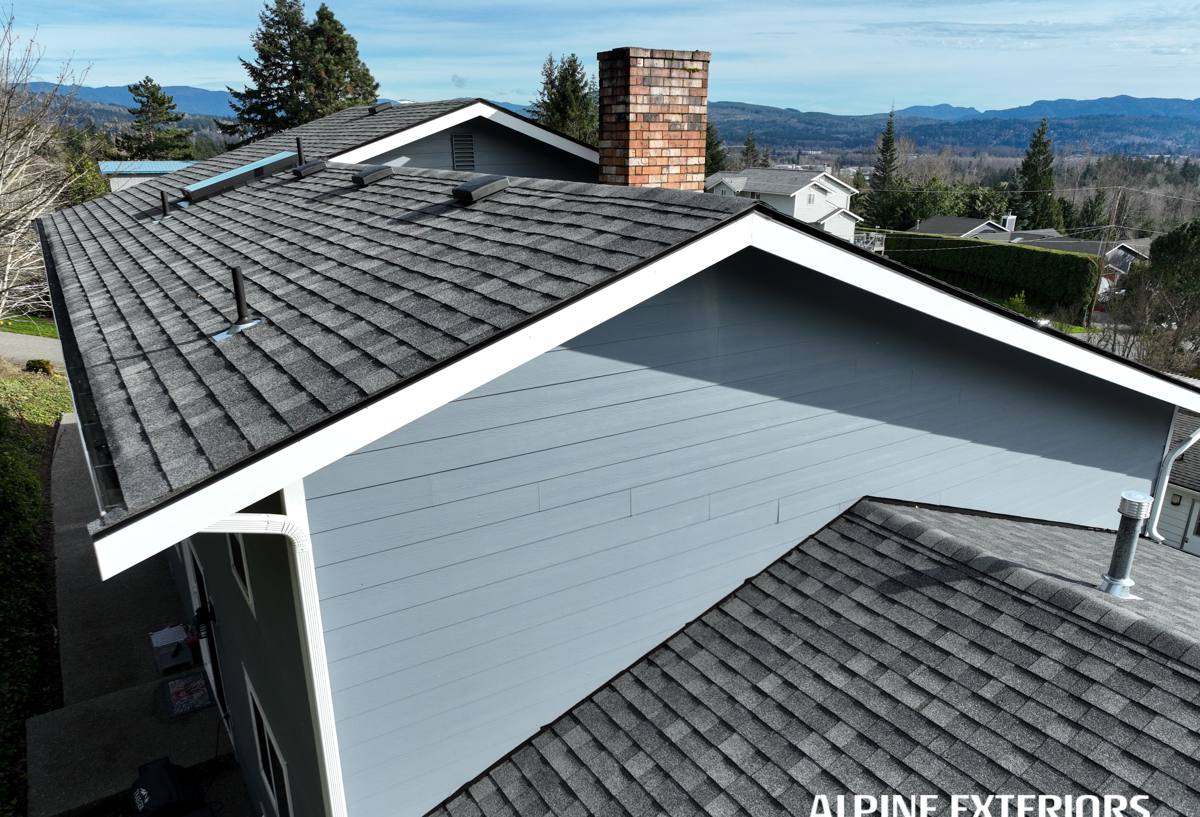
Signs a Queen Anne Home Needs a New Roof, Not Another Repair
Most homeowners call us after a leak, but by the time water is visibly coming through a ceiling, the roof has usually been failing quietly for a while. Watch for these signs, especially on a roof that's already 18-25+ years old:
- Granules collecting in gutters or at downspout outlets — a sign the shingle surface is breaking down
- Shingles that are curling, cupping, or cracking, particularly on south- and west-facing slopes
- Moss or algae buildup that keeps returning within a season or two of cleaning
- Soft or spongy spots on the roof deck, felt when walked (we check this, not something to test yourself)
- Daylight visible through the attic roof boards, or damp insulation under the decking
- Flashing around chimneys, skylights, or roof-to-wall transitions that's rusted, lifted, or caulked over repeatedly as a "fix"
- Rising energy bills alongside an aging roof, often a sign ventilation and insulation are compromised
One or two of these can sometimes be handled with a targeted repair. Several at once, especially on a roof past its expected service life, usually means repair costs stop making financial sense and full replacement becomes the more honest recommendation.
Roofing Materials That Make Sense for This Climate
There's no single "best" roofing material — the right choice depends on the home's structure, slope, budget, and how much upkeep the owner wants to take on. Here's how the common options compare for a house exposed to King County's wind, rain, and moss cycle:
| Material | Typical Lifespan | Moss/Moisture Behavior | Best Fit |
|---|---|---|---|
| Architectural (laminate) asphalt shingle | 25-30 years | Good with proper ventilation and moss-resistant granules; needs periodic cleaning | Most standard-slope Queen Anne homes |
| Standing seam metal | 40-50+ years | Sheds moss and moisture well; smooth surface resists buildup | Modern builds, additions, low-slope sections |
| Cedar shake (wood) | 20-30 years with upkeep | Attractive but moisture-sensitive; needs regular treatment and inspection in this climate | Older or historic-style homes where matching original character matters |
| Torch-down / membrane (low-slope) | 15-25 years | Handles standing water on flat sections; seams are the failure point to watch | Additions, porch roofs, and flat-roofed sections common on hillside homes |
Queen Anne's older housing stock often mixes roof types on the same property — a steep-slope main roof over a flatter addition or dormer, for example. We evaluate each section on its own terms rather than defaulting to one material for the whole house.
What a Correct Roof Installation Actually Involves
A new roof is only as good as what's underneath the material you can see. Cutting corners in the layers below the shingles or panels is the single biggest reason a "new" roof leaks within a few years.
Tear-Off and Deck Inspection
We remove the old roofing down to the deck rather than layering over it. That's the only way to actually see the plywood or plank sheathing underneath, which is where hidden rot and soft spots show up — especially common on older Queen Anne homes where a roof may have been re-covered once or twice already without anyone checking the deck. Any damaged sheathing gets replaced before anything new goes down.
Underlayment, Ice-and-Water Protection, and Flashing
Given how much wind-driven rain this hill sees, we pay particular attention to self-adhering waterproof underlayment at eaves, valleys, and any roof-to-wall transition — the spots where water is most likely to be pushed uphill or sideways under normal shingle laps. New flashing goes in at every chimney, skylight, vent pipe, and sidewall rather than reusing old flashing or relying on sealant as a substitute for a proper metal detail. Sealant is a backup, not a plan.
Ventilation
Balanced intake and exhaust airflow keeps the underside of the roof deck dry and at a consistent temperature. Without it, moisture from inside the house condenses in the attic, which rots sheathing from below — a problem that has nothing to do with the roofing material and everything to do with airflow. Many older Queen Anne homes were built before modern ventilation standards, so bringing the attic system up to current practice is often part of doing the job right, not an upsell.
Roof Styles Common on Queen Anne Homes
Queen Anne's housing stock spans early-1900s Craftsman bungalows, older two-story homes, and newer infill construction on smaller hillside lots. Each style presents its own roofing considerations:
- Craftsman and early-century homes — typically moderate-to-steep gable or hip roofs, often with dormers and multiple valleys that need careful flashing work
- Older two-story homes with additions — frequently have a mix of steep main roof and lower-slope addition or porch roof requiring different materials and detailing
- Newer infill and remodeled homes — often include low-slope or partially flat sections, especially where the design takes advantage of hillside views
Because the neighborhood is built on a slope, roof access and staging also vary a lot from lot to lot — something worth factoring into scheduling and safety planning before work starts.
Our Installation Process
We keep the process straightforward and communicate at each stage so there are no surprises:
- On-site inspection and honest assessment of whether repair or replacement makes sense
- Written estimate covering material options, scope, and timeline
- Permit pull where required before any work begins
- Property protection — tarps and ground coverings for landscaping, siding, and windows
- Full tear-off and deck inspection, with photos of anything that needs attention
- Installation of underlayment, flashing, ventilation components, and final roofing material
- Magnetic sweep and full site cleanup, including gutters and downspouts
- Final walkthrough and warranty paperwork
What a New Roof Costs in Queen Anne
Every roof is priced on its own specifics, but the main cost drivers are consistent. We'd rather explain what moves the number than throw out a figure that doesn't hold up once we're actually on the roof.
| Cost Factor | Why It Matters |
|---|---|
| Roof size and number of stories | More material and steeper access add labor time |
| Roof complexity (valleys, dormers, skylights) | Each transition needs custom flashing, which adds material and labor |
| Material chosen | Asphalt, metal, cedar, and membrane roofing carry different material and installation costs |
| Deck condition | Rotted or soft sheathing found during tear-off adds repair cost not visible from the ground |
| Access and site conditions | Steep lots, limited staging space, and street parking on hillside blocks can affect labor time |
| Ventilation and code upgrades | Older homes may need attic ventilation brought up to current standards |
We give a written, itemized estimate before any work starts, so you know exactly what's driving the number rather than getting a lump sum you have to take on faith.
Permits and Working on Queen Anne's Streets
Roof replacement in Seattle generally requires a permit through the city, and we handle that process as part of the job rather than leaving it on the homeowner. Queen Anne's hillside streets also come with practical realities worth planning around — narrow or steep blocks, limited parking, and driveways that weren't built with modern equipment staging in mind. A crew that's worked the neighborhood before knows to plan delivery timing, dumpster placement, and material staging around those constraints instead of figuring it out on the fly.
Why Hire a Crew That Already Works This Neighborhood
Roofing a home on Queen Anne isn't the same job as roofing a flat lot in a newer subdivision. It means understanding how wind moves across an exposed hillside, how shade patterns on a sloped lot keep certain roof sections wet longer, and how to stage a safe, efficient job on a steep street with tight access. It also means being straightforward about what King County's climate actually does to a roof over 20-30 years, instead of overselling a material that looks good on paper but isn't the right fit for this hill's wind and rain exposure.
If your Queen Anne roof is showing its age, or you just want a straight answer on repair versus replacement, we're happy to take a look. Reach out for a free, no-pressure estimate using the form below — we'll walk the roof, explain what we find, and give you a clear, written recommendation with no obligation.