 Seattle Exterior
 Rainier Valley's Climate and What It Does to Siding
Rainier Valley sits in a part of Seattle where mature tree canopy, close-set lots, and long stretches of overcast, wet weather all work against exterior siding at the same time. King County's marine climate means moisture is rarely gone for long — even in summer, morning dew and shaded yards keep wall surfaces damp longer than homeowners expect. Add driving rain that comes in sideways off wind gusts, a moss and algae season that can run from fall through spring, and the general salt-air influence carried through the Puget Sound region, and you have a set of conditions that punishes any siding material with a weak spot.
Older homes in this neighborhood were often sided with materials that were never engineered for this climate — plain wood, early-generation composites, or vinyl that was chosen for upfront cost rather than long-term performance. Over 15, 20, or 30 years, that mismatch shows up as soft trim boards, peeling paint, streaked or greened wall surfaces, and siding that's absorbing water it was never built to shed.
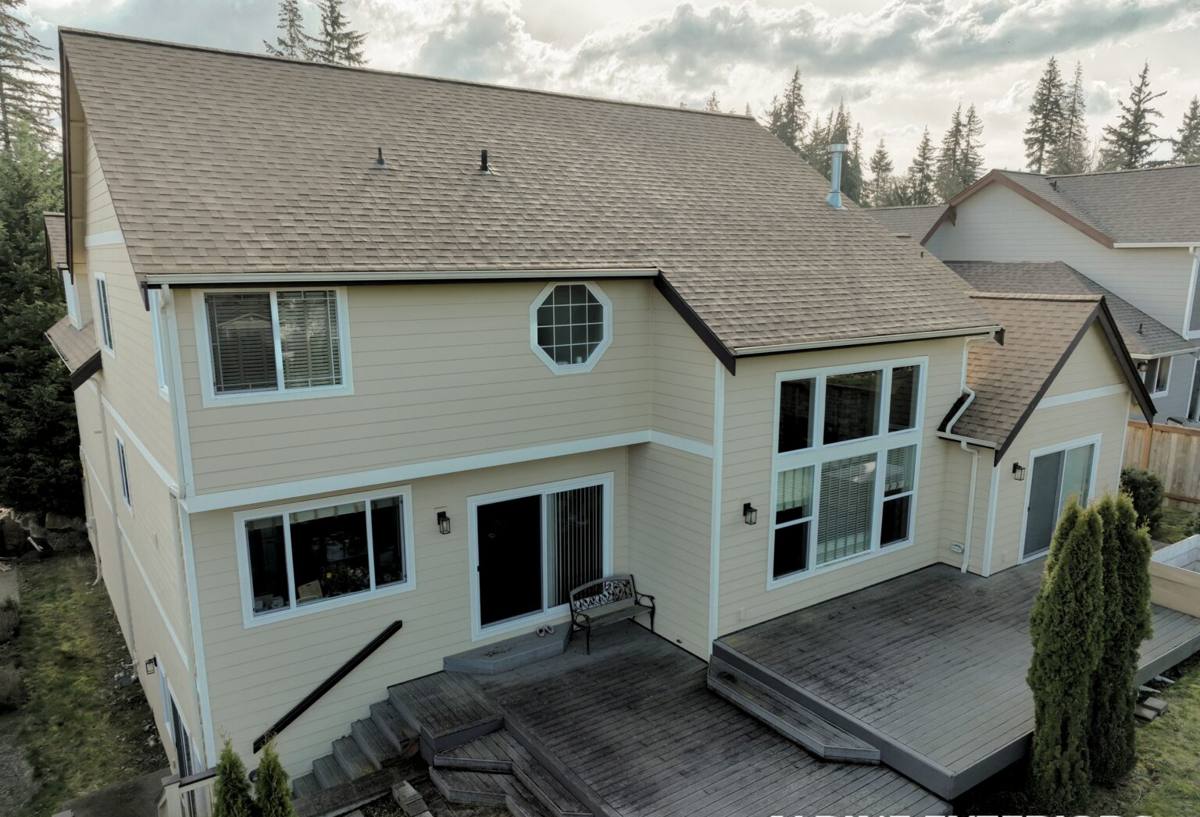
Signs Your Rainier Valley Home Needs Siding Replacement
Not every siding problem means a full replacement — some are cosmetic, some are structural. Here's what tells us it's time to talk about replacement rather than repair:
- Soft, spongy, or crumbling spots when you press on the siding, especially near the bottom edges and around windows
- Persistent moss, algae, or black streaking that comes back within a season of cleaning
- Paint that won't hold — bubbling, peeling, or needing a repaint every 3-4 years instead of 8-10
- Visible gaps, warping, or boards that have pulled away from the wall
- Musty smells or damp patches on interior walls that back up to exterior siding
- Siding that's original to a home built more than 25-30 years ago, especially wood lap or early composite products
If you're seeing more than one of these, it's usually a sign that moisture has been getting behind the siding for a while, not just sitting on the surface.
Why Shaded, Tree-Heavy Lots Are Harder on Siding
A lot of Rainier Valley's housing stock sits under mature trees or close to neighboring structures, which limits direct sun and airflow across exterior walls. That shade is pleasant in July, but it also means siding surfaces stay damp longer after every rain event, giving moss, algae, and mildew a head start. Homes with heavy tree cover typically need siding materials that resist moisture absorption at the core, not just a coating that resists it on the surface.
Why James Hardie Fiber Cement Is the Right Fit for This Climate
We install James Hardie fiber cement siding exclusively, and Rainier Valley's climate is a big part of why. Fiber cement doesn't rot, and it doesn't provide the organic material that moss and mildew feed on the way wood does. Hardie's HZ5 product line is specifically engineered for climates like Seattle's — cold, wet winters and moderate, damp summers — with a formulation designed to resist moisture damage and hold paint and finish longer than wood or standard composite siding.
The factory-applied ColorPlus finish is a meaningful part of that performance. Because the color and protective coating are baked on in a controlled factory environment rather than brushed on at the job site, it resists fading, chipping, and the kind of early peeling that's common with field-painted wood and some composite products in wet climates. That matters directly here — fewer repaint cycles means fewer chances for water to find a gap in the finish.
Fiber cement is also non-combustible, which is a genuine safety advantage regardless of climate, and it carries a strong transferable warranty when installed to manufacturer specification — something we'll walk through with you at the estimate.
What We Don't Install, and Why
We don't install vinyl, LP SmartSide, Cemplank, Allura, or unprimed cedar or spruce siding. Each of those products has legitimate uses and each does some things well. But in a climate defined by sustained moisture exposure, we've found the long-term trade-offs — moisture-sensitive engineered wood cores, vinyl's tendency to warp and fade, or the maintenance burden of raw wood — outweigh the upfront savings for most homeowners. Standardizing on one material lets us install it correctly every time and stand behind the result.
What a Correct Siding Replacement Job Involves
Replacing siding isn't just swapping old boards for new ones. A correct job addresses everything underneath the siding, because that's usually where the real problems start.
Tear-Off and Inspection
We remove the existing siding down to the sheathing and inspect for rot, soft spots, or water damage that isn't visible from outside. This is often the first time a homeowner sees the actual condition of their wall assembly, and it's the step that determines whether any framing or sheathing repair is needed before new siding goes on.
Water-Resistive Barrier and Flashing
A weather-resistant barrier goes over the sheathing, with careful attention to flashing at windows, doors, and any place where water naturally wants to find a way in. In a climate with as much driving rain as Seattle sees, flashing details are often the difference between siding that lasts decades and siding that fails early from the inside out.
Correct Fastening and Clearances
James Hardie siding has specific fastening patterns, nail spacing, and clearance requirements — including keeping siding a proper distance above grade, decks, and roof lines — that are laid out in the manufacturer's installation instructions. Skipping these details doesn't always show up right away, but it shortens the life of the installation and can affect warranty coverage.
Trim, Caulking, and Finish Work
The finish details — corner trim, joint treatment, caulking at penetrations — are what keep water out at the seams. This is also where a rushed installation shows itself first, usually within a year or two, as small gaps open up and start letting moisture behind the siding.
Our Process From Estimate to Final Walkthrough
| Step | What Happens |
|---|---|
| On-site estimate | We walk the exterior with you, check current siding condition, and discuss product and color options |
| Written proposal | Clear scope of work, materials, and pricing before anything is scheduled |
| Tear-off and inspection | Old siding removed, sheathing and framing inspected for damage |
| Barrier and flashing install | Weather-resistive barrier and flashing installed per manufacturer spec |
| Hardie siding installation | Fiber cement siding installed with correct fastening, clearances, and trim details |
| Final walkthrough | We review the completed work with you before considering the job done |
Cost Factors for Rainier Valley Siding Replacement
Every home is different, so we don't quote pricing without seeing the property, but these are the factors that most often move the number up or down:
| Factor | Why It Matters |
|---|---|
| Home size and wall area | More square footage means more material and labor |
| Existing siding removal | Multiple layers or difficult-to-remove materials add time |
| Sheathing or framing repair | Hidden water damage found during tear-off requires repair before new siding goes on |
| Trim and architectural detail | Homes with more corners, gables, and trim require more precision and labor |
| Number of stories | Taller homes require more scaffolding and safety setup |
| Access and lot layout | Tight, tree-covered, or narrow lots common in Rainier Valley can affect staging and crew access |
Why Hiring a Crew That Already Works Rainier Valley Matters
A contractor who regularly works in Rainier Valley already understands the practical realities of the neighborhood — narrow side yards, mature landscaping close to the house, shared driveways, and the permitting expectations of the City of Seattle. That familiarity means fewer surprises during the job: we know how to stage material and equipment on tight lots, how to protect landscaping during tear-off, and what inspectors are looking for on a residential siding permit in this jurisdiction.
It also means we've seen how different sections of this neighborhood age differently — homes tucked under heavy tree cover versus those on more open, sun-exposed lots — and we bring that context into the estimate instead of applying a one-size-fits-all recommendation.
Maintaining Your New Siding in Seattle's Climate
James Hardie siding is low-maintenance compared to wood or vinyl, but "low-maintenance" doesn't mean "no maintenance" in a climate this wet. A few habits go a long way:
- Rinse siding gently once or twice a year to keep moss and algae from establishing, especially on shaded walls
- Keep gutters clear so water isn't overflowing directly onto siding sections below
- Trim back vegetation and tree limbs that keep siding damp or in constant shade
- Check caulking at trim joints and penetrations periodically, and touch up as needed
- Address any impact damage or chipped finish promptly rather than letting it sit through a wet season
If your Rainier Valley home is showing signs of wear, worth a look, or you're simply planning ahead, we're happy to come out, walk the exterior with you, and give you an honest read on what's going on — no pressure, no obligation. Reach out using the form below to schedule a free estimate.