 Seattle Exterior
 Storm Damage Roof Repair Built for Ravenna's Weather
Ravenna's older housing stock — a mix of craftsman bungalows, post-war ramblers, and a growing number of newer infill homes — sits under some of the heaviest tree canopy in Seattle. That's part of what makes the neighborhood feel the way it does, but it's also a factor most homeowners don't think about until a windstorm rolls through and a limb comes down on the roof, or weeks of driving rain finally find their way through a flashing seam that's been failing quietly for years. Storm damage repair here isn't a generic service — it's shaped by King County's wet winters, the specific way wind moves through a neighborhood with mature trees on nearly every lot, and the moss and debris load that builds up on roofs shaded most of the day.
This page covers what storm damage actually looks like on a Ravenna roof, what a repair done right involves, and how we approach the job from first inspection to final cleanup.
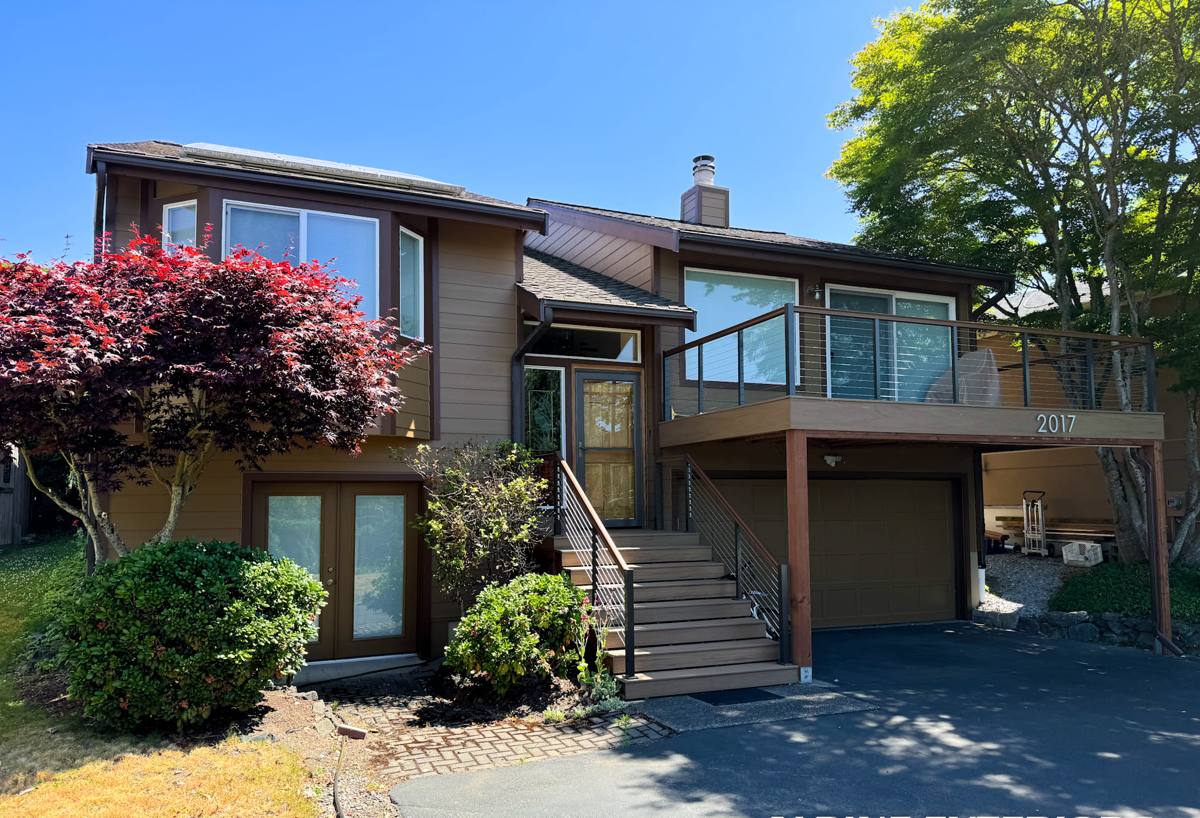
What Seattle Storms Actually Do to a Ravenna Roof
Puget Sound storms are rarely the dramatic, roof-ripping-off kind. More often it's a combination of factors working on a roof over time, then a single event that pushes an already-weakened area past its limit.
Wind and Falling Debris
Wind in this part of Seattle tends to gust rather than sustain, and it moves differently through a tree-lined neighborhood than it does in an open subdivision. Gusts funnel between houses and through gaps in the canopy, which is why you'll sometimes see one roof lose shingles while the house next door is untouched. Branches and limbs — sometimes whole tree tops — are the more common source of damage here, punching through shingles, cracking sheathing, or crushing gutters and downspouts.
Driving Rain
Seattle rain is usually light, but storm systems moving off the Sound can push rain sideways for hours. That matters because a roof that sheds water fine in a normal shower can still leak in a windblown storm if flashing, step counters, or ridge caps aren't sealed tight. Water finds the weak point, not the obvious one.
Moss and Organic Buildup
Ravenna's tree cover means shade, moisture retention, and a long moss season — moss doesn't just sit on top of shingles, it works its way under tabs and lifts them, which is exactly where wind and rain get their opening. A roof with moss problems going into storm season is far more likely to sustain real damage than a clean one.
Marine Air
Being close to Puget Sound, the broader Seattle area deals with a steady marine air influence — humid, salt-tinged air that accelerates corrosion on exposed metal flashing, fasteners, and gutter systems over time. It's a slower factor than wind or rain, but it's part of why storm damage on an older roof is often worse than it looks from the ground: corroded flashing fails faster once it's stressed.
How These Factors Compound
| Climate Factor | What It Does Over Time | Why It Matters in a Storm |
|---|---|---|
| Tree canopy / falling debris | Physical impact damage, clogged gutters | Punctures and blocked drainage during heavy rain |
| Driving/wind-driven rain | Tests every seal and lap joint | Finds gaps that light rain never reaches |
| Moss and shade | Lifts shingle tabs, holds moisture against the roof deck | Weak points become entry points under wind load |
| Marine/salt air | Corrodes fasteners and metal flashing | Weakened metal fails faster under storm stress |
Signs Your Ravenna Home Took Storm Damage
Some damage is obvious. A lot of it isn't — especially from the ground, and especially on a steep or heavily shaded roof plane. After any significant wind or rain event, it's worth checking for:
- Missing, cracked, or curled shingles, particularly on the side of the roof facing the prevailing wind
- Granules collecting in gutters or at the base of downspouts
- Dented, bent, or detached gutters and downspouts
- New or worsening water stains on interior ceilings or upper walls
- Visible daylight through the attic roof deck or soffit
- Debris — branches, needles, moss clumps — piled against a roof valley or chimney base
- Flashing that looks lifted, bent, or separated around chimneys, skylights, or vent pipes
- A musty smell in the attic, which often shows up before a visible stain does
If you notice any of these, the safest move is a professional inspection before the next storm system comes through — not after a small leak becomes a ceiling repair.
What a Correct Storm Damage Repair Actually Involves
Storm repair gets rushed more often than almost any other roofing work, because homeowners understandably want the leak stopped fast. The problem is that a fast patch and a correct repair aren't always the same thing.
Inspection Before Anything Else
We start by identifying every point of entry, not just the one that's dripping into the living room. A leak inside the house can travel a surprising distance from where water actually got in, so tracing it back to the real source — a lifted shingle, a cracked flashing seam, a punctured deck — is the first job, not an afterthought.
Temporary Protection When Needed
If a roof has active exposure — a hole, missing section, or major flashing failure — and full repair can't happen immediately, the right move is a proper temporary seal: tarped and secured correctly, not just draped and hoped for. This buys time without making the eventual repair harder.
Matching Materials, Not Just Covering Holes
A patch that doesn't match the surrounding shingle profile, color, or exposure will fail faster and look wrong. We match materials to what's already on the roof wherever possible, and when an exact match isn't available — common on older roofs — we explain the closest honest option rather than guessing and hoping it blends.
Flashing and Underlayment, Not Just Shingles
Most storm leaks trace back to flashing, valleys, or underlayment — not the shingles themselves. Replacing a few shingles over a compromised flashing detail is a repair that looks done but isn't. A correct job addresses the water path, not just the visible symptom.
Structural Check When Debris Was Involved
If a branch or limb hit the roof with any real force, we check the sheathing underneath, not just the shingle layer. A cracked or sagging deck board under a patched shingle is the kind of thing that turns into a bigger problem if it's missed.
Our Process, From Call to Completion
- Contact and triage — we ask what you're seeing and whether there's active water entry, so we can prioritize urgent cases.
- On-site inspection — a full assessment of the roof, not just the area you noticed, including attic access where possible.
- Written scope and estimate — a clear explanation of what's damaged, what caused it, and what the repair involves, in plain language.
- Temporary protection — applied immediately if the roof has active exposure and repair can't start the same day.
- Repair work — matched materials, proper flashing and underlayment work, and cleanup of any storm debris on the roof and in gutters.
- Final walkthrough — we show you what was done and what to watch for going forward.
Repair vs. Replace: What Actually Drives the Decision
Not every storm-damaged roof needs replacing, and not every roof that "just needs a patch" should stop there. The honest answer depends on a handful of factors we walk through with you on-site.
| Factor | Leans Toward Repair | Leans Toward Replacement |
|---|---|---|
| Age of roof | Under roughly 12-15 years, otherwise sound | Near or past expected service life |
| Extent of damage | Localized — one section or plane | Multiple areas, or damage found on inspection beyond the storm event |
| Underlying deck condition | Solid, no rot or soft spots | Soft decking, signs of long-term moisture |
| Moss/organic history | Manageable, addressed with cleaning and maintenance | Heavy, recurring buildup already compromising multiple areas |
| Insurance scope | Claim covers a defined repair area | Claim adjuster or inspection finds broader damage |
We'll always tell you honestly which side of that table your roof lands on — a repair that's likely to fail again in a year isn't a favor to you, even if it's the cheaper number today.
Storm Damage and Insurance Claims
Many storm repairs in the Seattle area do end up going through homeowner's insurance, particularly when a tree limb or wind event caused clear, sudden damage. We're not a public adjuster and won't promise a specific claim outcome, but we can provide a clear, documented inspection and written scope of damage that you can submit with your claim, and we're glad to walk an adjuster through what we found on the roof if that's helpful to your process. What we won't do is inflate a scope to chase a bigger payout — the estimate reflects what the roof actually needs.
Why a Crew That Already Works Ravenna Matters
Roof age and construction vary block by block in a neighborhood like Ravenna — older craftsman roofs, mid-century additions, newer builds all sitting near each other, each with different roofing history and different exposure to the tree canopy. A crew that's already worked in the neighborhood has a feel for how these roofs age here specifically: which roof lines collect moss fastest, how the tree cover changes wind exposure block to block, and what flashing details tend to fail first on homes of a certain era. That's not something you get from a general storm-response outfit passing through King County after a big weather event — it comes from doing this work locally, on an ongoing basis.
Reducing Storm Risk Before the Next One Hits
Storm damage repair is reactive by nature, but a few maintenance habits meaningfully reduce how much damage the next storm does:
- Clean gutters and downspouts before the wet season builds up, especially under heavy tree cover
- Have moss treated and removed before it lifts shingle tabs, not after
- Trim back branches with a clear path to the roofline — a wind gust doesn't need to snap a large limb to cause damage, a smaller one swinging repeatedly against shingles will do it too
- Have flashing and roof penetrations checked every few years, since these fail quietly long before a leak shows up inside
- Address small leaks early — a stain the size of a dinner plate today is a much smaller repair than the same leak left through another rainy season
Get a Straight Answer on Your Roof
If a recent storm left you with a leak, missing shingles, or just an uneasy feeling about what a windstorm did up there, we're happy to take a look. We'll give you a clear, honest assessment of what happened, what it takes to fix it right, and what it would cost — no pressure, no inflated scope. Reach out for a free estimate using the form below.