 Seattle Exterior
 Why Queen Anne Roofs Wear Differently Than Roofs Elsewhere in Seattle
Queen Anne sits high above the rest of the city, and that elevation cuts both ways. The views are part of why people love living here, but that same exposure means wind off the water reaches roofs on this hill harder and more often than it reaches roofs down in a sheltered valley neighborhood. Add in the salt-laden air drifting up from Puget Sound, months of driving rain every winter, and a moss season that can run from fall through spring, and you've got a roof environment that punishes shortcuts. A repair that would hold up fine in a drier, calmer part of King County can fail here in a season or two if it wasn't done with this specific climate in mind.
We're not describing anything exotic — it's the same maritime Pacific Northwest weather every Seattle roof deals with. But wind-driven rain hits harder at elevation, salt air accelerates corrosion on exposed metal fasteners and flashing, and moss doesn't just sit on a roof looking bad — it holds moisture against shingles and shakes, works its way under tabs, and lifts edges that then let water in. A roof repair here has to account for all three at once.
What "Driving Rain" Actually Does to a Roof
Rain that falls straight down mostly runs off. Rain that's being pushed sideways by wind finds every weak seam, every under-driven nail, every spot where a shingle edge has curled up even slightly. On an exposed hill like Queen Anne, wind-driven rain can get pushed up and under roofing material at eaves, valleys, and around penetrations like vent pipes and chimneys — the exact spots where most leaks actually start. A repair that only patches the visible symptom without addressing how wind and water move across that section of roof tends to come back.
The Housing Stock Here Changes What a Repair Needs to Be
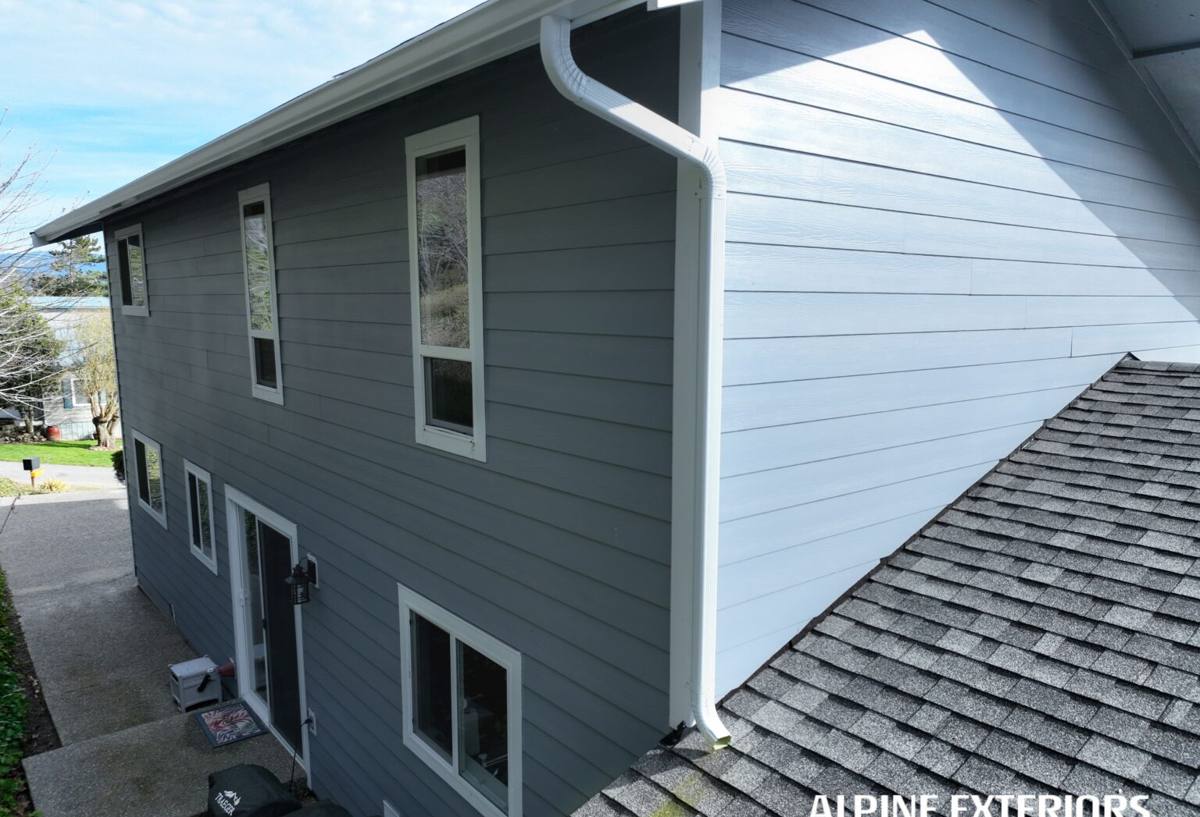
Queen Anne has a lot of older housing stock — craftsman bungalows, early 1900s foundations, homes that have been added onto, re-roofed, and repaired multiple times over the decades. That history matters. An older roof deck may have layers of past roofing underneath the current surface, older flashing details that don't match modern standards, or framing that was never quite squared up. Steeper roof pitches are also common on this style of home, which changes both the safety approach and the materials that make sense.
Steep Pitches and Multiple Roof Planes
A lot of Queen Anne homes have complex rooflines — dormers, multiple gables, and steeper pitches than you'd find on a typical newer single-story home. Every valley, every place two roof planes meet, is a spot where water concentrates and flashing has to be done right. On a simple roof, a mediocre repair might survive by luck. On a roof with several intersecting planes, there's no margin for a repair that doesn't match the original detailing.
Mature Trees and Moss Load
Many lots on the hill have significant mature tree cover, which is part of the neighborhood's character but also means more organic debris — needles, leaves, seed pods — collecting in valleys and behind chimneys. That debris holds moisture and speeds up moss growth. A roof shaded most of the day dries out slower after every rain, which extends the window moss and algae have to take hold.
Common Roof Repair Issues We See on Queen Anne Homes
- Moss and algae growth on north-facing and shaded slopes, especially under tree canopy
- Lifted or cracked shingle tabs along exposed, wind-facing roof edges
- Flashing failures at chimneys, dormers, and valleys on older, more complex rooflines
- Corroded or loosened fasteners on metal flashing and gutters from prolonged salt-air exposure
- Interior water staining that shows up rooms away from where the actual leak point is, due to water traveling along rafters or sheathing before it drips
- Ice-dam-adjacent damage during the rare hard freeze, when older attic insulation and ventilation weren't designed for it
What a Correct Repair Actually Involves
A roof repair done right isn't just "find the leak, cover the hole." It's a sequence, and skipping steps is how a repair turns into a callback six months later.
1. Find the Real Source, Not Just the Symptom
Water almost never enters where it shows up inside the house. We trace staining and damage back along the roof deck and framing to the actual entry point — a lifted shingle, a failed flashing seam, a cracked pipe boot — before we touch anything.
2. Check the Deck Underneath
On older homes especially, we check the condition of the roof sheathing once material is pulled back. Soft, delaminated, or rotted decking has to be replaced, not just covered over — patching shingles onto compromised decking just relocates the problem.
3. Match Material and Method to What's There
A repair should tie into the existing roofing system correctly — same or compatible material, proper shingle lacing or step-flashing technique, correct underlayment at the repair boundary — so the patch doesn't become the next leak point at its own edges.
4. Rebuild Flashing Properly, Not Just Reseal It
Caulk and roofing cement have their place, but they're not a substitute for correctly lapped flashing at chimneys, valleys, and walls. We rebuild flashing details to shed water the way they're supposed to, rather than relying on sealant to hold back a design flaw.
5. Clear and Treat for Moss Where Relevant
If moss contributed to the failure, the repair includes removing it properly (not power-washing, which can drive granules loose and damage shingles) and addressing the conditions that let it take hold, so the same section isn't back to the same problem in a couple of years.
Our Process for a Queen Anne Roof Repair
- Free on-site assessment — we walk the roof (or inspect from the deck edge and interior where a walk isn't safe or necessary) and document what we find with photos.
- Honest diagnosis — we explain what's actually failing, why, and what a proper fix requires. If it's a simple, contained repair, we say so. If we see signs the roof is nearing the end of its useful life, we say that too.
- Clear scope and pricing — a written estimate that spells out exactly what's being repaired and how, before any work starts.
- The repair itself — deck inspection, correct material matching, proper flashing work, and cleanup of any moss or debris contributing to the issue.
- Follow-up — we check that the repair is holding, particularly after the first significant wind-driven rain event following the work.
Repair or Replace? What Actually Drives That Decision
Not every leak means a new roof, and not every roof that "looks old" needs replacing. Here's how we weigh it:
| Factor | Leans Toward Repair | Leans Toward Replacement |
|---|---|---|
| Roof age | Within expected lifespan for the material | At or past the material's typical service life |
| Extent of damage | Isolated to one section, plane, or penetration | Multiple failure points across several roof planes |
| Deck condition | Solid, dry sheathing under the affected area | Widespread soft spots, rot, or delamination |
| Moss/algae history | Manageable with cleaning and spot treatment | Chronic, recurring growth despite past treatment |
| Granule loss (asphalt shingle roofs) | Localized, from the specific damaged area | Widespread bald patches across the field of the roof |
Materials and Maintenance: What Makes Sense on This Hill
We don't push one product as a cure-all — every roofing material involves trade-offs, and the right call depends on the specific roof, its pitch, and the homeowner's priorities.
| Material | How It Handles Moss/Moisture | Maintenance Consideration |
|---|---|---|
| Asphalt composition shingle | Moss-resistant granule options exist; standard shingles need periodic cleaning in shaded areas | Lowest upfront cost; straightforward spot repairs |
| Cedar shake/shingle | Attractive but naturally more moisture-absorbent; needs consistent airflow and upkeep to avoid moss and rot | Higher maintenance burden in a wet, shaded climate like this one |
| Metal roofing | Sheds moisture fast and resists moss well on most slopes | Requires correct fastener and flashing detailing to avoid its own leak points at penetrations |
| Synthetic/composite roofing | Generally moisture- and moss-resistant by design | Installation sensitivity varies by product; warranty terms differ from traditional materials |
Where a homeowner wants the traditional look of cedar shake, we'll install and repair it — but we're upfront that in a climate with this much sustained moisture, it asks for more attention over time than composition shingle or metal. That's a maintenance and moisture-behavior trade-off, not a judgment on the material itself.
Why a Crew That Already Works Queen Anne Makes a Difference
Roofing crews that mostly work drier, flatter parts of the region don't always think about wind-driven rain at elevation, or how much of a difference tree cover and shaded exposure make to moss timing. A crew that regularly works this hill knows to check the usual failure points first — valley flashing on complex rooflines, chimney flashing on older homes, wind-exposed shingle edges — because we've seen the same patterns repeat on similar homes nearby. That's less guesswork and a faster, more accurate diagnosis, which keeps the job focused on what actually needs fixing.
It also means practical logistics are already worked out: navigating steep, narrow streets with equipment, and being realistic about seasonal scheduling around King County's wet months so repairs get done in a dry weather window whenever possible, rather than rushed between storm fronts.
A Quick Checklist Before You Call Anyone About a Roof Repair
- Note where the leak or damage shows up inside — room, and roughly where on the ceiling or wall — even though the actual source may be elsewhere
- Check your attic (if accessible) for staining, damp insulation, or daylight coming through the decking
- Look at the roof from the ground for obvious moss buildup, missing shingles, or debris pooling in valleys
- Note roughly how old the roof is, or when it was last repaired or replaced, if you know
- Get a written scope and price before work starts — a vague verbal estimate isn't enough for a roof repair
- Ask what happens to the roof deck if it's found to be damaged once material is pulled back — that should be discussed, not assumed
Let's Take a Look
If you're dealing with a leak, visible moss buildup, or roofing that's showing its age on your Queen Anne home, we're glad to come take an honest look. There's no cost and no pressure for the estimate — just a clear read on what's actually going on and what it would take to fix it correctly.