 Seattle Exterior
 Why Magnolia Roofs Wear Differently Than Roofs Inland
Magnolia sits on a peninsula with water on multiple sides, which means the neighborhood catches weather that homes a few miles inland in Seattle simply don't see as often. Salt-laden air off Puget Sound accelerates corrosion on fasteners, flashing, and metal components years before it would on a roof in a more sheltered part of King County. Add in wind that funnels across open water and up the bluffs, and you get uplift forces on shingles and ridge caps that a standard inland roof rarely has to handle.
Then there's the tree cover. Much of Magnolia has mature evergreen canopy, including large stretches of parkland, and that shade keeps roof surfaces damp far longer after a storm than a roof in full sun. Combine constant moisture with organic debris from needles and leaves, and you have the exact recipe moss and algae need to take hold. We don't treat Magnolia like every other Seattle roof — the material choices, the flashing detail, and the maintenance plan all shift because of where the house sits.
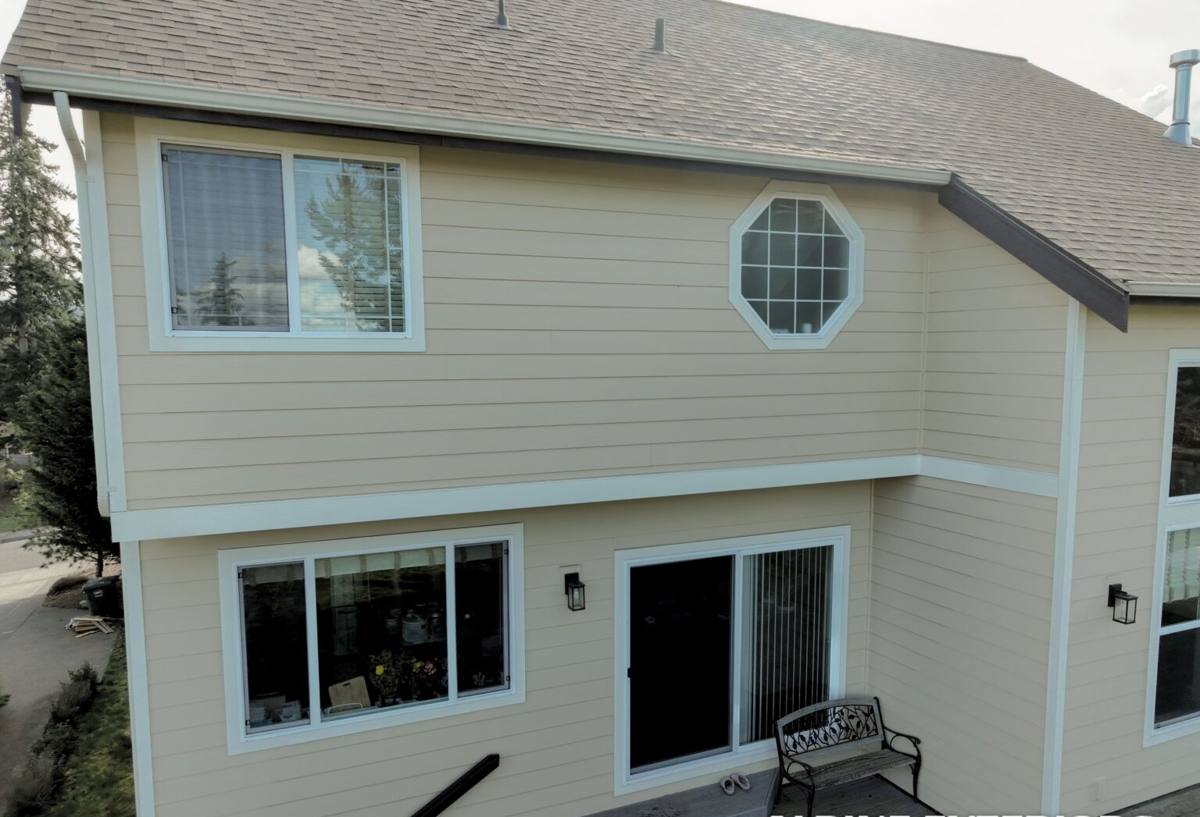
Signs a Magnolia Roof Needs Replacement, Not Another Repair
Most homeowners call us after a repair, not before one. The honest answer isn't always "replace it" — but there's a point where patching stops making financial sense. Here's how we tell the difference.
Inside the House
Ceiling stains that reappear in the same spot after every heavy rain, daylight visible through the attic roof deck, or insulation that's damp and matted are all signs the roofing system, not just one flashing point, has failed. In a marine climate like ours, once water is tracking through the deck itself, isolated repairs tend to just move the leak rather than fix it.
On the Roof
Shingles that are cupping, cracking, or losing granules in sheets rather than a few spots at a time indicate the material is at the end of its service life. Moss that's established itself under the shingle tabs — not just on the surface — has usually already lifted the shingles enough to let wind-driven rain underneath. Soft or spongy spots underfoot during an inspection almost always mean deck rot, which a repair can't address.
Age and History
Standard asphalt composition roofs in this climate typically run 18–25 years depending on ventilation and installation quality — often shorter than manufacturer marketing suggests, because our wet, mild winters don't give roofs the dry recovery time that roofs in drier climates get. If your roof is in that range and has needed more than one or two repairs in the last few years, replacement is usually the more honest recommendation.
What a Correct Roof Replacement Actually Involves
A roof replacement is more than swapping old shingles for new ones. The parts you don't see are what determine whether the new roof lasts 10 years or 30 in this environment.
- Full tear-off: We remove the existing roofing down to the deck rather than layering over it, so we can actually inspect the wood underneath.
- Deck inspection and repair: Any rotted, delaminated, or soft sheathing gets replaced before anything new goes down — covering over bad decking just hides the problem for the next owner.
- Ice-and-water shield at vulnerable points: Eaves, valleys, and roof-to-wall transitions get self-adhering waterproof membrane, since these are where driving rain gets pushed uphill under normal shingle coverage.
- Synthetic underlayment across the field: A tear-resistant, water-shedding layer under the whole roof, not just the felt paper that used to be standard.
- New flashing throughout: Step flashing, counter-flashing, chimney flashing, and skylight flashing are replaced, not reused — old flashing is one of the most common hidden leak sources we find on tear-offs.
- Balanced ventilation: Intake at the eaves and exhaust at the ridge, sized to the attic, so moisture from inside the house doesn't condense on the underside of the new deck.
- Proper fastening for wind exposure: Nailing pattern and fastener count matched to Magnolia's wind exposure, not just manufacturer minimums.
Choosing a Roofing Material for Magnolia's Microclimate
There's no single "best" roofing material — there's the material that's the right trade-off for your house, your budget, and this specific climate. Here's how the common options actually compare for a Magnolia home dealing with salt air, wind, and heavy shade.
| Material | Moss/Algae Resistance | Wind Performance | Maintenance Burden | Typical Lifespan Here |
|---|---|---|---|---|
| Standard asphalt composition | Moderate — improves with algae-resistant granules | Good with proper nailing | Periodic moss treatment recommended | 18–25 years |
| Architectural/laminate asphalt | Good, especially algae-resistant lines | Very good, heavier and thicker | Lower than 3-tab | 25–30 years |
| Metal (standing seam or panel) | Excellent — sheds moss and debris | Excellent | Low, but requires correct fastener and coating spec near salt air | 40–50+ years |
| Cedar shake | Poor without diligent upkeep in shaded, damp areas | Fair, sensitive to installation quality | High — regular treatment and inspection required | 20–30 years with upkeep |
We're candid with homeowners about cedar in particular: it can look great, but in a shaded, moisture-heavy setting it demands a maintenance commitment most households don't want to keep up with, and moisture behavior under shakes is unforgiving if that upkeep slips. That's a maintenance and moisture-management conversation, not a knock on the product itself — it's simply not what we'd put our name behind installing without a very clear-eyed homeowner. For most Magnolia homes, a quality architectural asphalt with algae-resistant granules or a metal roofing system gives the best balance of appearance, durability, and realistic upkeep.
How Our Roof Replacement Process Works
- On-site inspection: We walk the roof and attic, check ventilation, note flashing condition, and photograph anything that affects the scope or price.
- Written estimate: A clear, itemized quote — material, tear-off scope, deck repair allowance, and timeline — with no vague line items.
- Material selection: We walk through the options above against your budget and how much upkeep you actually want to do.
- Permitting: We handle the permit filing with the City of Seattle so you don't have to navigate it yourself.
- Scheduling around weather: We build in realistic buffer for our wet season rather than promising a date we can't reliably hit.
- Tear-off and deck inspection: Old roofing comes off, the deck gets inspected in daylight, and you're shown any repair needs before we cover them up.
- Installation: Underlayment, flashing, ventilation, and finish material installed to manufacturer spec and matched to wind exposure.
- Final walkthrough and cleanup: Magnetic sweep for nails, full site cleanup, and a walkthrough so you know exactly what was done and why.
Permits, Codes, and Working Within Magnolia's Character
Roof replacements in Seattle require a permit through the city, and inspectors are checking for things like proper ventilation, correct fastening, and compliant flashing details — not just whether new shingles are on the roof. Because Magnolia has a real mix of home ages and rooflines, from older homes with original framing to newer builds, we don't treat every job as a template. Older homes in particular often need deck repair or ventilation upgrades that a newer home wouldn't, and we price and permit for that reality rather than assuming a like-for-like swap.
Working a peninsula neighborhood also means planning around narrower streets, steep driveways, and tighter lot access in some pockets — logistics that matter for material staging and dumpster placement but that a crew unfamiliar with the area often underestimates on the first day of a job.
Moss, Algae, and Long-Term Roof Care in a Marine Climate
Even a correctly installed roof needs some seasonal attention here. Magnolia's combination of shade, moisture, and a long moss season means maintenance isn't optional if you want to hit the full lifespan of your roofing material.
- Have gutters and downspouts cleared before the fall rains start, so water isn't backing up under the roof edge.
- Remove moss and debris buildup at least once a year — ideally by a professional who won't damage granules or shingle edges doing it.
- Trim back overhanging branches where practical to reduce shade and debris load on the roof surface.
- Check attic ventilation isn't blocked by insulation, since poor airflow is one of the biggest drivers of premature roof failure in wet climates.
- Have flashing points — chimneys, skylights, vents — inspected every couple of years, since these fail before the field of the roof usually does.
Why Hiring a Crew That Already Works Magnolia Matters
A roof replacement is only as good as the details most homeowners never see — the flashing under the shingles, the fastener spec for wind exposure, the ventilation balance in the attic. Those details change based on where the house sits, and a crew that already works this specific stretch of Seattle knows what actually fails here versus what fails in a drier, more sheltered part of King County. That's the difference between a roof that needs attention again in five years and one that goes the distance.
If your roof is showing its age or you just want a straight answer on whether repair or replacement makes sense for your house, we're glad to take a look. Reach out for a free, no-pressure estimate using the form below — we'll walk the roof, give you honest options, and let you decide from there.