 Seattle Exterior
 Shoreline sits right along Puget Sound, which means decks here take a beating most inland neighborhoods never see. Salt-laden air off the water, driving rain that comes in sideways during winter storms, and a moss season that can stretch from October into May all work on wood and fasteners at the same time. We've repaired decks all over King County, and the ones in Shoreline consistently show a specific pattern of damage tied to that combination — which is why a generic repair approach often misses the real problem.
Why Shoreline Decks Age Differently
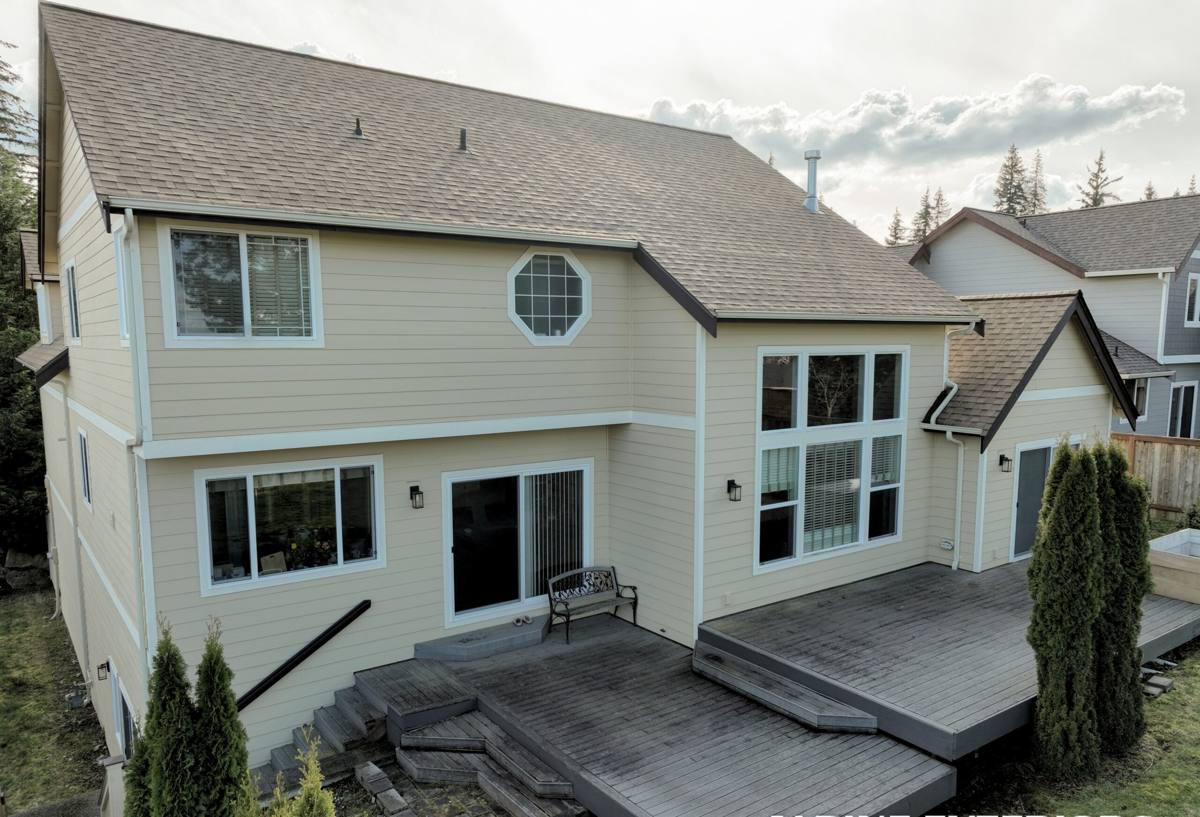
Two things separate Shoreline from a drier, inland Seattle neighborhood: proximity to salt water and near-constant shade in many yards from mature evergreens. Salt air accelerates corrosion in fasteners, joist hangers, and any exposed metal hardware — even galvanized coatings break down faster here than the manufacturer's rated lifespan suggests once you're within a mile or two of the Sound. Meanwhile, tree cover keeps decking boards damp longer after every rain, which is exactly the condition moss, algae, and rot fungi need to take hold.
The result is decks that can look fine from a distance but have real structural issues underneath: rusted-through hangers, soft framing at the ledger board, and decking that's lost its grip strength even though the surface still looks like wood. We've opened up decks in this area that were structurally sound five years ago and are now unsafe to walk on at the far corner — not because the homeowner neglected them, but because the climate here doesn't give wood much of a break.
The Moss and Algae Factor
Moss isn't just cosmetic. It holds moisture against the board surface around the clock, which keeps the wood's moisture content elevated even on dry days. Over a full moss season, that constant dampness is enough to start decay in untreated or lightly treated lumber, especially where boards butt against each other or against framing where airflow is already limited.
What a Correct Deck Repair Actually Involves
A lot of deck "repair" in this region amounts to replacing whatever board looks bad and calling it done. That fixes the symptom, not the cause. A repair done right starts with figuring out why that section failed in the first place — usually moisture intrusion, a flashing gap, or a fastener that's corroded and no longer holding.
- Probe framing members (joists, beams, posts) with an awl at every suspect area, not just where the surface damage shows
- Check the ledger board connection to the house — this is the single most common serious failure point on older decks and the one with the highest safety stakes
- Inspect all metal hardware for rust, pitting, or loss of holding strength, especially joist hangers and structural screws near ground level or close to the water
- Confirm proper flashing where the deck meets the house siding, since a bad seal here drives water directly into the wall framing, not just the deck
- Check post bases and any wood-to-concrete contact points for rot from wicked-up ground moisture
- Assess railing posts for looseness — a common issue as lag bolts corrode or the surrounding wood softens
Only after that inspection do we know whether a job is a targeted board-and-hardware repair or something that needs to go deeper into the framing. We tell homeowners honestly which one they're looking at before any work starts.
Common Repairs We See in Shoreline
Ledger Board and Flashing Issues
The ledger board — where the deck attaches to the house — is the highest-consequence repair on any deck. If flashing was installed incorrectly or has failed, water runs behind it and into the rim joist and wall framing, which can go undetected for years. In a climate with as much annual rainfall as Seattle gets, a bad ledger connection is not a "someday" fix.
Joist and Beam Rot
Shaded, damp framing is where we most often find soft or crumbling wood. This is usually repaired by sistering new lumber alongside the damaged member or, in worse cases, replacing the affected span outright. We use pressure-treated lumber rated for structural ground or near-ground contact where relevant.
Fastener and Hardware Corrosion
Given the salt air exposure, we generally upgrade hardware during any repair rather than reusing old fasteners, even ones that look okay on the surface. Stainless steel or high-grade coated fasteners cost more up front but hold up far better this close to the Sound.
Railing and Guard Repairs
Loose or wobbly railings are a safety issue, not a cosmetic one. Repair usually means addressing the post connection at the framing level, not just tightening visible hardware, since the looseness is often coming from wood movement below the surface.
Decking Board Replacement
Whether we replace with wood or composite depends on the homeowner's priorities and how the rest of the deck is holding up — covered in the comparison below.
Wood vs. Composite: What Makes Sense for a Repair
When we're replacing decking boards during a repair, homeowners often ask whether it's worth switching materials on just the repaired section or planning ahead for a future full resurface. There's no universally right answer — it depends on budget, how the rest of the deck looks, and how much moss and moisture exposure the specific spot gets.
| Factor | Wood (cedar/PT) | Composite |
|---|---|---|
| Upfront cost | Lower | Higher |
| Moss/algae resistance | Needs regular cleaning and treatment | Better resistance, still needs periodic cleaning |
| Maintenance | Periodic staining/sealing required | Minimal, no sealing needed |
| Matching existing deck | Easier to blend with existing wood boards | Can look mismatched unless full sections are replaced |
| Long-term durability in shade/damp areas | More prone to rot if maintenance lapses | More consistent performance in persistent shade |
| Repairability | Simple to replace individual boards | Board profiles and colors change over product runs, making exact matches harder later |
For a partial repair on an otherwise healthy wood deck, matching the existing material is usually the more practical call. If a deck is heavily shaded and has a history of moss and rot problems, it's worth talking through whether a composite section makes sense for that specific area, even if the rest stays wood.
Our Repair Process
We keep this straightforward because homeowners deserve to know exactly what they're paying for before we start.
- Inspection — we walk the full deck, probe framing, check the ledger, and inspect hardware, not just the obviously damaged spots
- Honest assessment — we tell you whether this is a targeted repair or something more extensive, and why
- Written scope and estimate — clear on materials, what's being replaced, and what's being left alone
- Repair work — framing and structural fixes first, then decking, hardware, and railings
- Final check — we confirm flashing, fastener seating, and railing stability before calling the job done
Why Local Experience in Shoreline Matters
A crew that only occasionally works this close to Puget Sound can miss the early signs of salt-driven hardware corrosion, or underestimate how much moisture a shaded Shoreline yard holds onto compared to a sunnier lot a few miles inland. We work throughout King County and see this pattern often enough in Shoreline specifically that we know where to look first — the ledger connection, the shaded corner, the hardware that looks fine but isn't. That local pattern recognition is what keeps a repair from turning into a return visit.
We also know the practical side of working here: permitting expectations for structural deck work in this jurisdiction, and the fact that a deck built to code twenty years ago may not meet current guard and attachment standards — something worth flagging honestly if we see it during a repair, even if it's outside the original scope.
Signs You Should Get a Deck Inspected
- Boards that feel spongy or flex more than they used to underfoot
- Visible gaps, cracking, or separation where the deck meets the house
- Rust streaks running down from hardware or fasteners
- Railings that wobble or shift when leaned on
- Persistent moss or dark staining that keeps returning after cleaning
- Any framing visible from underneath that looks discolored, soft, or crumbly
None of these automatically mean a full rebuild — most start as a repair. But the longer moisture keeps working on exposed wood and hardware in a climate like ours, the more likely a small fix turns into a bigger one.
Get a Free Estimate
If your deck is showing any of the signs above, or you just want an honest read on its condition before another Seattle winter sets in, we're happy to take a look. The estimate is free, there's no pressure, and you'll get a clear explanation of what we find and what it would take to fix it — use the form below to get started.