 Seattle Exterior
 New-Construction Windows Are a Different Job Than Replacements
When a home in Shoreline is being framed from the ground up — or when an addition, garage conversion, or full teardown-rebuild is underway — the windows go in before the siding, before the final trim, and often before the house is fully weathered in. That's a very different job than swapping an old window out of an existing opening. There's no old flashing to work around, no existing trim to match, and no shortcuts available. Every layer of water management has to be built correctly the first time, because once the siding goes on, you don't get a second look at it for another 20 years.
We treat new-construction window installation as a systems job, not a product-drop job. The window itself matters, but the flashing, the sill pan, the housewrap integration, and the nailing fin attachment matter just as much — arguably more, in a climate like ours.
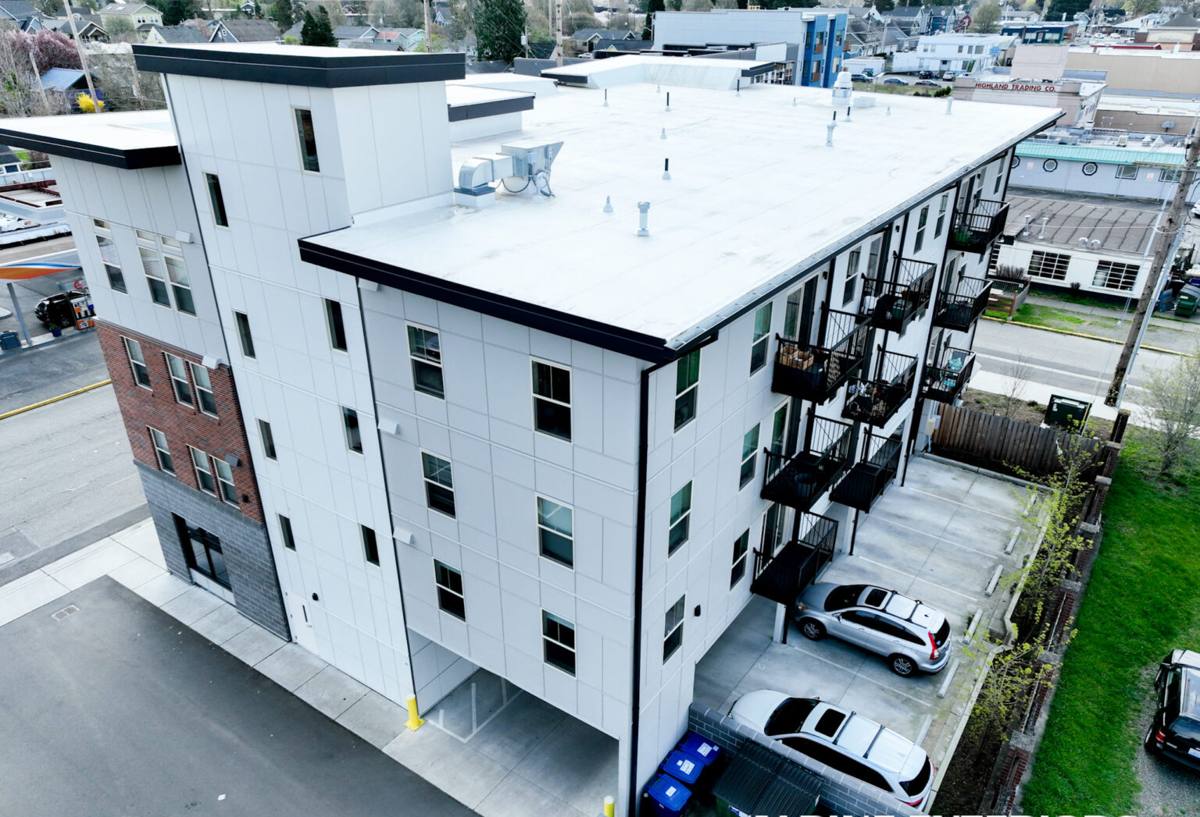
What Seattle-Area Weather Does to a New Build's Windows
Shoreline sits right on Puget Sound, which means homes here deal with a combination most inland Washington towns don't: salt-laden air off the water, wind-driven rain that hits window walls at an angle instead of straight down, and a long stretch of the year — often six months or more — where surfaces stay damp enough for moss and algae to take hold. None of this is dramatic on its own, but it's relentless, and relentless is what wears down a window installation that wasn't detailed correctly.
Salt Air and Hardware
Salt-laden moisture accelerates corrosion on window hardware, fasteners, and metal flashing components that aren't rated for it. On a new build near the water, we pay attention to fastener and flashing material compatibility from day one, not as an afterthought.
Driving Rain and Wind Exposure
King County storms frequently come with sustained wind, which pushes rain sideways into wall assemblies rather than letting it run straight down and off. A window opening that's only detailed for vertical water flow will eventually leak under those conditions — usually a few years in, once sealants start to age.
Moss and Prolonged Dampness
Our long wet season keeps sills, trim, and lower window corners damp for extended stretches. Any spot where water can pool instead of shed — a poorly sloped sill, a missing kick-out, a sill pan without a back dam — becomes a moss and rot starting point over time.
Water Management Is the Real Job
The window unit itself is usually the easy part. What separates a new-construction install that lasts from one that fails early is the sequence of materials behind and around it:
- A sloped sill pan flashing with a back dam, so any water that gets past the window body drains outward instead of into the wall cavity
- Housewrap or weather-resistive barrier integrated in the correct shingle-lap order — always working from the bottom up so water sheds over each layer
- Corner flashing and head flashing sized and lapped to handle wind-driven rain, not just gravity-fed runoff
- Proper nailing fin fastening and shimming so the window stays square and doesn't rack over time, which is what eventually breaks seals
- Sealant used only where it belongs — sealant is a backup to good flashing, never a substitute for it
This is where a lot of new-construction window problems actually originate. The window brand rarely fails on its own; the flashing detail around it does, and by the time anyone notices, it's a drywall and framing repair instead of a five-minute fix.
Choosing Window Materials for a Shoreline Build
There's no single "best" window material — the right choice depends on budget, maintenance appetite, and how exposed the home is to weather and salt air. Here's how the common options actually perform in this specific climate:
| Material | Moisture & Salt-Air Performance | Maintenance | Typical Fit |
|---|---|---|---|
| Vinyl | Good — won't corrode or rot; seams need quality welding | Low | Most budget-conscious new builds |
| Fiberglass | Very good — dimensionally stable in wet, temperature-swinging conditions | Low | Homes wanting longevity without upkeep |
| Wood-clad | Depends heavily on cladding quality and installation detail; interior wood needs protection from condensation | Moderate to high | Homeowners who want a wood interior look and are willing to maintain it |
| Aluminum | Prone to corrosion near salt air unless properly coated; thermal performance is weaker | Moderate | Rare in residential new builds here; more common in commercial |
For Shoreline specifically, given the Sound-adjacent air and our wet season, we lean toward vinyl or fiberglass for most residential new-construction projects — not because other materials are bad products, but because they hold up with the least intervention in exactly the conditions this area produces year after year.
Energy Code and Performance Requirements
Washington's energy code sets minimum performance requirements for new-construction windows, and King County jurisdictions enforce them at inspection. On a new build, this isn't optional — the window schedule has to meet U-factor and, in some cases, solar heat gain targets before the project passes.
What Actually Matters on the Spec Sheet
- U-factor — lower is better for heat retention; this is the number inspectors check against code minimums
- Low-E coatings — help manage heat gain and loss without darkening the glass noticeably
- Dual or triple pane — dual pane with a quality low-E coating meets code for most Shoreline builds; triple pane adds cost and weight for marginal gains in our mild-winter climate
- Air infiltration rating — matters more here than in drier climates, since a leaky window is also a wind-driven-rain entry point
We build the window order to the approved plans and code requirements up front, so there's no scramble — or worse, a failed inspection — partway through framing.
Our New-Construction Installation Process
1. Plan Review and Window Order
We confirm rough opening sizes against the architectural plans before ordering, and check that specified U-factors and performance ratings match what the jurisdiction requires.
2. Rough Opening Prep
We verify each opening is square, correctly sized, and that housewrap or WRB is in place and properly lapped before a single window goes in.
3. Sill Pan and Flashing Installation
Sloped sill pans, back dams, and jamb/head flashing go in per a consistent, code-compliant sequence — not improvised opening to opening.
4. Window Setting and Shimming
Each unit is set plumb, level, and square, shimmed at the manufacturer's specified points, and fastened per that manufacturer's installation instructions — which is also what keeps warranty coverage intact.
5. Final Flashing and Sealant
Head flashing and any remaining sealant details are completed, and the assembly is visually checked for proper lap order before siding crews close it in.
6. Documentation and Walkthrough
We note window locations, models, and any project-specific details for the homeowner's records, since this information gets buried once siding and trim are finished.
Common Problems We Find on New Builds
Most of the window callbacks we get on new construction trace back to a short list of preventable issues. Before your siding crew closes the walls in, it's worth confirming these have been done right:
- Sill pan flashing installed flat instead of sloped to drain
- Housewrap lapped in the wrong order, directing water behind the barrier instead of over it
- Windows fastened without shims, leaving them out of square and prone to seal failure
- Sealant used to compensate for missing or incorrect flashing, rather than as a backup layer
- Fastener and flashing metals that aren't compatible, inviting corrosion in salt-air exposure
- No kick-out flashing where a window head meets a roofline or lower wall, sending runoff straight down the wall face
Any one of these can look fine on install day and still cause a leak, rot pocket, or moss line within a couple of wet seasons.
Why a Shoreline-Experienced Crew Makes a Difference
New-construction window work depends on getting the sequence right the first time — there's no "fix it later" once siding is up. A crew that already works regularly in Shoreline and the broader Seattle area knows the local building department's inspection expectations, understands how Puget Sound exposure changes flashing and material decisions, and has already seen what does and doesn't hold up through a full King County wet season. That familiarity shows up in fewer inspection corrections, fewer callbacks, and windows that are still performing well a decade or two after the framing crew has moved on.
If you're planning a new build, addition, or major renovation in Shoreline and want windows installed correctly the first time — flashed right, spec'd to code, and matched to what our local climate actually demands — we're happy to walk the plans with you. Reach out below for a free, no-pressure estimate.