 Seattle Exterior
 Siding Installation in Renton: Built for Our Weather, Not Just Our Look
Renton sits in the thick of the Puget Sound region's marine climate, and that climate is hard on exterior siding. Homes here deal with driving rain that comes in sideways during winter storms, salt-tinged marine air moving in off the Sound, and long stretches of gray, damp months that let moss and algae get a foothold on anything that stays wet too long. Siding that looks fine in a showroom in a dry climate can fail quietly here for years before a homeowner ever sees a problem, because the damage usually starts behind the surface, not on it.
That's why siding installation in Renton isn't just about picking a color and nailing up boards. It's about choosing a material engineered for sustained moisture exposure, and installing it with the flashing, gaps, and fastening details that keep water moving out instead of in. Get either piece wrong and you're looking at rot, mold, and a siding job that needs to be redone a decade before it should.
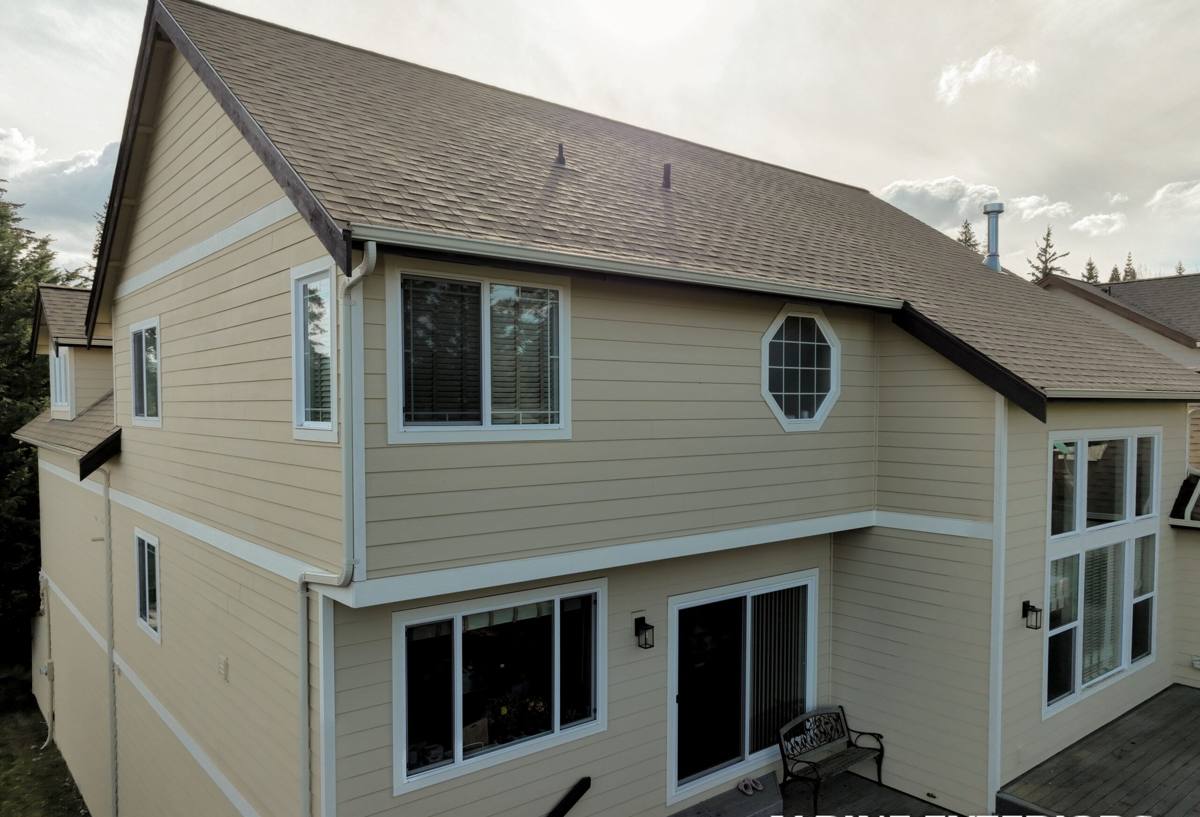
What Renton's Climate Actually Does to Siding
King County gets a lot of rain, but it's the combination of factors that wears siding down faster than homeowners expect:
- Driving rain and wind-driven moisture that forces water sideways into seams, laps, and trim joints rather than letting it simply run off
- Persistent humidity that keeps wood-based and composite products damp for days at a time, even when it isn't actively raining
- Marine air carrying salt and moisture that accelerates corrosion on fasteners and finishes not rated for coastal exposure
- Shade and tree cover, common on many Renton lots, that slows drying time and extends the moss and algae season well beyond what drier parts of the state see
None of that is unusual for the greater Seattle area, but it means siding choices that work fine in Eastern Washington or the Southwest simply don't hold up the same way here. A product's moisture rating and how it's installed matter more in Renton than almost anywhere else in the country.
Why We Install Only James Hardie Fiber Cement
We made a deliberate decision to install James Hardie fiber cement siding exclusively, and not vinyl, LP SmartSide, cedar, primed spruce, or other fiber cement brands. That's not a marketing position — it's a professional standard built around what actually survives a Pacific Northwest winter without turning into a callback.
Fiber cement itself isn't new, and other brands make a version of it. What sets James Hardie apart for our climate is the combination of a cement-based core that doesn't absorb and hold water the way wood-based products do, a factory-applied ColorPlus finish that's baked on under controlled conditions rather than field-painted, and HardieZone engineering that specifically accounts for regions with heavy rainfall and humidity. Products not engineered for wet climates can perform fine for a few years and then start showing swelling, delamination, or finish failure right around the time a homeowner assumes their siding is a decade from needing attention.
We're not saying every other product is unusable everywhere — vinyl and engineered wood have legitimate uses in drier climates or on lower-exposure projects. But for Renton's rain load, moss pressure, and marine humidity, we don't think they hold up well enough to put our name behind the install. Fiber cement that's specifically rated for this region does.
What HardieZone HZ10 Means for Renton Homes
James Hardie engineers its siding for specific climate zones, and the Puget Sound region falls into the HZ10 zone — built around resistance to moisture, freeze-thaw cycling, and the fungal growth that comes with prolonged dampness. That's a meaningfully different product than what gets installed in arid climates, and it's part of why we don't treat siding as a one-size-fits-all product.
What a Correct Siding Installation Actually Involves
Most siding failures we get called out to inspect in Renton aren't material failures — they're installation failures. The siding itself was fine; the details around it weren't. A correct job covers several layers most homeowners never see once the job is done.
Tear-Off and Substrate Inspection
Before any new siding goes up, the old material comes off and the sheathing underneath gets inspected. This is where hidden rot, past water intrusion, or failed flashing around windows and doors gets found. Skipping this step and installing over a compromised substrate just buries the problem under new siding.
Weather-Resistive Barrier and Flashing
A weather-resistive barrier goes over the sheathing, and flashing gets installed at every penetration point — windows, doors, hose bibs, light fixtures, and roof-to-wall transitions. In a climate with as much driving rain as Renton sees, this layer is what actually keeps water out of the wall assembly. The siding itself is really the second line of defense, not the first.
Fastening, Clearances, and Ground Contact
James Hardie has specific fastening patterns, nail spacing, and clearance requirements — including keeping siding a set distance above roof lines, decks, and grade — that are part of what keeps the manufacturer's warranty valid. Installers who don't follow these specs can void that warranty even if the siding itself is a premium product.
Caulking, Trim, and Finish Detail
The last step is where a job either looks professional or doesn't — clean trim lines, properly caulked joints, and paint-ready or factory-finished surfaces that don't show fastener heads or gaps. This is also where a lot of lower-bid crews cut corners, because it's labor-intensive and easy to rush.
Signs Your Renton Home May Need New Siding
Because siding damage often starts behind the surface, by the time it's visible it's usually been developing for a while. Look for:
- Soft spots or visible give when you press on the siding, especially near the bottom courses
- Persistent moss, algae, or dark streaking that comes back within weeks of cleaning
- Cracking, warping, or boards separating at the seams
- Paint that's peeling, bubbling, or needing repainting far more often than it used to
- Visible gaps around windows, doors, or trim where caulking has failed
- A musty smell in interior rooms along exterior walls, which can indicate moisture getting behind the siding
Any one of these on its own isn't necessarily an emergency, but several together, especially on a home more than 15-20 years old, is worth having looked at before the next wet season.
Our Installation Process
- On-site assessment — we walk the home, check the existing siding and substrate where accessible, and talk through what you're seeing and what you want out of the project
- Product and profile selection — choosing between HardiePlank lap siding, HardiePanel, or HardieShingle based on your home's style and your preferences
- Tear-off and substrate repair — removing old siding and addressing any rot or damage found underneath before anything new goes up
- Weather barrier and flashing installation — the part of the job that does the most to keep your home dry long-term
- Siding installation — following James Hardie's fastening and clearance specifications to keep the manufacturer warranty intact
- Trim, caulking, and final finish work — the detail work that determines how the job actually looks and holds up
- Final walkthrough — going over the finished work with you before we consider the job done
Cost Factors for Siding Installation in Renton
Every home is different, but the following factors tend to move the price of a siding installation up or down the most:
| Factor | Impact on Cost |
|---|---|
| Home size and number of stories | More surface area and taller walls increase labor and equipment needs |
| Tear-off complexity | Multiple layers of old siding or extensive rot repair add labor time |
| Siding profile chosen | Lap siding, panel siding, and shingle-style siding differ in material and install labor |
| Trim and architectural detail | Homes with more corners, dormers, and trim work require more precise, time-intensive work |
| Access and site conditions | Tight lots, slopes, or limited equipment access can add setup time |
| Finish choice | Factory-applied ColorPlus finishes versus field-painted options affect both cost and long-term maintenance |
We give straightforward, itemized estimates rather than vague lump-sum numbers, so you can see exactly what's driving the cost on your specific home.
Why Working With a Crew That Already Knows Renton Matters
A siding installer who works Renton regularly already knows the kinds of substrate issues common to homes in this area, how local building and permitting requirements apply to exterior work, and how to sequence a job around our wet-season weather windows rather than fighting it. That local familiarity translates directly into fewer surprises mid-project and a finished job that's actually built for the climate it has to survive, not just installed to spec on paper.
We also stand behind the work with both the manufacturer's product warranty and our own installation workmanship, which matters more in a climate where installation errors show up as water damage rather than obvious surface flaws.
If your Renton home's siding is showing its age, or you're planning ahead for a replacement, we're happy to take a look and give you a straightforward, no-pressure estimate. Use the form below to get started.