 Seattle Exterior
 Why Ravenna Siding Takes a Beating
Ravenna's mix of mature street trees, established landscaping, and close-set older homes creates a microclimate that's tougher on exterior siding than a lot of homeowners realize. The tree canopy that makes the neighborhood shady and pleasant in July also keeps siding damp longer after every Seattle rain, because sunlight and airflow can't reach the wall the way they can on a more open lot. Add in wind-driven rain off the Sound during winter storms, a long stretch of low-angle sun for much of the year, and the salt-tinged marine air that reaches inland across King County, and you have conditions that push moisture into every gap, seam, and hairline crack in a siding system.
Moss is the most visible symptom, but it's really a signal, not the problem itself. Moss holds moisture against the siding surface for weeks at a time, and wherever it takes hold, the material underneath is staying wet far longer than it should. On wood-based products that means rot risk. On any siding, it means paint and caulk break down faster, and small gaps become bigger ones.
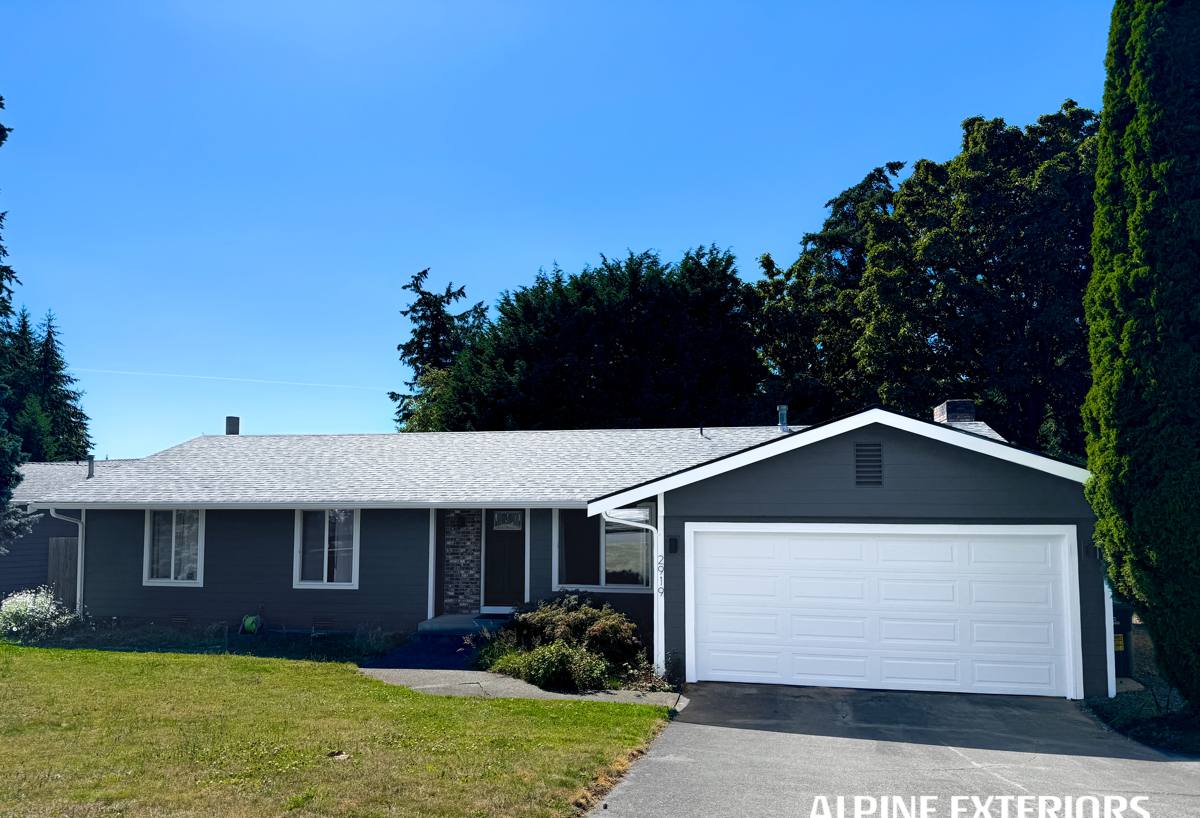
What We Look For in a Ravenna Siding Inspection
Beyond the Obvious Moss Patch
A homeowner calls about a green patch of moss or a cracked board, and that's a fine reason to get someone out to look — but a proper inspection doesn't stop at the spot that prompted the call. We check the panels above and below it, the trim and corner boards, the caulk lines at windows and doors, and anywhere siding meets a roofline, deck ledger, or foundation. Damage rarely stays isolated; if one section has been wet long enough to show a problem, the sections around it have usually been absorbing the same moisture.
Reading What the Siding Is Telling You
- Soft or spongy spots when pressed (a strong sign moisture has gotten past the surface)
- Paint that's bubbling, peeling, or alligatoring in patches rather than evenly across a wall
- Persistent moss or algae growth that keeps coming back within a season of cleaning
- Visible cracks, splits, or buckled panels, especially near corners and butt joints
- Staining or dark streaks below seams, nail heads, or trim — a sign water is tracking behind the siding
- Gaps opening up at caulked joints around windows, doors, or utility penetrations
- A musty smell or visible interior staining on the wall directly opposite a suspect area
Any one of these on its own might be minor. Two or three together, especially in a shaded or low-airflow part of the house, usually means it's time for a real inspection rather than another round of caulk and paint.
What a Correct Repair Actually Involves
There's a real difference between patching the visible damage and actually fixing the problem, and it comes down to what's happening behind the siding, not just on top of it. A repair that only replaces the damaged board without checking the water-resistive barrier, flashing, and fastening underneath is likely to fail again in a season or two — often in the exact same spot.
Steps We Don't Skip
When we open up a damaged section, we're checking the house wrap or building paper behind it for tears or gaps, confirming flashing is lapped correctly at windows, doors, and any horizontal trim, and looking for the actual moisture entry point rather than assuming it's the spot that looks worst. Sometimes the visible damage is downstream of a flashing issue several feet away. We also check fastener placement and spacing against manufacturer specifications, since improperly nailed siding is one of the most common causes of early cracking and moisture intrusion we see on repair calls.
Matching Material and Finish
Once the underlying issue is addressed, replacement pieces need to match the existing siding in profile, exposure, and finish as closely as possible. On a factory-finished product like James Hardie ColorPlus, that means sourcing the correct plank width and matching the color line rather than field-painting a patch that will weather differently than the rest of the wall over time.
Repair or Replace? How We Help You Decide
Not every siding problem in Ravenna calls for a full re-side, and not every problem is safely solved with a patch. The right call depends on how much of the wall is affected, what's causing the damage, and how old the existing siding is.
| Factor | Repair Usually Makes Sense | Replacement Usually Makes Sense |
|---|---|---|
| Extent of damage | Isolated to one or two sections | Spread across multiple walls or elevations |
| Underlying cause | A single flashing or caulk failure, now corrected | Widespread moisture intrusion behind the siding |
| Age of existing siding | Product is mid-life and otherwise sound | Original material is near or past its service life |
| Material on the house | James Hardie or another product still performing well overall | Cedar, primed spruce, or vinyl showing systemic wear |
| Cosmetic match | Replacement pieces will blend acceptably | Patch would be visibly mismatched or the color line is discontinued |
We'll tell you honestly which category your home falls into. If a repair is the right, durable fix, that's what we recommend — a bigger job isn't a better job if it isn't the one your house actually needs.
Why We Only Repair and Replace With James Hardie
When a repair does require new siding material — because the damaged section can't be reasonably matched, or because it's part of a larger replacement — we install James Hardie fiber cement and nothing else. We don't install LP SmartSide, vinyl, Cemplank, Allura, primed spruce, or cedar, and that's a deliberate standard, not a sales pitch.
Wood products like cedar and primed spruce look great new, but they're the most vulnerable to exactly the conditions Ravenna's tree cover and rain create: sustained moisture contact leads to rot, and the maintenance cycle to keep wood siding sealed and painted is demanding and never really ends. Vinyl is low-maintenance but it expands and contracts with temperature swings, can crack in impacts, and doesn't hold up the same way structurally when a section needs cutting out and replacing cleanly. Engineered wood products like LP SmartSide perform reasonably when installed and maintained correctly, but they still rely on a wood-strand core that depends on an unbroken factory coating and careful field sealing at every cut edge — a tough standard to guarantee over decades in a wet climate.
James Hardie fiber cement doesn't rot, doesn't attract pests, and is non-combustible. The ColorPlus factory finish is baked on and warranted separately from the substrate, so patched or replacement sections can be color-matched far more reliably than field-painted repairs. It's also available in HZ product lines engineered for specific climate zones, which matters in a region where siding faces sustained damp more than it faces extreme heat or freeze-thaw. That combination is why it's the only product we put on a Ravenna home, whether we're repairing one damaged section or re-siding the whole house.
Our Repair Process
- Inspection and moisture check — we examine the damaged area and surrounding siding, and use a moisture meter where rot or hidden water intrusion is suspected rather than guessing from the surface.
- Diagnosis — we identify the actual cause: failed caulk, damaged flashing, a torn water-resistive barrier, improper fastening, or simple material fatigue.
- Honest scope — we tell you plainly whether this is a contained repair or a sign of a bigger issue, and what each option involves.
- Correct rebuild — we repair the water-resistive barrier and flashing first, then install matched James Hardie material to manufacturer fastening and clearance specifications.
- Finish and cleanup — caulking, touch-up, and a final check that the repair blends with the surrounding siding and sheds water the way it's supposed to.
Keeping It From Coming Back
A correct repair should hold for years, but Ravenna's tree cover and long damp season mean upkeep still matters more here than in a drier, more open part of King County. A few habits go a long way: keep gutters and downspouts clear so water isn't sheeting down the siding face, trim back branches and shrubs that keep a wall shaded and damp, rinse moss and algae off siding gently before it gets established rather than after, and have caulk lines around windows and trim checked every couple of years since that's usually where a new problem starts. None of this requires a contractor visit every time — it's mostly about not letting small maintenance items pile up into a repair call.
Why Hiring a Crew That Already Works in Ravenna Matters
Ravenna's housing stock spans a real range of ages and original construction methods, and that history matters when you're opening up a wall. A crew that regularly works this neighborhood has a feel for what's typically behind the siding on homes of different eras here — older building paper, different framing details, past repair work that may or may not have been done correctly — and knows what to check for before assuming a modern repair approach will apply cleanly. That local pattern recognition, combined with an honest read on Seattle's rain and moss cycle, is what separates a repair that lasts from one that reopens next winter.
If you've got a section of siding in Ravenna that's showing moss, cracking, or soft spots, we're glad to come take an honest look. There's no pressure and no obligation — just a straight assessment of what's going on and what it would take to fix it right, using the free estimate form below.